Chemical manufacturing is a specialized industry that requires strict safety controls due to high risks of fire and explosion, structural corrosion, and hazardous chemical leakage. A lack of technical expertise during the engineering design stage often leads to reduced building service life, foundation and floor settlement caused by chemical infiltration, and rejection during regulatory approval procedures. Comprehensive compliance with industry-specific safety standards when designing chemical manufacturing factories enables investors to develop standardized construction design documentation, allowing BIC, as a general construction contractor, to execute projects safely, protect investment capital, and ensure stable long-term commercial operations.
Chemical manufacturing plants are consistently classified among industrial facilities with the highest levels of operational risk. Understanding these specific hazards and the relevant legal framework is an essential first step in developing accurate factory design solutions, protecting human lives, and safeguarding business assets.
Chemical processing and storage involve numerous hazards that can cause serious damage if they are not strictly controlled from the construction design stage:
- Extremely high fire and explosion risks: The presence of volatile organic solvents, flammable chemicals, and high-pressure compressed gas systems creates an environment highly sensitive to heat and friction. Even a minor electrical short circuit or sudden temperature increase can potentially trigger a large-scale fire or explosion.
- Persistent chemical corrosion: Acidic solutions, alkaline substances, and specialized chemicals can react strongly with conventional construction materials. Without specialized protective solutions, chemical infiltration can deteriorate concrete structures, corrode machinery foundations, and damage load-bearing steel frames, significantly reducing the durability of the entire facility.
- Toxic gas emissions and environmental leakage risks: Chemical spills on factory floors or toxic gases released into the air can create risks of suffocation and acute poisoning for workers. Untreated chemical wastewater penetrating the ground can contaminate groundwater resources and surrounding ecosystems.
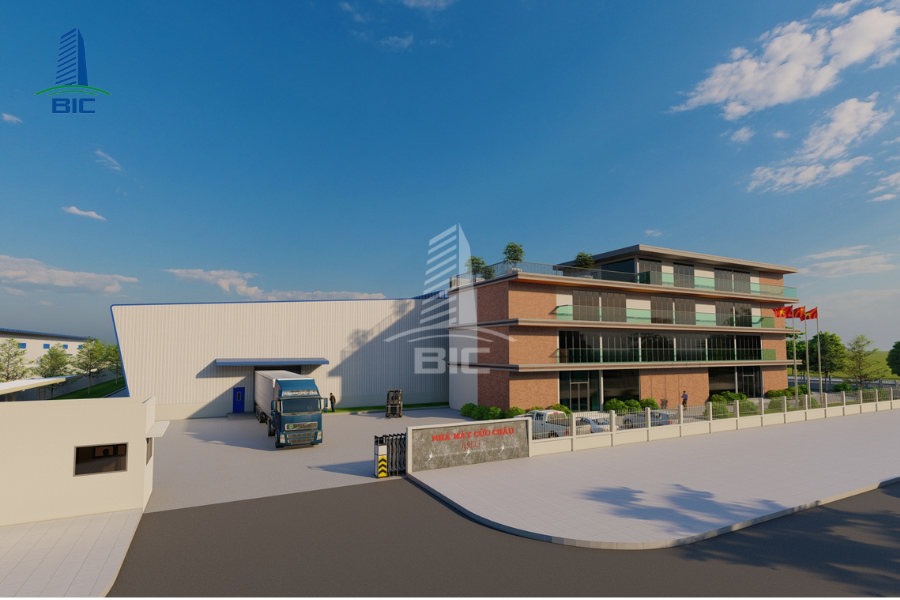
All chemical industrial projects must undergo stringent regulatory review procedures before construction permits can be issued:
- National technical regulations on chemical safety: Projects must strictly comply with the Law on Chemicals, the Law on Occupational Safety and Health, and relevant implementing decrees governing hazardous chemical management. All storage locations, reaction areas, and packaging processes must meet technical requirements concerning safety distances and ventilation standards.
- Environmental safety distances and fire protection approval standards: Factory design documentation must comply with QCVN 06 fire safety regulations and incorporate an Environmental Impact Assessment (EIA) report approved by the competent authorities. Master site planning must ensure the required minimum safety separation distances from residential areas, public roads, and neighboring factories. Partnering with BIC as a general construction contractor helps investors comprehensively address these complex legal requirements, ensuring timely project implementation and the highest level of safety.
Designing chemical manufacturing factories requires absolute precision in every technical parameter. Each architectural and structural solution must serve as a protective barrier that safeguards the entire facility.
Master site planning forms the fundamental basis for ensuring chemical plant safety. Construction design must maintain appropriate fire protection separation distances and environmental safety distances between the main manufacturing buildings and surrounding residential areas. Functional zones must be arranged independently, including raw material receiving areas, chemical reaction and production workshops, hazardous chemical storage facilities, and waste treatment stations. Internal traffic routes must be clearly separated, establishing distinct boundaries between specialized chemical tanker routes and pedestrian walkways for workers, eliminating the risk of traffic collisions that could cause accidental chemical leakage.

The structural frames and floor systems of chemical factories are continuously exposed to highly corrosive substances. Applying chemical-resistant vinyl ester epoxy coatings or composite protective linings across concrete floor surfaces helps prevent acidic and alkaline solutions from penetrating deeply and damaging structural components. Factory design engineers must calculate machinery foundation systems and chemically isolated floor layers using specialized load-bearing materials. This solution prevents chemical liquids from penetrating through cracks into the ground, protects reinforced concrete foundations, and maintains building durability throughout decades of operation.
Air quality control is a mandatory requirement for preventing fire and explosion disasters. Mechanical ventilation networks in chemical production workshops are designed to maintain negative pressure conditions, preventing hazardous chemical vapors and flammable gases from spreading into office areas or auxiliary workshops. Exhaust fans and air ducts are manufactured from high-quality chemical-resistant plastic materials. In areas with high fire and explosion risks, electrical equipment and ventilation fans must comply with ATEX explosion protection standards, eliminating the possibility of electrical sparks being generated during operation.
Chemical leakage incidents require immediate containment and treatment measures that must be incorporated into the building's architectural design. Factory design documentation must include containment bunds and emergency collection sumps with sufficient calculated capacity to hold the maximum potential chemical spill volume within each designated area. Chemical-contaminated wastewater collection channels must be installed with accurately calculated slopes, protected with corrosion-resistant coatings, and routed separately to dedicated industrial wastewater treatment facilities, ensuring that hazardous chemicals cannot leak directly into the surrounding environment.
MEP infrastructure and fire and explosion protection systems in chemical manufacturing plants require technical standards far more demanding than those applied to conventional industrial buildings.
Electrical power distribution and lighting systems in chemical manufacturing plants must use explosion-proof switching devices, electrical cabinets, and lighting fixtures that meet Ex-proof standards for hazardous areas. Electrical wiring networks must be installed within specialized fire-resistant steel conduits. In particular, anti-static grounding systems must be designed to cover all storage tanks, mixers, metal pipelines, and reaction equipment. Completely dissipating static electricity accumulated through chemical handling and friction helps eliminate the risk of electrical sparks that could trigger explosions.

Different categories of chemicals have entirely different combustion characteristics, requiring specialized fire suppression methods. In areas storing flammable organic solvents, automatic foam fire suppression systems are prioritized to extinguish flames quickly and isolate oxygen. Central control areas and computer rooms are protected using CO₂ or FM-200 gas fire suppression systems to avoid damaging sensitive electronic equipment. Toxic gas detectors and early-warning laser smoke detectors are directly connected to automatic emergency shutdown systems, enabling chemical supply valves to close immediately when an incident is detected.
Partnering with a contractor possessing extensive practical expertise is a decisive factor in achieving project success and ensuring the highest level of safety for chemical manufacturing facilities.
BIC begins each project by conducting comprehensive studies of the physicochemical characteristics of individual product categories, manufacturing processes, and the investor's storage requirements. Based on actual operational data, BIC's engineering team develops optimized construction design documentation, accurately calculating MEP load requirements and chemical safety solutions. Drawings prepared by BIC ensure complete coordination among architectural, structural, and technical infrastructure systems, enabling production lines to operate at maximum efficiency.
BIC applies three-dimensional Building Information Modeling (BIM) technology throughout the design development process for chemical manufacturing factories. The 3D model provides detailed simulations of chemical piping networks, foam fire suppression pipelines, explosion-proof electrical cable ladders, and emergency spill containment systems. Automated clash detection software enables engineers to identify and resolve technical conflicts directly within the digital model, ensuring precise on-site installation and reducing costs for investors.
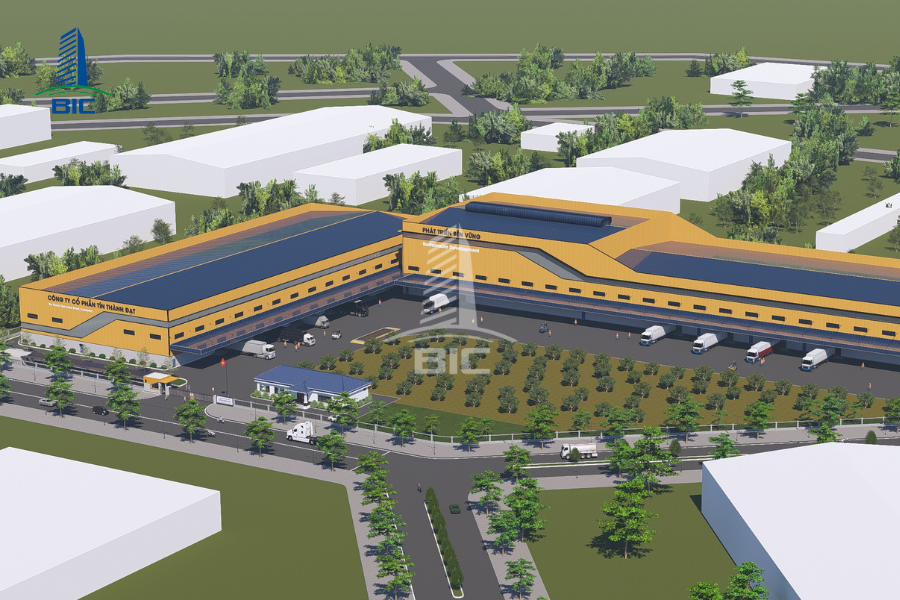
Selecting BIC as a turnkey general construction contractor under the Design and Build model allows investors to simplify project management. BIC assumes direct responsibility for the entire process, from master planning, construction permit applications, Environmental Impact Assessment (EIA) reporting, and fire protection design approval to construction completion and final acceptance. Seamless coordination between design development and on-site execution helps shorten the overall implementation schedule by 15% to 20%, maintain control over the turnkey budget, and ensure that no additional costs arise beyond the agreed contract.
Chemical manufacturing factory design is a complex engineering challenge that requires strict compliance with current safety regulations and legal frameworks. Investing systematically in construction design documentation from the beginning not only protects business assets and human lives but also helps companies optimize operating costs and prevent regulatory risks. Partnering with BIC as a general construction contractor provides investors with comprehensive solutions covering consulting, design, and turnkey construction, ensuring that facilities meet the highest safety standards, are completed on schedule, and are ready to support sustainable business development objectives in the future.