After a long period of continuous operation under the effects of weather, production chemicals, and heavy machinery loads, industrial factory buildings inevitably face the risk of wear and deterioration. Factory deterioration not only directly affects labor productivity, but also creates serious risks related to structural safety and disruption of the company’s supply chain.
Proactively identifying signs of damage, conducting technical inspections at the right time, and preparing an appropriate renovation construction design solution are urgent requirements for investors. Working with a reputable factory design consultant and general construction contractor helps accurately assess the existing condition, propose optimal reinforcement solutions, ensure legal safety, and extend the operational life of the entire building.
Early identification of technical damage signs helps investors promptly develop treatment solutions, prevent safety incidents, and minimize financial losses for the business.
Factory deterioration is often clearly shown through two groups of technical signs on-site:
- Load-bearing structural damage: Concrete floors show long cracks, differential settlement, or peeling of the surface hardening layer due to continuous moving loads from forklifts. The pre-engineered steel frame shows signs of tilting or twisting; metal roofing has localized sagging; and envelope walls show cracks along column bases. In particular, atmospheric corrosion creates heavy rust layers at column bases, foundation bolts, structural welds, purlins, and roof bracing systems.
- Infrastructure and MEP system damage: Metal roofing suffers from serious leakage at joints or screw positions, allowing water to leak into production areas. Water supply and drainage networks become clogged, while underground leaks erode the foundation soil. Industrial electrical cable systems show aging insulation, and cable trays become rusted, increasing the risk of voltage drops or electrical short circuits and fires.

The decline in quality of industrial buildings results from a combination of natural factors and human operation management:
- Environmental impacts and production characteristics: A humid tropical environment, large temperature fluctuations, and continuous storms accelerate oxidation of metal structures. For chemical, textile dyeing, or food processing factories, acidic vapors and industrial waste emissions directly corrode the protective coating on steel and reinforced concrete structures.
- Operational overloading: Businesses may renovate independently or install additional machinery lines with loads exceeding the original design capacity of the foundation and steel frame system. Storing goods beyond the permitted density on mezzanines or in warehouses can also deform load-bearing structures.
- Deficiencies in construction design and execution: The original construction design drawings may have miscalculated building loads, used inaccurate geotechnical survey data, or selected an unsuitable foundation solution. In addition, careless construction contractors using steel and concrete materials that fail to meet technical standards reduce the building’s original durability.
- Neglecting periodic maintenance: Many businesses do not implement periodic inspection and infrastructure maintenance plans. Minor damage such as roof leakage, floor cracks, or rust at column bases is not handled in time, resulting in overall deterioration of the building.
Factory inspection is a professional assessment activity used to determine the current quality condition, load-bearing safety level, and continued operating capacity of a building. Investors should proactively carry out inspection at the following key times.
Under construction quality management regulations, large-scale industrial buildings that have been in operation for 5 to 10 years must undergo periodic safety inspections. This activity helps evaluate the degree of quality degradation in concrete structures, steel frames, and infrastructure systems over time.
Periodic inspection not only ensures legal safety so the business can maintain its operating license, but also helps detect hidden damage early, avoiding the risk of widespread factory deterioration and costly repairs.
As soon as abnormal signs are detected, such as vertical cracks at column bases, foundation settlement exceeding allowable limits, severe roof sagging, or deformation of the steel frame, the investor should immediately stop operations in the affected area and conduct urgent inspection.
In addition, after natural disasters such as major storms, flooding, or fire incidents, technical inspection is mandatory to assess the extent of material damage and the remaining load-bearing capacity of the building before allowing workers to return.
During business development, many companies need to change technology lines, install heavier machinery systems, or increase storage density on mezzanines and in warehouses. Increasing loads without checking the bearing capacity of the existing foundation and steel frame structure carries a very high risk of collapse.
The technical inspection report provides accurate data on remaining load-bearing capacity, serving as the basis for engineers to propose suitable reinforcement solutions.
Before preparing a renovated factory design dossier, existing condition inspection is a mandatory survey step. Inspection results accurately reflect concrete strength, steel corrosion levels, and the stability of foundation soil.
These technical data are important inputs for the consulting unit to propose an optimal upgrade construction design solution, ensuring safe connection between the existing structure and the new reinforcement system.
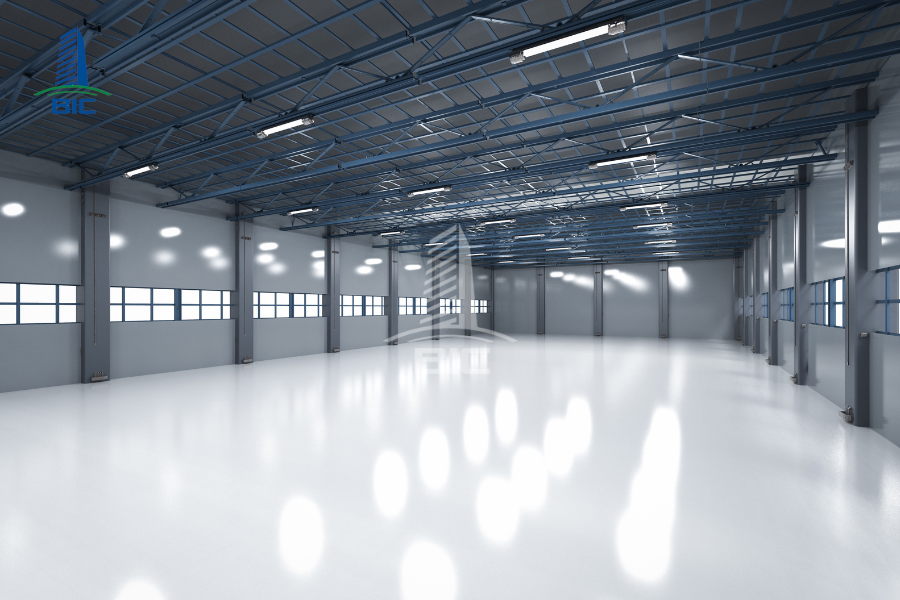
A systematic inspection process combined with accurate technical treatment solutions helps fully restore functionality and extend the building’s service life.
The inspection process for a deteriorated factory is carried out through a strict sequence of steps:
- Step 1: Conduct a site survey, collect as-built drawing dossiers, and measure the actual geometric dimensions of the structural system.
- Step 2: Perform non-destructive testing using specialized equipment such as concrete ultrasonic testing devices, anti-rust coating thickness gauges, bolt tightening inspection devices, and steel structure deflection measurement tools.
- Step 3: Enter survey data into specialized simulation software to calculate and verify the actual load-bearing capacity of the entire building.
- Step 4: Prepare an inspection report, classify the building safety level, and propose specific technical treatment solutions.
Based on inspection results, engineers apply corresponding technical solutions:
- Reinforcing foundations and load-bearing frames: For settled foundations, reinforcement may be carried out through high-pressure grouting or the addition of auxiliary driven piles. For weakened steel columns and roof rafters, common solutions include adding steel plate jacketing, supplementing bracing members, or installing additional support points to increase load-bearing capacity.
- Repairing concrete floors: Floor cracks are treated by injecting specialized epoxy, followed by a self-leveling mortar layer or epoxy coating to strengthen the surface and restore load-bearing capacity for forklift movement.
- Replacing the building envelope and insulation system: Rusted old metal roofing is replaced with high-quality color-coated metal sheets, combined with additional glass wool or PU insulated panels to improve heat resistance and fully prevent leakage.
The factory design consulting unit plays the role of shaping the upgrade solution. Based on the inspection report, design engineers calculate a renovation structural solution that ensures technical safety while maximizing the reuse of the existing frame to save costs for the investor.

Renovating a deteriorated factory is much more complex than new construction, requiring the construction unit to have strong technical capability and extensive site-handling experience.
A reputable general construction contractor directly coordinates with the inspection team to survey the entire infrastructure system. Based on this, the general contractor prepares an overall renovation construction design solution that thoroughly addresses the causes of damage, not only the visible symptoms. The combination of design thinking and construction capability ensures the highest feasibility for the renovation solution.
The biggest challenge when repairing a deteriorated factory is ensuring that the factory’s production line can continue operating. The general construction contractor prepares a phased construction method and carries out rolling construction during night shifts or holidays.
This process helps isolate repair areas, limit dust and noise, and avoid affecting the company’s delivery schedule. In addition, a turnkey contract helps investors tightly control costs and fully eliminate the risk of budget overruns.
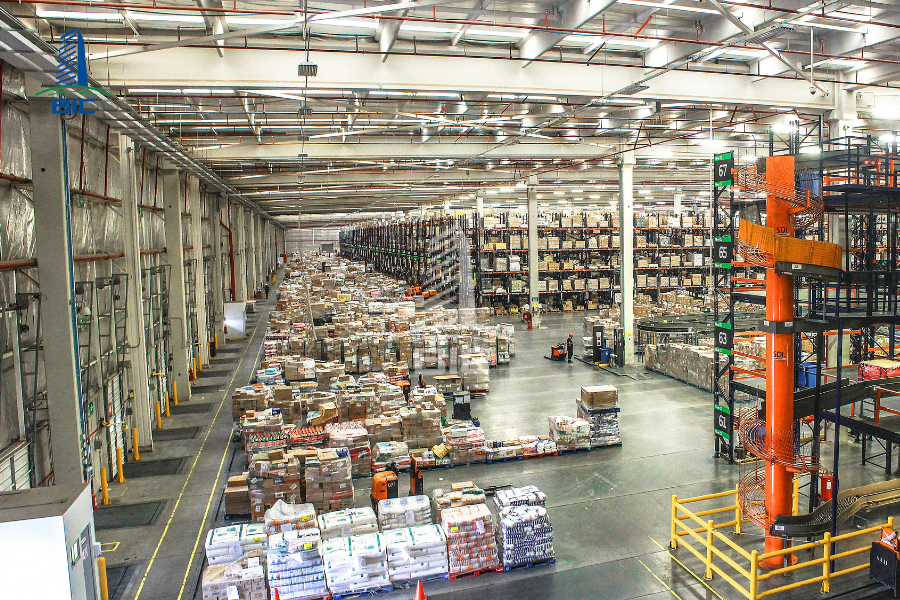
Construction inside an operating factory requires extremely strict occupational safety standards. The general contractor is responsible for setting up isolation barriers, installing safety net systems, and strictly supervising welding, cutting, lifting, and high-level component installation.
After completion, the building is handed over with a long-term warranty policy, giving investors strong peace of mind.
Proactively responding to factory deterioration is a smart asset management decision for every business. Timely technical inspection not only prevents occupational safety incidents, but also helps investors proactively plan renovation budgets and avoid being forced into action when the building has become severely damaged.
Working with BIC, a professional factory design consultant and reputable general construction contractor, is the key to helping businesses transform an aging building into a modern, safe, legally compliant factory that is ready to meet long-term production development needs.