The MEP system acts as the nervous system and operational bloodstream of a factory, supplying electricity, water, compressed air, and maintaining standard microclimate conditions for the entire industrial production line. Omissions or miscalculations in factory MEP design often lead to overload, voltage drops, production chain disruptions, and increased electricity operating costs for businesses.
A synchronized construction design solution from the beginning helps optimize energy efficiency, reduce OPEX, and protect the service life of expensive machinery systems. The combination of an accurate factory design solution and the practical implementation capability of a reputable general construction contractor ensures that MEP infrastructure operates safely, continuously, and flexibly enough to meet future expansion needs.
The MEP system plays a foundational role in maintaining the continuous operation of the entire industrial building. At BIC, we recognize that an accurate technical solution from the beginning brings practical operational value to investors.
The electrical system provides stable energy for all machinery and production equipment to operate at maximum capacity. A precise factory MEP design solution helps eliminate voltage drops, overload, or sudden power outages, thereby protecting expensive electronic components and preventing production line disruption.
In addition, arranging an industrial lighting network that meets the required lux standards helps workers perform tasks accurately, reduces the defect rate, and ensures occupational safety.
Each processing or manufacturing industry has strict requirements for surrounding environmental conditions. Ventilation and air-conditioning systems help accurately control temperature, humidity, and air cleanliness.
This is especially important for food processing, pharmaceutical, and electronic component manufacturing, where even a minor humidity fluctuation can damage an entire batch of raw materials.

Water supply and drainage infrastructure directly serves industrial cleaning, equipment cooling, and personnel living needs. High-pressure compressed air pipeline networks transmit energy to operate automated equipment on production lines.
At the same time, integrated wastewater collection and treatment systems help the factory operate smoothly and treat waste to required standards before discharge into the environment.
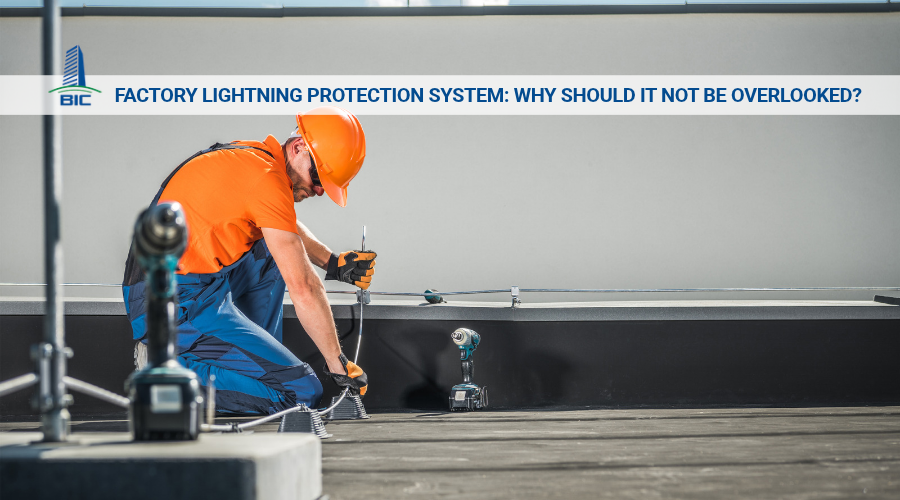
Electrical short circuits and fires are always among the top risks that can cause serious damage to businesses. The safety network, including automatic fire alarm systems, fire pump stations, lightning protection systems, and surge protection devices, provides comprehensive protection for the factory.
Integrating these technical solutions helps protect workers’ lives and factory assets against natural disasters and technical incidents.
A standard MEP technical dossier prepared by BIC always includes four complete specialized system groups, ensuring tight connectivity and synchronized operation.
The power supply network includes low-voltage transformer stations, main switchboards, distribution boards, and cable ladder systems leading to each machinery cluster. The lighting system uses energy-saving industrial LED lights.
Low-voltage infrastructure integrates security camera networks, emergency public address systems, LAN networks, and access control systems, helping the management team operate the entire factory more easily.
The air handling system includes roof exhaust fans, wall ventilation fans, and fresh air duct systems to keep production spaces well ventilated. In areas requiring special conditions, such as cleanrooms or laboratories, BIC implements VRV central air-conditioning systems or water-cooled chiller systems to ensure precise control of room temperature and pressure.

The water supply network distributes clean water to each functional zone, along with separate stormwater drainage and production wastewater drainage systems. The central compressed air station is equipped with an air receiver tank and specialized stainless steel or aluminum pipeline systems that deliver high-pressure compressed air to operating points along the assembly line.
Fire prevention and fighting infrastructure includes an automatic fire alarm control center, automatic sprinkler system, wall-mounted fire hose reels, and fire compartment barriers.
The Building Management System, or BMS, connects all MEP equipment to the control center, allowing engineers to monitor operating parameters, measure electricity consumption, and receive real-time incident alerts.
To deliver the highest economic efficiency for investors, BIC always follows core technical principles throughout the construction design dossier preparation process.
During the preparation of factory design drawings, BIC’s engineering team always calculates a reserve capacity of 15% to 20% for electrical, water, and compressed air systems. The technical network is planned in independent modular form, allowing businesses to easily install new production lines in the future without affecting existing zones.
BIC prioritizes industrial equipment integrated with inverter technology, energy-saving lighting systems, and waste heat recovery solutions. Pipeline routes and electrical cable routes are designed along the shortest possible paths to minimize voltage loss and water pressure drop, helping businesses save hundreds of millions of VND in electricity costs each year.

BIM technology creates a three-dimensional spatial model of the entire MEP system, steel frame structure, and factory architecture. Visual simulation helps BIC engineers thoroughly detect and resolve spatial clashes among air ducts, fire protection pipelines, and concrete floor beams directly on the computer.
This completely eliminates the need for dismantling or adjusting equipment on-site, ensuring that the construction schedule is maintained as committed.
With experience in implementing numerous large-scale industrial projects, BIC as a general construction contractor is committed to delivering turnkey solutions from design drawings to actual operation.
As a turnkey general construction contractor, BIC assesses the feasibility of factory MEP design drawings from the project planning stage. We strictly control the installation of pipe sleeves through beams, structural hangers, and machine foundation systems, ensuring that the civil construction works connect perfectly with the MEP system.
BIC works directly with reputable domestic and international MEP equipment manufacturers, supplying all cable, pump, and electrical cabinet materials with complete Certificates of Origin and Certificates of Quality. All materials brought into the project undergo strict inspection to ensure high load-bearing capacity and durable operation in harsh industrial environments.

BIC’s engineering team directly supervises the installation process, conducts earthing resistance measurements, pressure tests water pipelines, and checks the airtightness of compressed air networks.
Before handover, we organize no-load and loaded integrated testing for the entire MEP system and coordinate with the fire police authority to complete fire prevention and fighting acceptance, ensuring that the factory is ready for safe operation.
After project handover, BIC provides a detailed as-built dossier together with operation manuals for the factory management team. We establish periodic maintenance plans for transformer stations, fire pumps, and ventilation systems. BIC’s long-term warranty policy gives investors peace of mind to focus on production and business operations.
A standard factory MEP design solution is a decisive factor that enables the factory to operate safely, continuously, and with optimized investment capital. Synchronized calculation of MEP systems from the planning stage not only helps businesses reduce annual operating costs, but also extends the service life of the entire equipment line.
Choosing to work with a professional factory design unit and reputable general construction contractor like BIC is a strategic step that helps investors own a modern building that operates efficiently and is ready for future expansion.