In the context of a rapidly developing economy, factory design is not only a technical task but also a crucial factor that determines a business's operational efficiency. A well-thought-out design not only optimizes workspace but also enhances labor productivity, reduces production costs, and ensures worker safety. However, to achieve these benefits, managers need to pay attention to several important factors during the design process. This article will provide insightful information on the key considerations in designing and constructing production factories, helping businesses establish an efficient and sustainable working environment.
- Construction regulations and standards: Compliance with construction regulations and standards is a fundamental aspect of the production factory design process. These regulations often include factors such as building height, construction area, load-bearing capacity of structures, as well as labor safety and environmental requirements. Adhering to these regulations ensures the project meets standards while avoiding legal risks and unnecessary additional costs during construction.
- Electrical, water, and ventilation systems: These three technical factors are essential in maintaining stable production operations. The electrical system must be designed to accommodate the power requirements of production machinery while ensuring absolute safety during use. Additionally, the water system should not only meet daily needs but also support production processes and cooling for the factory. The ventilation system should be optimized to maintain fresh air, improve working conditions, and reduce pollution risks in the factory environment.
- Safety and fire protection: Designing safety and fire protection systems is mandatory for any production factory. Fire protection systems should be installed in strategic locations, including production areas and emergency exits, to ensure swift response in case of incidents. Moreover, employee training on labor safety and the use of firefighting equipment is crucial to enhance accident prevention capabilities. A good fire protection system safeguards both assets and human lives, minimizing risks and losses for the business.

- Space area and layout: In factory design, planning the area and space layout is one of the decisive factors for the efficiency of production processes. The factory should have a sufficiently large area to meet production, storage, office, and employee rest area needs. At the same time, the potential for future expansion should be considered in case production scale increases. A reasonable space layout optimizes operations, allowing continuous production while avoiding overlap or wasted space. A well-planned factory layout facilitates management and reduces construction and operational costs.
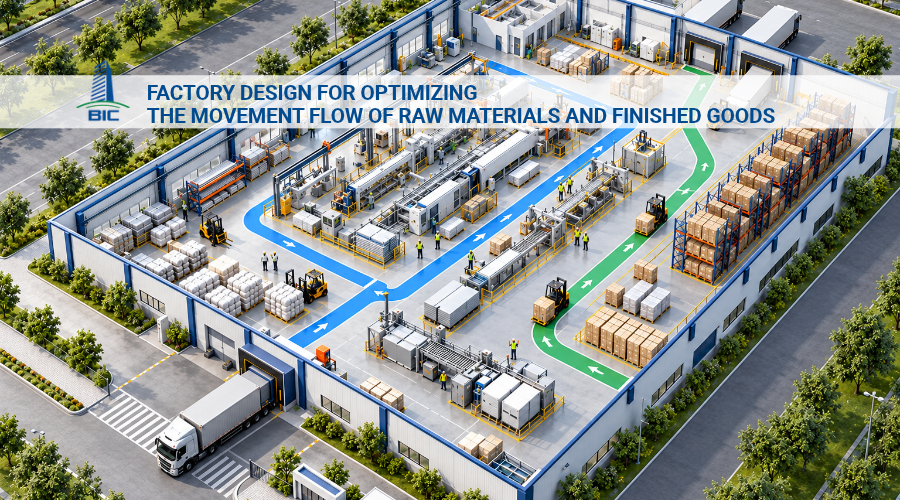
- Flow of goods and workers: The design should ensure that the flow of goods and workers does not obstruct production areas and storage spaces. Internal pathways must be wide enough for forklifts, trolleys, or machinery to move easily and quickly, minimizing wait times and reducing the risk of congestion in the factory. For workers' circulation, safe pathways with clear signage should be arranged to avoid collisions with machinery or goods. A well-designed flow not only boosts production efficiency but also ensures the safety of everyone working in the factory.
- Production areas, storage, and offices: Clear zoning between functional areas in the factory is vital to improving management and production efficiency. The production area should be located near the raw material intake area for easy handling and reduced transportation time across stages. Storage areas must be spacious enough to neatly store raw materials, finished products, and auxiliary equipment. Warehouses should be located conveniently for goods intake and output, without disrupting other activities. The office area should be separate but close enough to the production area for easy supervision and management. Proper zoning and layout will ensure smooth operations, enhance productivity, and provide flexibility for business growth.

- Topography and soil survey: Before starting the design of a production factory, conducting a topography and soil survey is an essential step to ensure the construction is built on a solid foundation. The topography and soil characteristics directly affect the factory's load-bearing capacity and the durability of the structure over time. If the construction site is in a complex topography or has weak soil, reinforcement measures or special structural choices will be necessary. Thorough surveys help avoid risks such as subsidence, cracking, or damage in the future, while also optimizing initial investment costs.
- Waste and pollution management: During production, the generation of waste such as wastewater, exhaust, and solid waste is inevitable. Therefore, designing an efficient waste treatment system is crucial to environmental protection and meeting legal standards. The wastewater treatment system must be designed to handle specific pollutants from the industry, ensuring that the discharged water meets environmental standards. The exhaust system must also comply with requirements for reducing dust and harmful gases, minimizing negative impacts on the surrounding air. Effective waste management helps businesses avoid fines and enhances their reputation by demonstrating social responsibility to the community.
- Impact on the surrounding environment: Production factories can have certain impacts on the surrounding environment, such as air pollution, noise, or negative effects on the landscape. To mitigate these impacts, the design should incorporate noise-reducing measures such as soundproof materials and placing machinery far from residential areas. The ventilation and dust extraction systems should also be optimized to minimize the spread of dust and harmful substances into the air. These measures not only protect the health of nearby residents but also reduce legal risks for the business. By doing so, businesses can build a positive image, demonstrating a commitment to environmental protection and sustainable development.

- Estimated design and construction costs: Planning a detailed cost estimate from the design phase to construction is the foundation for businesses to control finances. This stage involves calculating costs from design conceptualization, selecting contractors, purchasing materials, to completing the construction. A detailed estimate helps businesses clearly visualize the total costs involved, allowing for budget adjustments or allocations accordingly. Furthermore, accurate estimates help avoid unexpected costs due to design changes or construction delays, ensuring the project is completed on time and within budget.
- Material and labor costs: Building materials and labor account for the majority of construction costs. Choosing the right materials not only affects the quality of the project but also has long-term cost implications. Businesses should consider using durable, eco-friendly, and energy-saving materials to reduce future maintenance costs. Regarding labor, reputable contractors with competitive pricing should be selected to ensure construction progress and project quality. If labor costs are not carefully calculated, it can lead to labor shortages or extended project timelines, increasing the total cost.
- Operational and maintenance costs after completion: Once the factory is operational, ongoing operational and maintenance costs must be accounted for in advance. Designing energy-saving systems, such as using LED lights and installing efficient ventilation and air conditioning systems, will help reduce monthly operational expenses. Additionally, the factory should be designed for easy maintenance, with technical systems arranged for convenient inspection and repair. A well-maintained project not only extends its lifespan but also minimizes major costs caused by unexpected malfunctions or accidents.
- Fire protection system (PCCC): Designing a factory with a PCCC system is a mandatory requirement for any production factory. A standard fire protection system must include fire detection devices such as smoke and heat sensors, accessible fire extinguishers, and automatic sprinklers activated when a fire is detected. It is essential to ensure that the entire factory is fully equipped with fire protection devices to handle emergencies promptly. A poorly designed fire protection system increases the risk of damage to assets and human lives, leading to severe financial and reputational consequences for the business.

- Emergency exits and safety signage: Clearly marked emergency exits and safety signs are key factors in ensuring workers can safely evacuate in the event of an emergency. Emergency exits should be designed wide enough, unobstructed, and lead directly to safe areas outside. Additionally, installing clear exit signs, fire extinguisher usage instructions, and safety rules should be implemented thoroughly and made easily understandable. Especially, safety signs must have high contrast, be easily visible, and placed in prominent locations. A well-designed emergency exit and signage system enhance worker safety and reduce casualties in hazardous situations.
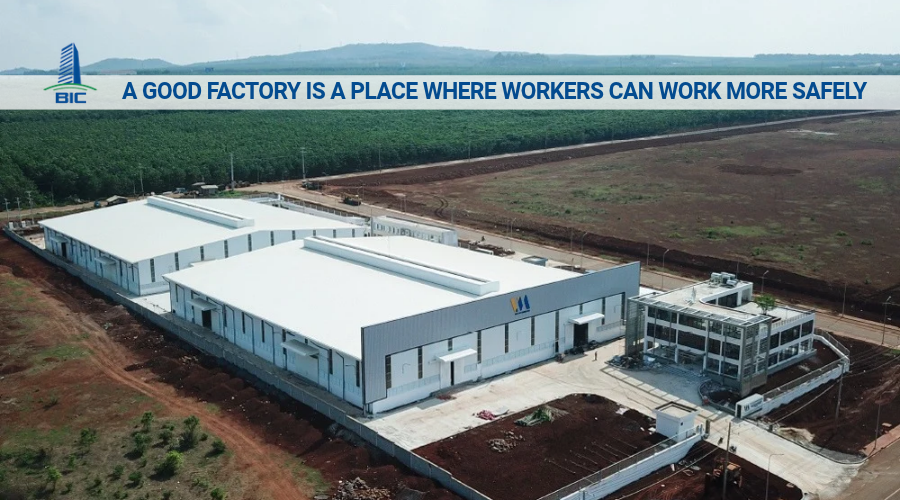
- Worker safety during production: Ensuring worker safety during production is crucial to protecting their health and lives. The factory should be designed with protective systems for machinery, such as barriers and automatic shutdown systems in case of incidents, to prevent accidents. Moreover, providing adequate personal protective equipment (PPE) like helmets, gloves, and safety glasses is mandatory to shield workers from potential hazards. Additionally, the workspace must be designed rationally and spaciously to ensure comfort and minimize collisions between workers and machinery. A safe working environment not only increases labor productivity but also helps businesses reduce costs from avoidable accidents.
The first step in the factory design process is analyzing the company's needs. This includes clearly defining production goals, operational scale, product types, employee numbers, and specific technical requirements. Businesses should also consider future expansion possibilities and factors related to legal regulations, the environment, and workplace safety. A thorough needs analysis ensures that the factory will be optimally designed to support efficient production, cost savings, and meet the company’s requirements.
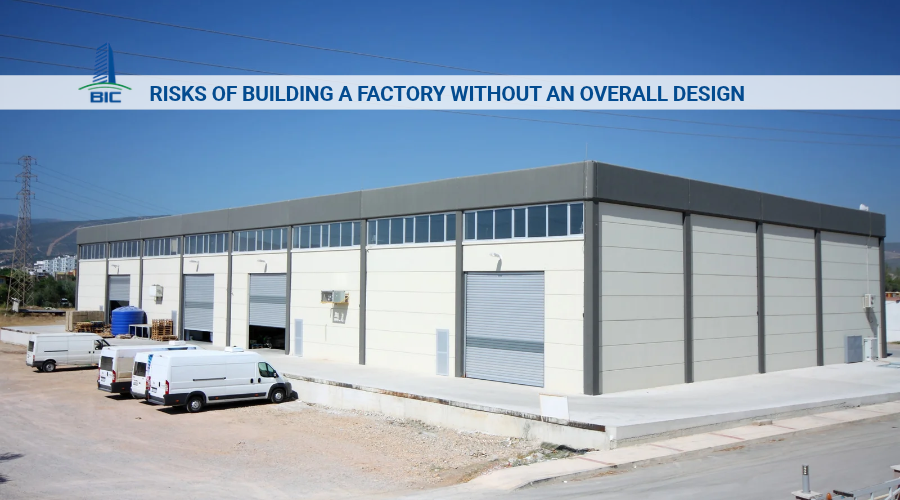
After analyzing the company’s needs, the next step is planning and developing a preliminary design. This phase includes creating floor plans, selecting the construction site, and determining basic technological, material, and technical system requirements such as electricity, water, ventilation, and waste treatment. The preliminary design provides an overview of the factory's structure and layout, from production areas to storage and support spaces like offices and employee rest areas. Detailed planning and an accurate preliminary design give businesses a clear understanding of the project, making it easier to make necessary adjustments before moving on to detailed design.

The detailed design phase is crucial for specifying all technical, structural, and material elements for the factory. All systems, including structural supports, water supply and drainage, ventilation, lighting, and safety systems (fire protection, emergency exits), must be meticulously designed to ensure functionality, safety, and cost-efficiency. Additionally, optimizing the factory design helps minimize construction costs, ensure energy efficiency, and create a safe and comfortable working environment for employees. This process may include load calculations, detailed construction cost estimates, and long-term maintenance options.
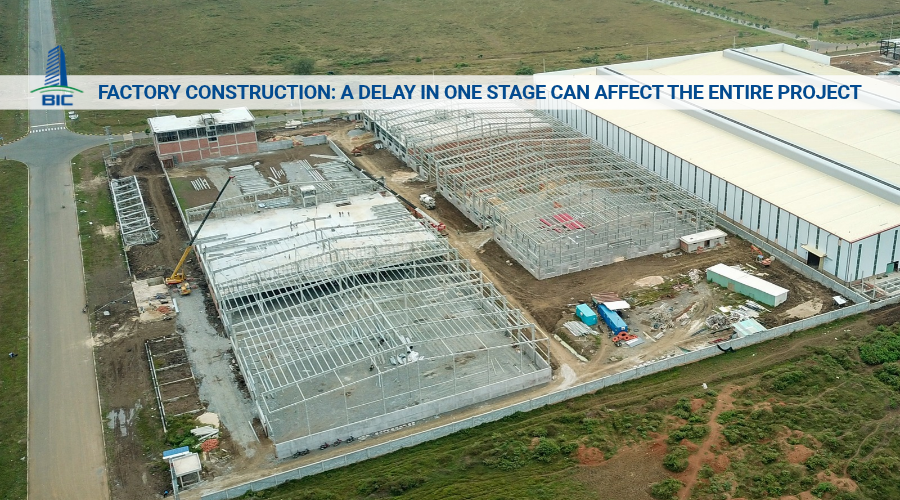
Once the design is completed and construction begins, supervision is essential to ensure the factory is built according to the approved design and timeline. The project manager or site supervisor must regularly inspect the construction process to ensure quality, safety, and compliance with the plan. Contractors must also be selected carefully to ensure quality and progress. Ongoing supervision ensures that the factory is completed to the required standards and within the planned budget.
The final step in the factory design process is testing and handover. Once construction is complete, the factory must undergo rigorous testing to ensure that all systems, from structure to electricity, water, ventilation, and fire protection, are fully functional and meet regulatory standards. After successful testing, the factory is handed over to the business for operation. Throughout the handover process, businesses should carefully review the completed factory to ensure it meets all needs and standards. If there are any issues, adjustments must be made before the final handover.
The factory design process requires careful consideration and needs analysis to ensure that the factory is designed to meet the exact production requirements of the business. These factors play a key role in optimizing the factory design and construction process, ensuring that the company has a safe, efficient, and sustainable production environment.
If you are planning to design or renovate a factory, don’t hesitate to contact BIC. We are committed to providing professional factory design solutions that guarantee quality and cost optimization for your business. Let BIC be your trusted partner in the development of your factory!