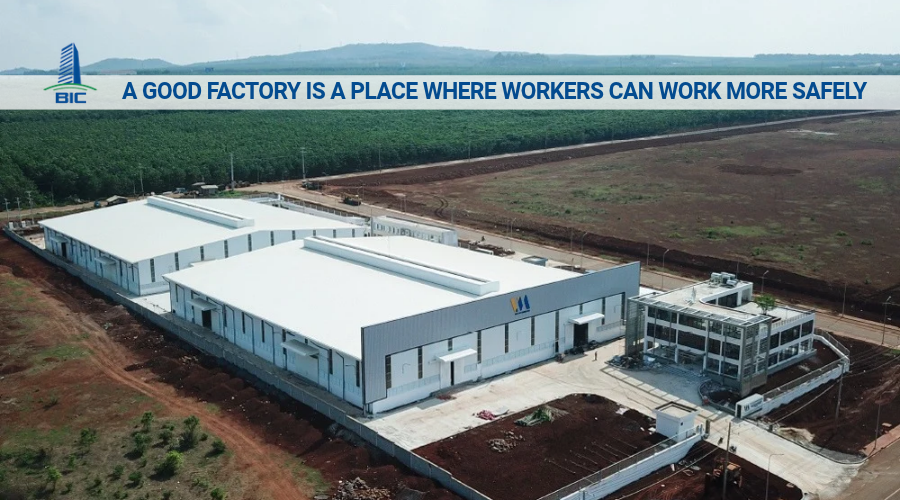
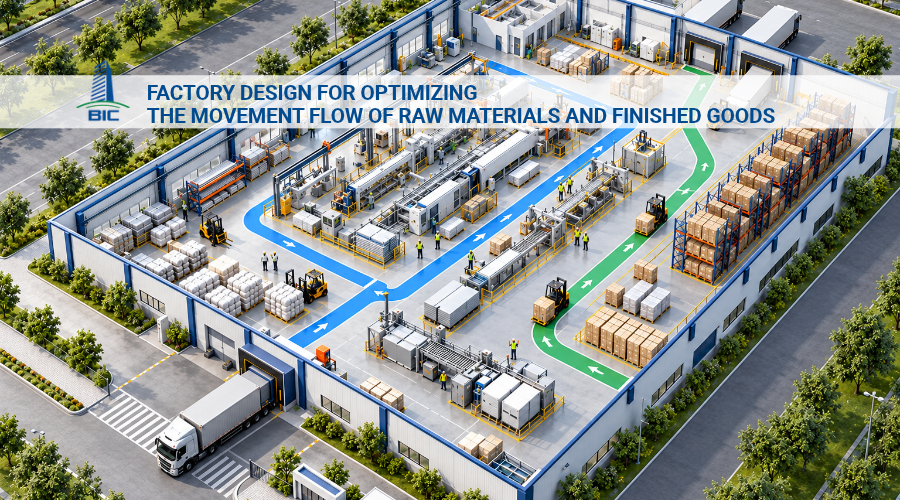
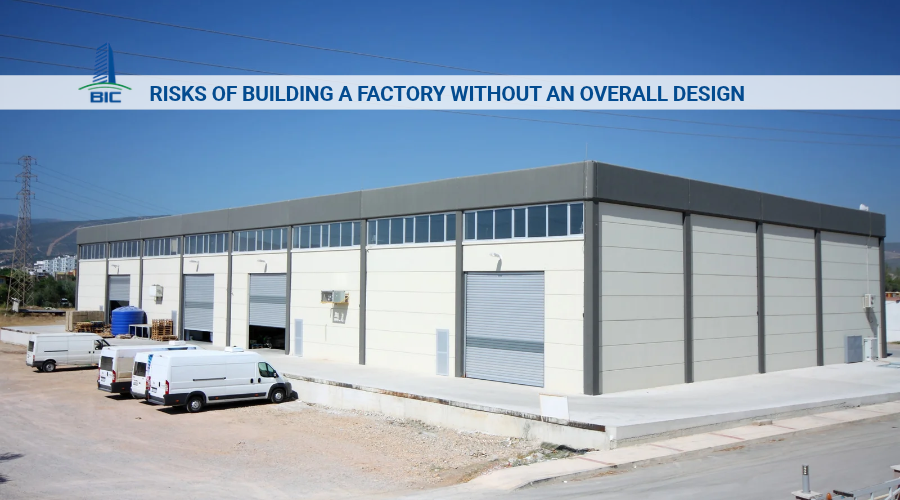
Pre-engineered buildings are becoming the most popular and preferred type of construction in today's market. This is due to the advantages and distinctive features of pre-engineered buildings compared to traditional construction methods.
Not only do pre-engineered buildings help investors save costs in constructing workshops, but they also bring a difference in terms of time and efficiency during the operation process. Let's explore more about the various types of pre-engineered buildings with BIC!
Pre-engineered buildings for civil use are becoming a popular choice in industrial zones and clusters in Vietnam, especially in projects such as supermarkets, restaurants, and high-rise buildings. Here is the structure of pre-engineered buildings:
Foundation System:
- Using a reinforced concrete foundation system to transfer loads to the ground.
- Precise anchor bolts are connected to the steel foundation system to ensure easy and accurate installation of other components.
Workshop Floor:
- Concrete is poured as a base layer with compacted sand beneath it.
- The floor surface is often polished or epoxy coated to ensure a clean, glossy surface during use.
Main Structural Frame:
- Consists of steel columns, beams, and trusses.
- Columns and trusses are designed to withstand large loads and spans of up to 100 meters.
- Connections between frame parts are typically made with gusset plates and high-strength bolts.
Skylights and Canopies:
- Skylights provide ventilation and airiness to the workshop.
- Canopies provide sun and rain protection at doorways and windows.
Purlins and Bracing System:
- Galvanized steel purlins, typically in C or Z shapes, are connected to the main frame to support the metal roof.
- The bracing system enhances the stability of the structural frame during installation and use.
Roofing and Insulation Materials:
- Roofing sheets are often combined with insulation layers to resist heat and noise.
- Using roofing sheets and glass wool layers to protect against weather impacts.
Multi-Storey Pre-Engineered Buildings:
- Implementing two-storey or three-storey pre-engineered workshops to increase usable area on the same land.
- Using composite steel-concrete floor solutions to optimize load-bearing capacity and reduce construction costs.
The features and advantages of pre-engineered buildings play a crucial role in improving efficiency and cost savings for construction projects.
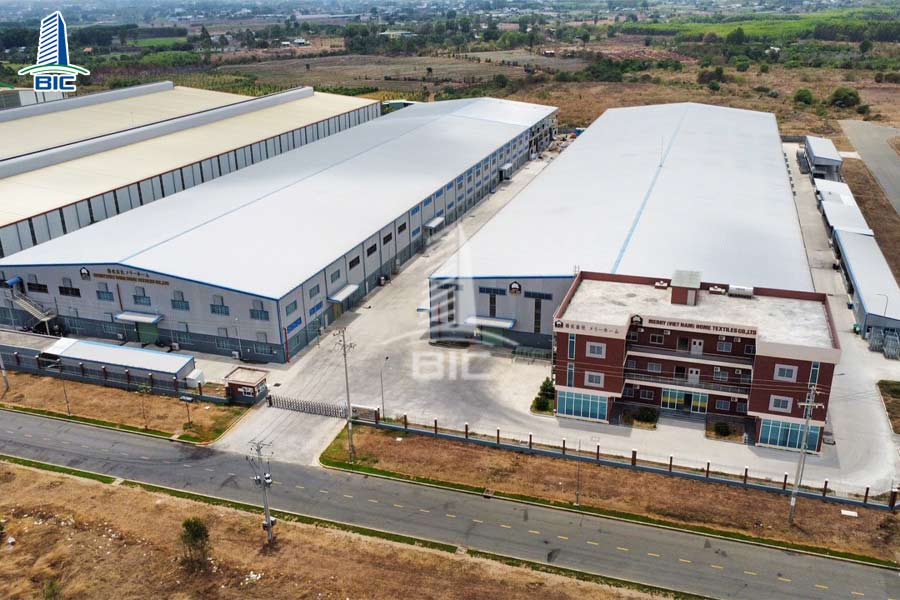
Reasons to Choose Pre-Engineered Buildings for Workshop Construction
According to construction experts, pre-engineered buildings are entirely made up of steel components. From large parts such as beams, columns, and trusses to small details like purlins and wall studs, everything is manufactured from industrial-grade steels capable of bearing strong loads.
Specifically, columns are made from round or H-shaped steel, ensuring good load-bearing capacity and minimal deformation under external pressures. I-beams have the ability to support heavy loads. Trusses are constructed from steel beams with varying cross-sections or lattice shapes. Steel purlins with U, C, or Z shapes are connected to trusses with high-strength bolts. Bracing, including roof, end, and purlin bracing made of steel, is designed to enhance connectivity and ensure the stability of pre-engineered steel frame buildings.
Thanks to this structure, pre-engineered buildings have better resistance to external impacts compared to traditional concrete workshops, with less deformation or deviation from external forces. Moreover, galvanizing steel materials enhance the strength of the structure, minimize rust, and improve waterproofing for pre-engineered workshop buildings.
Another benefit is mobility when relocation or repositioning is needed. In traditional construction methods, when relocation is necessary, businesses often have to abandon the entire workshop. However, with pre-engineered buildings, as the structure is assembled using bolts, businesses can easily dismantle and reuse components, saving costs and time.
Research has shown that pre-engineered buildings can save up to 30% of construction costs compared to steel-reinforced concrete buildings. The quick construction process helps reduce labor costs and waiting time, allowing businesses to quickly start production activities and save resources for other purposes.
Not only that, pre-engineered buildings are also suitable for expanding production scales in the future. Businesses only need to connect existing components according to the drawings, and the completion process can take place quickly within a few weeks or even days, compared to building concrete workshops, which can take many months or even years.
For businesses looking to optimize costs and save time, pre-engineered buildings are an effective and flexible solution.
With a steel structure, pre-engineered buildings can withstand external environmental factors, especially microorganisms such as mold, which are often the most dangerous. Therefore, constructing a pre-engineered steel building will provide more peace of mind about the lifespan of the structure and reduce monthly cleaning and renovation work. This means that you can maintain the quality of the building without investing too much time and effort into maintenance.
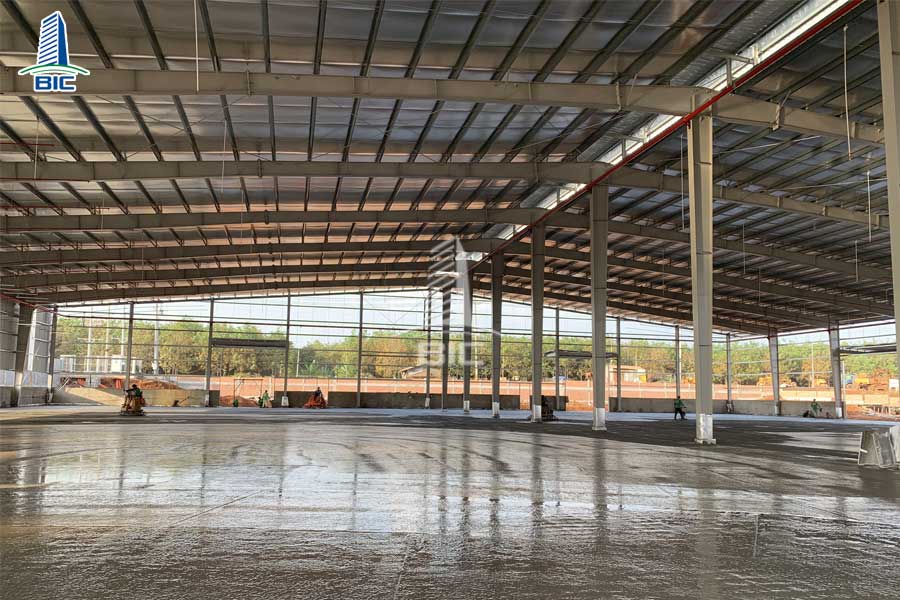
One of the outstanding advantages of pre-engineered buildings is sustainability and the ability to recycle into many other items if the workshop no longer meets its original purpose. The environmental friendliness of pre-engineered buildings is also demonstrated through their use in public projects such as sports arenas, schools, churches, hospitals, etc. A steel building takes less time to maintain, meaning the workshop will last longer and bring more economic benefits to the owner.
Especially, pre-engineered buildings provide warmth in winter and comfort in summer due to their good thermal resistance, unaffected by harsh weather conditions. With lightweight and unique structures, these workshops optimize space and save time, effort, and costs in the construction process. The waterproofing ability of this type of workshop is also very high, ensuring that you can completely trust when choosing to build pre-engineered steel workshops.
The design phase plays an undeniable role in the implementation of pre-engineered workshop projects. Ensuring absolute accuracy in dimensions, quantity of details, and technical requirements is extremely important to ensure the quality of the project. This process includes site surveys, site layouts, and proposing optimal design solutions for investors, along with preparing basic drawings for the construction of pre-engineered steel frame workshops.
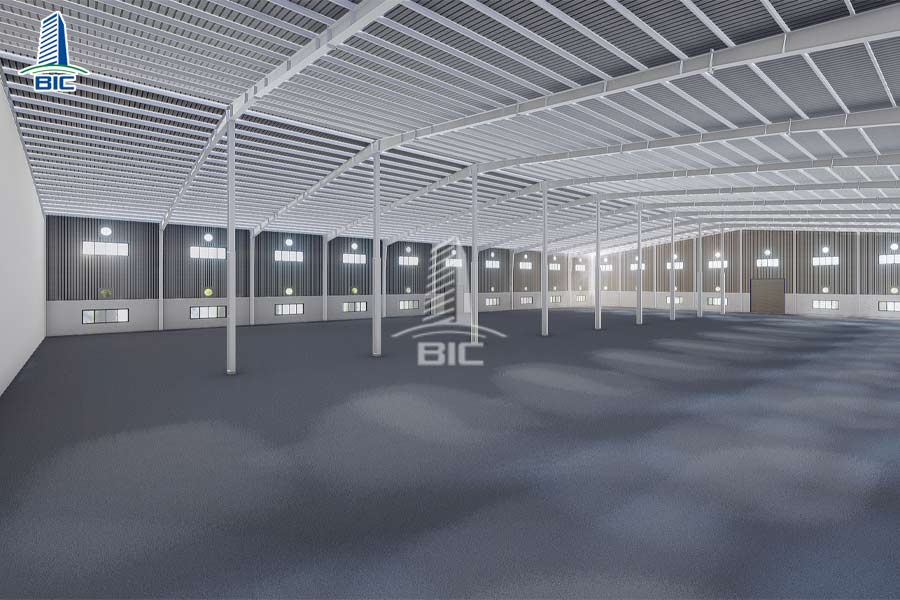
The process of manufacturing steel components at the factory requires the use of modern machinery systems and careful quality control. From receiving raw materials and supplies to the cutting, forming, welding, straightening, and finishing processes, each step must strictly adhere to quality standards.
During the construction process of pre-engineered workshops, close coordination between departments and units is indispensable. Progress supervisors ensure that all work is carried out according to the predetermined schedule and update information and reports regularly during the construction of pre-engineered steel frame workshops. Specific steps include receiving and storing materials, installing anchor bolts, erecting the main frame, installing roof and wall sheets, and finally completing the project.
We, BIC, pride ourselves on being one of the leading units in the field of designing and constructing workshops, pre-engineered buildings, committed to providing reliability and professionalism in the market. With a team of experienced engineers and architects, we have successfully designed and constructed many steel frame pre-engineered workshop projects for both large and small-scale projects.
For BIC, customer satisfaction is always a top priority, and we ensure that each project is completed with the highest quality and on schedule. Customers can confidently choose us, BIC, to implement pre-engineered steel frame workshop construction projects.