A factory is not only a production site but also the face of a business. A scientific and modern factory design will contribute to enhancing production efficiency, ensuring labor safety, and creating a good impression on customers.
However, construction design a factory is not simple at all. Many businesses face difficulties such as: which type of factory to choose, what the design process looks like, how much it will cost, etc. In this article, BIC will provide you with comprehensive knowledge about factory design, helping you confidently make the right decisions.
A professional factory design company not only ensures the quality of the construction but also brings many practical benefits to the business. Below is a detailed analysis of the benefits that investors will receive when collaborating with a professional design company:
- Rational layout: The areas within the factory are arranged scientifically, optimizing the use of space.
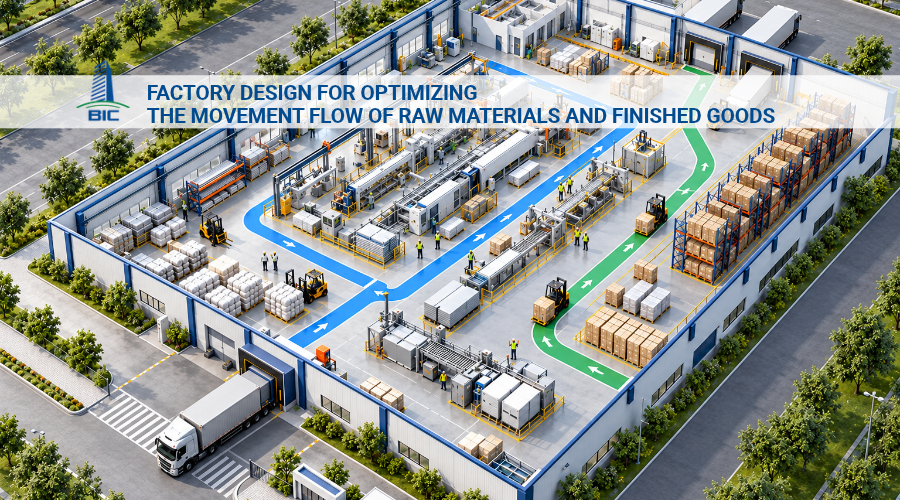
- Convenient internal traffic: The pathways between areas are designed optimally, reducing time and effort in transporting raw materials and finished products.
- Improved working environment: Utilizing ventilation solutions and natural light enhances employee comfort, thereby increasing work efficiency.
- Optimizing material usage: A professional design company will select materials that fit the budget while still ensuring the durability and quality of the construction.
- Energy savings: The design integrates energy-saving solutions such as using natural light and efficient cooling systems.
- Minimizing waste: A detailed construction plan helps avoid unnecessary errors during the construction process.
- Terrain: Solid geology, flood resistance, and favorable conditions for construction.
- Climate: Consider local weather factors to select appropriate materials and design suitable ventilation and drainage systems.
- Transportation: Proximity to main roads for convenient transportation of raw materials and products.
- Load Capacity: Foundation design must support the weight of machinery, goods, and production activities.
- Height: Suitable for machinery or production lines that require high ceiling space.
- Slope: Ensure proper drainage to prevent water accumulation that could damage the foundation.
- Initial Investment: Includes costs for design, materials, labor, and equipment.
- Operating Costs: Design that optimizes energy and materials helps reduce long-term operating expenses.
- Steel: Suitable for large factories, prefabricated structures help shorten construction time.
- Concrete: High durability, appropriate for foundations or solid constructions.
- Wood: Used in decorative items or office areas.
- Vietnamese Construction Standards (TCVN): Compliance with regulations regarding safety, quality, and the environment.
- International Standards: Exporting companies or those in international cooperation must meet standards such as ISO, ASME, or LEED standards.
The above factors are closely related and mutually influential.
- Production scale affects technical requirements and budget.
- Construction location impacts initial investment costs and materials used.
- Purpose of use determines design standards and material selection.
Considering the synchronization of these factors is fundamental to designing a factory that fully meets usage requirements, optimizes costs, and facilitates sustainable development. A professional design company will help businesses harmonize and effectively coordinate these factors.
The design of factories is a process that includes several stages carried out sequentially and carefully to ensure the quality and efficiency of the project. Below is a detailed description of each stage:
- Purpose: To assess the initial conditions as a basis for design.
- Tasks:
+ Measure the area and determine land boundaries.
+ Check the topography and geological conditions.
+ Evaluate natural factors such as wind direction, rainfall, and climate.
+ Research legal requirements and regional planning.
- Purpose: To shape a preliminary idea of the architecture and layout of the project.
- Tasks:
+ Sketch the factory floor plan.
+ Determine the design style (modern, minimalist, functional).
+ Identify functional areas: production, storage, office, restrooms.
+ Discuss and gather feedback from the investor for adjustments.
- Purpose: To concretize the idea into detailed drawings for construction implementation.
- Tasks:
+ Create detailed technical drawings (architecture, structure, electrical, plumbing, ventilation systems).
+ Calculate structure and load to ensure safety.
+ Estimate construction costs.
+ Present the final design to the investor for approval.
- Purpose: Ensure that the design complies with standards and legal regulations.
- Work content:
+ Evaluate the design at the competent authority.
+ Complete legal procedures such as construction permits.
+ Make adjustments if required by management agencies.
- Purpose: Carry out the construction of the project based on the approved design.
- Work content:
+ Prepare materials and labor.
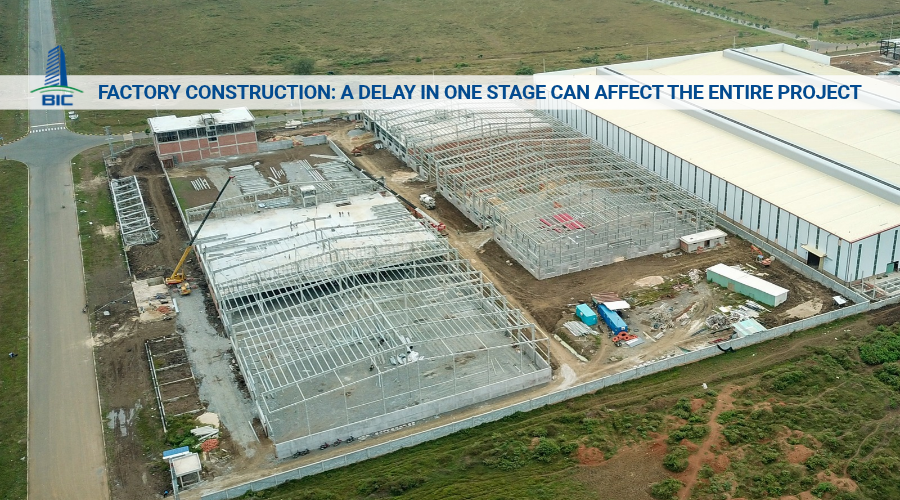
+ Execute each item according to the plan: foundation, structure, roof, interior.
+ Monitor quality and construction progress.
+ Address any arising issues (if any).
- Purpose: Ensure that the completed project meets requirements and is ready for use.
- Work content:
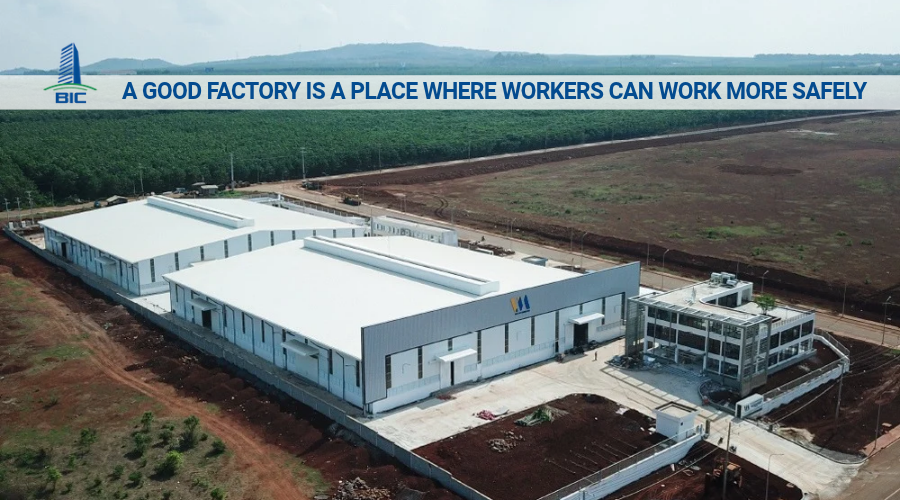
+ Inspect and accept the project based on technical standards.
+ Address any items that do not meet requirements.
+ Provide guidance on the use and maintenance of systems (electricity, water, fire protection).
+ Handover the project to the investor.
The process of designing a factory requires close coordination between stages to ensure the project meets quality, aesthetics, and usability requirements. Collaborating with professional design units will help businesses complete the project on schedule and optimize costs.
Factories come in various designs and structures, depending on their intended use, budget, and construction conditions. Below is a detailed analysis of common types of factories, including their advantages, disadvantages, and applications, along with a summary comparison table.
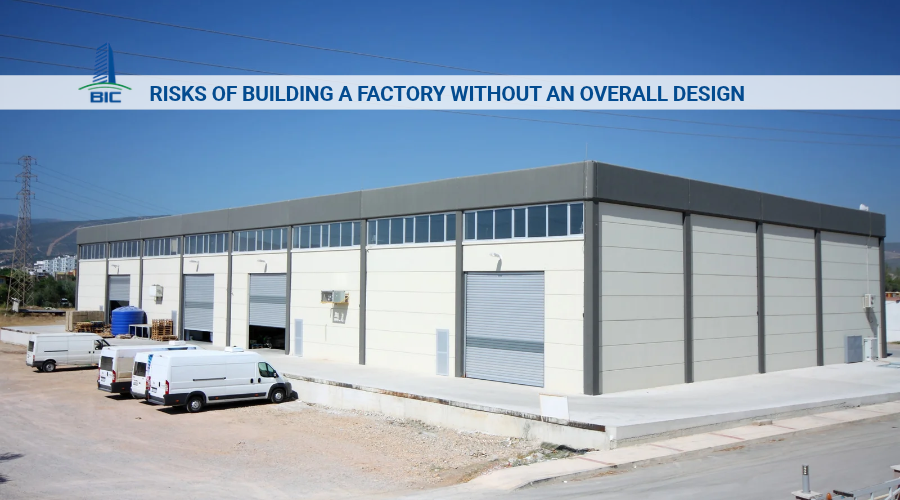
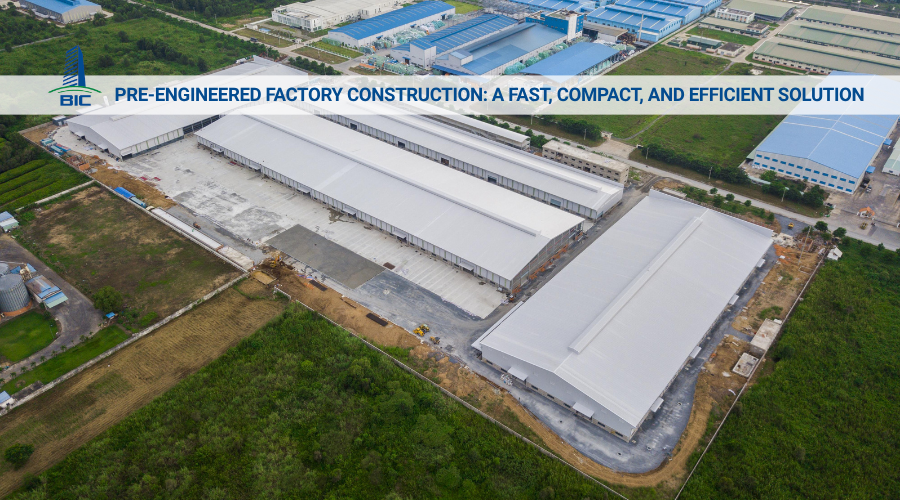
- Quick construction time: Components are pre-manufactured and assembled on-site.
- Low cost: Optimizes material and labor expenses.
- Easy to expand: Simple to modify or add structures as needed.
- Lightweight: Reduces pressure on the foundation.
- High durability: Good load-bearing capacity, suitable for heavy loads.
- Excellent soundproofing and thermal insulation: Suitable for industries with high temperature and noise requirements.
- Long lifespan: Can be used reliably for many decades.
- Combines the advantages of both types:
+ Steel structure helps reduce construction time and costs.
+ Foundations and areas subject to heavy loads are made of concrete to enhance durability.
- High flexibility: Easily designed to suit various types of production.
|
Type of Workshop |
Advantages |
Disadvantages |
Applications |
|
Pre-engineered Workshop |
Quick construction, low cost, easy to expand, lightweight |
Limited soundproofing and thermal insulation |
Warehouses, medium and small-scale manufacturing plants. |
|
Reinforced Concrete Workshop |
High durability, good soundproofing and thermal insulation, long lifespan |
High cost, long construction time |
Heavy industry, workshops requiring sustainability |
|
Combined Workshop |
Flexible, combines the advantages of both types |
Average cost, high technical requirements |
Large-scale production, needs cost optimization |
Each type of workshop has its own advantages and disadvantages, suitable for different goals and conditions of the business. Choosing the appropriate type of workshop should be based on usage needs, budget, and long-term development strategy.
Factory design requires thorough preparation, from selecting a design firm and building materials to complying with legal regulations. Below are important considerations to ensure the factory achieves optimal usability and safety in operation.
Criteria for selecting a factory design company:
- Experience: Prioritize firms with many years of experience in industrial factory design.
- Capability: A team of professional engineers and architects with high expertise.
- Reputation: Research previous projects completed and reviews from past clients.
- Comprehensive services: Providing design, construction, and assistance in obtaining building permits.
- Survey and information gathering: The design firm conducts measurements, assesses the current situation, and listens to the investor's requirements.
- Preliminary concept development: Propose design options, including layout and materials to be used.
- Finalizing detailed design: Create technical drawings, calculate structures, and estimate costs.
- Design approval: Ensure the design complies with legal regulations and is approved by the investor.
- Common types of building materials used in construction design:
- Steel: The primary material for pre-engineered factory structures, easy to work with and cost-effective.
- Concrete: Used for foundations and high-load-bearing components.
- Aluminum and glass: Suitable for office areas, providing a modern and airy feel.
- Insulation materials: Insulated panels or heat-resistant paint help reduce temperatures inside the factory.
- Urban Planning: The design of the factory must comply with the area’s planning and obtain construction permits.
- Fire Prevention and Fighting (FPFF): Meet the requirements for emergency exits, fire alarm systems, and firefighting measures.
- Environmental Protection: Design wastewater and exhaust gas treatment systems that meet regulatory standards.
- Occupational Safety: Comply with regulations regarding structural safety and the use of protective equipment.
Prepare a cost estimate
- Design costs: Include surveys, drafting plans, and obtaining construction permits.
- Construction costs: Materials, labor, and equipment.
- Initial operating costs: Electrical, water, ventilation systems, and maintenance.
Create a construction plan
- Preparation: Site leveling, material preparation, and labor arrangements.
- Construction: Execute each phase, from foundations, structural frames, roofs to interior finishing.
- Supervision: Monitor progress and quality of construction to ensure compliance with requirements.
- Acceptance: Inspect the entire project before handover.
Factory design is the first and most crucial step in the construction process, directly affecting operational efficiency, investment costs, and the company’s image. Choosing the right design unit, using appropriate materials, and complying with legal regulations not only helps optimize costs but also ensures that the project achieves high quality, safety, and sustainability over time.
If you are looking for a professional factory design solution that meets your needs, please contact BIC today for detailed and free consultation. Our team of experienced experts is ready to accompany you in realizing all your ideas!