Natural disasters are becoming increasingly complex and unpredictable, posing major challenges to industrial factory projects—especially in regions frequently affected by storms, flooding, and extreme weather. For investors, losses are not limited to structural damage but also include production disruptions, asset safety risks, and rising post-disaster recovery costs. In this context, designing factories with strong disaster resistance has become a strategic requirement rather than a supplementary option.
Disaster-resilient factory design is not merely about structural reinforcement; it is a comprehensive construction design process that includes assessing natural conditions, selecting appropriate structural solutions and materials, determining finished floor elevations, designing drainage systems, and implementing measures to protect facilities from environmental risks. When these factors are integrated from the design stage, factories can maintain stable operations, minimize damage, and shorten recovery time after disasters.
In the article below, BIC analyzes disaster-resilient factory design solutions from both technical and investment perspectives, helping investors understand the role of construction design in risk management, asset protection, and long-term operational sustainability.
In Vietnam, factories are commonly exposed to storms, tropical depressions, heavy rainfall leading to flooding, tornadoes, and extreme weather events. In certain areas, ground vibration and landslides must also be considered in construction design. These risks may occur cyclically or unexpectedly, requiring factory design to address them thoroughly from the earliest stages.
Natural disasters can damage structures, roofs, building envelopes, and technical systems of factories. Beyond physical damage, disasters disrupt production, affect delivery schedules, and damage corporate reputation. In many cases, factories may be unable to operate for extended periods due to repairs and recovery, resulting in significant economic losses.
When factories are not designed to withstand natural disasters, post-disaster recovery costs often far exceed the initial investment required for preventive measures. Losses include not only repair costs but also damaged goods, equipment losses, and interrupted revenue. These impacts can severely affect investment efficiency and long-term operational viability.
Prioritizing disaster-resilient design enables investors to proactively manage risks and protect assets from the outset. Well-designed, resilient factories not only reduce damage when disasters occur but also recover and resume operations more quickly. This is essential for ensuring safety, production stability, and sustainable long-term investment performance.

Disaster-resilient factory design is a construction design approach that accounts for environmental risks such as storms, heavy rain, flooding, ground vibration, and extreme weather. Its objective is to ensure structural stability, minimize damage, and reduce production disruptions during disasters. This is not a temporary response but a technical strategy integrated throughout planning, design, and construction stages.
Conventional factory design mainly focuses on functionality, initial investment cost, and construction schedule. Disaster-resilient design expands the scope to include long-term risk scenarios, requiring more rigorous calculations for structure, floor elevation, roof connections, drainage systems, and envelope materials. These differences enable the factory to better withstand adverse natural conditions and reduce major repair needs after commissioning.
Construction design is the most critical tool for managing disaster risks in factories. By evaluating local topography, climate, and hydrological conditions, appropriate technical solutions can be proposed to mitigate potential damage. When risks are controlled at the design stage, investors can better protect assets, personnel, and ensure stable production.
From a long-term investment perspective, disaster-resilient factory design is a preventive investment that delivers sustainable value. Initial costs for resilience solutions are typically far lower than post-disaster recovery expenses. Moreover, resilient factories have longer service life, stable utilization, and preserved asset value, enhancing overall investment efficiency.
Factory design serves as the first line of defense against natural disasters. Early-stage assessments of natural conditions, wind direction, flood levels, and soil characteristics inform decisions on building form, floor elevation, and structural solutions. Properly designed factories can reduce damage severity and remain stable under extreme weather scenarios.
Factory durability depends heavily on construction design quality. Decisions regarding load-bearing systems, roof connections, envelope materials, and drainage systems directly affect resistance to storms, heavy rain, and flooding. Well-calculated designs enable factories to perform under harsh conditions, reduce recurring damage, and extend service life.
Beyond damage prevention, factory design determines recovery speed after disasters. Solutions such as logical functional zoning, safe technical spaces, and easily repairable structures allow faster remediation. High recoverability helps factories resume operations sooner, reducing downtime and economic losses.
When disaster resilience is not considered in factory design, facilities may suffer severe damage after a single major event. Consequences include high repair costs, safety risks, prolonged production interruptions, and asset value depreciation. Retrofitting resilience measures after completion is often far more costly and less effective than integrating them from the outset.
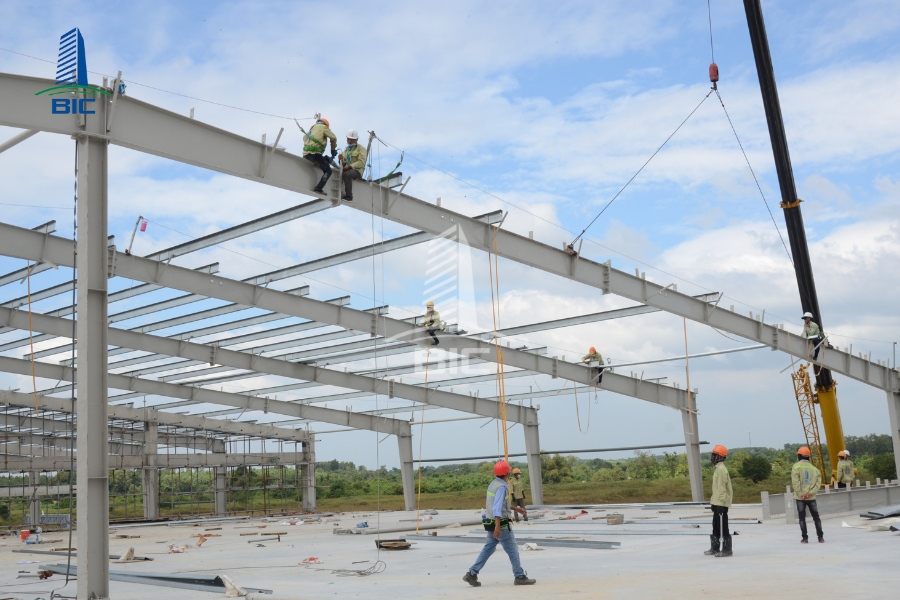
Building form and layout directly affect wind resistance. Compact forms with fewer complex corners help reduce wind pressure. Rational site layouts distribute wind loads more evenly, minimize localized vortices, and reduce damage risks at vulnerable areas such as roof edges and gable ends.
Structural design is critical to ensuring overall factory stability during storms. Frames, bracing systems, and connections must be calculated according to regional wind loads. Enhancing spatial stiffness and structural integrity helps limit deformation and collapse risks during severe storms.
Roofs experience the strongest wind forces during storms. Disaster-resilient factory design must focus on roof slope, assembly layers, and especially secure connections between roofing and structural frames. Strong anti-uplift and anti-sliding connections help prevent roof failure and reduce damage during high winds.
Selecting appropriate envelope materials is essential for factories in storm-prone regions. Materials must offer high strength, durability, and reliable connections to structural systems. Proper material selection enhances resistance to damage, extends building lifespan, and ensures operational safety.

Although earthquakes may be infrequent in many regions, vibrations can still significantly affect factories due to large spans, open spaces, and heavy machinery. Vibrations may originate from ground movement, regional seismic activity, or production processes. Without proper design considerations, these vibrations can cause cracks, misalignments, and overall instability.
In areas with seismic or vibration risks, structural design must follow earthquake-resistant principles to ensure ductility and energy dissipation. Flexible structural systems, appropriate bracing, and controlled building mass reduce seismic forces, helping factories remain stable and protect personnel and equipment.
In addition to environmental vibrations, production machinery can generate significant dynamic loads. Factory design should incorporate vibration isolation solutions such as damping layers, independent machine foundations, or vibration-absorbing floor systems to protect the main structure and maintain stable working conditions.
Overall stability control is a core objective in earthquake- and vibration-resistant factory design. This includes coordinated performance among foundations, load-bearing structures, and building envelopes, while minimizing structural weaknesses under dynamic loads. Well-designed factories maintain durability and stable operation over the long term.
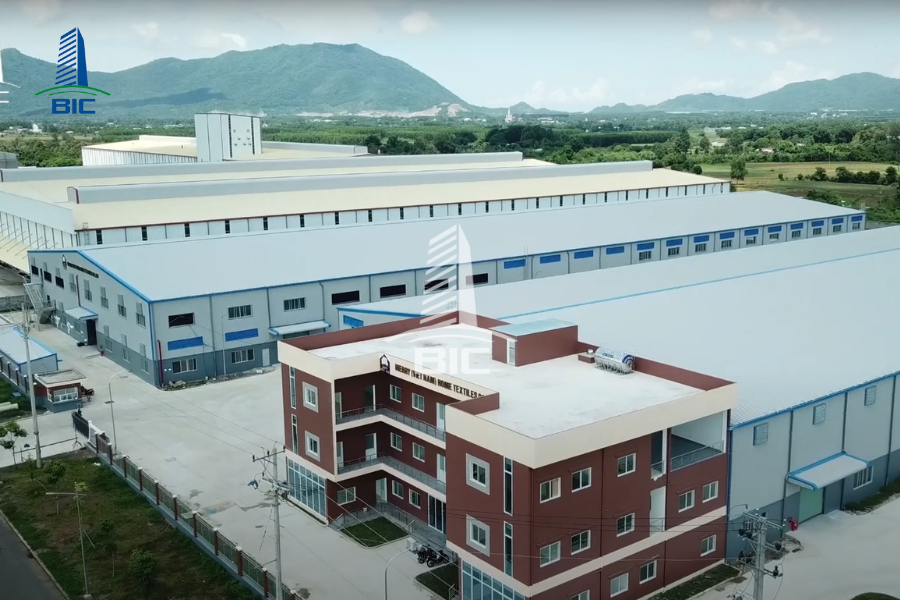
The most effective way to enhance disaster resistance is to integrate preventive measures from the initial factory design stage. Comprehensive assessment of natural risks, site conditions, and climate characteristics allows optimal design solutions. Early integration enables proactive optimization of structure, floor elevation, and technical systems while minimizing costly adjustments later.
Disaster resistance depends on coordination between architecture, structure, and technical infrastructure. Architectural design must align with load-bearing solutions and drainage systems, while structural design must address wind, seismic, and environmental loads. Integrated construction design ensures all resilience measures function as a unified system.
Balancing initial investment costs with long-term risk mitigation is critical. Disaster-resilient solutions should be selected based on cost–benefit analysis, avoiding both overinvestment and underprotection. Rational construction design optimizes costs while minimizing damage and recovery expenses over the building’s lifecycle.
Continuous involvement from design through construction ensures that disaster-resilient solutions are implemented as intended. Design teams supporting construction can promptly address technical issues, adjust details, and ensure quality. This approach helps factories achieve targeted resilience, improve investment efficiency, and ensure long-term durability.
Disaster-resilient factory design is no longer an optional enhancement but an essential requirement as natural risks continue to rise. When disasters can cause severe asset damage, production disruptions, and reduced investment efficiency, integrating resilience solutions from the construction design stage is the most proactive and sustainable approach.
Factories designed with consideration for storms, flooding, vibration, and environmental conditions can maintain structural stability, minimize damage, and shorten recovery time after incidents. The value of disaster-resilient design lies not only in reduced repair costs but also in operational stability, asset preservation, and extended building lifespan.
From a long-term investment perspective, construction design that integrates disaster resilience is a preventive investment delivering lasting benefits. Investors should view it as a fundamental pillar in factory development strategies, enabling facilities to adapt to natural uncertainties and maintain stable, efficient operations throughout the project lifecycle.