During the construction of industrial factories, metal roofing sheets are not merely a covering layer but a critical factor that directly affects operational efficiency, energy costs, and the lifespan of the building. A well-chosen factory roofing system can help reduce internal temperatures, prevent water leakage, optimize maintenance costs, and create a stable long-term production environment.
Conversely, poor selection may lead investors to face numerous issues such as excessive heat, rapid deterioration, and even negative impacts on productivity and operational safety. Therefore, choosing roofing sheets should be considered from a comprehensive construction design perspective, combining technical factors, functionality, and investment strategy. In this article, BIC provides investors with key criteria and practical insights to make the right decision.
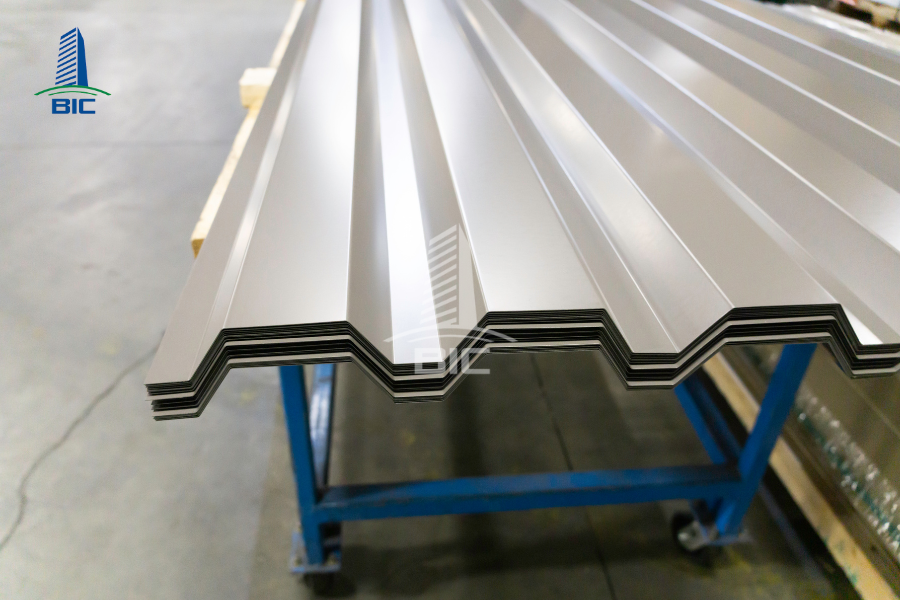
Factory roofing sheets are the upper enclosure system of a building, widely used in industrial construction due to their lightweight nature, fast installation, and cost efficiency. In construction design, roofing sheets not only protect against rain and sunlight but also play an essential role in controlling the internal production environment.
Essentially, roofing sheets are metal materials (commonly galvanized steel or aluminum-zinc coated steel) designed to protect the structure from weather impacts while stabilizing operating conditions. Within the overall structure, the roof is part of the building envelope, working together with walls and the structural frame to create a complete, safe, and efficient production space.
A complete factory roofing system typically includes multiple layers and components working together to ensure load-bearing capacity, thermal insulation, and waterproofing:
- Roofing sheets: The outermost layer, directly exposed to the environment. These can be single-layer or multi-layer depending on insulation, soundproofing, and durability requirements.
- Purlin and steel frame system: The main load-bearing structure supporting the entire roof. Purlins are arranged based on precise calculations in factory design to ensure long-term stability.
- Insulation and heat-resistant layers: Materials such as PU, PE, or glass wool (Glasswool) help reduce indoor temperature, limit heat absorption from the roof, and improve working conditions for workers.
The coordinated integration of these components determines the actual performance of the roofing system.
Depending on usage needs and production characteristics, investors can choose from various roofing types:
- Single-layer sheets: A basic, cost-effective option suitable for factories with low insulation requirements or non-temperature-sensitive environments.
- Insulated roofing sheets (PU, PE, Glasswool): Multi-layer structures providing effective thermal and acoustic insulation. Commonly used in factories requiring temperature control or noise reduction.
- Seamlock and cliplock roofing: Premium roofing types using screw-less or low-penetration connection systems, enhancing waterproofing and durability. Particularly suitable for large-scale, high-tech industrial buildings.
Roofing sheets are not just protective layers; they directly impact the overall performance of the building:
- Impact on temperature and working environment: Proper roofing selection helps reduce indoor temperature, improve labor conditions, and increase productivity.
- Influence on building lifespan: A well-designed and properly installed roofing system minimizes leakage, corrosion, and deterioration, thereby extending the factory’s lifespan.
- Integration with overall construction design: Roofing must be calculated in coordination with structural systems, drainage, ventilation, and other technical solutions. Without early integration, the roof may become a weak point causing additional costs and operational risks.
Thus, factory roofing is not merely a material choice but a strategic factor that must be carefully considered throughout the design and investment process.
Thermal performance is the top priority, especially for large-scale industrial facilities.
- PU and multi-layer insulated sheets: These reduce heat absorption from external environments and maintain more stable indoor temperatures.
- Impact on working conditions: Effective insulation can reduce indoor temperature by 3–7°C, improve labor conditions, reduce cooling system loads, and enhance productivity.
An efficient roofing system must ensure rapid water drainage and minimize leakage.
- Roof slope: Typically 10–15% to allow rainwater to drain quickly and prevent pooling.
- Gutter and drainage design: Must be integrated into construction design to match roof area and rainfall intensity, especially for large factories.
Roofing is directly exposed to environmental conditions, making durability a key factor.
- Harsh environments (coastal, chemical exposure): Require highly corrosion-resistant materials.
- Galvanized or aluminum-zinc coatings: Improve oxidation resistance and extend lifespan to 15–25 years or more depending on conditions.
For large-span factories, roofing must remain stable under extreme weather.
- Roof connections: Seamlock or cliplock systems enhance tightness and resistance to strong winds.
- Sheet thickness and structure: Proper thickness combined with well-designed purlin and steel frame systems ensures long-term safety.
Beyond technical aspects, roofing must also meet visual and functional requirements.
- Color selection: Affects both aesthetics and heat absorption.
- Industry suitability: Each production sector has different environmental requirements, so roofing must align with operational needs.
Investors should evaluate roofing based on total lifecycle cost, not just initial expenses.
- Short-term vs. long-term costs: Low-cost roofing may lead to higher maintenance and operational expenses.
- Investment efficiency: High-quality roofing reduces energy consumption, minimizes repairs, and extends building lifespan, ensuring sustainable economic value.
Choosing factory roofing requires balancing technical performance, functionality, and cost, while integrating it from the early design stage to ensure optimal project efficiency.

A basic option widely used in low-budget projects.
- Advantages: Low cost, easy installation.
- Disadvantages: Poor thermal and acoustic insulation, high heat absorption, and noise during heavy rain.
A preferred solution in modern factory design.
- Thermal and acoustic performance: Multi-layer structure effectively reduces heat transfer and noise.
- Applications: Suitable for industries requiring temperature control such as food processing, electronics, and precision engineering.
A premium roofing solution with non-penetrative connections.
- Superior waterproofing: Eliminates leakage risks caused by screw holes.
- Applications: Ideal for large industrial buildings requiring high durability and long-term waterproof performance.
An advanced system with concealed connections.
- High durability: Strong structural connections improve resistance to deformation under harsh conditions.
- Fast installation: Efficient assembly method shortens construction time.
|
Type |
Advantages |
Disadvantages |
Suitable for |
|
Single-layer |
Low cost, easy installation |
Poor insulation, hot |
Simple, low-budget factories |
|
Insulated |
Good thermal & acoustic performance |
Higher cost |
Temperature-controlled production |
|
Seamlock |
Excellent waterproofing, durable |
High cost |
Large, high-tech factories |
|
Cliplock |
Durable, fast installation |
Medium–high cost |
Medium to large factories |
Each roofing type has its own pros and cons. Selection should be based on production requirements, budget, and investment strategy, while being integrated into the overall construction design.
Roofing selection must align with the building’s geometry and structure.
- Span and roof slope: Large-span buildings often require seamlock or cliplock systems for stability and waterproofing.
- Architectural form: Roof shape (gable, mono-pitch, etc.) determines material type and installation method.
A well-planned construction design helps optimize material usage.
- Reduced waste: Accurate calculations minimize material loss.
- Improved performance: Proper design enhances insulation, waterproofing, and durability.
Roofing systems are integrated with the main structure.
- Purlins and steel frame: Must be designed in sync with roofing type.
- Connections: Screws, clips, or seamlock systems must ensure tightness and wind resistance.
- Leakage and overheating
- High maintenance costs
- Operational disruptions
A properly designed roofing system is the result of a comprehensive factory design process.

- Focusing only on price: Leads to poor quality and higher long-term costs.
- Ignoring environmental conditions: Causes corrosion, deformation, and reduced performance.
- Lack of integration with design: Results in structural incompatibility and additional costs.
- Overlooking ventilation and insulation: Leads to excessive indoor heat.
- Improper installation: Causes leakage, water pooling, and wind damage.
Avoiding these mistakes helps optimize costs and ensure long-term operational efficiency.

- Early-stage roofing design: Roofing must be integrated into the overall construction design from the beginning, ensuring coordination with architecture, structure, and MEP systems.
- Material selection based on function: Choose roofing materials according to industry requirements to maximize operational efficiency and reduce long-term costs.
- Optimized drainage and waterproofing: Proper roof slope (10–15%), gutters, and drainage systems are essential to prevent leakage.
- Integration of ventilation and insulation: Skylights and roof ventilators improve airflow and insulation layers reduce heat and energy consumption
- Coordination between design and construction: Clear design documentation and proper execution minimize errors, control costs, and ensure project quality.
Choosing factory roofing sheets is not merely a material decision but a crucial part of a long-term construction and investment strategy. A properly designed, well-selected, and correctly installed roofing system helps optimize costs, improve operational efficiency, and extend the building’s lifespan.
On the other hand, rushed or poorly coordinated decisions can lead to risks such as leakage, overheating, and high repair costs. Therefore, to ensure sustainable performance, investors must approach factory roofing from a comprehensive perspective—integrating factory design, material selection, and professional construction solutions.