In an industrial factory project, drawings are not only documents for construction implementation but also the foundation for controlling the entire project—from functionality, structure, and technical systems to progress and investment costs. In reality, many investors often only care about the overall site plan or the appearance of the building, but do not clearly understand what a full factory construction design dossier includes, what each part serves, and how it affects the actual implementation process.
This is very important because if the structure of the dossier is not understood from the beginning, investors will easily become passive when working with consultants, find it difficult to control design quality, and easily encounter adjustments during the construction design or actual construction phases. Meanwhile, a methodical dossier not only helps the project be implemented with the right techniques but also helps optimize operations, limit risks, and protect long-term investment efficiency.
In the article below, BIC will help investors clearly understand what factory construction design drawings usually include, the role of each dossier set, and the important contents that need attention before putting the project into implementation.
In an industrial factory project, construction design drawings are a set of documents representing all solutions to form the project in reality. This dossier not only includes the architectural part but also clearly shows the structure, technical systems, related infrastructure, and necessary contents to implement the project synchronously. In other words, this is the basis for converting the investor's investment needs into a construction plan that can be implemented in the field.
For factory projects, design drawings are also the foundation for performing many important steps such as applying for construction permits, making cost estimates, organizing construction, and final acceptance of the project after completion. If the dossier lacks logic or synchronization, the entire implementation process can be affected, from incurred costs to delayed progress and difficulty in quality control.
For the investor, construction design drawings are not merely technical documents from the consultant, but a tool to control the entire project. First of all, the dossier helps control the functional use of the factory, ensuring the project is arranged according to the needs of production, storage, operation, and future expansion.
Besides, the drawings also directly affect the ability to control investment costs. When the dossier is clear and complete, the quantity take-off, estimation, and construction organization will be more accurate, thereby limiting unplanned expenses. At the same time, this is also the basis for controlling progress, because the more synchronized the dossier, the more favorable the implementation between disciplines. More importantly, the future quality of the project depends heavily on the quality of the initial dossier. A good drawing will help the project be constructed correctly, operate stably, and have fewer risks in the long term.
Compared to civil works, factory design drawings have a higher level of complexity because they directly serve production activities. If civil works mainly revolve around living or residential needs, factories are associated with machinery, technological lines, operational loads, internal traffic, loading areas, technical systems, and specialized safety requirements.
In addition, factory dossiers must simultaneously solve many problems that common civil works rarely encounter, such as floor loads for production, organization of goods and human flows, MEP systems serving machinery, fire fighting and prevention (FFP) solutions, industrial ventilation, and the ability to expand capacity in the future. Therefore, a construction design dossier for a factory always requires a more holistic, practical, and operationally focused mindset compared to the dossiers of common civil works.
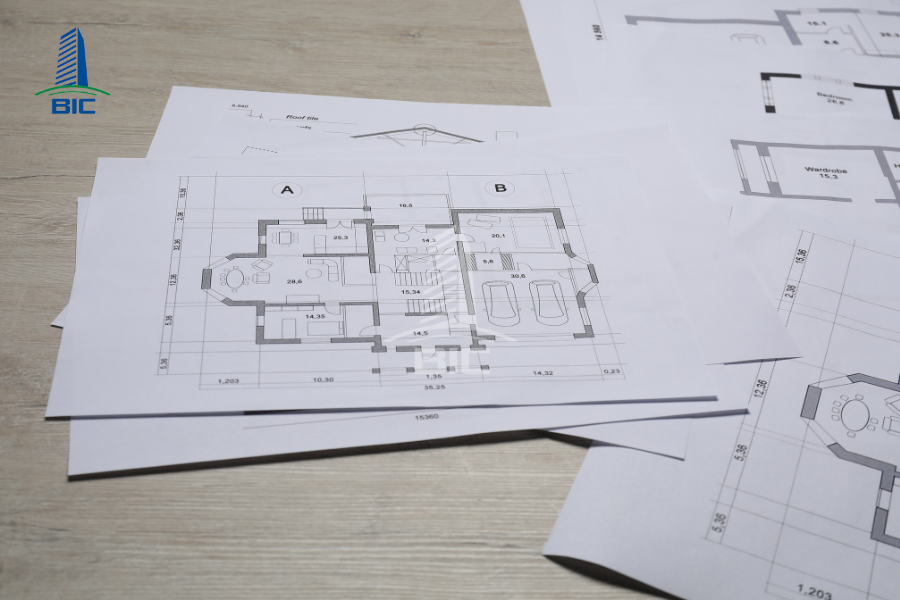
When preparing construction design dossiers for factories, investors do not necessarily need to go as deep as the consultant, but need to grasp the basic legal framework of construction investment activities. This is the basis for understanding why the project must go through steps such as dossier preparation, appraisal, verification, licensing, and design quality control before actual implementation. The current legal system is being further specified by guiding decrees and newer construction activity management documents.
For investors, Decree 15/2021/NĐ-CP is one of the most important documents because it specifies details on some contents of construction investment project management. In practice, this is a very important basis for understanding which design steps the project will go through, what the dossier at each stage is used for, when appraisal or verification is needed, and how to organize the dossier according to the correct project management process. For industrial factory projects, grasping the logic of this decree will help investors work with consultants more proactively, instead of just receiving drawings without understanding which step of the project the dossier is in.
In parallel with Decree 15, Decree 175/2024/NĐ-CP is currently a very noteworthy document because it stipulates details on a number of articles and measures to implement the Construction Law on the management of construction activities, effective from December 30, 2024. For investors, this decree directly affects the perspective on managing design activities, construction, dossier control, and organizing project implementation according to current legal practices. In other words, this is an important legal foundation to understand that a factory design dossier not only needs to be technically correct but also needs to follow the construction management logic currently being applied.
One content that investors often overlook is project classification, while this is a factor that directly affects the application of regulations, standards, and the scope of technical requirements of the dossier. In the professional documents of the Ministry of Construction, QCVN 03:2022/BXD is stated as the National Technical Regulation on the classification of projects serving construction design. For factory projects, understanding which group and grade the project belongs to will help investors understand why consultants apply different technical criteria, dossier scales, or verification requirements.
In addition to project classification, factory construction design dossiers are also greatly affected by specialized regulations, especially QCVN 06:2022/BXD on fire safety for buildings and projects, issued with Circular 06/2022/TT-BXD and effective from January 16, 2023. After that, this regulation continued to have Amendment 1:2023 according to Circular 09/2023/TT-BXD. For investors, this is very important because fire fighting and prevention, escape routes, fire separation, firefighting traffic, and many architectural – MEP contents cannot be separated from the factory dossier. This is why a good dossier must always be developed on the basis of many regulations at the same time, not just a set of floor plan drawings.
Investors can completely hire a consultant to implement the dossier, but should not leave the entire legal part and dossier structure to the designer. The reason is that current decrees such as 15/2021/NĐ-CP and 175/2024/NĐ-CP are directly linked to the way dossiers are organized, managed, and implemented in construction projects; if this framework is not understood, it will be very difficult for investors to control the scope of work, difficult to evaluate what the dossier is missing, and easy to become passive when changes occur during the construction design or construction phase. Understanding the legal framework at a sufficient level will help investors work more effectively with consultants, control the project better, and limit many risks regarding cost, progress, and dossier quality.
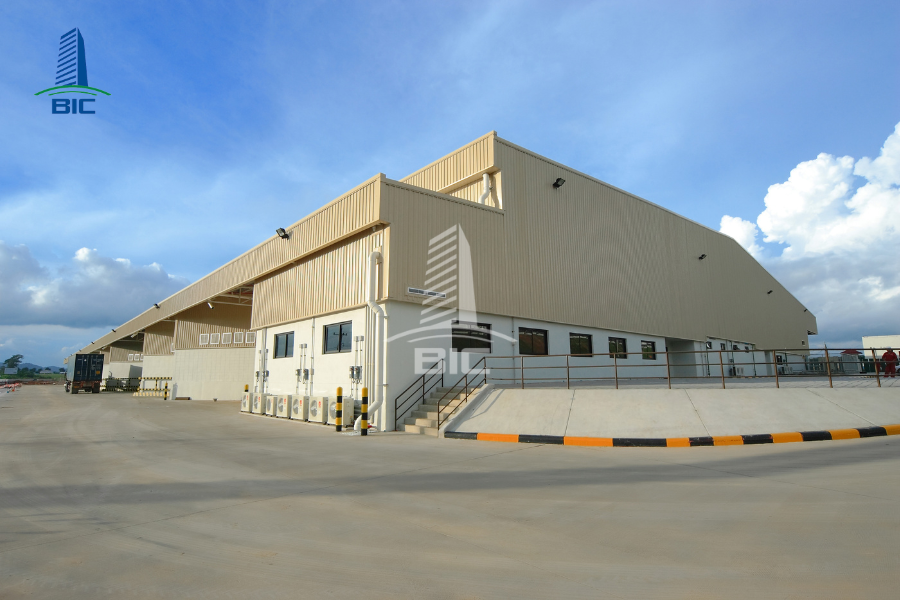
In a factory construction design project, the architectural dossier is the part showing the organization of space and functional use of the project. This is the group of drawings that helps the investor clearly see the overall site plan, production area, warehouse, office, auxiliary area, internal traffic, building height, elevations, sections, and basic architectural details. For industrial factories, architecture is not only to be "beautiful" but also to serve operation, safety, and future expansion capability, so it is always a core part of the dossier. The preparation and management of design dossiers in construction projects are currently placed within the legal framework of Decree 15/2021/NĐ-CP and Decree 175/2024/NĐ-CP.
If the architectural dossier answers the question of how the project is organized, then the structural dossier answers how the project will stand firm and work. This part usually includes drawings of foundations, columns, beams, main frames, floors, mezzanines, bracing systems, purlins, steel connections, bolts, gusset plates, and other load-bearing details. For investors, this is the group of dossiers that directly affects the durability, operational load, and total investment of the factory. The classification of projects to apply appropriate design requirements is currently linked to QCVN 03:2022/BXD, which is the regulation on project classification serving construction design.
In a factory, the MEP dossier is an inseparable part of architecture and structure. This dossier usually includes power electricity, lighting, water supply and drainage, ventilation, cooling, compressed air, technical gas, and systems directly serving production operations. For many industrial factories, the effectiveness of using the project depends heavily on the quality of the MEP dossier, as this is the part that decides the ability to provide power for machinery, drainage, ventilation, and long-term operating costs. In project management practice, MEP is not a "later added drawing" part but a main component of the factory design dossier.
A complete factory construction design dossier must always have the FFP part integrated from the beginning, not separated from the overall project. This dossier is usually related to escape plans, fire compartments, fire separation, fire alarm systems, fire fighting, fire water supply, and firefighting traffic. In terms of regulations, this part is directly affected by QCVN 06:2022/BXD on fire safety for buildings and projects; in terms of law, it is also linked to Decree 105/2025/NĐ-CP detailing the implementation of the Law on Fire Fighting, Prevention, and Rescue. For investors, this is the group of dossiers that greatly affects the site plan, structure, MEP, legality, and project implementation progress.
Many investors only focus on the main factory block, but in reality, a good dossier must also include the technical infrastructure part outside the building. This group usually shows internal roads, yards, site leveling elevations, surface water drainage, loading areas, outdoor power supply, outdoor water supply, rainwater and wastewater collection. For industrial factories, this is the part that directly affects internal logistics, drainage, truck traffic, and the actual exploitation efficiency of the entire project. The current construction regulation system of the Ministry of Construction shows that industrial project design cannot be separated from regulations on planning, technical infrastructure, project classification, and fire safety.
In addition to the drawings, the dossier also needs to have a design description and technical instructions. The description helps explain the design basis, applied standards, the logic of choosing solutions, and key technical assumptions. Technical instructions clarify material requirements, quality, construction methods, acceptance requirements, and project quality control criteria. For investors, this is a very important part because the drawings tell "what the project looks like," while the description and technical instructions tell "why it is done that way" and "how to construct and accept it." In construction activity management practice, this is the part that helps reduce arguments between design and construction, while limiting incurred issues during implementation.
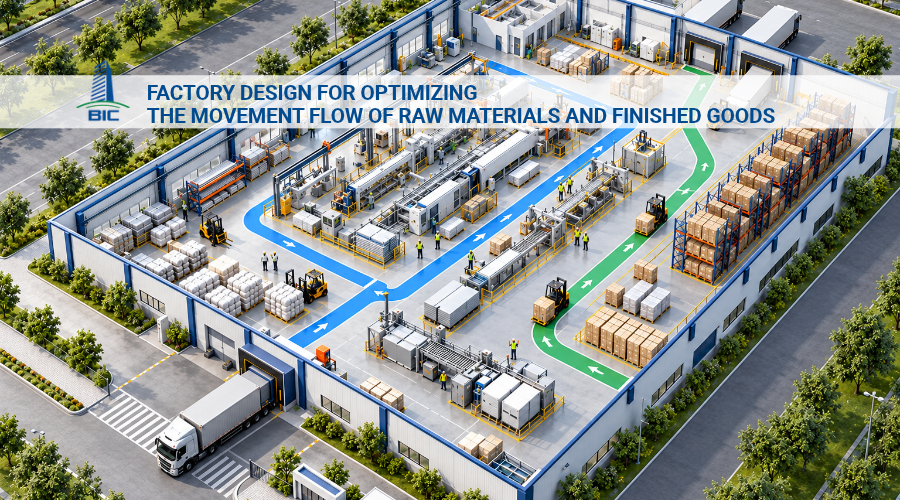
In a factory construction design dossier, the general site plan drawing is one of the most important parts because it shows how the entire project is placed on the land plot. Here, investors can clearly see the position of the factory block, office area, warehouse, yards, internal roads, loading area, setbacks, access direction, and traffic organization in the entire project. For industrial factories, the general site plan is not only about arranging shapes but also the foundation for operation, logistics, safety, and future expansion capability.
From the construction management perspective, the general site plan is also directly related to planning, project classification, and outdoor technical requirements. Therefore, this is the part that investors need to review very carefully from the beginning, because if the layout is wrong, fixing it later often leads to line changes in many other disciplines such as architecture, infrastructure, MEP, and FFP.
If the general site plan answers where the project is on the land plot, then the functional floor plan drawing answers how the project will be used inside. This is the part that clearly shows the production area, warehouse, office, auxiliary area, technical area, toilet area, internal traffic, and other spaces serving operation.
For investors, this is a group of drawings with great practical value because it directly reflects the production and operational needs of the business. In factory design, functionality must come before form. A beautiful floor plan that is not suitable for the operational flow, not convenient for loading goods, or does not support the production line is still a weak solution. Therefore, the functional floor plan is always the part that needs to be reviewed most carefully in the architectural dossier.
Elevations and sections are a group of drawings that help investors better visualize the project's shape, height, spatial proportions, and the way the architecture is organized vertically. For factories, this part is particularly important because it relates to roof elevation, clear height, space for installing machinery, ventilation, lighting, and actual operational capability.
Unlike civil works, the sections of an industrial factory are not just for looking at the form but also for checking the rationality of the production space. This is where investors can clearly see if the usage height is sufficient for the production line, if the roof is suitable for ventilation and heat dissipation, and if the project is being designed correctly for its actual purpose of use.
In addition to the general site plan, functional floor plan, elevations, and sections, the architectural dossier also includes basic details such as doors, walls, roofs, partitions, finishing layers, adjacent areas, and other specific treatment details. These details help transfer architectural ideas from a general level to a level that can be implemented in reality.
For investors, the architectural details part may not be the first place to look, but it is the place where large differences in project quality can easily arise if done poorly. This is the part that affects durability, aesthetics, heat resistance, waterproofing, and the long-term usage experience of the factory. A good dossier does not just stop at a beautiful floor plan, but must be clear in the details so that construction is not ambiguous or leads to different interpretations on the construction site.
Looking from an investment perspective, the architectural dossier is the tool that helps investors control the functional use and overall image of the project. This is the part that most clearly reflects whether the factory is truly suitable for the production, warehousing, operation, and expansion activities of the business.
If the architectural dossier is done correctly from the beginning, investors will find it easier to control the next steps such as structure, MEP, FFP, and construction. Conversely, if the architectural functionality is not correct, every subsequent adjustment will be much more expensive. Therefore, in the entire construction design process, the architectural dossier is always the foundation to keep the project on the right track from the start.
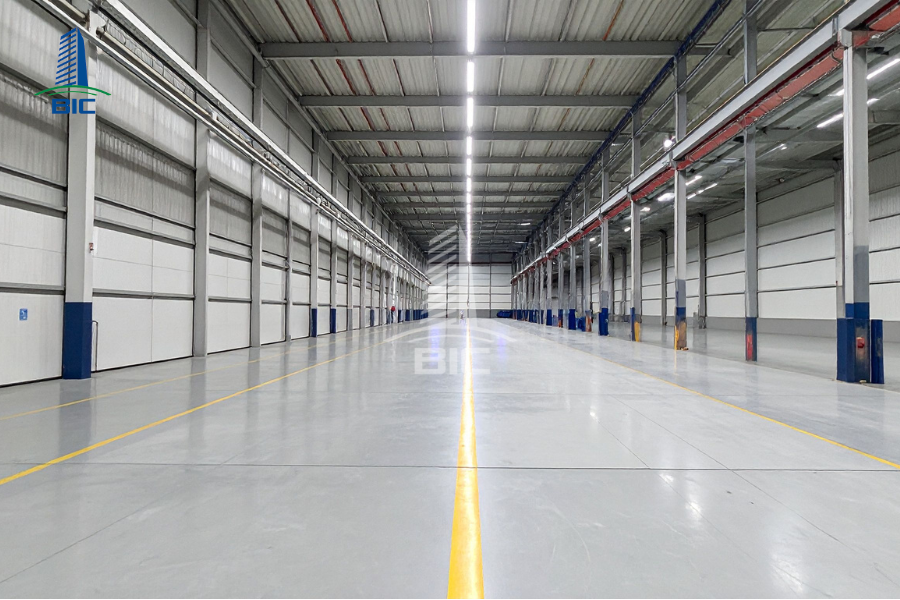
The foundation drawing is the fundamental part of the structural dossier, representing the first load-bearing solution of the project. Depending on geological conditions, operational load, and project scale, the foundation solution can be isolated foundation, strip foundation, raft foundation, or pile foundation. This is a particularly important group of drawings because it affects the long-term stability of the industrial factory while accounting for a significant proportion of costs in the total investment.
For investors, the foundation dossier not only helps understand how the project will be placed on the ground but is also the basis for controlling the risk of subsidence, cracking, and major incurred issues during the construction phase. If the foundation part is calculated inappropriately from the beginning, fixing it later is often very difficult and very expensive.
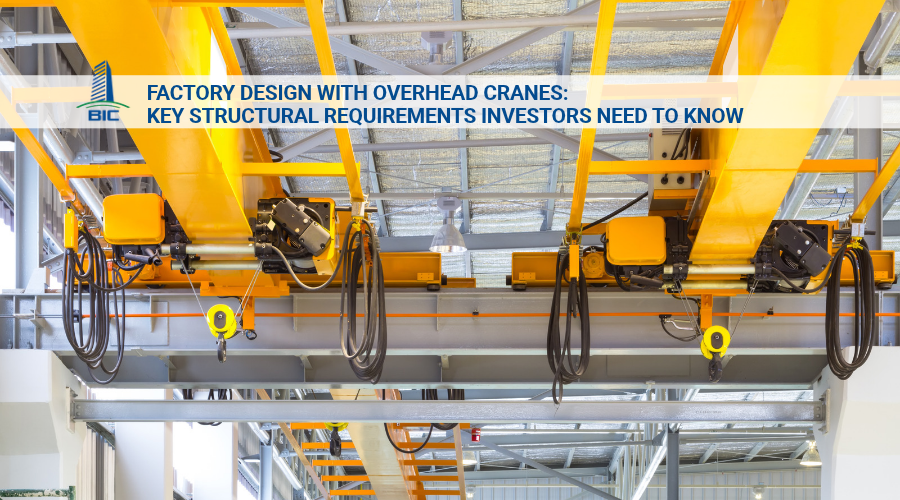
This is the group of drawings showing the main load-bearing system of the project, including columns, beams, and the entire structural frame. Depending on the construction design solution, the factory can use a steel frame, reinforced concrete, or a combination of both. For many current projects, the steel frame is a popular choice as it is suitable for large spans, fast construction, and convenient for later expansion.
For investors, this part of the drawing has great significance because it directly decides the load-bearing capacity, durability, usage height, span length, and flexibility of the project. It can be said that if architecture decides how the project is organized, then structure decides whether the project can operate safely and sustainably.
For factories with mezzanines, office floors, technical floors, or operation floors serving the production line, the structural dossier will show this part separately. The content usually includes floor structure, thickness, design load, floor support solutions, and connection details with the main frame system.
This is the part that investors need to pay special attention to if the project needs to use floors for offices in the shop floor, auxiliary warehouses, or equipment arrangement. Just an incorrect load assessment or unsuitable functionality can cause inconvenience in use or increase the cost of reinforcement later.
In addition to the main columns and beams, the structural dossier also includes bracing systems, purlins, and auxiliary connections that help the entire project work stably as a unified system. The bracing system helps increase spatial stiffness, limit deformation, and support the project to withstand lateral impacts such as wind or vibration during use. Purlins are intermediate components supporting the roof and walls, while connecting with the main frame system.
Although these items receive less attention from investors than the main frame, in reality, they play a very important role in the overall stability of the factory design. If these details are not calculated synchronously, the project may have reduced working capacity, affecting construction quality and exploitation lifespan.
The structural detail part is where the level of completion of the dossier is most clearly shown. This is the group of drawings specifically describing each steel component, bolt position, gusset plate, joint, connection between structural components, and necessary parameters for fabrication and assembly in the field.
For investors, this is a very important part although it is often not read carefully. The clearer the detail part of a dossier, the more favorable the process of fabrication, assembly, and quality control at the construction site. Conversely, if the details are not clear, the project can easily lead to different understandings between design and construction, leading to errors, delayed progress, or cost overruns.
In the entire construction design dossier, the structural dossier is the part that most directly affects the cost and durability of the project. The structure decides the volume of steel, concrete, foundation, construction solutions, and even the potential for future expansion. Just by changing one structural solution, the total investment of the project can differ significantly.
More importantly, this is the part that decides the load-bearing quality and lifespan of the factory. For investors, understanding the logic of the structural dossier will help control the project better, correctly assess the value of the design solution, and avoid becoming passive when working with consultants or construction contractors.
In the factory construction design dossier, the power electricity and lighting part is the group of drawings showing the entire power supply solution for the project. The content usually includes the incoming power source, main distribution board, distribution boards, cable trays, cable routes, power supply for machinery and equipment, and lighting systems serving production, offices, and auxiliary areas.
For investors, this is the part that directly affects the operational capability of the industrial factory. If the electrical dossier is designed correctly, the project will have the ability to provide a stable power source, suitable for usage capacity, and convenient for later expansion of production lines. Conversely, if the calculation is insufficient or the layout is unreasonable, the factory may encounter overload, lack of power supply points, or incur very large renovation costs after going into operation.
The water supply and drainage dossier shows the entire solution for domestic water supply, production water, rainwater drainage, and wastewater drainage in the project. For factories, this is not just a simple piping drawing but also relates to the way operation, cleaning, maintenance, and water treatment are organized throughout the usage process.
Depending on the type of production, this part may include technical water, cooling water, equipment cleaning water, or a separate wastewater collection system. For investors, the water supply and drainage dossier plays a very important role because it directly affects operational efficiency, project hygiene, and the ability to meet environmental requirements of the project.
For many industrial factories, especially projects with high labor density or large heat generation, the ventilation and cooling dossier is an indispensable part of MEP. The content usually shows the positions of industrial fans, air intake louvers, exhaust ports, cooling pad systems, air conditioning systems, or solutions to support microclimate control inside the factory.
This is the part that investors should care about carefully, because it directly affects working conditions, production efficiency, and long-term operating costs. A good ventilation solution not only makes the factory cooler but also helps reduce heat accumulation, improve machinery durability, and improve the working environment for workers.
For production industries that use compressed air or specialized technical gases, the MEP dossier will have this extra part. The content usually includes equipment placement, piping routes, gas supply points, and details serving system operation and maintenance.
This is a part that not every factory has, but when it appears, it is very important because it is directly related to the production line. If the compressed air and technical gas dossier is not calculated correctly from the beginning, the project will easily encounter inconvenience in operation, difficulty in expansion, and many adjustments when installing actual machinery.
If architecture decides how the project is organized and structure decides how the project stands firm, then MEP decides whether the factory operates effectively. This is the part directly associated with electricity, water, ventilation, cooling, and technical systems serving production every day.
For investors, the MEP dossier has great significance because it directly affects exploitation efficiency, operating costs, and the future adaptability of the project. A methodical MEP dossier will help the factory operate stably, more economically, and with fewer incurred issues throughout its life cycle.
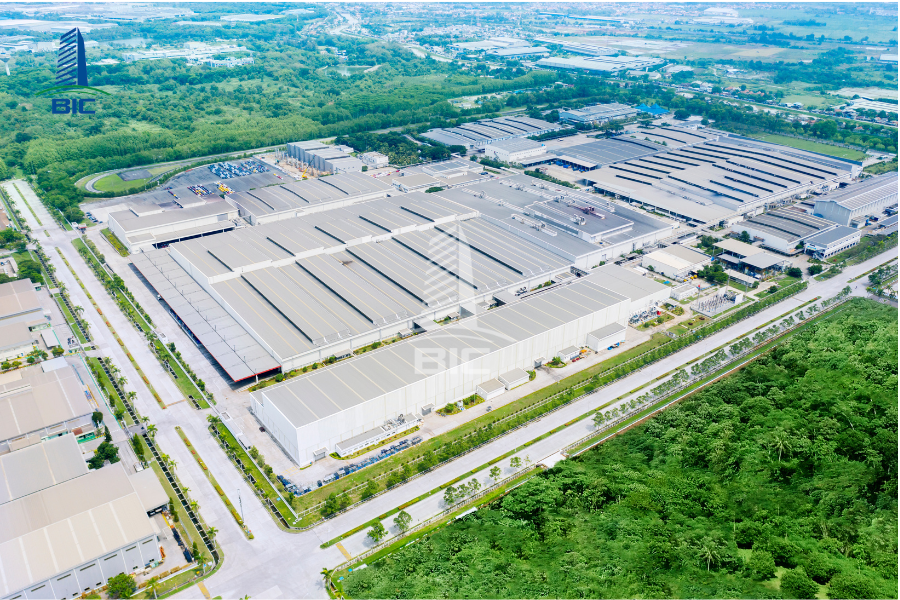
From a contractor's perspective, fire fighting and prevention solutions should not start from equipment but must start from how the industrial factory will actually operate. When the production function, type of goods, machinery density, human flow, goods flow, and fire risk level of each area are clearly understood, the FFP solution can stick to actual use instead of just being correct on paper. This approach is consistent with the current legal framework of the Law on Fire Fighting, Prevention, and Rescue 55/2024/QH15 and Decree 105/2025/NĐ-CP, both effective from July 01, 2025.
For BIC, reading the operational problem correctly is the first step before implementing the factory design. When functionality is clarified early, the FFP solution will require fewer changes to the floor plan, escape routes, or technical systems in later steps.
FFP cannot be separated into a separate dossier and then "attached later," because it directly affects the general site plan, escape routes, functional zoning, firefighting traffic, fire resistance level, and many other technical contents of the project. For factories, the central regulation for handling these contents is QCVN 06:2022/BXD issued by the Ministry of Construction with Circular 06/2022/TT-BXD, effective from January 16, 2023.
From implementation practice, BIC approaches FFP as a part of the overall solution, coordinating with architecture, structure, and MEP right from the concept stage. Doing it right at this step makes the project more synchronized, reduces technical conflicts, and is more favorable during the development of the detailed dossier.
A construction design dossier can be correct in principle but still incur large costs if it does not stick to actual implementation conditions. For FFP, contents such as piping, equipment positions, access routes, priority power sources, or technical spaces, if not checked for construction feasibility early, are very likely to require adjustments at the construction site. Decree 105/2025/NĐ-CP is one of the important bases for organizing the implementation of FFP requirements according to the new law.
For BIC, the value of a contractor does not lie in "drawing enough dossiers," but in the ability to ensure that the solution can be constructed, can be operated, and does not create a conflict between the dossier and the field. This is the way to help investors control the project's progress and technical risks better.
Optimizing FFP costs does not mean cutting items at all costs. For factories, the largest costs often lie in the rounds of revision when the initial solution does not stick to the correct regulations or is not suitable for the functionality. When the solution is built on the basis of QCVN 06:2022/BXD and the current legal framework, investors will find it easier to control what are mandatory requirements and what parts can be optimized according to the investment level and nature of use.
From a contractor's perspective, BIC focuses on overall optimization: correct regulations, suitable functionality, within budget, and limiting later incurred issues. This method is much more effective than saving in the short term but having to fix the floor plan, change the structure, or supplement the technical system in the later stage.
Reviewing the dossier early is one of the most effective ways to reduce incurred issues during the construction design process. When the floor plan, escape routes, fire compartments, firefighting access, and MEP system are checked right from the beginning, the cost of adjustment is still low and the project progress is less affected. This is particularly important for factories because just a small change in FFP can lead to changes in many other disciplines.
For BIC, the early review step is not just to have a "correct dossier," but to protect the investor's budget and progress. The earlier problems are detected, the less risk the project has of having to be fixed during the construction phase or before being put into use.
FFP is an item related simultaneously to legality, technique, progress, and operational safety, so the value of a contractor lies in the ability to follow the project from design to acceptance, not just stopping at handing over drawings. The new legal framework including Law 55/2024/QH15 and Decree 105/2025/NĐ-CP shows that FFP management in projects is set out throughout the process of investment and putting the project into use.
From implementation practice, BIC focuses on accompanying the investor from the survey step, creating solutions, reviewing dossiers, coordinating implementation to the inspection and acceptance stage. This approach helps the FFP solution not only follow the regulations but also be closely linked with investment efficiency and the long-term operational capability of the factory.
A factory construction design dossier is not just a collection of drawings for construction, but the foundation for the investor to control the entire project from functional use, load-bearing structure, and technical systems to progress, costs, and long-term operational capability. For an industrial factory project, if only one part of the dossier lacks synchronization between architecture, structure, MEP, or FFP, the entire subsequent implementation process can incur changes, delayed progress, and cost overruns.
Therefore, the important thing does not lie in "having drawings," but in having a factory design dossier that is clear enough, detailed enough, and sticks to the actual operational needs of the business. When the dossier is prepared methodically from the beginning, investors will find it easier to work with the construction design unit, control the quality of the project better, and significantly limit risks during implementation.
From a practical perspective, a good dossier not only helps the project be built correctly but also helps the project operate correctly. That is also the reason why investors should consider the construction design dossier as a foundational investment for the long-term effectiveness of the entire project, rather than just a necessary procedure before starting construction.