In manufacturing factories, the electrical system does not merely supply power to machinery and equipment; it determines the stability of the entire operational process. Even a minor incident such as overload, short circuit, or voltage drop can interrupt production lines, resulting in significant financial losses and schedule delays. Therefore, the electrical system in a factory must be designed and implemented in accordance with strict technical standards from the very beginning of the investment phase.
Unlike residential buildings, electrical systems in manufacturing factories must handle large loads, continuous fluctuations, and harsh working environments. Factory building design must integrate electrical solutions in coordination with structural systems, layout planning, and production lines to ensure safety, optimize capacity, and allow for future expansion. Inadequate calculations or improper equipment selection may lead to operational risks and costly upgrades later on.
In the following article, BIC analyzes key standards applicable to electrical systems in factories, covering technical requirements, safety, legal compliance, and long-term operational considerations. This provides investors with a clear basis for evaluating and selecting appropriate solutions to ensure sustainable operational efficiency for manufacturing facilities.
Factory electrical systems must support high loads from heavy machinery, motors, heating equipment, and auxiliary systems. The load is not only substantial but also fluctuates depending on production stages, especially when multiple devices start simultaneously. If not accurately calculated during the construction design phase, voltage drops, overload, or phase imbalance may occur, directly affecting operational efficiency.
Many manufacturing factories operate in shifts or continuously for extended periods. This requires the electrical system to maintain high reliability, minimize incidents, and incorporate appropriate backup solutions. Factory design must integrate stable power supply solutions, rational distribution layouts, and conveniently located electrical panels for maintenance in order to reduce downtime when incidents occur.
Manufacturing factories often operate in environments with dust, high humidity, vibration, or elevated temperatures. These conditions directly impact the lifespan and safety of electrical equipment. The electrical system must utilize materials and equipment suitable for specific environmental conditions and be installed in compliance with standards to minimize risks of short circuits and damage.
Compared to residential systems, factory electrical systems are significantly more complex. Industrial loads are larger and require accurate short-circuit calculations, protection coordination, and equipment selection. Integration with production lines and other MEP systems in factory construction design demands high technical expertise. Applying residential electrical design approaches to manufacturing factories may lead to serious safety and operational risks.
Designing a factory electrical system begins with accurate calculation of total capacity and load for the entire production line. Capacity determination must consider not only current equipment specifications but also simultaneity factors, motor starting currents, and future expansion potential. Inaccurate calculations may result in overload or underutilized investment capacity, directly impacting operational efficiency.
Power distribution should be scientifically organized by functional zones and production lines. The electrical system should be divided into separate branches for easier control and maintenance. The placement of substations, distribution boards, and cable routes must align with factory design to optimize cable lengths, reduce power losses, and minimize the risk of system-wide failures.
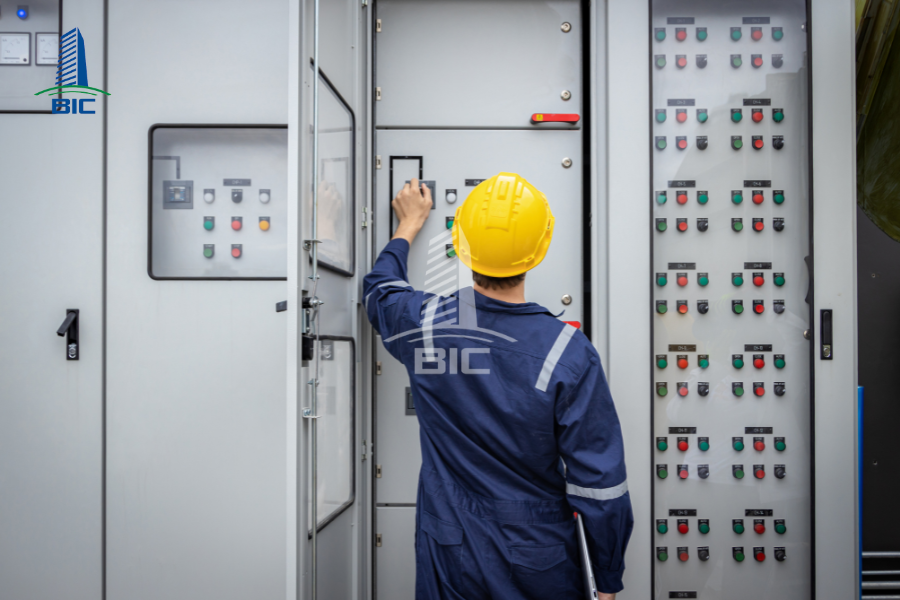
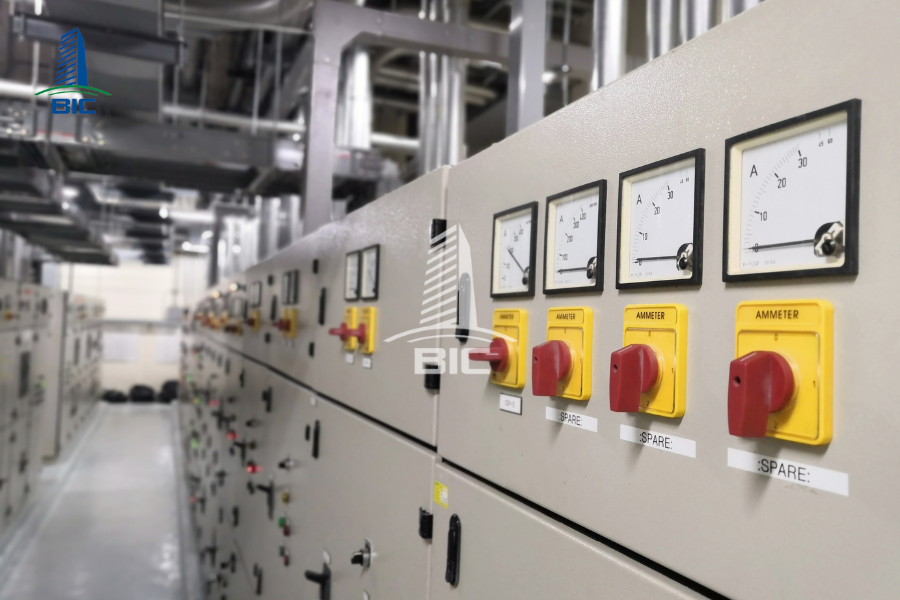
Electrical panels serve as the control and protection center of the factory electrical system. Panel design must ensure load capacity, appropriate protection grading, and convenient operational access. Protective devices such as circuit breakers, protective relays, surge protection devices, and leakage protection devices must be selected according to the specific characteristics of the manufacturing environment. Integrated construction design ensures safe and stable operation throughout the facility’s lifecycle.
An important requirement in factory electrical system design is planning for future capacity expansion. Adequate reserve capacity enables businesses to add equipment or upgrade production lines without overhauling the entire electrical infrastructure. Factory design should incorporate space for spare panels, expansion cable routes, and substation upgrades to ensure long-term flexibility and investment efficiency.

Grounding systems are mandatory to ensure safety for both personnel and equipment. Construction design must calculate grounding resistance in compliance with technical standards to safely dissipate fault currents. Protective devices such as RCDs or ELCBs should be installed in high-risk areas, especially in humid or metal-contact environments. Proper grounding significantly reduces the risk of electric shock and severe incidents.
Overload and short circuit are common causes of fires and equipment damage in factories. Electrical design must include protective devices such as circuit breakers, fuses, and protective relays capable of timely disconnection during faults. Equipment selection must be based on short-circuit current calculations and actual load characteristics. Proper protection ensures system stability and limits asset damage.
Factories often have large roof areas and metal structures, making them vulnerable to lightning. Lightning protection systems, including both direct strike protection and surge protection, must be integrated from the beginning of factory design. Surge protection devices safeguard electrical systems and production equipment from high-voltage impulses, ensuring continuous operation and reducing repair costs.
Electrical safety also depends on system layout and management. Electrical panels must be installed in accessible yet secure locations with warning signs and restricted unauthorized access. Cables and trays should be neatly arranged to avoid obstructing walkways or creating collision hazards. Standard-compliant construction design fosters a safe working environment and enhances operational efficiency.

Lighting is a critical component of the electrical system, directly affecting production quality and occupational safety. Illumination levels must be determined according to work characteristics, required precision, and spatial conditions. Factory construction design must comply with technical standards on illuminance, uniformity, and color rendering to ensure clear working conditions, reduce errors, and prevent eye fatigue.
Lighting systems must align with functional zones within the factory. Production areas, quality control zones, and auxiliary spaces have different lighting requirements. Proper zoning optimizes energy efficiency and avoids waste. Fixtures must be positioned to minimize shadows and glare while ensuring uniform light distribution across work surfaces.
Energy costs represent a significant portion of factory operating expenses. Therefore, energy-saving solutions should be integrated from the design stage. High-efficiency LED lighting, intelligent control systems, and daylight sensors can reduce power consumption while maintaining lighting standards. Optimized lighting design improves operational efficiency and lowers long-term costs.
Lighting quality directly influences worker productivity and accuracy. Insufficient or poorly distributed lighting may cause eye strain, reduced concentration, and increased accident risk. Conversely, a well-designed lighting system enhances the working environment, boosts production efficiency, and ensures operational safety.
Factory design forms the foundation for efficient electrical system layout. During initial planning, the locations of panels, substations, cable routes, and trays must be coordinated with functional requirements. Failure to integrate electrical planning from the outset may lead to costly modifications and construction delays.
Electrical systems are part of the MEP network and must be closely coordinated with structural components. Cable tray supports, floor and wall penetrations, and equipment installations must align with structural load capacity. Integrated construction design prevents technical conflicts and optimizes space utilization.
Production line layout directly determines electrical distribution methods. Each machinery zone has specific load and operational characteristics. Factory design must clearly define equipment locations to ensure sufficient capacity and convenient maintenance. Proper integration enhances operational efficiency and reduces power losses.
Conflicts between electrical systems and structural, ventilation, or plumbing systems often occur without technical coordination. Detailed construction design and cross-disciplinary review help identify and resolve conflicts before construction begins. This approach minimizes on-site modifications, controls costs, and ensures construction progress.
Factory electrical systems must comply with national technical regulations and Vietnamese standards regarding electrical safety, installation, and operation. These include load calculations, protective device selection, grounding, lightning protection, and worker safety requirements. Compliance provides the legal basis for project approval and commissioning.
Depending on scale and characteristics, factory electrical systems may require design appraisal and acceptance by regulatory authorities. Factory design documents must clearly present single-line diagrams, power supply schematics, capacity calculations, and safety solutions. Acceptance procedures must follow technical protocols to ensure stable operation before commissioning.
Investors are responsible for organizing the design, appraisal, and construction of factory electrical systems in compliance with legal standards. Selecting qualified design consultants and contractors is crucial to regulatory compliance. Investors must also supervise construction, acceptance, and documentation management to minimize legal risks throughout the project lifecycle.
Upon completion, the electrical system must have comprehensive as-built documentation, including drawings, acceptance reports, and technical equipment documentation. Certain components may require inspection before official operation. Complete documentation not only satisfies legal requirements but also supports future maintenance, upgrades, and expansion.
Electrical systems must be integrated from the early factory design phase rather than added after structural completion. Early load calculations, substation placement, panel layout, and cable routing optimize space, reduce construction changes, and minimize additional costs. Proactive construction design ensures capacity alignment with production needs and expansion capability.
Electrical system efficiency heavily depends on coordination among disciplines. Architecture defines spatial layout, structure influences support systems, and MEP provides technical solutions. Integrated collaboration ensures stable operation, minimizes conflicts, and optimizes construction efficiency.
Proper design ensures appropriate equipment capacity selection, avoiding overinvestment or shortages. High-efficiency equipment and rational layout reduce power losses during operation. Well-planned construction design controls initial investment costs while lowering long-term energy and maintenance expenses.
Seamless coordination from design through construction ensures that electrical systems are implemented according to approved technical documents. Design consultants supporting construction can promptly resolve emerging issues, maintaining schedule and quality. This integrated approach enables investors to manage risks, optimize investment efficiency, and ensure safe, stable operation.
The electrical system in a factory is not merely infrastructure but a decisive factor for safety, continuity, and overall operational efficiency. From load calculations and distribution to protection, lighting, and regulatory compliance, every component must be integrated coherently within the construction design process. When properly designed and implemented according to standards, the electrical system enables investors to control risks, minimize additional costs, and establish a solid foundation for future production expansion.
According to BIC, investing correctly from the factory design stage is the sustainable solution to ensure long-term operational efficiency for manufacturing facilities.