Factory design GMP-compliant is increasingly widespread and has become a mandatory requirement across many production sectors. GMP standards are especially important in industries such as food, pharmaceuticals, medical devices, and many others. So, what is GMP, and what are its regulations and requirements for industrial factories? In this article, BIC will help you gain a deeper understanding of GMP standards and the key factors to consider in designing a GMP-compliant factory.
GMP, short for Good Manufacturing Practice, is a regulatory system aimed at controlling and ensuring quality standards throughout the production process to achieve the highest product quality. This standard provides comprehensive control over all aspects, from raw materials and production processes to storage and packaging, minimizing risks that may affect product quality. Additionally, GMP serves as the foundation for other food safety management systems such as ISO 22000.
GMP covers every aspect of production, including factory design, construction, equipment, raw materials, packaging specifications, and storage requirements. Establishing a GMP-compliant factory helps companies organize production processes logically and scientifically, minimizing risks and enhancing operational efficiency.
Since July 1, 2019, GMP standards have officially been applied per Decree 15/2018/ND-CP, becoming a mandatory requirement in production fields with strict hygiene and safety standards. Key industries include:
- Pharmaceutical manufacturing
- Food production
- Medical equipment manufacturing
- Cosmetic manufacturing
Companies in these fields must adhere to GMP standards to ensure product quality and consumer safety.

Designing and constructing a GMP-compliant factory not only ensures compliance with quality standards but also enhances production efficiency and safety in operations. The strict GMP standards include:
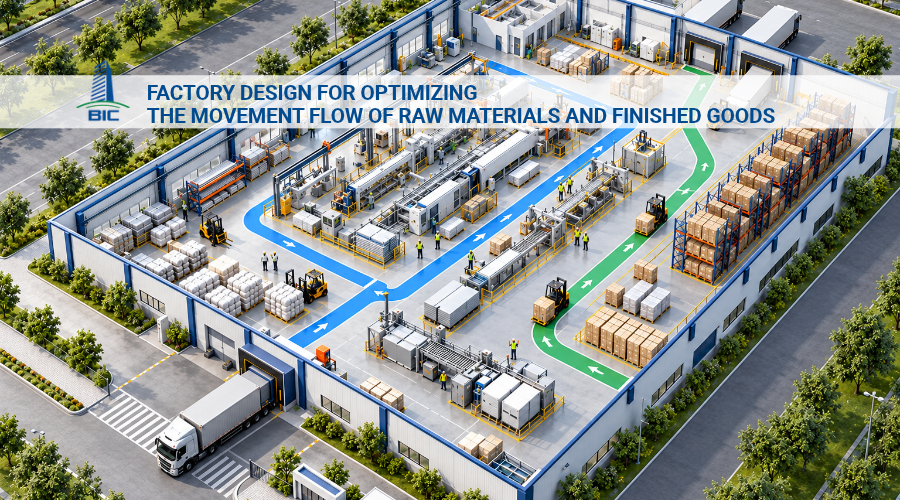
The factory layout and equipment arrangement must adhere to regulations for organizing equipment and materials logically to support production flow and minimize cross-contamination risks.
- Floor, walls, and ceiling surfaces must be smooth, light-colored, waterproof, and free from cracks for easy cleaning and dust control.
- Ceiling height: The ceiling should not exceed 2.7 meters, except for areas requiring taller equipment.
- Surface intersections: Floor-to-wall, wall-to-wall, and wall-to-ceiling joints should be rounded to prevent dust buildup and allow for easy cleaning and contamination control.
- Wall edges: Wall edges at contact points (e.g., between wall ends and glass partitions) should be beveled at a 45-degree angle to prevent dust accumulation and facilitate cleaning.
- Water pipes: These should be surface-mounted, at least 3 cm away from the wall, and usually installed near the ceiling to avoid obstructing space.
- Enclosed wastewater collection: The floor should have a slope of 1-2% to direct wastewater toward drainage points, avoiding water stagnation on the floor. Rooms where water is generated require special drainage systems; others are directly connected to underground collection systems.
- Drain points: Drainage outlets must be equipped with systems to prevent insects, rodents, and odors, using water traps and screens.

All lights should have covers and preferably be recessed into the ceiling to provide optimal lighting and avoid dust accumulation.
Non-hand-operated sinks are essential for maximum hygiene and limiting contamination. Handwashing stations should include drying facilities, such as disposable towels or hand dryers.
- Fixed equipment: There should be a minimum gap between equipment and the floor to allow for easy cleaning beneath it. If spacing is not feasible, the equipment should be mounted flush with the floor.
- Factory layout: The layout should be designed to minimize errors, facilitate cleaning and maintenance, and prevent dust accumulation, waste, and cross-contamination risks.
Areas prone to dust generation, such as floors and ceilings, should have special measures to contain dust and ensure easy cleaning, reducing cross-contamination and maintaining a clean production environment.
Following these requirements helps a factory meet GMP standards, optimize production processes, and ensure that products meet international quality standards.
In food and pharmaceutical industries, factory design GMP-standard requires clean rooms or sterile areas built from special materials to meet stringent hygiene standards. These materials must withstand regular cleaning and sterilization processes and have smooth, seamless surfaces to minimize contamination risk. Particle materials are not allowed in clean rooms due to contamination risks.
Clean room floors should be smooth, scratch-resistant, impact-resistant, easy to clean, durable, and free of cracks. Additionally, floors should be anti-static and capable of bearing heavy loads. Raised flooring can be used to maintain necessary humidity levels.
Clean room doors should be smooth, easy to clean, and threshold-free, ensuring they open towards the cleanest area. When not in use, doors should be sealed to maintain positive pressure in the room. Wooden doors are not allowed in clean rooms to avoid mold growth and deformation.
Clean room windows should be smooth, dust-resistant, non-wooden, and streamlined to prevent contamination. Windows between clean and non-clean areas should have at least two layers, with one fixed to maintain cleanliness.

- Ensuring Product Quality
Factory design a GMP-compliant allows comprehensive control over the entire production process, from raw materials to final products. GMP’s requirements for hygiene, material durability, temperature, humidity, and pressure control eliminate risks of contamination or cross-contamination. This ensures high-quality products that meet the safety demands of strict markets, boosting consumer confidence in product consistency and quality and enhancing brand reputation.
- Building Credibility and Expanding Markets
A GMP-certified factory reinforces a company's commitment to quality and safety, making a strong impression on domestic and international partners. A GMP-certified facility is often seen as a symbol of professionalism, credibility, and compliance with international standards.
This not only helps companies build trust with customers but also facilitates entry into global supply chains and secures necessary certifications for exports. Achieving GMP certification opens new business opportunities, fosters partnerships with major clients, and provides a competitive advantage in markets or countries that demand high safety and quality standards.
Factory design a GMP-compliant is not only a mandatory requirement in some production fields, but also helps companies enhance credibility, optimize production processes, and expand their market reach. If you’re seeking a comprehensive and professional solution for designing a GMP-compliant factory, don’t hesitate to contact BIC. With our team of experienced experts, we are committed to guiding and supporting you to ensure that your factory not only meets the highest standards but also optimizes costs and construction time.