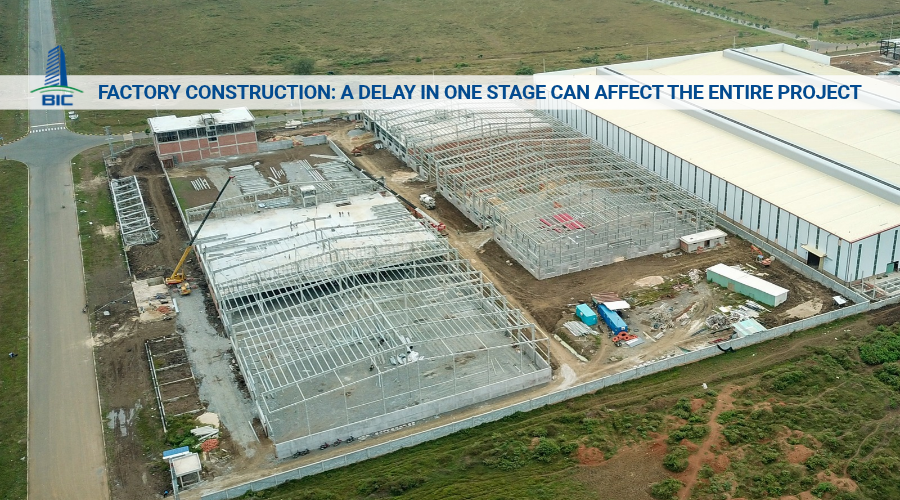
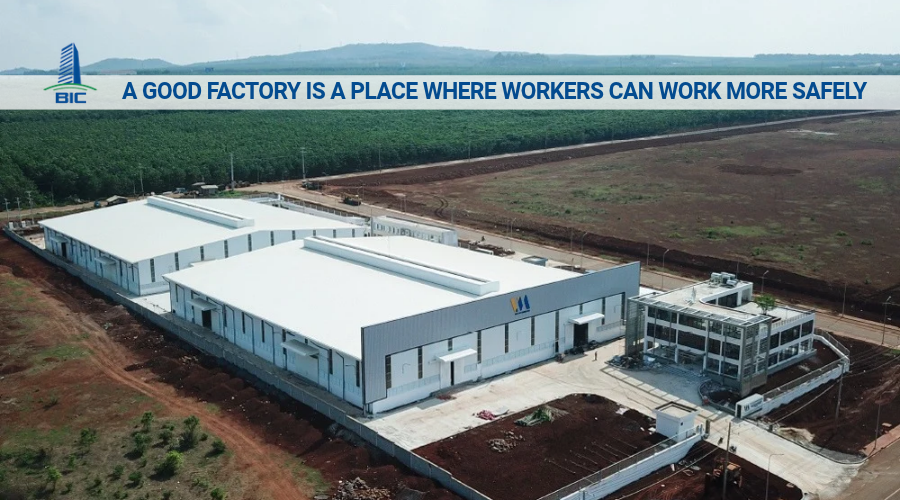
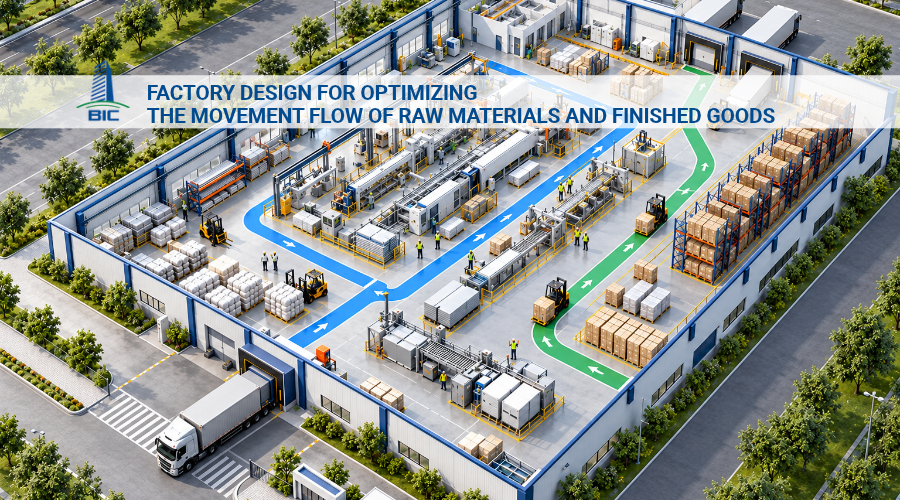
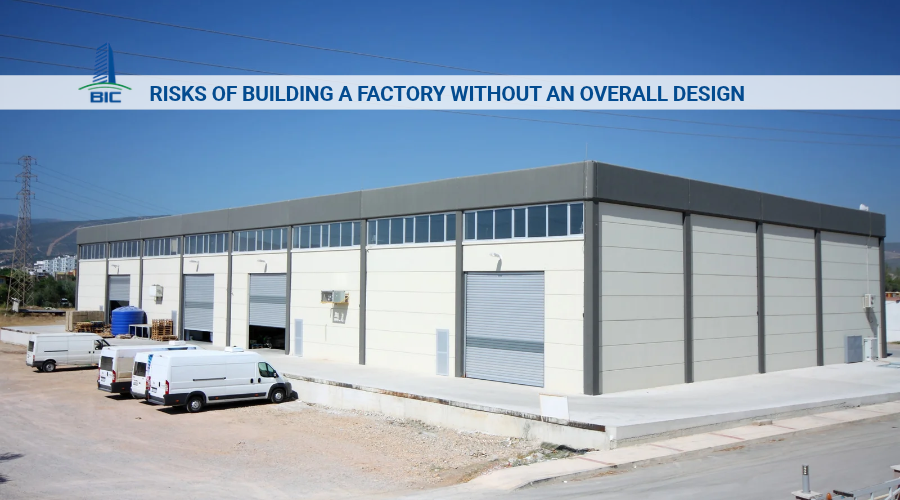
The textile industry is currently one of the key industries, significantly contributing to the economy and creating numerous jobs for workers in Vietnam. In the production process, factory design plays a crucial role, not only ensuring smooth operations but also enhancing productivity and product quality.
Complying with textile factory construction standards not only helps businesses meet legal requirements but also ensures worker safety and optimizes production efficiency. Therefore, understanding and applying these standards is a decisive factor in the success of any business in the textile industry.
In the design of garment factory foundations, it is essential to ensure that the natural characteristics of the foundation and the physical and mechanical properties of the soil are carefully considered. This also applies to technical systems and underground structures, if present.
For foundations exposed to high temperatures, heat-resistant materials must be used to protect the foundation. Similarly, for foundations subject to corrosion, materials resistant to corrosion should be incorporated into the design.
In non-framed factories with brick walls, masonry, or stone, if the foundation depth is 15 cm or less, a support beam must be designed so that the top of the beam is at least 3 cm (0.03 m) lower than the finished floor level.
Regarding the height of the steel column bases in corridors and overpasses supporting pipelines between workshops, they must be at least 0.2 m above the ground surface.
Additionally, Factory design foundations with expansion joints and workshops planned for future expansion must be integrated into the design of two adjacent columns. For the difference between the top of the foundation and the ground surface, the reinforced steel column should be 0.2 m, reinforced concrete should be 0.15 m, and the frame filling the wall should be 0.5 m.
.jpg)
The design standards for foundations and flooring in garment factories must follow regulations to meet technological requirements, withstand loads, and address geological and hydrological conditions. Some typical factors include:
- Concrete factory floors: Use load-bearing concrete, such as reinforced concrete, impact-resistant steel-reinforced concrete, acid- or alkali-resistant concrete, or asphalt concrete. Additionally, factory floors can be paved with steel, wood, plastic, or cement tiles.
- Weak ground treatment: Factory foundations built on weak soil require appropriate ground treatment methods according to geological conditions.
- Selecting floor structures: Factory floors should be designed based on technological requirements and usage conditions, selecting the appropriate floor structure.
- Drainage system: The floor surface should have a hard lining and a quick drainage system to prevent flooding.
- Warehouse and yard areas: In areas such as overpasses used for unloading bulk materials, flat surfaces should be designed to ensure safety and convenience.
- Concrete lining: Factory floors with concrete lining at least 0.1 m thick should be divided into cells with a maximum size of 0.6 m per side, with the cell joints filled with bitumen.
- Sidewalk flooring: The width of the sidewalk flooring should range from 0.2 m to 0.8 m, with a slope of 1% to 3% to ensure effective drainage.
Careful factory floor design ensures durability, safety, and efficiency during use.
In factory design, roofs and skylights must comply with standards to ensure the safety, efficiency, and durability of the structure. Specific standards include:
- Skylight length: Should not exceed 84 m and should be set back one step from the building's end column. For skylights combining lighting and ventilation, vertical glass should be installed; inclined glass should only be used if justified. If there are devices emitting heat, moisture, or toxic substances, skylights should not be designed.
- Factory roof slope: For slopes under 8%, thermal expansion joints should be arranged in the waterproof concrete layer, and the distance between the joints should not exceed 24 m along the length of the building.
- Factory roof drainage: The drainage system depends on the roofing material and technological requirements and can be designed for internal or external drainage.
- Roof slope standards by material:
+ Asbestos cement sheets: 30% to 40% slope.
+ Reinforced concrete roof: 5% to 8% slope.
+ Tiled roof: 50% to 60% slope.
+ Corrugated iron roof: 15% to 20% slope.
- Roof offset: If the offset is less than 2.4 m, a gutter is not required, but the roof area below the water runoff must be reinforced. If the offset is 2.4 m or greater, a gutter and downspout must be installed.
- Skylight design: Depending on production technology and factory orientation, various skylight designs such as domes, sawtooth, M-shaped, or cantilevered can be selected.
- Ventilated skylights: For factories generating heat, moisture, or toxins, ventilated skylights with rain protection must be installed. No glass is required, only gaps of 0.15 m to 0.3 m in height.
- Skylights with cranes: If the factory design includes cranes, the skylights must have protective nets with a minimum width of 0.7 m. Glass should be installed vertically according to the horizontal projection of the frame, and fixed in place with overhanging eaves, with a minimum glass thickness of 3 mm. If steel-reinforced glass is used, no protective net is required.
- Louvers: Louvers should not be made of fragile materials. For factories requiring rainwater protection, the rain protection angle should not exceed 15°. If the louvers are inclined, the rain protection angle of the overhanging eaves can increase to 45°.
Adhering to these standards ensures safe and efficient factory operations, extending the life of the building.
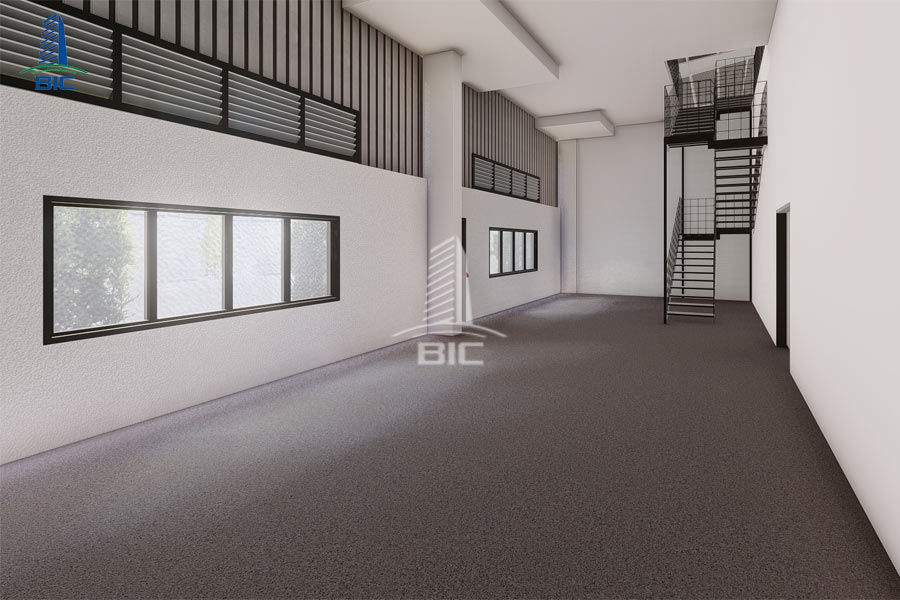
Factory wall and partition design standards will depend on the characteristics, scale, and usage requirements to choose suitable walls. Types of walls such as frame-filling walls, load-bearing walls, or self-supporting walls can be applied depending on the purpose of use. Materials can include brick, natural stone, reinforced concrete panels, or asbestos cement sheets.
- Exterior walls: If asbestos cement sheets or lightweight materials are used, the wall height must be at least 3 cm above the finished ground level. The wall base should be constructed with brick, stone, or concrete to increase durability.
- Waterproofing and moisture resistance: If the wall base is built with brick, a layer of cement mortar grade 75, 20 cm thick, should be applied horizontally at the finished ground level for durability and to prevent mold.
- Factory wall dimensions: Factory walls should be designed so that each span is a maximum of 12 m, and the column height should not exceed 6 m to ensure safety and structural stability.
- Workshop partition walls: Partition walls between workshops should be designed for easy assembly and disassembly to facilitate structural changes when necessary.
Complying with these factory design standards ensures a durable structure that is flexible during operations.
In textile factory construction, two basic standards for windows and doors must be followed to ensure safety and efficiency:
- Windows: Windows higher than 2.4 m must be installed in fixed frames to ensure storm resistance. If necessary, the window must be designed with secure clamps and a mechanical opening and closing system for safety and convenience.
- Doors: The maximum height of doors must be 2.4 m from the floor, ensuring flexible opening and closing. This ensures smooth movement within the factory and compliance with safety standards.
Following these standards not only enhances the durability of the building but also ensures safety during factory operations.
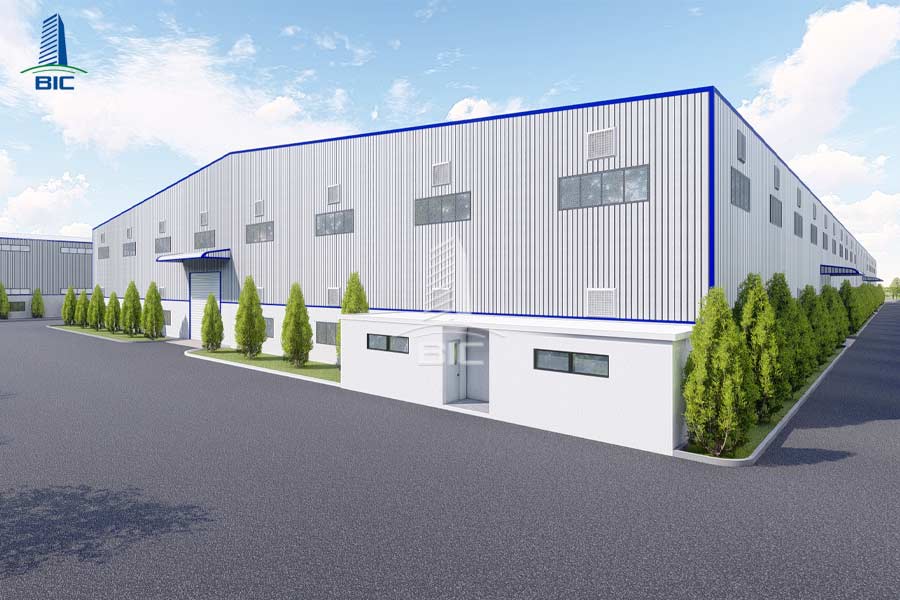
Adhering to textile factory design standards brings significant benefits, including:
- Increased production efficiency: Implementing design standards improves workflow, minimizes risks, and optimizes productivity. Logical and scientific designs optimize workspace, improve workflow, and reduce downtime, thereby enhancing production efficiency.
- Ensuring worker safety and health: Design standards focus on creating a safe working environment, reducing accidents and health issues. This not only protects worker health but also reduces costs related to incident handling and insurance.
- Environmental protection: Adhering to these design standards minimizes the negative impact of production on the environment. Environmentally friendly design solutions, such as efficient waste treatment systems and sustainable materials, help reduce pollution and protect natural resources.
These benefits not only improve factory operations but also enhance the reputation and sustainability of businesses in the textile industry.
Complying with textile factory design standards is key to optimizing workflows, reducing risks, and creating a safe working environment that protects workers' health and reduces accidents. Businesses are encouraged to invest in standard-compliant factory design and construction as a necessary step towards sustainable development in the textile industry, enhancing competitiveness and credibility. Contact BIC now for free consultation on industrial textile factory design and legal support.