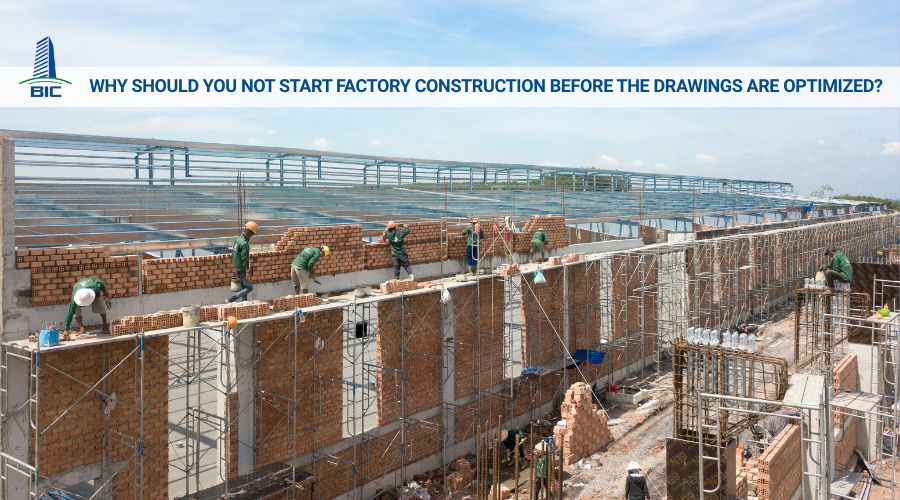
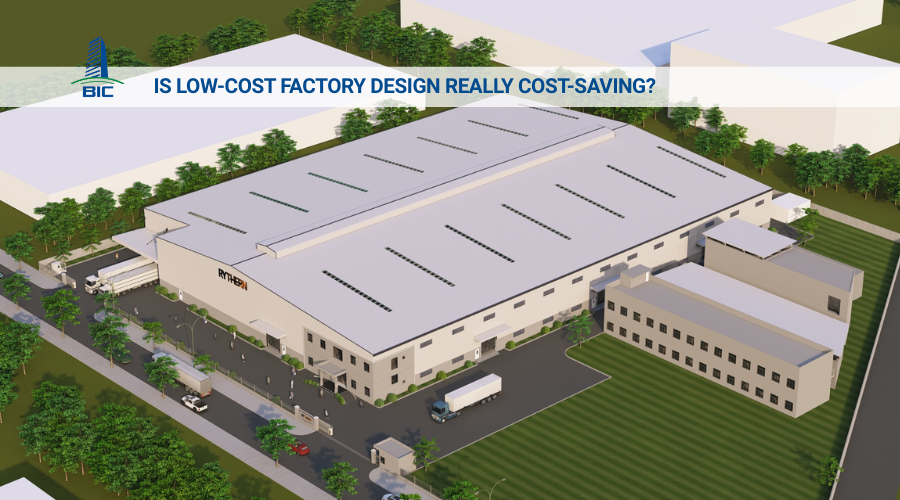
The expansion of construction of office buildings, factories, warehouses, etc. on leased land is quite popular because it takes advantage of the land fund and convenient location at the place of operation, minimizing transportation costs during the transportation of raw goods. material.
Besides, there will be concerns that when accounting for factories built on leased land, can VAT be deducted? Building on borrowed land requires a building permit.
In case the factory is built on leased land, the accounting and deduction of VAT will depend on the terms and conditions of the land lease contract and the construction contract.
If the contract allows the investor to deduct VAT, the expenses related to the construction of the factory such as purchasing materials, labor costs, design services, construction, installation, transportation, .. can deduct VAT according to the provisions of tax law.

However, if the contract does not allow VAT deduction, the investor will not be able to apply this deduction. This can lead to increased production costs and affect the feasibility and business performance of the project.
Therefore, before accounting and deducting VAT for expenses related to factories built on leased land, investors need to carefully check the terms and conditions in the contract to ensure compliance. accordance with the provisions of the tax law.
Law on property on land in Article 4 of Circular 96/2015/TT-BTC (amended and supplemented with Article 6 at point h, clause 2.2 of Circular 78/2014/TT-BTC) stipulates deductible expenses , not deductible when determining taxable income is regulated as follows:
b) Depreciation expense for fixed assets without documents proving ownership of the enterprise (except for fixed assets for finance lease purchase).
c) Depreciation expenses for fixed assets are not managed, monitored and recorded in the accounting books of the enterprise according to the current regime of fixed asset management and accounting.…

In case an enterprise has constructions on land such as offices, factories, and shops in service of its production and business activities, the enterprise may depreciate it and calculate it into deductible expenses when determining income. taxable according to the rate of depreciation and use time of fixed assets according to current regulations of the Ministry of Finance for these works if the following conditions are met:
+ Having a land use right certificate bearing the enterprise's name (in case the land is owned by the enterprise) or having a land lease or loan contract between the enterprise and the land-owning unit or individual and the business representative. Enterprises must be responsible before the law for the accuracy of the contract (in the case of leased or borrowed land).
+ An invoice for payment of the volume of construction work handed over together with the construction contract, contract liquidation, settlement of the value of the construction work bearing the name, address and tax code of the enterprise.
+ Works on land are managed, monitored and accounted for according to current regulations on fixed asset management.…”
On the other hand, Clause 10, Article 1 of Circular No. 26/2015/TT-BTC stipulates the conditions for VAT deduction as follows:
“Article 15. Conditions for deduction of input value-added tax
Having a lawful value-added invoice of purchased goods or services or a receipt for payment of value-added tax at the stage of importation or a receipt for payment of VAT on behalf of a foreign party according to the guidance of the Ministry of Finance applicable to the foreign party. with foreign organizations without Vietnamese legal status and foreign individuals doing business or earning income in Vietnam.

Having non-cash payment vouchers for purchased goods and services (including imported goods) of twenty million dong or more, except for cases where the value of goods and services is imported each time. valued at less than twenty million dong, goods and services purchased each time according to the invoice are under twenty million dong at the price inclusive of VAT and in case the business establishment imports the goods as gifts or presents of overseas organizations and individuals.”
Based on the approved provisions of the law, factories built on leased or borrowed land are still entitled to depreciation and deduction of input VAT if they have all the following documents:
- Land lease or land loan contracts do not need to be notarized, but the enterprise must be responsible for the authenticity of the contract.
- Invoices, construction contracts, minutes of settlement, contract liquidation must have the full name, address, and tax identification number of the enterprise.
- Having a non-cash payment voucher for liquidation of a contract for payment of a work volume valued at VND 20 million or more.
- Other documents proving that the assets are owned by the enterprise, the formed assets must be opened with a tracking number as prescribed.
In case the enterprise builds the fixed assets by itself, the completion of pre-acceptance test and handover of the enterprise is not required to issue an invoice. Input VAT forming self-made fixed assets shall be declared and deducted according to the provisions of Clause 2, Article 3 of Circular 119/2014/TT-BTC
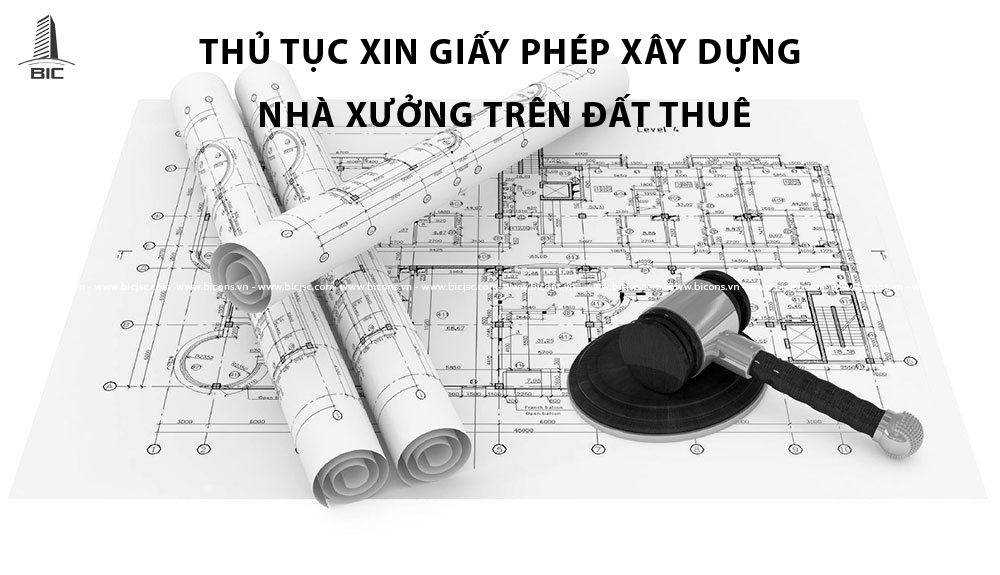
According to the Law stipulated in article 89 of the 2014 Construction Law, construction permits are provided
“Article 89. Objects and types of construction permits
1. Before starting work construction, the investor must obtain a construction permit issued by a competent state agency in accordance with this Law, except for the case specified in Clause 2 of this Article.
a) Works that are state secret, works built under urgent orders and works located in the area of two or more provincial-level administrative units;
b) Works under construction investment projects decided on investment by the Prime Minister, Ministers, Heads of ministerial-level agencies, Presidents of People's Committees at all levels;
c) Temporary construction works serving the construction of main works;
d) Works built along lines outside urban areas but in accordance with construction plannings already approved by competent state agencies or approved by competent state agencies in terms of work alignments;
dd) Construction works under projects of industrial parks, export processing zones, high-tech zones with detailed planning 1/500 already approved by competent state agencies and appraised for construction designs according to construction design regulations. provisions of this Law;
e) Houses under urban development projects, housing development projects with a scale of less than 7 floors and a total floor area of less than 500 m2 with a detailed 1/500 plan approved by a competent state agency. Browser;
g) Works to repair, renovate or install equipment inside the work without changing the load-bearing structure, without changing the use functions, without affecting the environment and safety of the works;
h) Repair or renovation works that change the exterior architecture not adjacent to roads in urban areas with requirements on architectural management;
i) Technical infrastructure works in rural areas only require the preparation of economic-technical reports on construction investment and in areas where there is no approved detailed construction planning for rural residential quarters;
k) Construction works in rural areas in areas where there is no approved urban development planning and detailed construction planning; separate houses in rural areas, except for separate houses built in conservation zones, historical-cultural relics;
l) The investor in the construction of works exempted from construction permits as prescribed at Points b, d, dd and i of this Clause is responsible for notifying the time of construction commencement enclosed with the construction design dossier to local construction management agency for monitoring and record keeping.
Because your business's works are not exempted, you will have to go through the procedures to apply for a construction permit.
=> Therefore, factories, offices, etc., if enterprises build on leased land, if they are not exempt from construction permits, they must obtain a construction permit. If the factory is built illegally (without permission), the formed property is of unknown origin (not granted ownership of the property) will not be recognized as fixed assets, not allowed to depreciate, deduct input VAT.