Factory design is a critical initial step in any industrial construction project. Optimizing the factory to help businesses save on operational costs is a top concern for many investors. To ensure the success of a project, contractors must master the key principles in construction design.
In this article, BIC will introduce you to the golden principles of factory design, helping you better understand their importance and the benefits they bring.
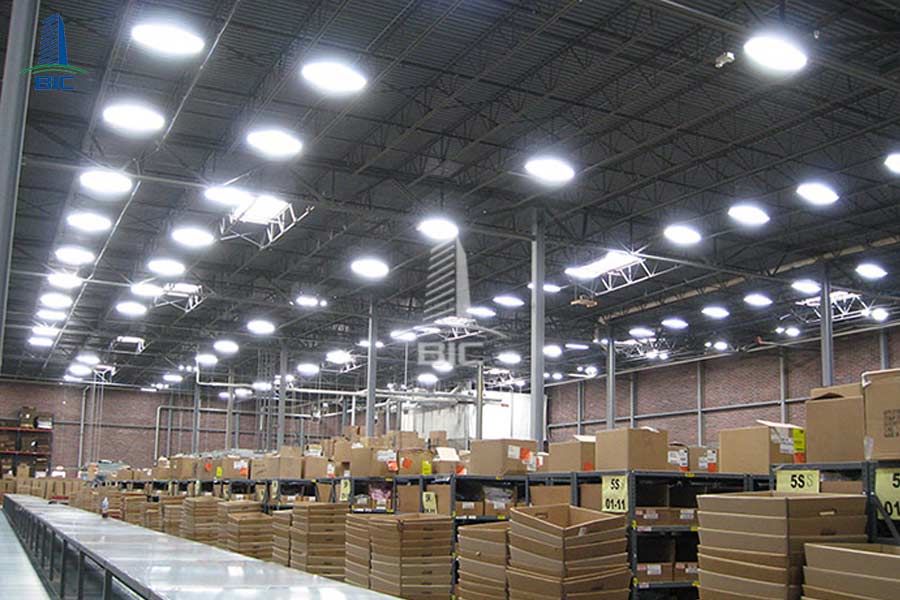
One of the most crucial aspects of factory design is energy optimization. This not only helps reduce operational costs but also contributes to environmental protection. To achieve this, the factory should be designed to maximize the use of natural light, minimizing the need for artificial energy. Lighting, ventilation, and air conditioning systems should be carefully selected, prioritizing energy-efficient solutions such as LED lights, inverter air conditioning systems, and natural ventilation systems.
Additionally, integrating renewable energy sources like solar or wind power is an effective strategy. Solar panels can be installed on the factory roof to provide electricity for production activities, reducing dependence on the grid. Meanwhile, smart energy management systems help monitor and adjust energy use efficiently, ensuring stable factory operations with minimal energy consumption.
Choosing building materials is a key factor in sustainable factory design. Using sustainable materials not only reduces the negative impact on the environment but also enhances the durability and economic efficiency of the project. Materials that can be recycled, reused, or are made from renewable resources should be prioritized.
For example, using recycled steel or wood from sustainable sources can minimize CO2 emissions and reduce impact on ecosystems. Additionally, efficient insulation materials such as heat-resistant paint, lightweight bricks, or insulated metal sheets will help save energy, reducing cooling and heating system costs.
Another important consideration when selecting building materials for factory design is their life cycle. Materials with a long lifespan and low maintenance requirements help minimize costs and maintenance efforts throughout the factory's lifecycle. Particularly, choosing local materials not only supports the local economy but also reduces emissions from transportation.
Finally, when selecting building materials, businesses should consider the health of workers, ensuring that materials are free of toxic substances and contribute to creating a safe and healthy working environment.
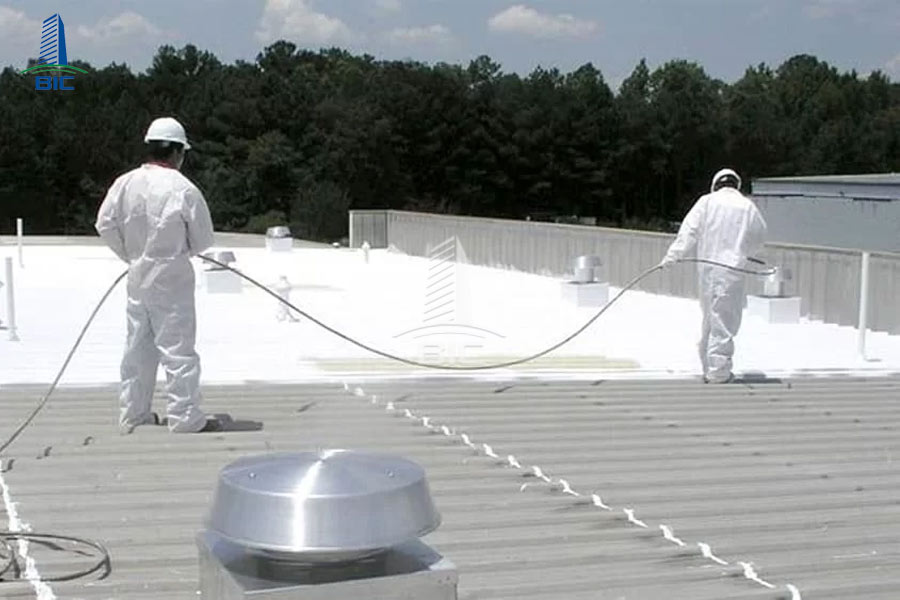
In sustainable factory design, the wastewater treatment system plays a crucial role. Efficient wastewater treatment not only helps protect the environment but also meets legal requirements and enhances the company's reputation. A good wastewater treatment system must ensure the ability to remove pollutants, reuse water, and minimize the amount of wastewater discharged into the environment.
One important measure is the classification and treatment of wastewater at the source. The factory should be designed with separate areas for collecting and treating wastewater from production activities, domestic use, and other sources. This helps prevent cross-contamination and optimizes the treatment process.
Additionally, applying advanced technologies such as biological, chemical, or membrane filtration treatment systems improves treatment efficiency and ensures that the quality of treated water meets safety standards. Especially, systems that reuse treated water in non-potable activities, such as irrigation, cooling, or cleaning, can significantly reduce the demand for clean water and operating costs.
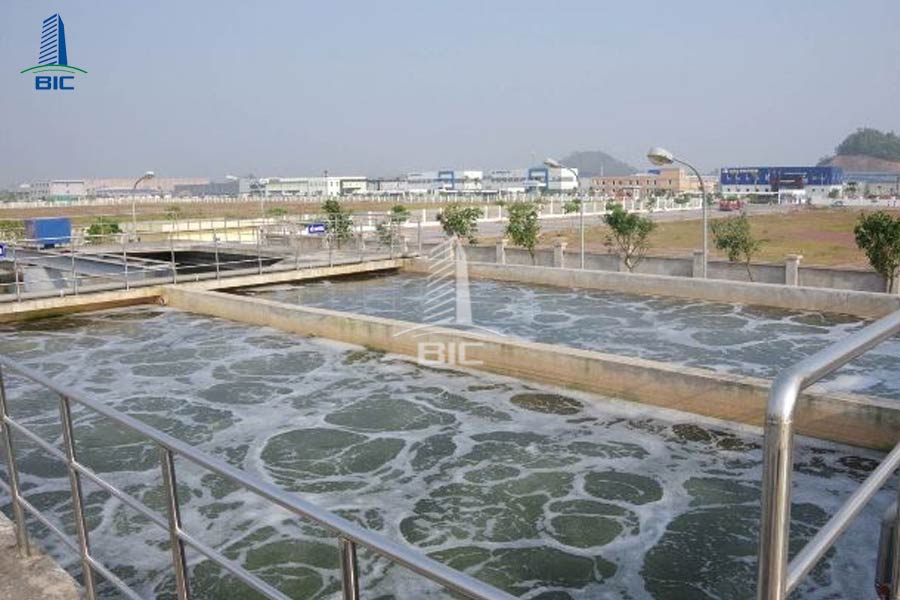
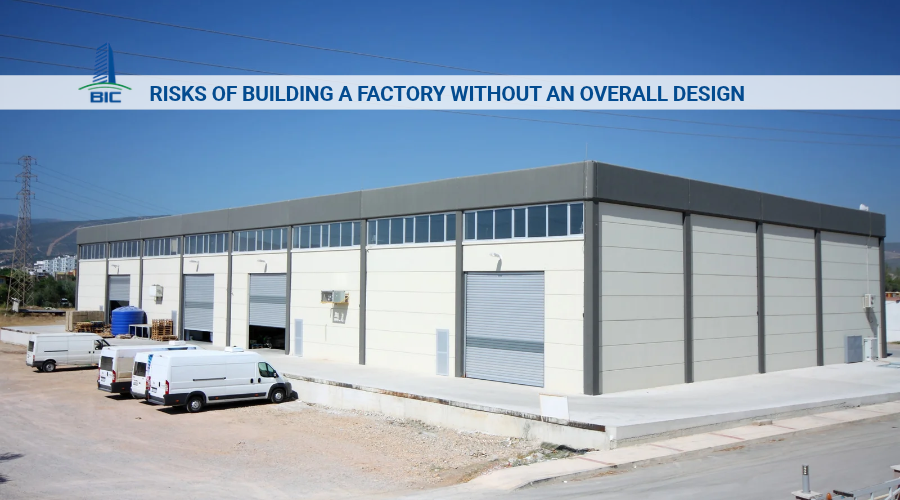
Optimizing factory space and infrastructure is a critical factor in sustainable factory design, helping to enhance work efficiency and reduce long-term costs. A well-designed factory not only maximizes space utilization but also creates favorable conditions for production, maintenance, and future upgrades.
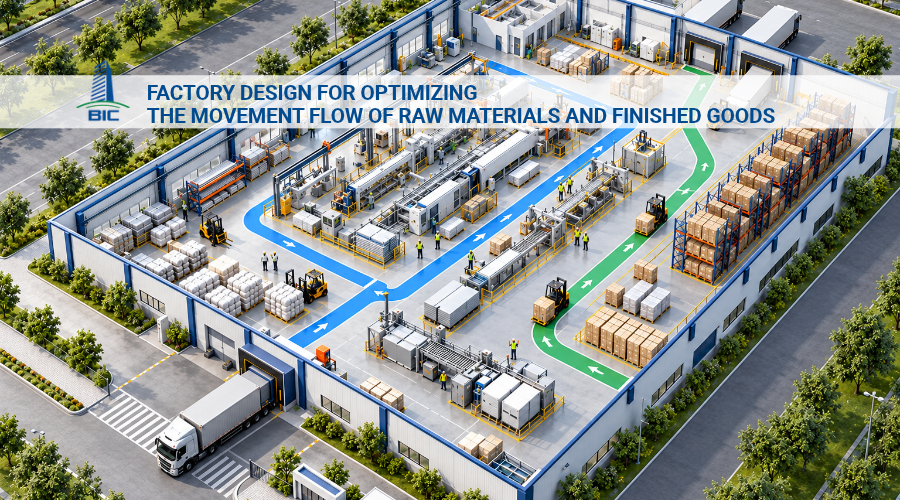
The functional space allocation in the factory should be done scientifically. Production, storage, transportation, and office areas should be arranged to ensure a continuous workflow without interruptions. This not only optimizes the production process but also minimizes time and operational costs.
Moreover, factory design with the potential for future expansion is essential. Flexible spaces can be restructured or expanded as needed without causing major disruptions to current production activities. This helps businesses save on upgrade costs and ensures adaptability to market developments or changes.
Furthermore, the factory’s infrastructure should be designed to support modern technological solutions, such as automation systems, IoT sensor networks, and smart management. This not only improves production efficiency but also enhances remote monitoring and management capabilities, ensuring the factory operates stably and safely.
Integrating environmentally friendly elements into space and infrastructure design is also a crucial point. For example, using greenery and natural ventilation systems to improve air quality and create a comfortable working environment for workers, while reducing factory cooling costs.
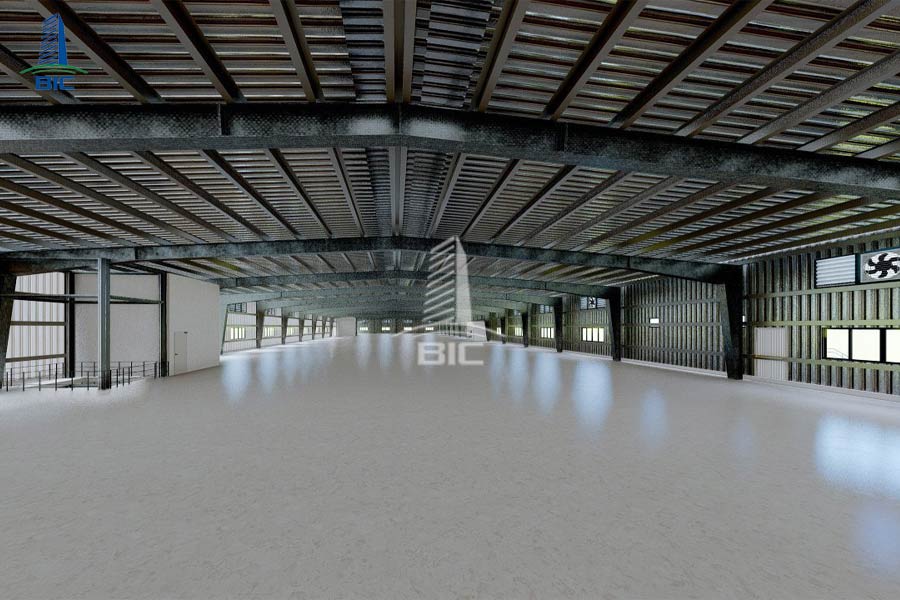
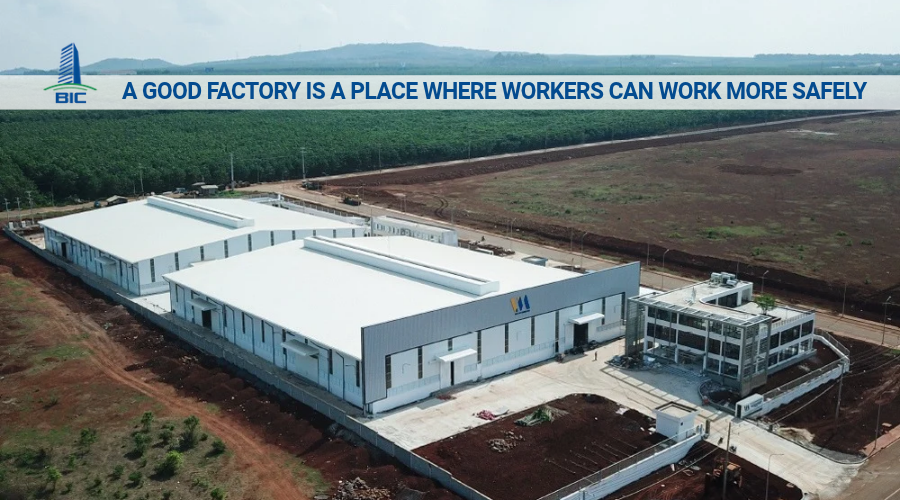
Worker safety and a safe working environment are core elements in sustainable factory design. Ensuring safety standards not only protects workers' health and lives but also enhances production efficiency and reduces legal risks for businesses.
First, factory design should focus on arranging emergency exits and safety areas so that they are easily accessible in case of emergencies. Emergency exits must be clearly marked, unobstructed, and always ready for use. Fire alarm, firefighting, and other safety systems should also be fully installed and regularly maintained to ensure effective operation.
Additionally, the working environment should be designed to be comfortable and safe for workers. This includes controlling air quality, lighting, and temperature in the factory. A good ventilation system helps maintain fresh air, minimizing the risk of respiratory-related diseases. Natural and artificial lighting should be harmoniously combined to reduce eye strain and increase focus.
Moreover, the selection and arrangement of machinery and equipment in factory design must comply with labor safety standards. Ensuring that all equipment has safety measures such as barriers, emergency stop buttons, and warning signs is crucial. Organizing regular safety training courses for employees is also an important part of building a safety culture at the workplace.
Sustainable factory design is not just a trend but a necessary requirement in industrial factory construction projects. By applying these golden principles, businesses can build factories that are not only environmentally friendly but also cost-effective, enhancing operational efficiency. Contact BIC for factory design consultation and construction today; we offer completely free legal consulting.