Over the past two years, Covid-19 has disrupted supply chains, which has had a significant impact on trade flows around the world. Also during the pandemic, Asia's role on the global trade map has also changed with the strength of intra-regional transactions growing stronger, corporations are having to redesign and build their networks. new industrial and logistics networks.
Mr. Tim Foster - Director of Logistics and Supply Chain Consulting, C&W Asia Pacific commented: “Asia will continue to be the main source of finished goods for consumer markets around the world. bridge. In which, Vietnam, Indonesia and India will lead in increasing production of components and sub-assemblies. These countries will continue to move up the value chain and start producing more finished products. in the context that China is facing great pressure from domestic demand.

Demand for finished goods will also increase sharply in labor-intensive industries such as textiles, footwear and furniture. In which, Vietnam, Malaysia, India and Indonesia are the markets that benefit the most. In addition, specialized products and subject to high transportation costs such as rubber, plastic, glass, chemicals and cement will be traded more strongly within the region.
Ms. Trang Bui - General Director of C&W Vietnam, said: “Food and beverage products will also drive strong intra-regional trade growth, as these items are perishable and perishable. Customers always have the need for product traceability as well as cold chain storage. Indonesia, Vietnam, the Philippines and Malaysia will be the key markets in the process of storing and moving goods.

Cold storage logistics is a very attractive asset class in recent times, thanks to the recent wave of drug and vaccine imports and exports, along with the sudden increase in e-commerce and food delivery.” .
Ms. Trang commented, the cold logistics market in Vietnam is still quite young and developing sporadically. The two main components of the current market are commercial cold storage and self-managed facilities. Companies compete based on various parameters such as warehouse capacity, number of pallets, fleet with professional trucks, temperature range, network coverage and location.
The cold chain market in Vietnam is worth about US$169 million in 2019. With an anticipated boom in vaccine supply, growth in seafood processing and consumer demand, C&W forecasts the market. This is expected to reach a value of US$295 million by 2025, representing approximately 12% annual growth.
With the growing importance of intra-regional trade - Asian manufacturing for Asia - corporations are having to design and rebuild their logistics and industrial networks in the region. Businesses that can keep up with the speed of market access and delivery distance to customers will have many chances to win. With the cost of industrial real estate increasing, and the fact that the supply chain design phase will determine 80% of the value and cost of the network, C&W identifies three important factors in the real estate investment decision. Industrial real estate to help investors optimize supply chains throughout the region, including:
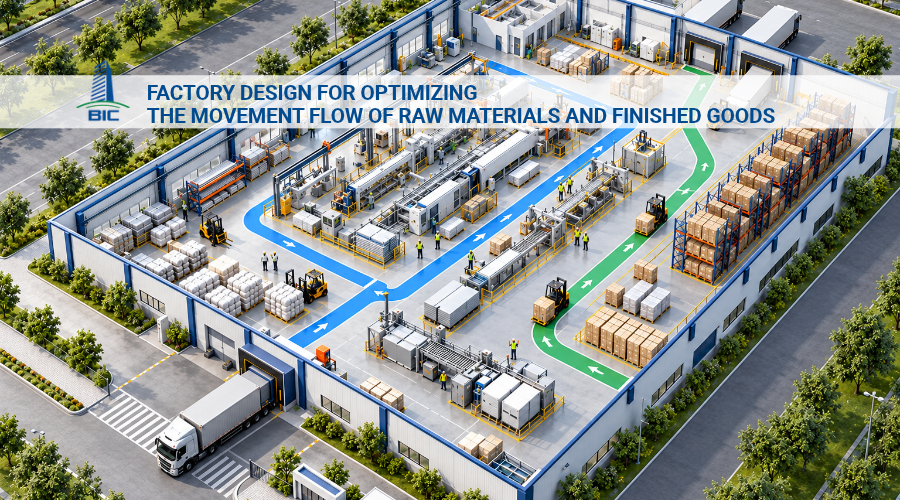
First, network design - depending on the needs of the business, the supply chain will be designed differently. Some companies focus on designing the most lean material supply flow possible with several large interconnected facilities, while some will design a long, scattered but flexible supply chain.

Second, the location of the facility - facility location requirements will depend a lot on the industry in which the business operates. Manufacturing companies may focus on placing factories near raw material suppliers, while e-commerce companies will choose warehouses closest to the number of available and potential customers.
Third, building specifications - the rate at which technological innovation increases, means that specifications for high-end logistics buildings continue to evolve. Building specifications are subject to customer needs, business requirements, and facility processes, layout, and automation. Recently, businesses have added requirements for ESG (Environmental, Social, and (Corporate) Governance), which are factors of production and sustainable industry building.
Corporations need to focus on building resilience and flexibility in the supply chain. From a real estate perspective, the impacts on industrial real estate are numerous but it is important to remember that demand for real estate is the product of supply chain optimization. It is important first to design the optimal supply chain network, then to fulfill the real estate requirements. Putting these factors together closely provides the most powerful approach to navigating transformation in the short and long term.