In the context of rapidly accelerating industrial economies, expanding production capacity through large-scale factory construction projects has become a strategic move for many enterprises. However, a facility covering tens of thousands of square meters is not simply an enlarged version of a small factory. Instead, it represents a complex technical challenge involving structural load capacity, large-span space solutions, and operational integration.
For investors, designing large-scale factories always involves potential risks—from floor settlement and cracking caused by uneven loads, to inefficient ventilation systems that create excessive heat, and even design errors that lead to significant additional costs. A small technical mistake during construction can later disrupt an entire million-dollar production line.
So how can companies optimize the factory construction process while still ensuring durability, safety, and cost efficiency? In this article, BIC examines the key technical considerations that every investor should understand before starting construction.
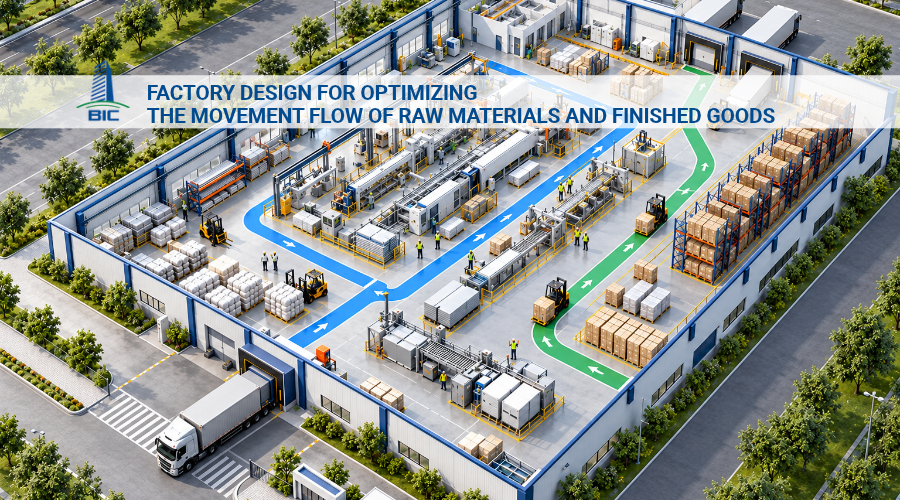
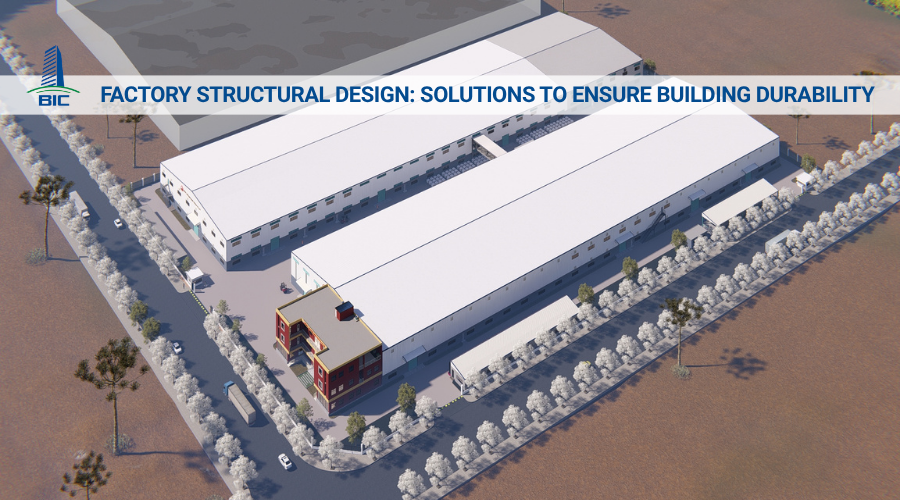
For large factory projects, efficiency depends not only on building size but also on how the space and operational flows are organized inside the facility. In real production environments, one of the biggest forms of waste does not come from material or equipment costs but from the time spent transporting goods, raw materials, and personnel. Therefore, master planning and efficient operational flow design are essential foundations of factory design.
The functional layout of the factory should be based on the actual production technology and processes of the enterprise. Before implementing architectural design solutions, investors should provide the design team with machinery layouts and production line diagrams to ensure that the factory design aligns with operational requirements. Once equipment layouts are clearly defined, functional areas can be arranged more effectively to optimize production space.
During the site planning stage, areas such as raw material receiving zones, primary processing areas, finishing areas, and finished goods warehouses should be arranged according to a one-way operational flow. This non-intersecting workflow helps minimize operational conflicts and improve internal logistics efficiency.
In addition, the internal transportation system must be designed according to the operational scale of the industrial facility. Internal roads around the factory are typically designed with widths ranging from approximately 7 to 12 meters to accommodate container truck movement. Properly designed turning spaces and loading areas—especially at dock leveler zones—ensure fast and safe loading and unloading, improving the overall operational efficiency of the factory.
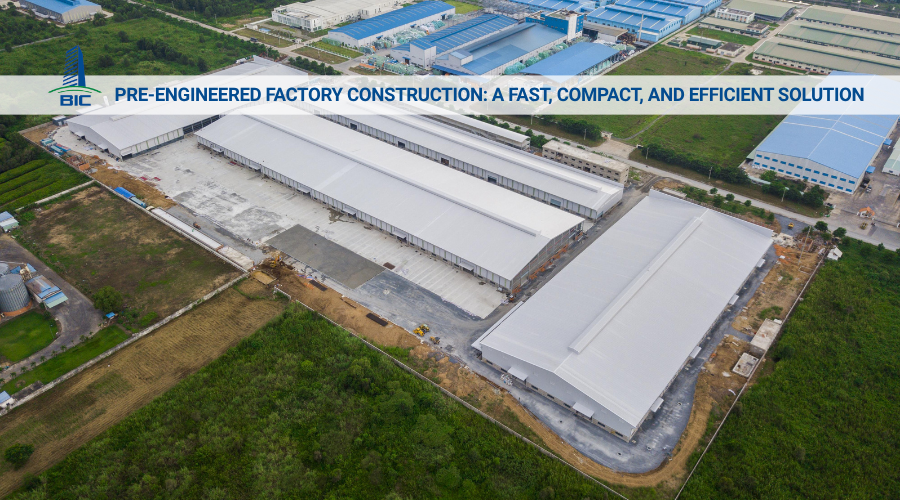
For large-scale factory projects, selecting the right structural system plays a key role in maximizing space efficiency and optimizing investment costs. In modern industrial construction, Pre-Engineered Buildings (PEB) are widely used thanks to their ability to span large distances, fast construction speed, and operational flexibility.
One of the most notable advantages of PEB structures is their ability to create large clear spans without intermediate columns. Depending on the design and technical requirements, this structural system can achieve clear spans of approximately 80–100 meters. Eliminating interior columns creates a spacious interior environment, allowing flexible arrangement of production lines, equipment, and forklift circulation paths.
This open space advantage is particularly valuable for large manufacturing facilities. Without structural column limitations, investors can reorganize production layouts according to business development stages. This flexibility is especially important in industries where production technology or equipment layouts frequently change.
Another advantage of pre-engineered steel structures is their ability to support future expansion. Steel frame systems allow factories to be easily extended when production demand increases. In many cases, investors can also add mezzanine floors to increase usable space without altering the entire building structure. Thanks to this flexibility, PEB systems are an ideal solution for large-scale factory design projects with long-term development plans.
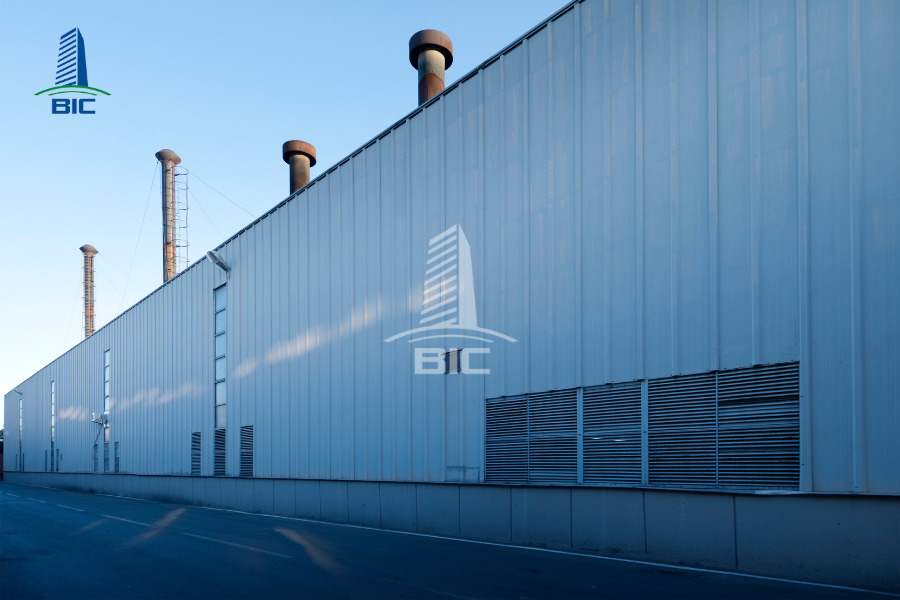
In large-scale factory construction, the floor system is one of the most critical technical components. Factory floors must withstand not only static loads from stored goods but also continuous dynamic loads from forklifts, machinery, and internal transportation activities. Therefore, floor construction quality directly affects operational performance and building lifespan.
In many industrial factory projects, floor construction costs account for approximately 20–30 percent of total construction costs but largely determine the long-term usability of the facility. If floors are not properly designed and constructed, problems such as settlement, cracking, or surface damage may appear shortly after operation begins, significantly affecting production efficiency.
For large factory sites, geological conditions are often inconsistent across the entire site. In some cases, weak soil layers or soft mud pockets may exist beneath the ground surface, creating risks of localized settlement after the building becomes operational.
Therefore, geotechnical surveys must be conducted with appropriate drilling density to accurately evaluate soil conditions. Survey results help identify high-risk areas and determine suitable ground improvement methods before constructing the factory floor.
When soil bearing capacity is low, reinforcement methods such as cement-stabilized soil columns or deep soil mixing techniques are commonly used to improve ground stability. In cases of extremely weak soil conditions, concrete pile foundations may be required to ensure load-bearing capacity. Without proper ground treatment, uneven settlement may occur, leading to floor cracking or damage during operation.
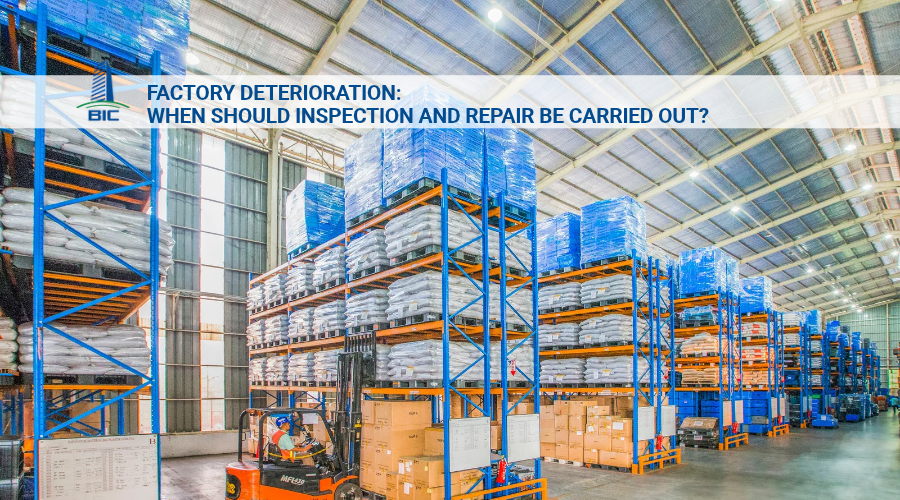
In modern factories—especially logistics centers using high-reach forklifts—strict floor flatness requirements are essential. Floor flatness directly affects forklift stability and warehouse racking system performance.
One widely used solution today is the use of Laser Screed technology during concrete pouring. This equipment automatically adjusts floor elevation using laser guidance, producing significantly higher precision and flatness compared with traditional manual finishing methods. As a result, floors can meet the super-flat standards required for modern logistics operations.
In addition, concrete floors are typically reinforced with traditional steel reinforcement combined with fiber materials such as steel fibers or polymer fibers. These materials improve impact resistance, reduce cracking, and enhance floor durability during long-term operation.
When constructing large concrete floor areas, expansion joints play an essential role in controlling concrete shrinkage. A common mistake in factory construction is spacing expansion joints too far apart or cutting joints at insufficient depth, which can lead to uncontrolled cracking.
To ensure load transfer between adjacent concrete slabs, dowel bars are usually installed at joint locations. When forklifts or vehicles pass over the joints, loads are evenly transferred between slabs, preventing uneven elevation differences or vibrations.
Joint filler materials must also be carefully selected according to operational conditions. Flexible materials with high impact resistance, such as polyurea or specialized epoxy are often used to protect joint edges from continuous forklift wheel impacts. When expansion joints are properly designed and installed, factory floors can maintain stability and durability throughout long-term operation.
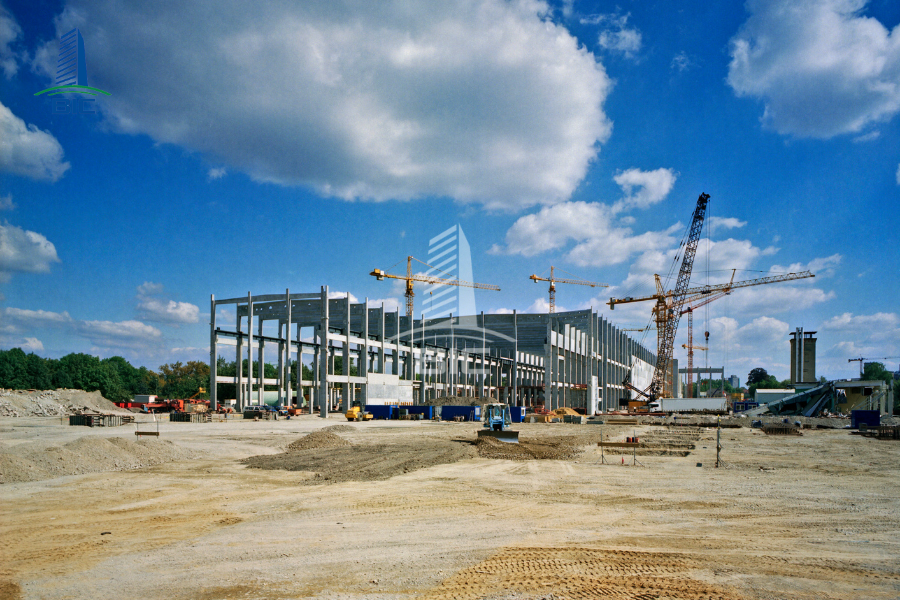
In large factory construction projects, roofing systems and building envelopes play a crucial role in protecting the structure from environmental impacts. With roof areas that may cover several hectares, the two main factors affecting performance are wind pressure and environmental temperature. Therefore, roof design must ensure waterproofing, efficient rainwater drainage, and effective thermal control.
Factory roofs must be designed with appropriate slopes to allow rapid drainage during heavy rainfall. In industrial factory design, the minimum roof slope is typically recommended to be around 10–15 percent. For buildings with large spans and long roof sections, drainage systems must be carefully designed to prevent water accumulation or overflow.
Roof drainage systems typically include perimeter gutters combined with internal roof drains. Drainage pipes must be sized appropriately to handle heavy rainfall during extreme weather conditions. Proper drainage design not only protects the roof system but also reduces the risk of leakage and structural damage.
A modern roofing solution widely used in factory construction is the seamlock roofing system. Unlike traditional metal roofing that requires screws penetrating the sheet surface, seamlock systems use mechanical locking connections between panels. This eliminates exposed screw holes on the roof surface, significantly reducing the risk of leakage caused by screw corrosion over time.
Large factory buildings often experience heat accumulation due to solar radiation absorbed by the roof. Without proper heat dissipation, a thermal island effect may occur inside the facility, increasing indoor temperatures and affecting working conditions and operational efficiency.
To reduce heat transfer from the roof, insulation materials are commonly used in the building envelope. A typical solution combines reflective insulation foil with fiberglass insulation layers or other insulation materials with a minimum thickness of around 50 mm. This insulation helps limit heat transfer into production spaces, improving indoor microclimate conditions.
In addition to insulation, natural ventilation systems are important for temperature control. Roof ventilation features such as monitor roofs or natural ventilators create air convection flows. Hot air rises and exits through roof vents, while cooler air enters through side wall openings. Through this natural airflow process, indoor temperatures can be reduced by approximately 3–5°C without consuming electrical energy, improving operational efficiency and reducing energy costs.
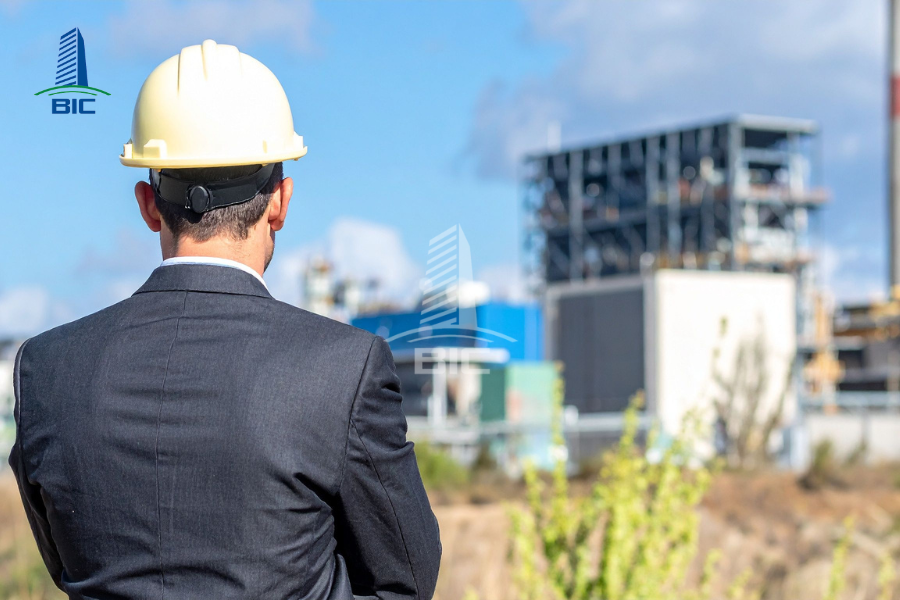
In large factory design and construction, mechanical and electrical systems as well as fire protection systems play a crucial role. These systems not only support production operations but also determine whether the facility meets safety and legal requirements. A well-designed M&E system ensures stable operation, energy efficiency, and easy maintenance throughout the building’s lifecycle.
Electrical systems in industrial factories must support large power loads, continuous operation, and future expansion capability. Therefore, electrical distribution systems must be carefully designed to ensure safety, minimize energy loss, and facilitate operational maintenance.
One important component is the cable tray system. Cable trays and ladders should be organized systematically along designated technical routes to allow easy access for inspection and maintenance. Proper cable organization improves safety and reduces risks of damage or overload.
In large factories with high electrical loads, busway systems are increasingly replacing traditional copper cable systems. Busway systems use modular electrical busbars that provide stable power transmission with reduced energy loss. In addition, busways allow easy installation of new power connection points when machinery locations change or production lines expand, increasing operational flexibility.
Fire protection systems are among the most critical components of industrial factory construction. In practice, many investors face difficulties during fire safety approval and inspection stages because the fire protection system was not fully integrated during the design phase.
One key component of fire protection systems is the fire water storage tank. These tanks typically have large capacities and require significant space within the project. To optimize space, many factories now use modular steel water tanks installed above ground or within the factory premises. This solution saves underground construction space and shortens construction time.
Emergency evacuation systems must also comply with safety regulations. The maximum travel distance from the farthest point in the factory to an emergency exit is typically limited to around 40–60 meters depending on the building’s fire resistance classification. For large factory buildings, fire compartment corridors or fire separation zones are required to ensure safe evacuation and limit fire spread during emergencies.
When fire protection systems are properly designed and constructed from the beginning, the approval and inspection process becomes easier while ensuring long-term operational safety.

For large factory construction projects, project management and construction supervision determine whether the project meets its goals in terms of schedule, cost, and quality. An effective management system allows investors to monitor the entire construction process, detect technical issues early, and ensure the project follows the approved design.
In modern construction projects, applying digital technologies for site management has become increasingly common. Investors should require contractors to implement electronic construction logs combined with real-time site surveillance camera systems.
This system allows project progress to be monitored in real time while continuously updating completed work items. Using monitoring data, investors can compare actual progress with the construction schedule presented in the Gantt chart. Early detection of delays allows timely adjustments in workforce or resources, which is particularly important for industrial factory projects where construction schedules directly affect production planning and financial flows.
A common mistake in many projects is conducting inspections only after construction is completed. In reality, factory construction should be inspected and approved at key milestones to ensure quality before moving to the next stage.
Important inspection milestones include verifying ground elevation levels and soil compaction after site leveling and compaction. This step ensures foundation stability before proceeding with further construction.
Before pouring foundation concrete, anchor bolt systems must be carefully checked for accurate positioning and elevation to ensure proper steel frame installation. During steel structure installation, weld quality and bolt tightening must also be inspected to ensure structural stability.
In addition, roofing systems and drainage systems should undergo waterproof testing before project completion. Conducting inspections at each technical milestone helps identify construction errors early and prevents costly repairs after project completion.
When project management and supervision are implemented systematically, large factory construction projects can achieve high quality and maintain stable long-term operation.
Constructing large-scale factories requires thorough preparation from the factory design stage to structural solutions, floor treatment, roofing systems, M&E systems, and fire protection systems. Each component directly affects construction quality, investment cost, and long-term operational efficiency.
Therefore, adopting a systematic and long-term approach helps investors minimize risks and maximize the operational value of their factories.
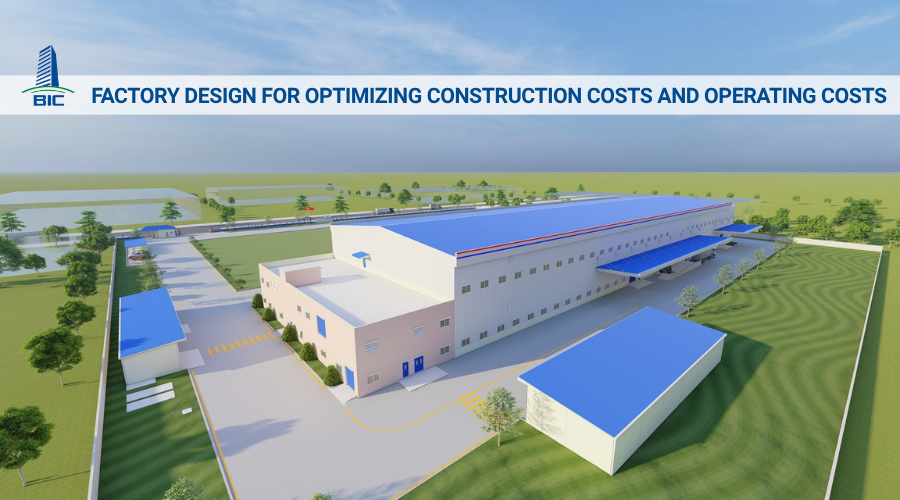
Instead of focusing solely on initial construction costs, investors should evaluate overall construction design solutions, operational efficiency, and lifecycle maintenance costs. A factory designed and constructed according to proper standards not only ensures safety, durability, and production efficiency but also creates a strong infrastructure foundation for sustainable business growth.