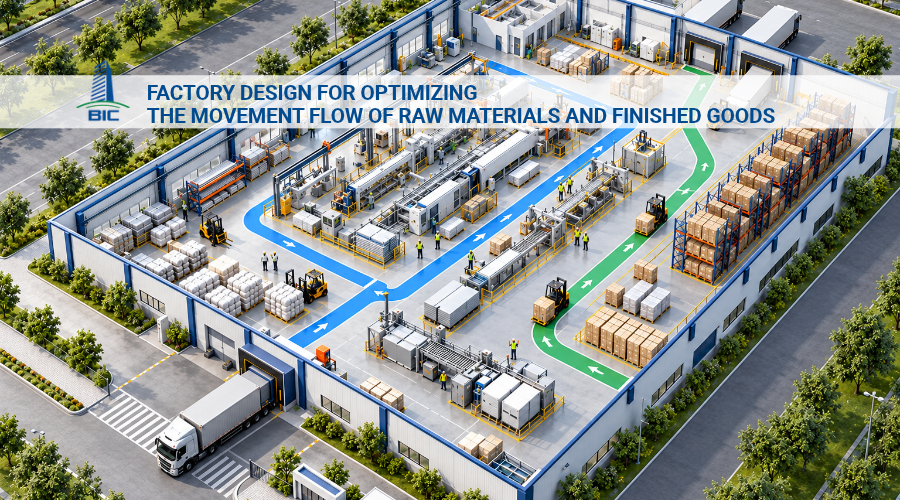
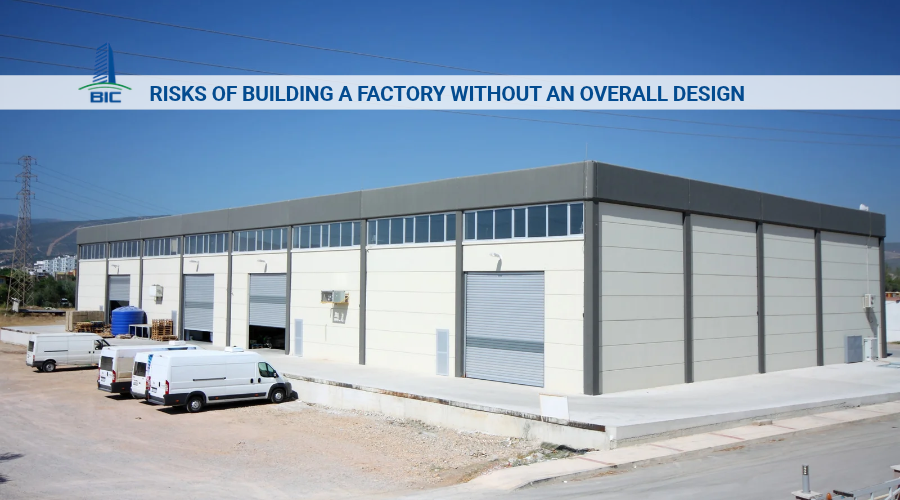
Factory design plays a crucial role in the production and operation of modern industrial processes. To ensure efficient and safe operations, factory design standards are of utmost importance. These standards not only ensure harmony between production needs and environmental factors but also help optimize space usage and enhance the sustainability of manufacturing facilities.
In the new regulations on factory design standards, investors, design contractors, and construction contractors must strictly adhere to these standards to ensure the overall quality of the project. Updating construction requirements is necessary to ensure effective preparation when implementing the construction of an industrial factory. Therefore, BIC updates you on the latest factory design standards today.
Factory design standards are a set of regulations, principles, and guidelines established to guide the process of designing, constructing, and operating industrial factories. These standards are typically issued by standardization organizations or authorized government agencies in the field of construction and industry.
The purpose of factory design standards is to ensure that factory construction projects meet safety, sustainability, production efficiency, and environmental protection requirements. These standards often include requirements for space design, technical infrastructure such as electrical, water, ventilation systems, fire prevention systems, earthquake-resistant structures, and occupational safety requirements.
Strict adherence to factory design standards is essential to ensure that factories can operate efficiently and safely while also optimizing operational and maintenance costs in the long term.
In the new regulations on factory design standards, revised since 2012, there are specific provisions for each design aspect that investors, design contractors, and construction contractors must strictly adhere to as follows:
For a long-lasting operation of the facility, the foundation plays an extremely important role as it bears many impacts when the building is in use. Complying with standards for factory foundations is crucial.
Firstly, the factory floor design must comply with TCVN 2737:1995 regarding load technology and geological conditions at the construction site. This is an essential task, helping to determine the properties of the ground and apply appropriate treatment measures in case of weak ground.
The foundations and underground technical systems in factory design standards must be designed to suit the physical properties of the soil and natural conditions at the construction site. When choosing a foundation plan, the structure of the building and the construction density on the land area must be considered.
- The top surface elevation of the foundation should be lower than the floor surface by specific values, including 0.2 m for steel columns, 0.5 m for columns with wall frames, and 0.15 m for reinforced concrete columns.
- The base elevation of steel columns for corridors and flyovers supporting pipes between workshops must be at least 0.2 m higher than the floor surface.
- The column foundations at expansion joints and workshops projected for expansion must be designed jointly for the two adjacent columns.
Foundations under brick walls, stone masonry walls, and rubble stone walls of non-framed buildings, when the foundation depth is not more than 0.15 m, should be designed with concrete or rubble stone concrete foundations. When the foundation depth is greater than 0.15 m, wall support beams should be designed, and the top surface of the wall support beams must be at least 0.03 m lower than the finished floor surface.
Additionally, the foundation must have protection measures against high temperatures and corrosion as required.
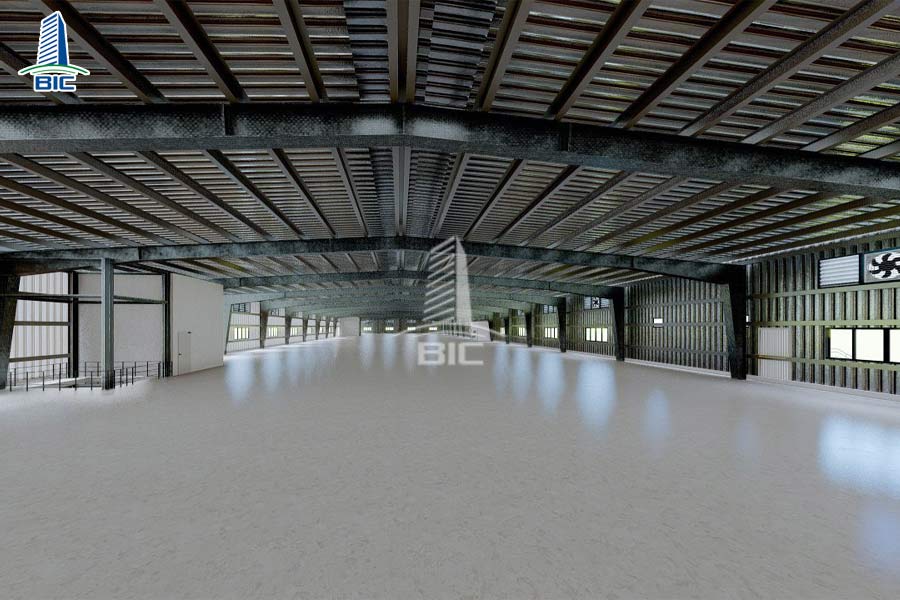
Concrete floors in factory design standards must be divided into sections not exceeding 0.6 m in length, with bitumen joints between the sections. The concrete cushion layer must be more than 0.1 m thick and have a strength grade of less than 150. The width of the house curb ranges from 0.2 m to 0.8 m, and the slope of the curb ranges from 1% to 3%.
Floors in factory design must be suitable for the technology and usage conditions. Types of structures that can be used include concrete floors, reinforced concrete floors, concrete floors resistant to impact with steel chips, acid-resistant and alkali-resistant concrete floors, cement tile floors, steel floors, wooden plank floors, plastic floors, and asphalt concrete floors.
Floors in warehouses and yards at overpass locations for unloading bulk materials must be flat, have a hard surface, and ensure quick drainage.
Doors and roofs are critical components in factory design standards, depending on the materials used for roofing. The slope of the factory roof has specific criteria as follows:
|
Material |
Slope Standards |
|
Cement Roofing Sheets |
30 - 40% |
|
Factory Tin Roofs |
15 - 20% |
|
Tile Roofs |
50 - 60% |
|
Reinforced Concrete Roofing Sheets |
5 - 8% |
For structures with a roof slope of less than 8%, it is necessary to create thermal gaps in the reinforced concrete layer to ensure waterproofing. The distance between thermal gaps should be designed to be more than 24 m along the length of the building.
Depending on the roofing material and technological requirements, the factory design standards for multi-span roofs can be designed for either internal or external drainage, connected to a common drainage system. Internal rainwater drainage requires a system of suspended gutters or pipes leading water to an indoor drainage trench. The drainage trench should be equipped with reinforced concrete covers that are easy to remove.
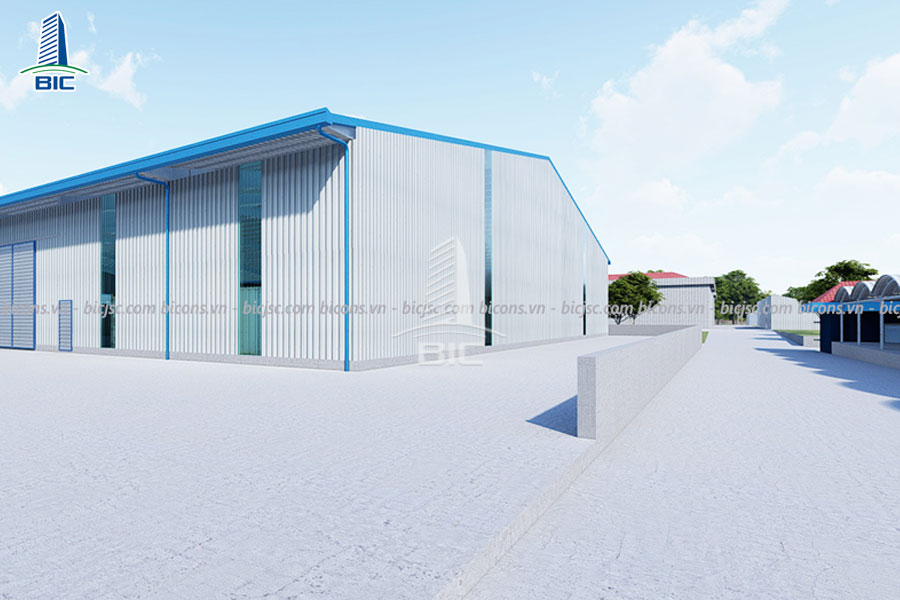
- For single-span factory buildings with a width not exceeding 24 m and column height below 4.8 m, rainwater can flow freely. When the column height is 5.4 m or more, a water gutter system to the ground is required.
+ In cases where the factory roof has skylights or stepped roofs with a height difference of 2.4 m or more between two roofs, gutters and water drains must be installed. If the height difference is less than 2.4 m, water can flow freely, but the lower roof section must be reinforced within the area of water flow.
+ Depending on technological requirements and the building’s orientation, various types of skylights can be designed, such as overlapping, M-shaped, saw-tooth, etc. Skylights combined with lighting and ventilation must use vertically installed glass; inclined glass should only be installed with justified reasons. The length of the skylight should not exceed 84 m and should be set back by one column distance from the gable end of the building.
- For single or double-span factory designs using natural light through walls and ensuring lighting requirements without heat, moisture, or toxic emissions, skylights are unnecessary.
- For factories producing a lot of heat, moisture, or toxic emissions, ventilation skylights are required. If only ventilation is needed while still preventing rain ingress, an open space without glass is sufficient, with a height of 0.15 m to 0.3 m. The angle for rain protection should not exceed 15° for water-sensitive production areas. If equipped with inclined louvers, this angle can increase to 45°, and the louvers must not be made of fragile materials.
Skylights should have fixed glass with the lower part open and the upper part with a protective overhang. The proportion between these parts must be calculated. From 18 degrees north latitude downward, the skylight glass must be designed to block direct sunlight.
The thickness of the skylight glass should not be less than 3 mm. In workshops with cranes or hoists, protective nets for the glass are required. The minimum width of the protective net is 0.7 m for vertically installed glass and equal to the horizontal projection of the frame for inclined or horizontal frames. If using wire glass, protective nets are unnecessary.
Depending on the characteristics, scale, and usage conditions of the facility, walls in factory design standards can be designed as load-bearing walls, self-supporting walls, or infill walls. Wall materials can include brick, natural stone, asbestos cement panels, and reinforced concrete panels. For outer walls using asbestos cement panels or light materials, the wall base should be made of brick, natural stone, or concrete and must be at least 0.03 m above the finished floor level.
- Brick wall bases should have rainwater-proof layers made of bitumen or other materials. The damp-proof layer below the wall base should be made of 75-grade cement mortar, 20 cm thick, placed horizontally at the finished floor level.
- Partitions between workshops should be designed for easy dismantling to meet changing technological and equipment maintenance needs. Partition materials can be reinforced concrete panels, steel mesh concrete, steel mesh with wooden or steel frames, plywood, or wooden panels.
- For production houses with spans less than or equal to 12 m and column heights not exceeding 6 m, load-bearing walls can be designed.
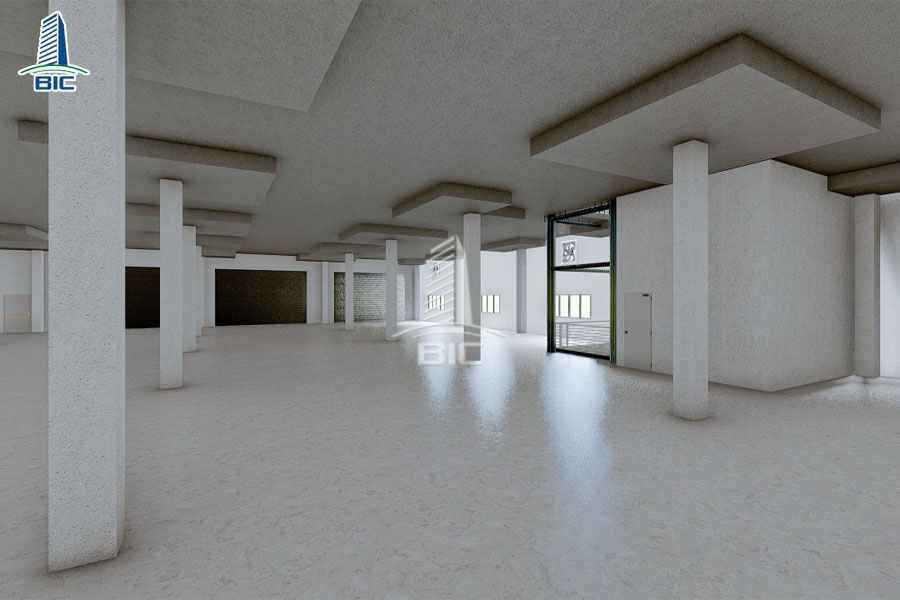
In factory design standards, maximizing the use of windows, doors, and ventilation openings is crucial for ensuring optimal natural ventilation and lighting.
Window Design Requirements:
- For windows not exceeding 2.4 m from the floor, operable windows should be designed.
- When windstorm protection is required, glazing areas over 2.4 m from the floor must be installed as fixed frames. If operable windows are necessary, secure fastening and mechanical mass-opening mechanisms must be provided.
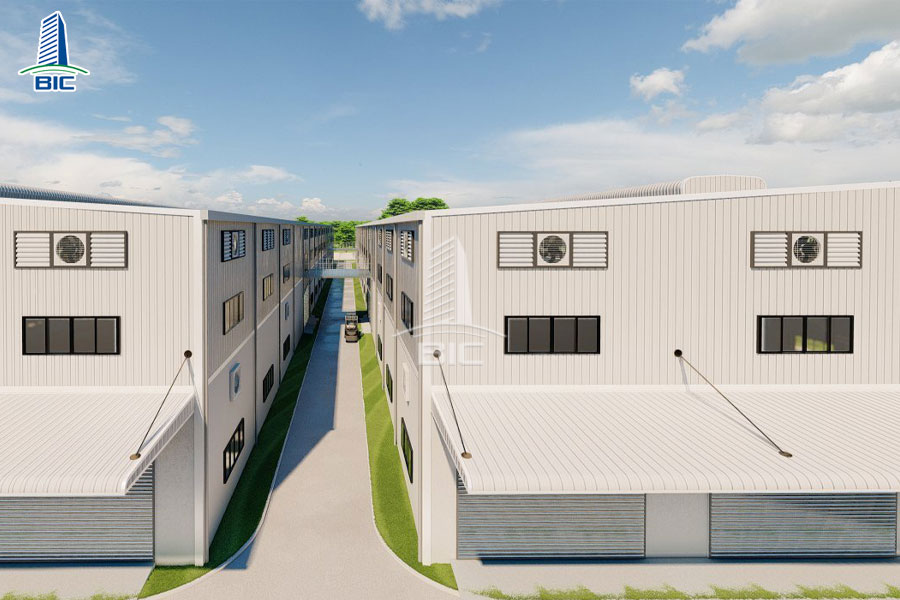
Besides the standards mentioned, several other requirements for industrial factories need attention:
- Electrical System Standards: Ensuring safety and high applicability.
- Fire Prevention Systems: Essential in industrial factories, complying with Government Decree No. 79/2014/ND-CP.
- Security Camera Systems, Lightning Protection, and Waste Treatment Systems: These also need careful consideration.
These updated factory design standards aim to provide a comprehensive understanding of basic and modern requirements in factory design.