Have you ever wondered how the construction design industry will evolve in the near future? In 2025, the industry is entering a phase of dramatic transformation thanks to the integration of advanced technology, sustainable development trends, and increasing market demands. Below are the five key trends for 2025 that BIC identifies as having a significant impact on the construction industry:
Safety is always the top priority in construction projects. However, the rapid emergence and advancement of machine learning (ML) and artificial intelligence (AI) technologies not only identify potential risks but also provide solutions to mitigate them, leading to groundbreaking progress in ensuring safety.
Currently, construction design trends focused on safety are driving significant changes in the industry. AI-powered cameras are a prime example, offering continuous data on-site activities. This technology enables comprehensive tracking of employees and equipment, ensuring transparency and accountability. Beyond monitoring, AI cameras analyze and predict hazards in real time, providing timely warnings.

AI-assisted site monitoring software enables better decision-making, maintaining productivity while enhancing safety standards. Detailed data analysis helps stakeholders identify causes and locations of incidents, allowing for the development of effective preventive strategies, thereby minimizing future injury risks.
In addition, AI extends beyond the construction site with the use of robots in pre-fabrication processes. Tasks performed in controlled factory environments significantly reduce injury risks for workers.
The combination of smart AI, enhanced hygiene and disinfection protocols, advanced protective equipment, and ongoing training programs has created safer working environments across all projects.
Although no longer a new technology, augmented reality (AR) continues to play a crucial role in driving growth and innovation in the construction industry, particularly in recent years. It is one of the best solutions for project visualization, providing a clear and detailed view of the final outcome.
AR is a powerful tool in construction design, enabling builders, architects, and construction firms to provide clients with a visual representation of projects from the pre-construction stage. This not only helps them understand how the project will look upon completion but also aids in effective project segmentation, resulting in a tangible final product. Investors can make informed decisions, optimize costs, and adjust designs accordingly.

- 3D Visualization: Allows evaluation of how projects integrate with their surroundings.
- Automated Measurements: Enhances accuracy and efficiency during surveys.
- Change Presentations: Quickly and cost-effectively showcases architectural or structural adjustments.
- Training and Safety Simulations: Familiarizes workers with hazardous scenarios in simulated environments.
By detecting issues early, AR shortens decision-making time and minimizes risks. Errors can be easily addressed when decision-makers can preview outcomes and make necessary adjustments before implementation.
Augmented reality not only improves construction processes but also delivers greater value to clients, enabling the industry to advance further in technological applications.
While not a new trend, Building Information Modeling (BIM) remains a crucial driver of innovation and efficiency in the construction industry. BIM leverages 3D models to support various stages throughout the entire factory design process.
Similar to augmented reality (AR), BIM facilitates easier sharing of ideas and data through a highly visual approach in factory design. This enhances coordination among stakeholders and significantly shortens production and construction timelines.

Specific Benefits of BIM
- Enhanced Prefabrication Support: BIM improves prefabrication processes with higher accuracy, minimizing errors in production.
- Reduced Project Timelines: Through detailed simulation and planning, BIM significantly cuts down the time required to execute projects.
- Accurate Rendering: BIM's 3D models ensure precise representation of factory design and project structures, instilling greater confidence during implementation.
As a bridge connecting project stages and teams, BIM not only optimizes performance but also enhances quality and reduces unexpected costs. This technology is pivotal in driving breakthroughs in construction design during the era of modernization.
Modular Construction and Pre-fabrication
Modular construction methods are revolutionizing the modern construction industry. Building components are pre-fabricated in factories and then transported intact to construction sites, offering unparalleled efficiency in both time and cost. This technology provides the following outstanding advantages:
- Modules are produced in controlled factory environments, ensuring compliance with the highest quality standards.
- Factory conditions minimize risks related to weather or common construction challenges, creating safer working environments for workers.
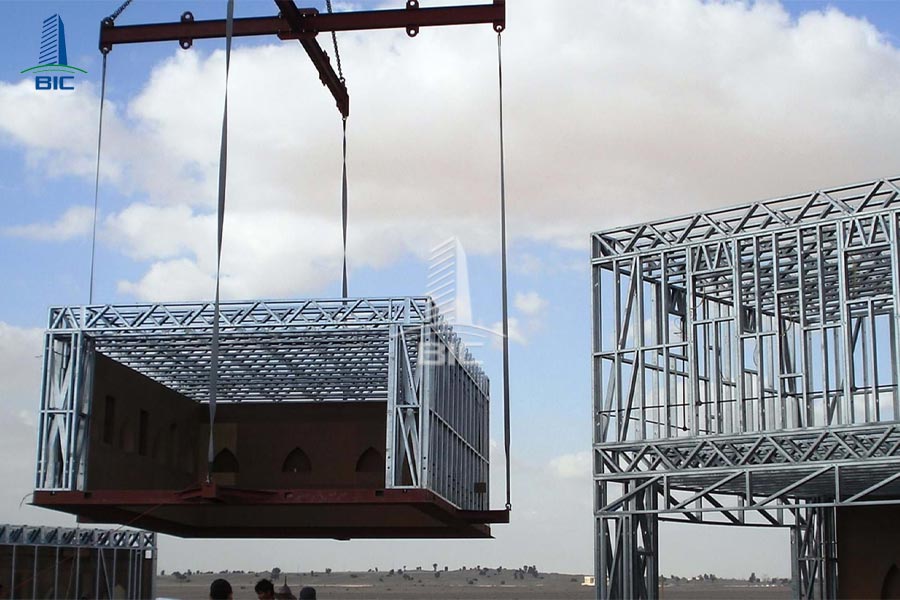
- Pre-fabrication in factories accelerates construction timelines, ensuring projects are completed on time and within budget.
- By eliminating delays caused by external factors, this method offers reliable project scheduling.
- Pre-fabrication processes optimize material usage, minimizing waste of expensive construction materials.
- Higher production efficiency leads to cost savings for investors.
Modular construction not only delivers practical value but also contributes to the modernization of the construction industry, pushing projects to achieve high standards of quality, efficiency, and sustainability.
Although LEED-standard materials and methods have been around for a long time, this trend continues to shape modern construction, becoming the foundation for sustainable building practices.
Construction companies now focus on environmental protection and resource conservation. Every stage in the construction process, from optimizing energy use at architectural offices to intelligent material transportation to job sites, is carried out based on green building principles. Reducing environmental impact ensures better public health protection.
The demand for corporate social responsibility and environmental protection has strongly motivated construction firms to adopt green initiatives. This trend extends not only to new projects but also to the renovation of existing buildings. Innovations like replacing energy-efficient windows and doors or upgrading glazing and curtain walls enhance utilization efficiency while modernizing structures.
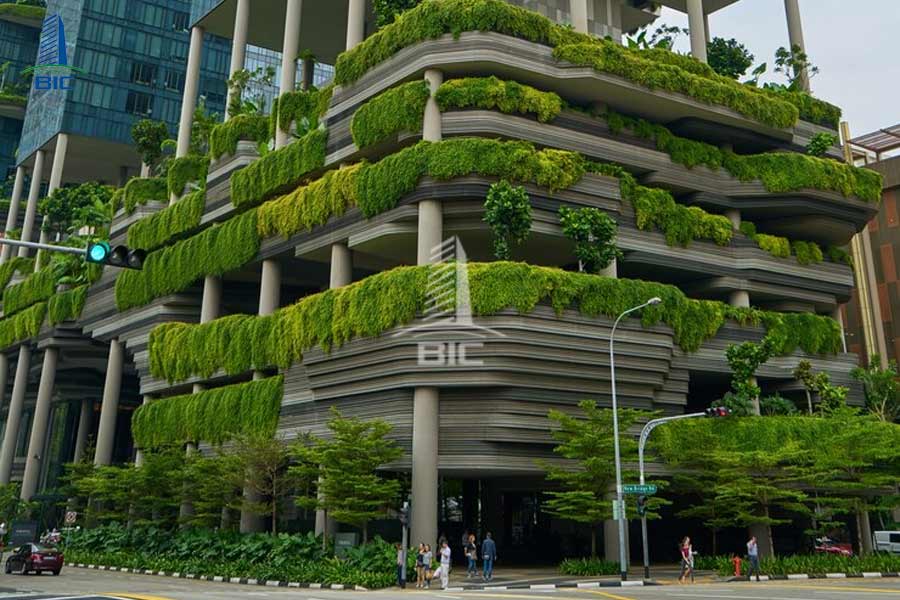
Some popular certifications in green building include:
- LEED (Leadership in Energy and Environmental Design): Evaluates energy efficiency and environmentally friendly design.
- EDGE (Excellence in Design for Greater Efficiencies): Optimizes resource use and project performance.
- Distributed Energy Systems: Reduces pressure on national energy systems.
Green construction is not just a trend but also a responsibility. Applying green initiatives offers long-term benefits for both the environment and communities while affirming the construction industry's commitment to a sustainable future.
The construction design trends for 2025 not only drive innovation but also lay the groundwork for sustainable future development. From workplace safety and augmented reality to green construction, each trend brings practical value and lasting benefits.
Contact us at BIC to create world-class, safe, and sustainable constructions together!