The search for energy-saving solutions has become more urgent than ever. Did you know that solar energy systems not only reduce operational costs but also offer sustainable benefits for the environment? With the ability to provide clean and abundant power, solar energy is becoming the top choice for businesses, especially in production factories. Let’s explore the outstanding benefits this system brings.
In the process of factory design, optimizing operational costs is always an important factor that business owners need to consider. One effective solution to reduce energy costs is to integrate solar power systems right from the design stage. Factories with high electricity consumption and continuous operation can save significant costs by applying this technology. In fact, a well-designed solar power system can meet up to 100% of the factory's electricity consumption, helping businesses maintain stable profits.
Choosing appropriate materials and roof structures to install solar panels is a crucial step. Solar panels not only allow factories to maximize natural sunlight for energy production but also help reduce indoor temperatures. This helps protect machinery, prolong equipment life, and create a comfortable working environment for employees. Therefore, factory roof designs must consider load-bearing and sun orientation factors to ensure the highest efficiency of the solar power system.
Integrating solar power systems into factory design not only brings economic benefits but also contributes to environmental protection. With Vietnam’s abundant solar radiation, factories designed to harness this renewable energy source will meet sustainable development criteria. This not only helps businesses reduce carbon emissions but also creates a positive impression on customers and partners, enhancing industry reputation. Factories utilizing green energy will inevitably become a future trend, meeting the long-term development needs of businesses.
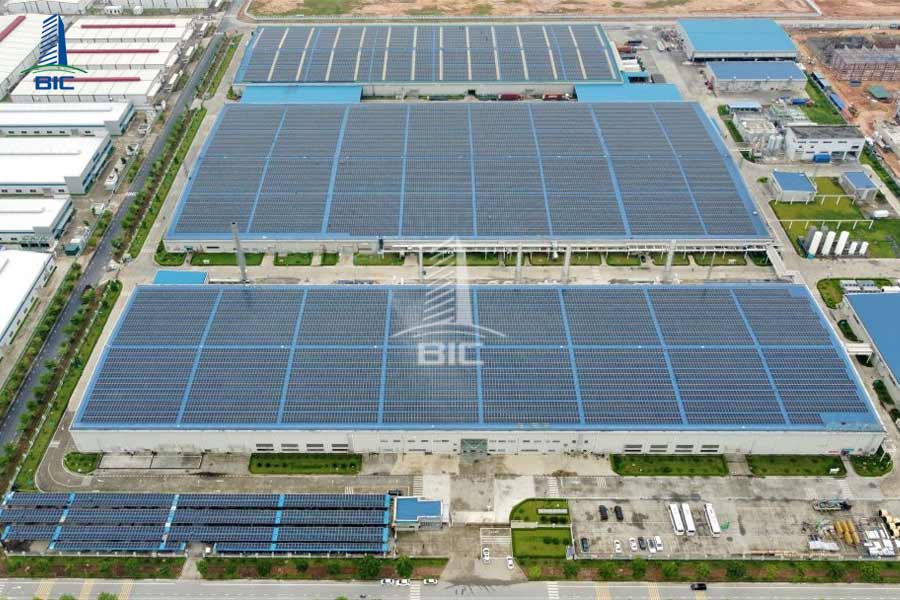
Installing solar energy systems in factory design not only brings operational efficiency but also optimizes long-term costs for businesses. First and foremost, saving on electricity costs is a prominent economic benefit. In production factories, electricity consumption accounts for a large portion of operating costs. By using solar energy systems, factories can produce electricity from natural sunlight, reducing reliance on the power grid. This not only lowers electricity bills but also helps factories control costs when prices of traditional energy sources fluctuate.
In addition, solar energy systems reduce reliance on the power grid. In modern factory designs, maintaining a stable electricity supply is key to ensuring uninterrupted production. A design combining solar energy and energy storage systems, such as batteries, can provide continuous power even during grid outages. This ensures continuous production, enhances flexibility, and minimizes risks from power loss.
Owning a clean energy system allows businesses to optimize operational costs, increase market competitiveness, and raise the value of factory assets, especially when planning to expand or sell. In the long run, a factory design integrated with solar energy is not only a cost-saving choice but also provides a strategic advantage for businesses.
Using solar energy systems in factory design brings clear environmental benefits, promoting sustainable development. Firstly, this system helps reduce CO2 emissions, one of the main causes of climate change. Instead of using traditional fossil fuel sources that pollute, solar energy is clean and emits no pollutants during electricity production. This helps businesses comply with environmental regulations and reduces negative impacts on ecosystems.
Additionally, utilizing renewable energy sources like solar demonstrates a company's commitment to sustainable development goals. In the global context, corporate social responsibility and environmental protection are becoming increasingly important, and factories using solar energy will have an advantage in meeting international standards and enhancing brand image. Applying solar energy in design not only brings direct environmental benefits but also helps businesses build a reputation and increase competitiveness.
Incorporating solar energy into factory design not only helps businesses reduce costs but also creates positive environmental impacts, contributing to comprehensive sustainable development.
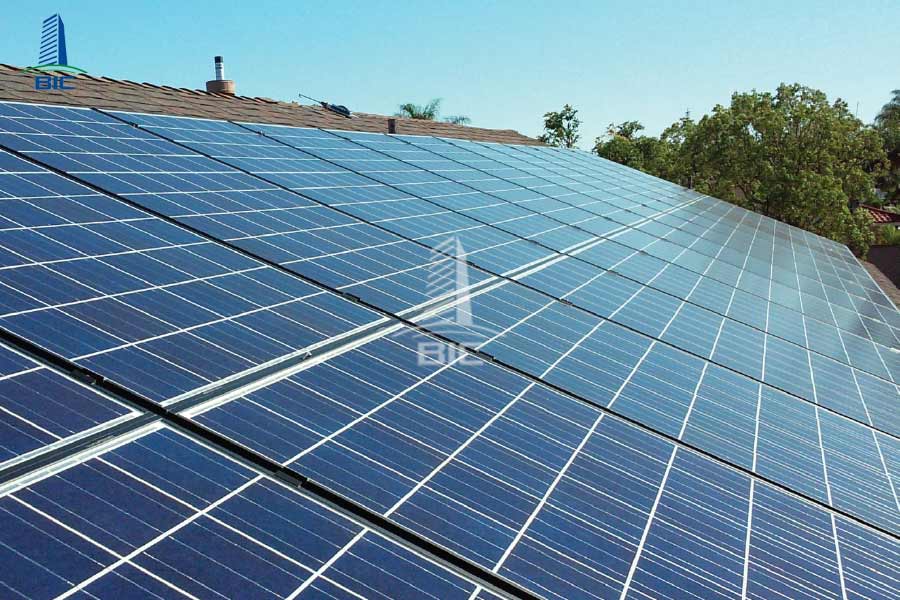
Integrating solar energy systems in factory design not only brings economic and environmental benefits but also enables businesses to enjoy government incentives. Many countries, including Vietnam, are encouraging the use of renewable energy through supportive policies such as tax reductions, subsidies, or providing preferential loans for businesses investing in solar energy systems. These incentives help ease the financial burden of initial installation and promote businesses toward sustainable energy solutions.
Moreover, using solar energy allows factories to better comply with environmental protection regulations. Today, businesses face strict requirements on emissions reduction and environmental protection, particularly in manufacturing industries. By adopting solar energy, businesses can reduce emissions and environmental impacts, avoiding fines for regulatory violations and potentially receiving environmental certifications, which elevate their reputation and market position.
Furthermore, investing in solar energy helps businesses lead in sustainable development trends. Many partners and customers are now highly concerned about corporate social responsibility, especially in environmental protection. Meeting legal requirements not only ensures compliance but also affirms a company's commitment to the environment and community, strengthening customer and investor trust.
Using solar energy systems in factory design not only brings economic and environmental benefits but also improves the power stability of the factory. In the context where production plants often face risks of power outages or grid overload, integrating solar energy systems ensures continuous electricity supply. This allows the production process to continue without disruption, reducing the risk of equipment damage and production halts, thus increasing productivity and operational efficiency.
Modern factory solar energy systems are highly durable and easy to maintain. Solar panels are designed to withstand harsh weather conditions such as rain, wind, and high temperatures, ensuring stable operation over long periods without needing much maintenance. This helps reduce maintenance and repair costs compared to traditional power supply systems. Moreover, with technological advancements, the efficiency of solar panels is increasingly high, ensuring stable electricity production for many years.
Solar energy systems can also be integrated with other technical solutions such as energy storage systems or backup generators. When properly designed and installed, these systems can work together, providing continuous power for the factory even in the absence of sunlight or when grid issues occur. This enhances production flexibility and protects businesses from power supply risks.
In conclusion, from a technical perspective, solar energy systems are not only a sustainable solution but also enhance the efficiency and reliability of factories, ensuring uninterrupted production and long-term maintenance cost savings.
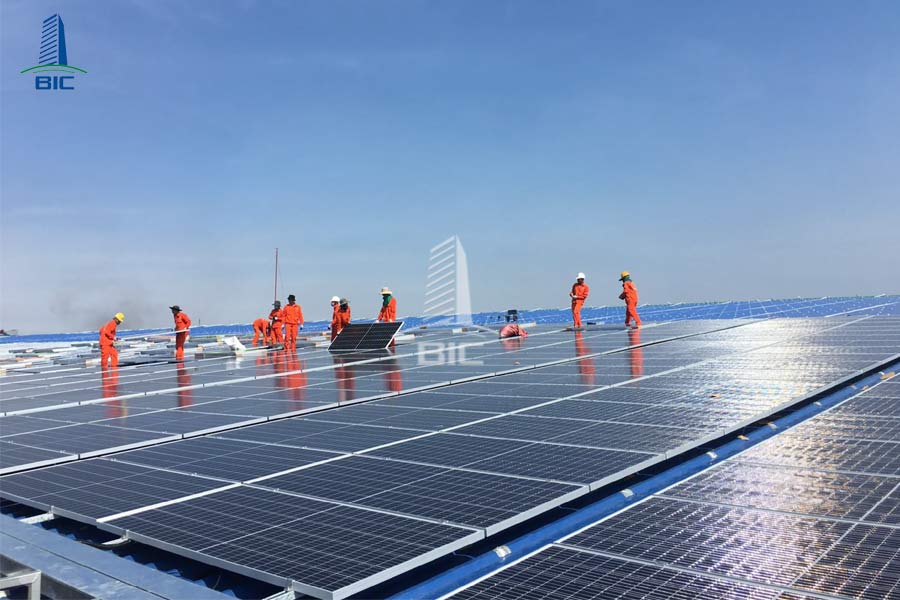
Solar energy systems in factories bring not only economic, environmental, legal, and technical benefits but also have practical applications that optimize production operations. With the ability to save electricity costs, reduce dependence on the power grid, and increase asset value, businesses not only improve operational efficiency but also contribute to environmental protection and enhance brand reputation. Especially in the context where sustainable development is increasingly valued, using solar energy is a comprehensive solution that helps businesses advance on the path of long-term development.
Contact BIC now for detailed consultation on solar energy system design and installation for your factory. With experience and professionalism, BIC is committed to providing the most optimal solutions, helping you save costs and build a sustainable future.