Affordable factory design is a construction solution that focuses on low costs, optimizing materials and construction processes to ensure functionality while saving budget. Affordable factories not only help businesses reduce financial burdens but also effectively meet production and operational needs.
In the industrial sector, factories play a crucial role, especially in an increasingly fierce competitive landscape. With low investment costs, businesses can quickly deploy infrastructure, thereby accelerating production speed and optimizing business performance.
The target audience for affordable factory design includes:
- Small businesses: Newly established units that need to optimize costs while ensuring quality infrastructure.
- Startups: Companies that require moderate, flexible production space that is easy to expand.
- Medium and small-scale production projects: Short-term projects or production trials before scaling up.
- With flexibility, cost savings, and efficiency, cost-optimized factory design is increasingly becoming the preferred choice for many businesses across all manufacturing sectors.
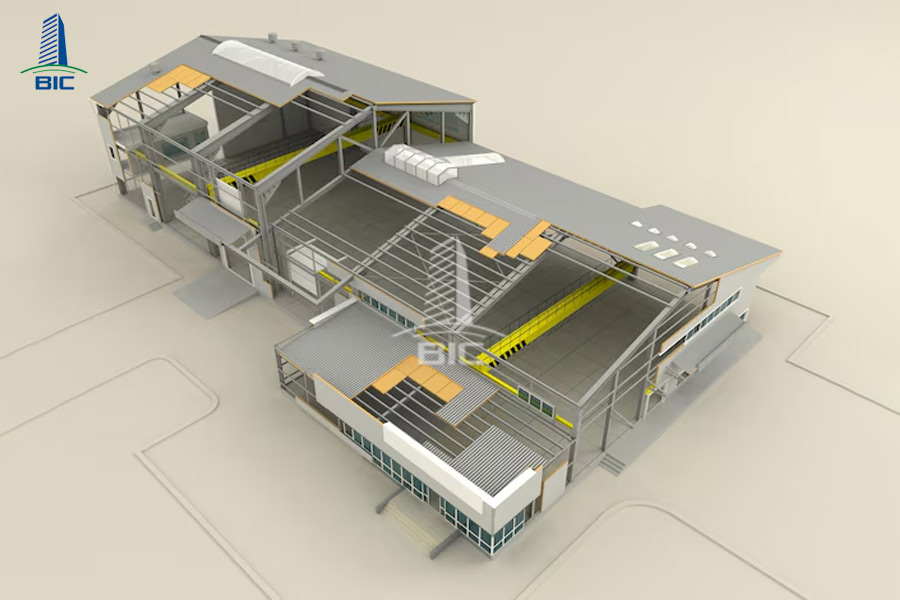
Affordable factories typically focus on optimizing construction costs while still ensuring functionality. Below are some notable features of this type of design:
Factory designs prioritize the use of low-cost materials that still ensure durability and high applicability. Common materials include:
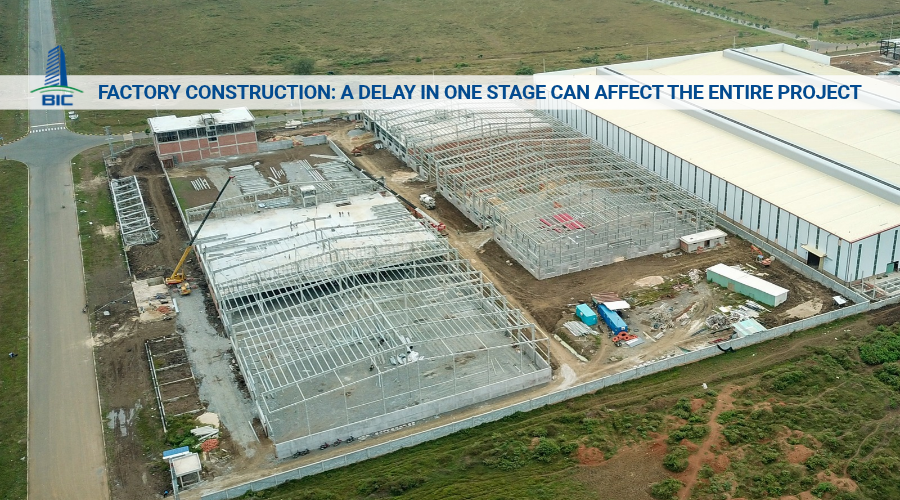
- Pre-engineered steel: This is the primary material due to its flexibility, quick construction, and low cost.
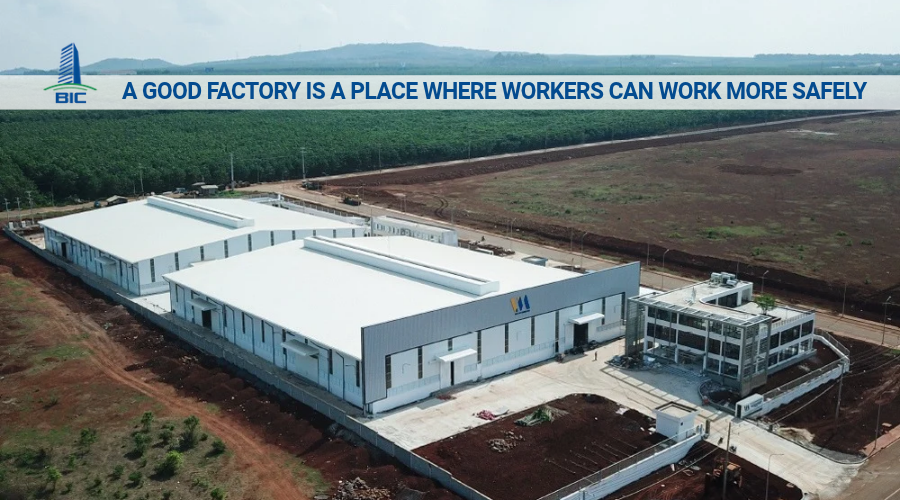
- Corrugated metal: Widely used for roofs and walls of factories because of its lightweight, ease of installation, and affordability.
- Reinforced concrete: Used only in areas requiring high durability, such as foundations, columns, and main beams.
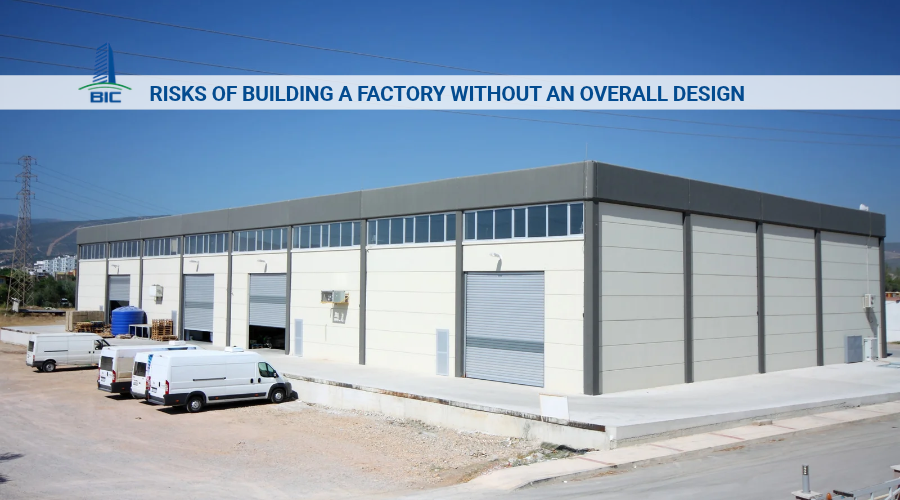
- Simple structure: Affordable factories are designed with a minimalist structure, with rectangular or square shapes being the most common due to their ease of design and construction.
- Optimal dimensions: The size of the factory is calculated to match the production scale and land area, avoiding material waste.
Affordable factories are often designed according to standard modules. This provides benefits such as:
- Easy assembly and construction.
- Reduced customization costs and increased mass production capability.
Thanks to the use of modern prefabrication technology, the construction process of affordable factories is rapid. This helps:
- Save time and labor costs.
- Meet usage demands in a short period.
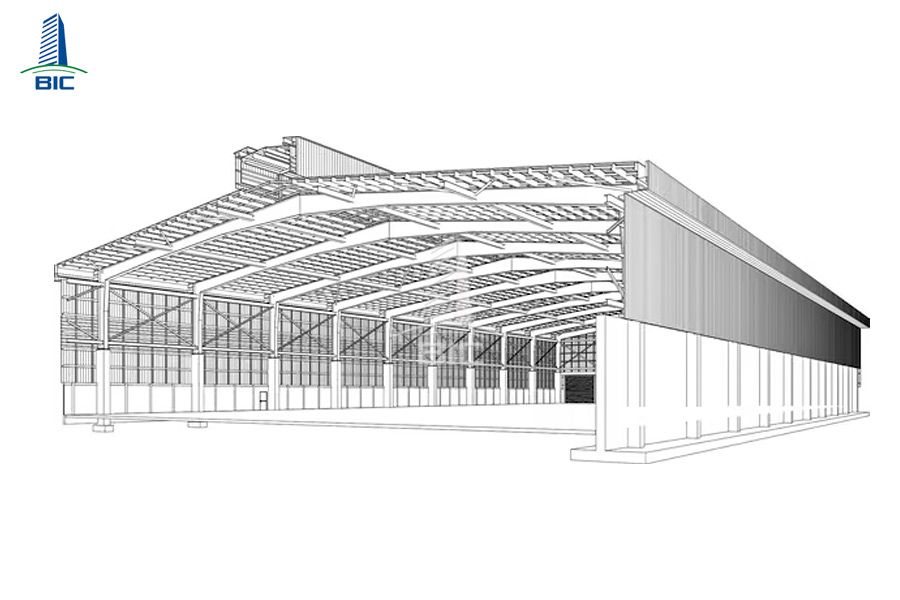
Low-cost workshop systems are optimally designed to minimize costs while ensuring efficiency:
- Ventilation system: Primarily uses industrial fans or natural ventilation.
- Electrical and plumbing systems: Basic design that meets essential operational needs.
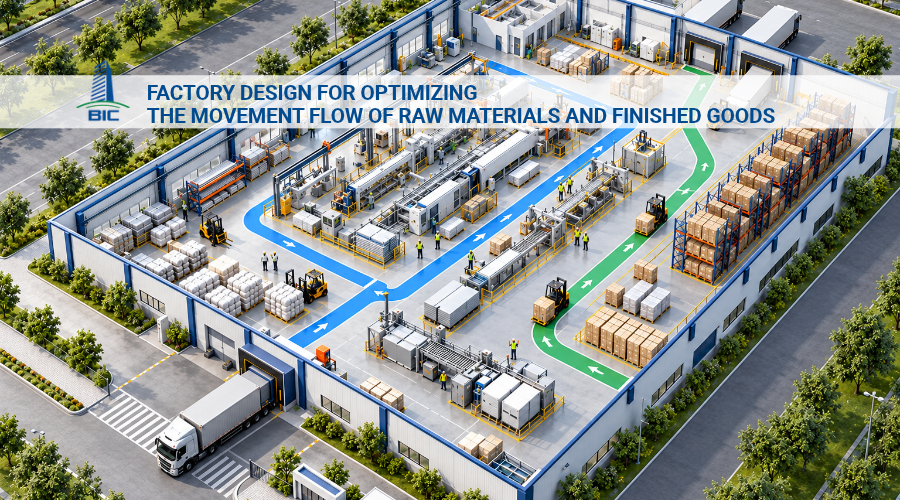
The interior space of the workshop is arranged scientifically and logically to maximize usable area:
- Work areas and storage are appropriately organized.
- Minimizing wasted empty space.
Despite low costs, low-cost workshops must still meet safety standards, including:
- High durability: Capable of withstanding heavy loads and harsh weather conditions.
- Fire resistance: Use of basic fire-resistant materials.
- Waterproofing: Ensuring water resistance for roofs and walls.
The design of low-cost workshops allows for easy expansion or upgrades as the business grows, helping to save on renovation and new construction costs.
With these characteristics, low-cost workshops are the optimal choice for businesses looking to balance cost and usability.
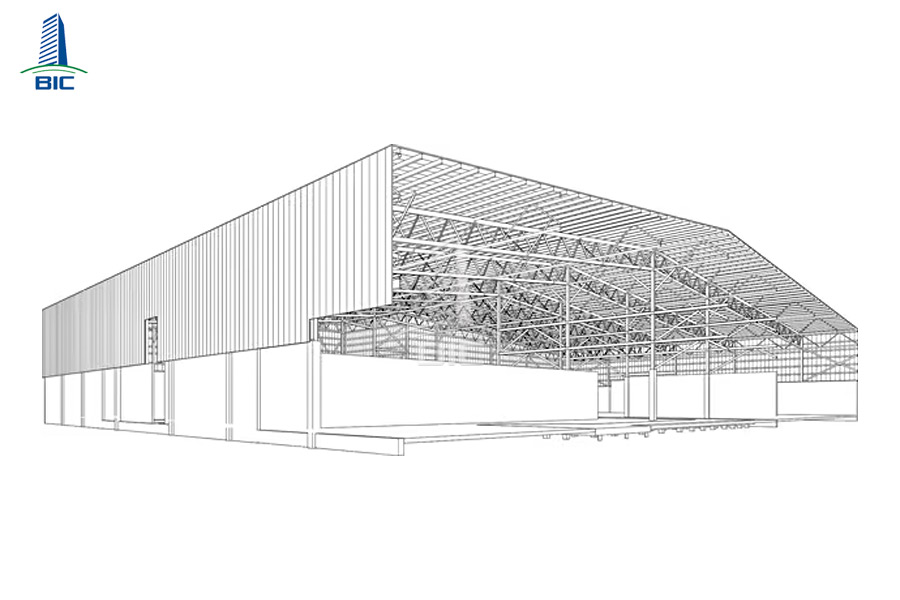
One of the biggest benefits of affordable factories is that they help businesses significantly reduce initial investment costs. By using cost-effective materials, simple designs, and quick construction methods, businesses can:
- Lower infrastructure construction costs.
- Allocate budget for investments in other areas such as machinery, personnel, or operations.
Affordable factories are designed and built in a short time frame, thanks to the application of modern modular technology. This helps:
- Businesses quickly bring production facilities into operation.
- Timely meet orders or the need to scale up production.
The design of affordable factories is particularly suitable for small businesses, startups, or projects that need to optimize capital. With low investment costs while still ensuring functionality, this solution helps:
- Businesses effectively utilize limited capital.
- Reduce financial risks, especially for experimental projects or short-term production.
With these outstanding benefits, affordable factories not only help businesses save costs but also create a solid foundation for long-term development.
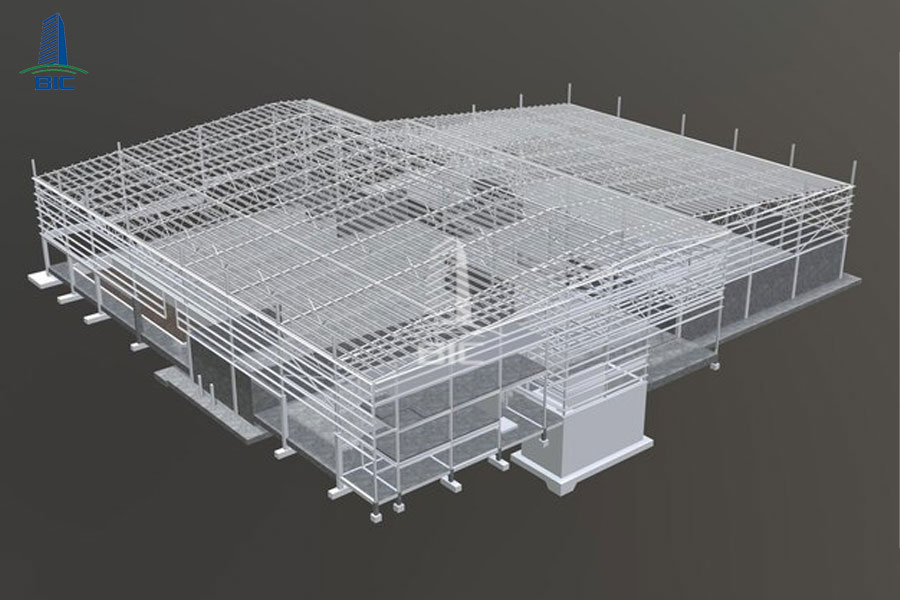
Selecting an experienced and reputable contractor is a crucial factor in ensuring the quality of the project. A professional contractor will:
- Advise on solutions that fit the budget and needs of the business.
- Commit to the construction schedule and quality of the project.
- Ensure compliance with safety and construction standards.
Although prioritizing cost savings, businesses need to carefully check the quality of materials and the design plan to avoid issues later on:
- Construction materials: It is advisable to choose durable materials that are suitable for the environmental conditions and operations of the factory.
- Factory design: Ensure that the design meets functional requirements, optimizes space, and allows for easy expansion when necessary.
The process of monitoring and checking the quality of construction is an essential step, even for low-cost projects. Businesses should:
- Appoint a person responsible for supervision or hire a professional project management unit.
- Closely monitor each construction phase to ensure that the items are executed according to standards.
- Promptly address any arising issues to avoid impacting the quality of the project.
Adhering to these notes will help businesses own a low-cost factory while still ensuring safety, durability, and long-term effectiveness.
Affordable factory design offers many outstanding advantages, especially in optimizing costs and effectively meeting production needs. To ensure the quality of the project, businesses should choose reputable contractors, thoroughly evaluate materials and designs, and maintain quality checks throughout the construction process.
If you are looking for a factory design solution that fits your budget and production requirements, carefully consider the above factors to select the best option. Contact BIC now for advice and to implement an affordable yet effective factory that fully meets your business's requirements!