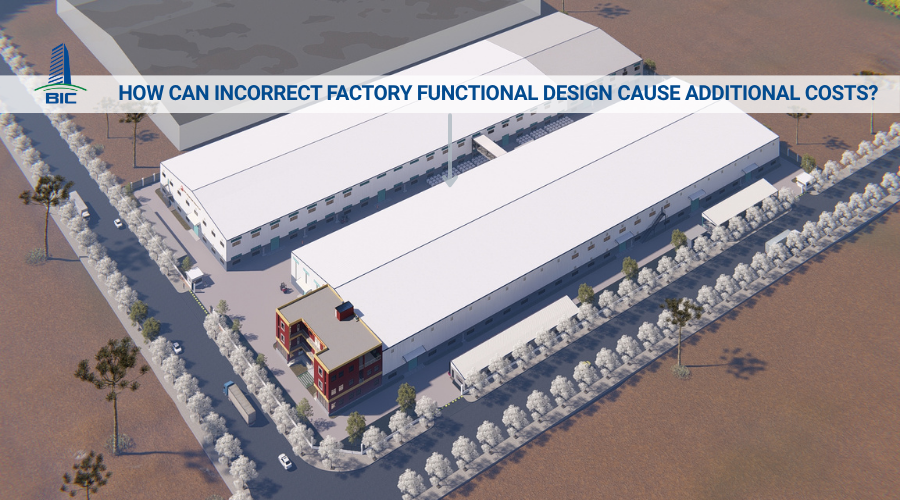
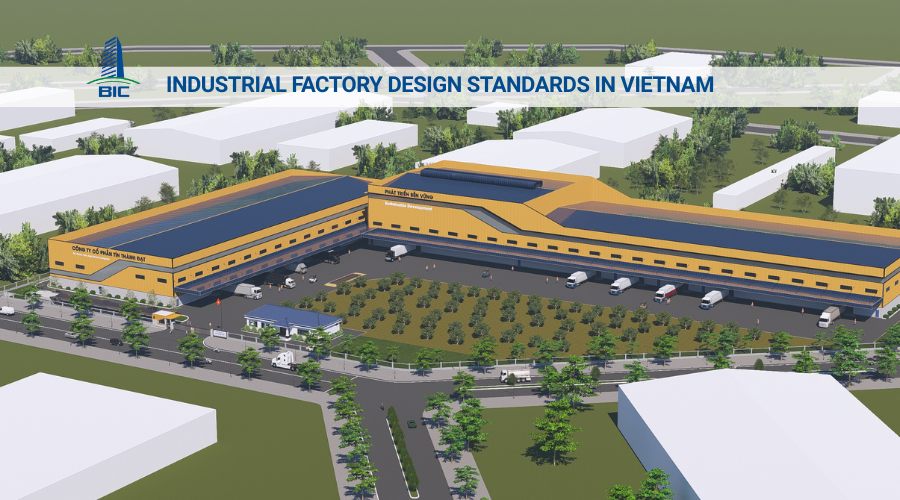
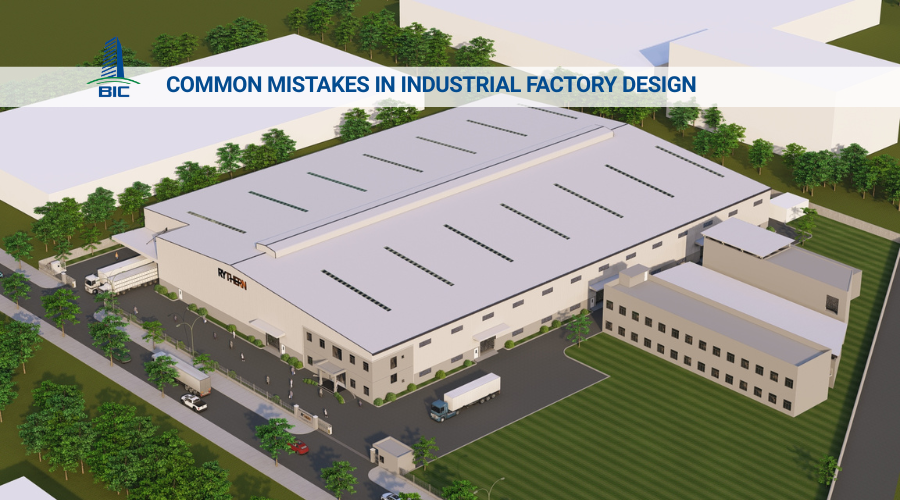
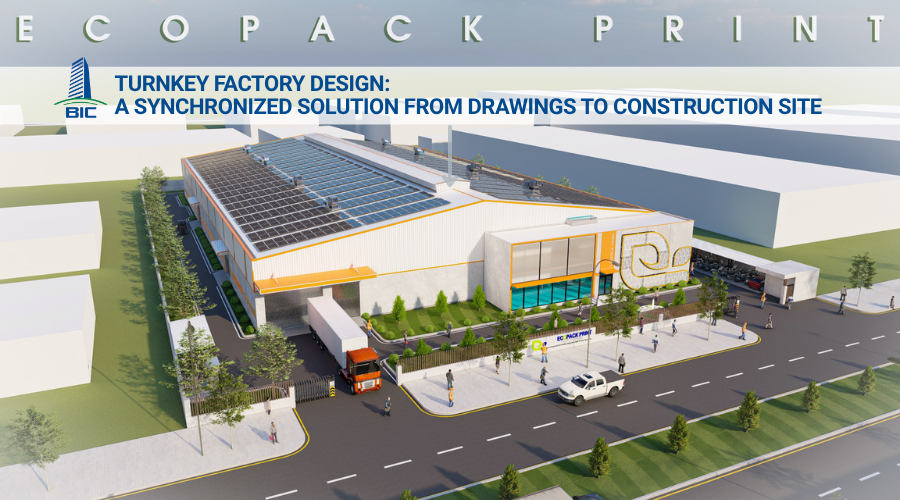
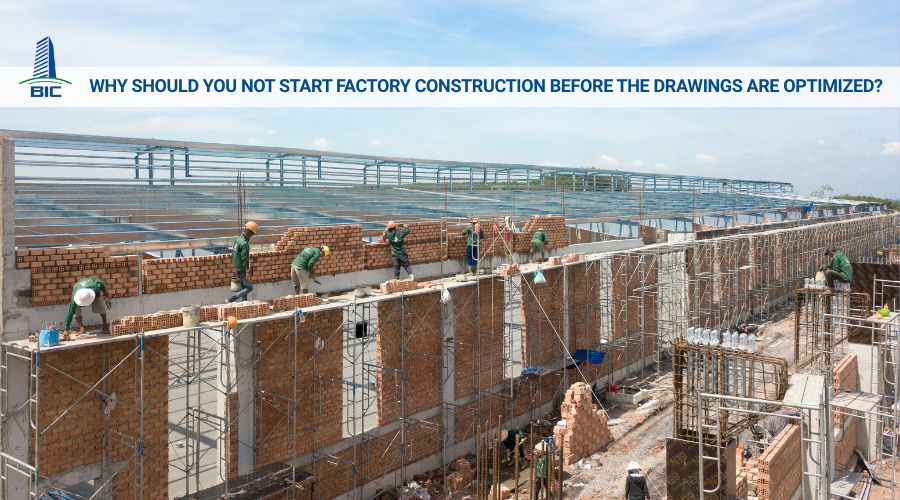
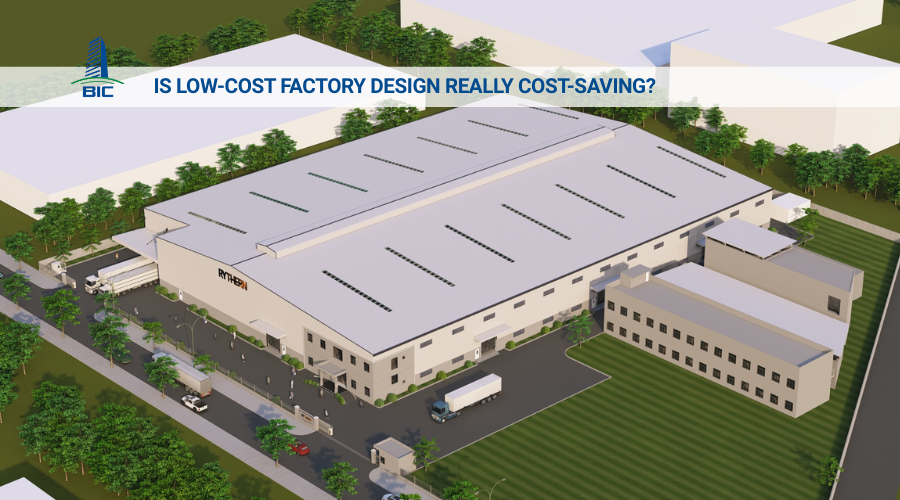
In the factory, it is necessary to plan a reasonable zoning to create favorable conditions for workers to work and move. Including production areas, offices, canteens, warehouses, waste storage areas, parking spaces... Reasonable arrangement of these areas helps businesses make full use of the land area and optimize the functions of the house. workshop and ensure safety at work.

Depending on the nature of the factory to have a suitable zoning plan and optimize the area
Most businesses will follow the principles of experience in building factories, dividing factories by function with the following main areas:
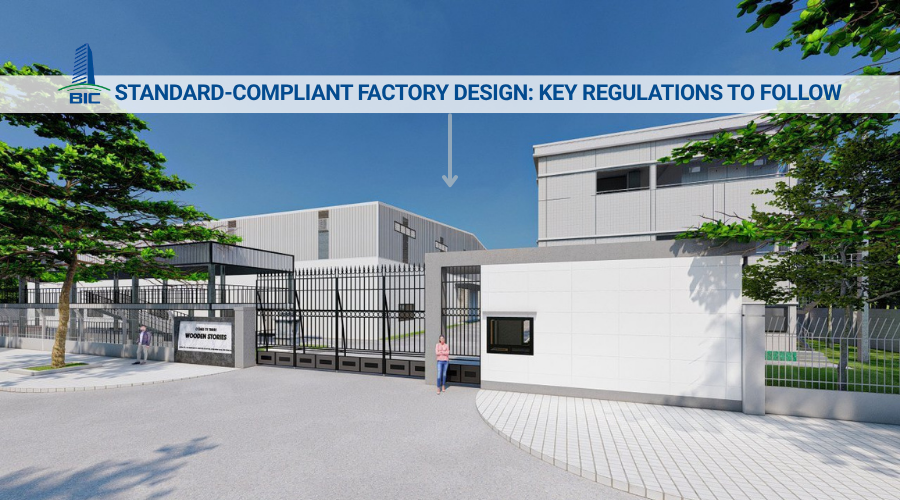
The area in front of the factory: This is the place to arrange items such as gates, doors, administrative rooms, permanent houses, product introduction rooms, research centers, laboratories, training and service houses. activities for employees (wardrobe, toilet, car park, canteen, ..). These items will be arranged separately or concentrated on an area depending on the size of the factory and the general planning of the whole company.
Production area: This is the main area and occupies a large area. Depending on the production line, size and number of employees, the production area is arranged according to each main workshop, sub-workshop or production line. With large factories, this area is often divided into a number of small production zones according to industry characteristics.
Production auxiliary area: This is the area where workshops and works for the main production line are located such as: generating stations, pumping stations, transformer stations, technical networks, etc., depending on the characteristics. manufacturing industry that this area has different large and small scale.
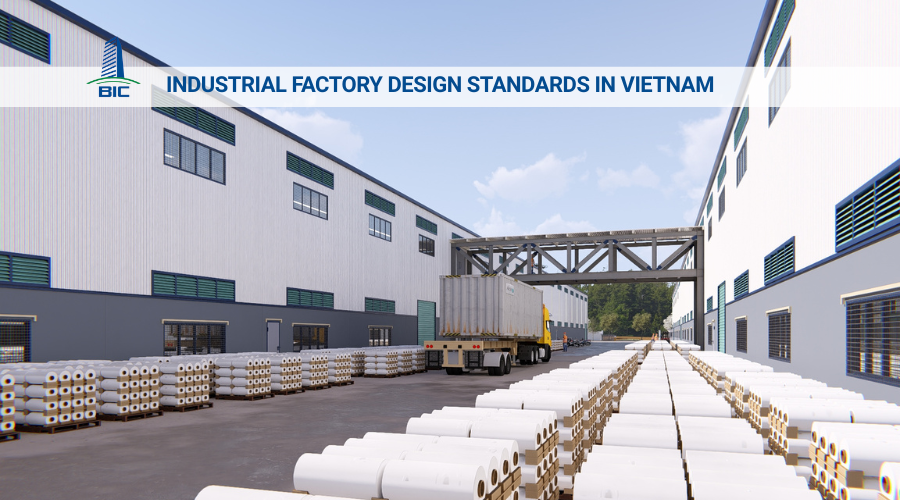
Warehouse and traffic area: This is a place to store finished goods, raw materials and operating and management works, roads for machines, workers, etc. Warehouses and transportation systems are the auxiliary area but plays an important role in helping to circulate all activities in the factory.
In addition to the above division, businesses can arrange according to the nature of industrial factories such as: hazardous - non-toxic areas, less - more transportation areas. Since then, the maximum compliance with the construction standards in the industrial park in accordance with the law.
Experience in building factories before construction, businesses need to draw up detailed factory design drawings. This drawing must ensure that the principle is suitable for the nature of the business, the field of production and the budget that the business can spend to build. As a result, the production activities of the enterprise will take place smoothly, efficiently and minimize the situation of incurring repair costs in the future.
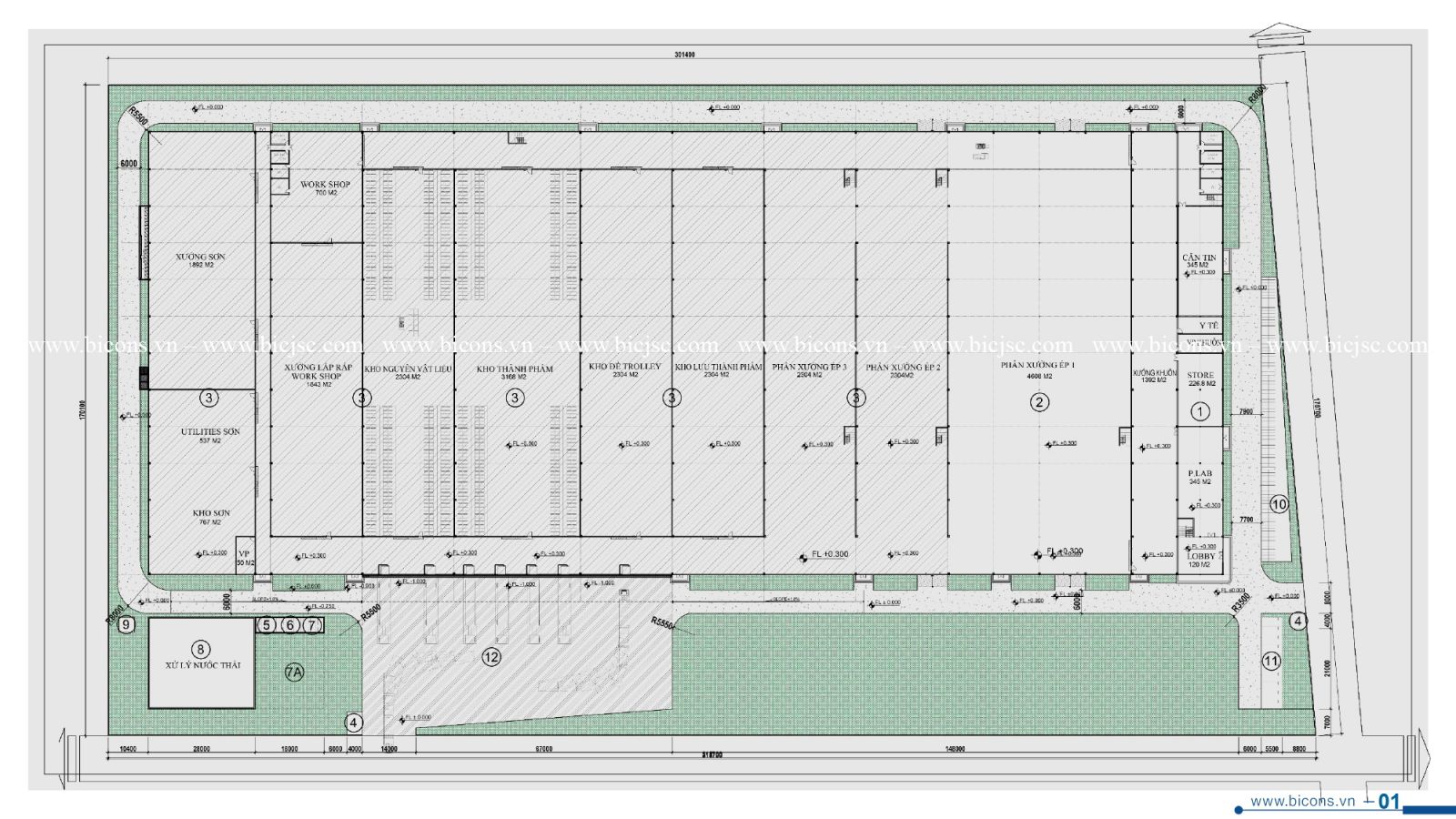 Design drawings need to follow the principle of building factories suitable to the field of activity
Besides, based on drawings, engineers will easily visualize the scale, layout of each area, necessary materials.. If adjustments are needed, they should be made right on the drawings to facilitate the process. construction later.
Based on the manufacturing industry and the investment fee, businesses can choose a concrete factory or a pre-engineered steel factory. From there, calculate and consider the arrangement of suitable areas inside and outside the factory. For example, pre-engineered steel buildings are often easy to build and expand when needed, and take up less land, so they are suitable for businesses with limited land area or need to shorten construction time.
.jpg)
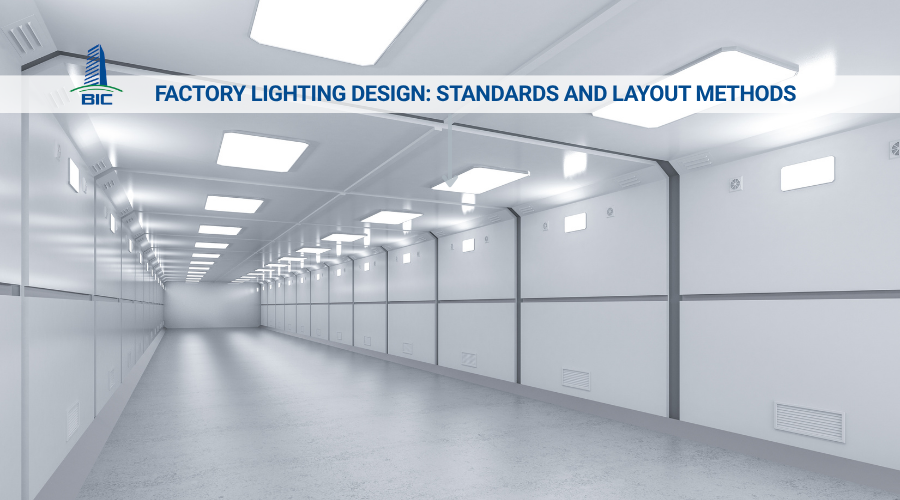
Inside the factory, a full electrical and ventilation system is arranged in accordance with the field of operation and the requirements of the workshop
Regardless of the type of factory, enterprises need to fully design important systems to support production. Including electric lighting system, water system, ventilation ... to create the best conditions for workers to operate effectively.
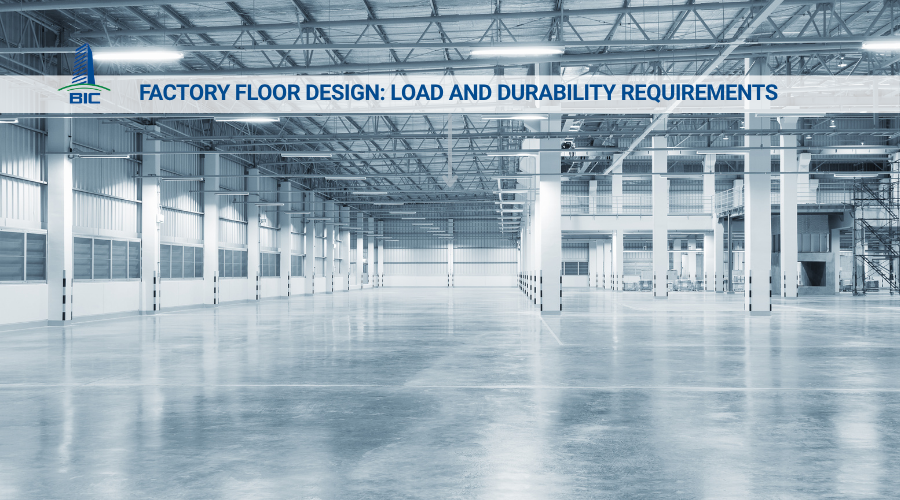
The foundation always plays an important role to ensure that the factory is sustainable over time, not damaged by natural impacts such as earthquakes, storms, floods... Therefore, when choosing a location to build a business, you should Choose a flat, solid land with great bearing capacity.
Choosing a solid ground to build the foundation is the principle of building a factory that cannot be ignored
In case it is not possible to choose a construction area, enterprises need to apply appropriate treatment and foundation options depending on the type of soil. If the hard ground can withstand a large load, the workshop can be built. If the ground is soft and muddy, the foundation must be reinforced with steel piles, bored piles to create certainty before building the workshop.
Building the factory frame is a very important job after the foundation has been completed. This construction item includes the installation of columns, trusses, construction of the roof of the factory.
Factory construction experience shows that the factory frame needs to be constructed carefully, firmly and safely
Because the roof is an elevated construction area, businesses need to be fully equipped with protective belts and belts for workers to work safely and effectively. In addition, other types of vehicles and supporting equipment such as forklifts, cranes, scaffolding can be used.
Columns and trusses are an important step to shape the entire factory later, so when building, it must ensure the principle: solid, sustainable, not moved. Based on the construction site, enterprises choose to install columns and trusses in the middle of the workshop and then deploy to the two sides of the gable or deploy from the two sides of the gable and then gradually install it inward.
Experience in building a factory when constructing partitions and factory walls is not too complicated but requires a good combination between the installer of the factory frame and the builder from the very beginning. Thus, the construction process will be fast and accurate according to the design. Businesses save time and costs, do not have to repair many times.
Ensure good coordination between the workshop frame builder and the partition installer
Besides, another principle of building a workshop that the construction supervisor needs to remember is to check the entire project after construction. The locations that need to be checked can include the gap at the installation point, the gap at the ventilation openings, the bolts that have been caught to ensure the quality of the work. Then proceed to hand over the project or request repair and re-construction.
The time of construction of walls and walls is also the stage of installing doors. Businesses need to calculate and pay attention to the opening direction for easy use and ensure ventilation in the future.
Installation of roof corrugated iron is usually done after completing the erection of the main frame. This stage is also very important to ensure that the factory does not leak, affecting machines and workers.
Installing roof panels in a straight line is an important principle in factory construction
Installing the first corrugated iron sheet is extremely important because it is the premise that determines the accuracy of the next corrugated iron sheets. After roofing is completed, ensure that all overlapping joints between the corrugated iron sheets are in a straight line and perpendicular to the purlin wall. Both technical assurance and aesthetic enhancement for the project.
According to the experience of building factories, if the enterprise uses additional insulation under the corrugated iron roof, the installation is similar to the installation of the roof. The joints must ensure alignment, no shrinkage, so the new insulation efficiency is high.
An important factory building principle that businesses need to keep in mind is construction density. The location of the factory must be suitable with the traffic infrastructure and the surrounding environment. The location is convenient for production, does not affect people's lives, and complies with state construction regulations.
The density of factory construction is suitable for the ground area and traffic infrastructure and urban landscape
Besides, the construction location also needs to be suitable with the grid power system in the area. The factory should be located in an area where there is a stable grid infrastructure to serve production and reduce the cost of pulling wires and installing electrical systems. Inside the factory, it is necessary to arrange light intensity and choose the right type of lighting to create the most favorable conditions for employees to work
Scaling up is what any business wants to improve production efficiency and meet market demand. Therefore, when planning to design a factory, businesses should have a plan for future expansion. Choose the type of factory that is easy to expand and construct (for example, pre-engineered steel buildings). Select the location and construction direction of some ancillary works (eg garage) reasonably to save minimum cost of dismantling in the future.
Although the above factory building principles sound easy to follow, applying them in practice is not so simple. To be more sure, businesses should look to professional factory construction service providers for advice and support.
--------------------------------------------------- --------------------------------------------------- --------------------------------------------------- --------
BIC . CONSTRUCTION DESIGN JOINT STOCK COMPANY
Ho Chi Minh Branch : 7th floor, Gia Dinh group, 566 National Highway 13, Hiep Binh Phuoc Ward, Thu Duc District, HCMC
☎️ Hotline: 0901.815.069
Website: bicons.vn - bicjsc.com
Hanoi Branch: 4th Floor, HUD3 Tower, No. 121-123 To Hieu Street, Ha Dong District - Hanoi.
☎️ Hotline: 0243.91.92.789
Mail: bic@bicons.vn - Fax: (028) 38 800 892