An industrial factory construction project is one of the business investment items with the largest capital scale and the most complex technical structure. Realizing a standardized production space requires synchronized coordination between cost management capability, on-site implementation processes, and compliance with specialized legal frameworks. In practice, mistakes in geotechnical surveys, incorrect application of factory design standards, or a lack of transparency in preparing quantity estimates can directly lead to schedule delays, additional costs, and difficulties in project acceptance before operation.
To optimize capital efficiency for long-term investment cash flow, business owners need to clearly understand the project management roadmap from the technical documentation stage to on-site erection. In this article, BIC provides a comprehensive summary of the steps in the factory construction process, breaks down the structure of material and labor costs, and identifies core quality control points. This practical information will help investors proactively supervise factory construction progress, manage legal risks related to fire prevention and fighting, and select the most optimal design and construction solution for their factory.
A successful factory construction project requires a scientific and disciplined implementation roadmap. Dividing the project into clear stages helps investors easily control progress, quality, and risk management at each important milestone.
This is the decisive starting step, providing all input data as the basis for later technical calculations.
- Functional data collection: The consulting unit works with the investor to clearly identify the operating process of the technology line, the material flow diagram, installation positions, and load requirements of each type of production machinery and equipment.
- Topographic survey: Boundary coordinates of the land plot are measured, benchmark points are identified, and the existing elevation map is prepared. This work helps accurately calculate earthwork volumes and position the building gridlines.
- Geotechnical drilling survey: Soil samples are collected on-site to determine soil layer structures, bearing capacity of the foundation soil, and groundwater level. Soil test results serve as the legal basis for engineers to calculate and select the appropriate load-bearing foundation solution for the industrial factory.
The design dossier translates the company’s functional requirements into accurate geometric and technical specifications.
- Basic construction design: Engineers prepare the master plan and clearly divide functional zones, including the main production workshop, raw material warehouse, administration office, canteen, parking area, and internal traffic system.
- Detailed construction drawing design: The drawing dossier details all components of the project, including:
- Building envelope architecture: Details of brick walls, wall cladding, insulated panels, skylight roofing systems, and emergency exits.
- Load-bearing structure: Detailed calculation of the pre-engineered steel frame system, including column and rafter sections, stability bracing systems, and connection bolts.
- M&E network: Drawings for power supply systems, lighting systems, water supply and drainage systems, and ventilation and air-conditioning systems.
Before on-site construction begins, the project must complete all legal documentation to obtain approval from competent state authorities.
- Fire prevention and fighting design approval: Design documents for fire alarm systems, automatic fire suppression systems, smoke extraction systems, and fireproof coating or wrapping solutions for steel frame structures must be submitted to the Fire Prevention and Fighting and Rescue Police authority for approval in accordance with current regulations.
- Construction permit application: The investor prepares legal documents on land use rights, environmental impact assessment reports, and appraised technical design documents to submit to the competent authority in order to obtain the official construction permit for the project.
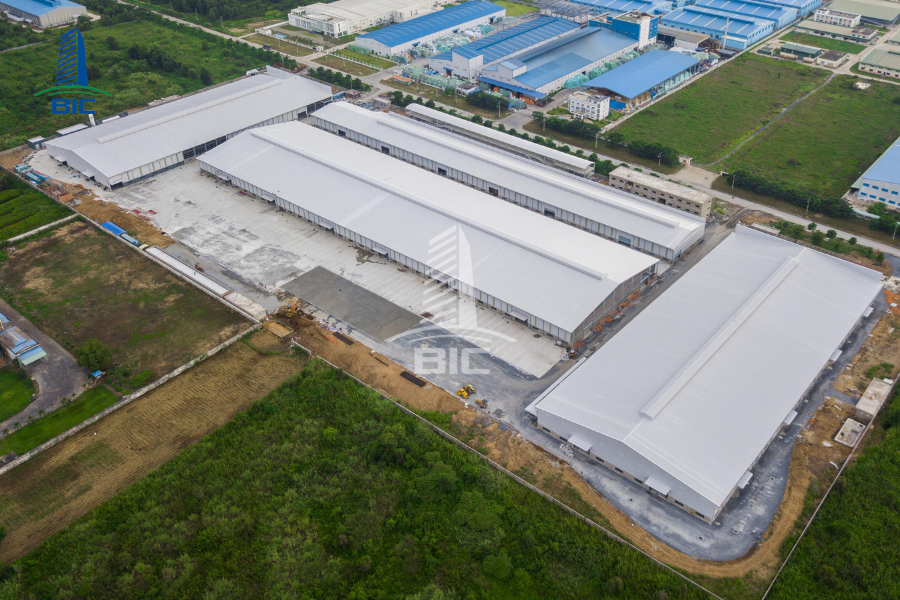
This stage requires close coordination between precision mechanical production at the industrial fabrication facility and basic construction activities on-site to optimize the overall schedule.
- Off-site activities, at the factory: Steel blanks are cut, frames are assembled, automatic welding is carried out, component surfaces are cleaned to Sa 2.5 standard, and anti-rust coating, finishing paint, or fireproof coating is applied to the pre-engineered steel frame system.
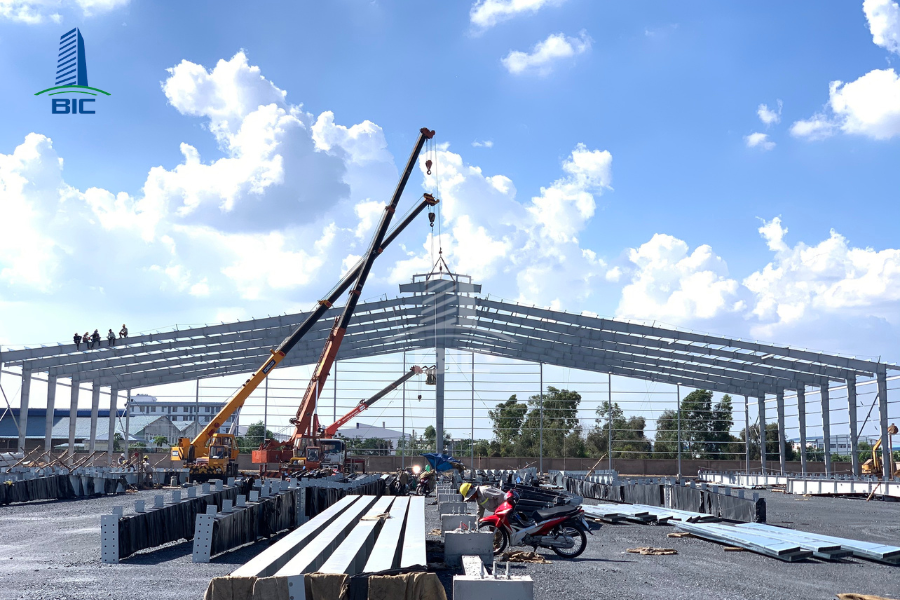
- On-site activities, at the construction site: The contractor carries out foundation excavation, foundation cap concrete pouring, and precise anchor bolt installation. Once the foundation concrete reaches the required strength, heavy-duty cranes are used to erect the steel frame, install roof sheets, fix wall panels, build perimeter walls, and cast the load-bearing concrete floor with hardener powder applied to strengthen the surface.
This is the final inspection step to ensure that all technical systems of the facility operate safely before the factory is put into use.
- Internal technical acceptance: The general contractor coordinates with the supervision consultant to conduct water pipeline pressure tests, grounding resistance measurements, individual and integrated test runs of M&E systems, and structural bolt tightening inspections.
- Legal acceptance with competent authorities: An on-site inspection by the Fire Prevention and Fighting Police authority is organized to obtain written approval of fire protection acceptance results. After that, the completion dossier, including as-built drawings and material certificates, is finalized to apply for project completion approval.
- Handover for operation: The general contractor transfers the as-built dossier and system operation manuals to the investor and activates the project warranty terms in accordance with the design and construction contract.
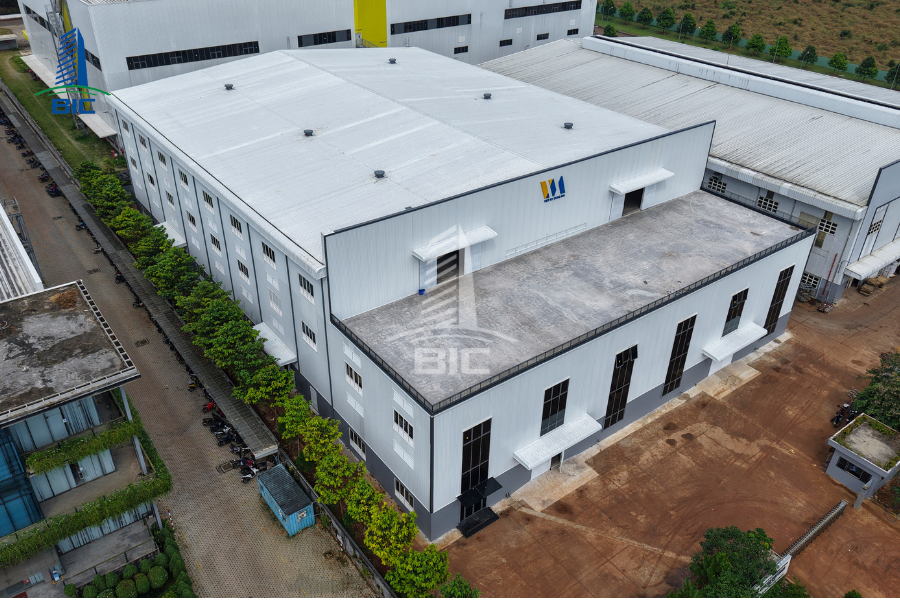
Understanding the components that make up the total investment helps investors plan capital allocation properly, proactively negotiate contracts, and minimize the risk of costs arising beyond the estimate. A standard total investment for a factory construction project includes the following four core cost groups.
This cost group belongs to the investment preparation stage but plays a decisive role in shaping the accuracy of the entire project:
- Site survey costs: These include the budget for topographic surveying, existing condition mapping, boundary and benchmark positioning, and geotechnical drilling and soil sample testing.
- Factory design costs: These are professional service costs for architects, structural engineers, and M&E engineers to prepare the construction design dossier from concept to complete construction drawings, together with the BOQ quantity takeoff.
Although this cost group accounts for only a small proportion, approximately 3% to 5% of total investment, proper investment in a quality design dossier can help the business save billions of VND in materials during on-site implementation.
This is the largest cost item in the total industrial factory construction budget, directly forming the building’s structural skeleton and envelope:
- Foundation and infrastructure quantities: Costs for cement, sand, stone, spun concrete piles, foundation reinforcement steel, and labor for excavation and grade beam concrete casting.
- Pre-engineered steel frame system: Fabrication and erection costs for steel columns, rafters, and purlins, calculated based on the actual steel tonnage from the factory. This cost fluctuates directly with market steel billet prices.
- Envelope system and floor: Budget for roofing sheets, insulated wall panels, and brick walls at the base of the workshop. This is followed by the cost of casting high-grade load-bearing concrete floors, welded steel mesh, and surface hardening materials such as hardener or epoxy coating.
The mechanical and electrical system supplies and regulates energy, ensuring a stable technical environment for the production line:
- Power supply system: Investment costs for the low-voltage transformer station, Main Switchboard (MSB), suspended cable trays, and power cable network running to each machinery cluster.
- Lighting and ventilation systems: Specialized heat-resistant LED high-bay lighting, roof exhaust fan systems, or negative-pressure cooling systems using cooling pads.
- Water supply and drainage systems: Production water supply pipelines, external rainwater drainage pipes, and construction of the internal wastewater treatment station before discharge into the environment.
- Statutory fire protection budget: This includes material costs for galvanized steel pipelines, sprinkler heads, fire alarm control panels, fire pump systems, and especially the cost of implementing protective measures for steel frames such as fireproof paint or fireproof mortar in accordance with QCVN 06:2022/BXD.
- External site infrastructure: Costs for compaction, asphalt paving or concrete casting of internal roads for container trucks, construction of perimeter fences, main gates, guard houses, lighting systems, and landscape greenery around the land plot.
Estimated Cost Composition in Total Factory Investment
|
Cost Item |
Percentage Share |
Main Fluctuation Factors |
|
Design and legal procedures |
3% - 5% |
Land area scale, construction grade |
|
Rough structure and steel frame quantities |
45% - 55% |
Market steel billet prices, span solution |
|
Load-bearing floor system |
15% - 20% |
Concrete floor thickness, concrete grade, hardener/epoxy standard |
|
M&E and fire protection systems |
20% - 25% |
Production machinery capacity, legally required fire-resistance rating |
|
External infrastructure: roads, fences, gates |
5% - 10% |
Site area and vacant land surrounding the factory |
To ensure optimal project efficiency, eliminate cost overrun risks, and guarantee safe operation, investors need to pay special attention to the following five quality control points from a management perspective.
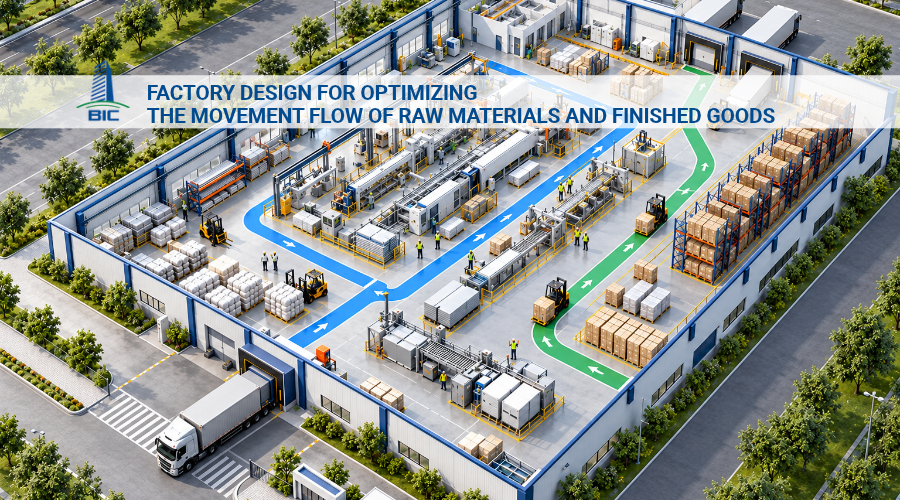
The master plan and functional zoning drawings must not be designed based on intuition, but must closely follow the company’s technology line. Factory design must accurately calculate the movement flow of raw materials from the input warehouse, through production stages, to the finished goods warehouse in a single direction, without duplication or overlap. Optimizing travel distance helps reduce operating waste, save space, and improve occupational safety for workers.
Investors should require the structural consulting unit to carefully analyze data from the geotechnical survey report before proposing the appropriate foundation solution. The choice between shallow foundations, such as isolated footings or strip foundations, and deep foundations, such as driven concrete piles or bored piles, must be based on soil bearing capacity and the actual load of machinery. Incorrect geotechnical calculations can lead to two consequences: either an unsafe design causing settlement, subsidence, and floor cracking later, or excessive safety factors causing unnecessary foundation reinforcement costs.
Instead of splitting the project into separate bid packages, such as a separate design unit and a separate construction contractor, the current industrial construction trend prioritizes the full-package Design & Build general contractor model. This method provides major benefits in technical synchronization. The general contractor takes full responsibility from drawing preparation to construction completion, helping completely eliminate dimensional discrepancies between drawings and actual site conditions, optimize fast-tracking construction methods, and lock in the BOQ estimate from the early stage.
The biggest risk that causes many factories to be completed but unable to operate is failure to meet fire protection acceptance standards. Investors need to finalize the design solution for the fire alarm system, automatic fire suppression system, and fire-resistance protection measures for the steel frame right from the initial design dossier stage for submission to competent authorities. Proactively integrating current fire protection standards into the drawings helps businesses avoid demolition, rework, or additional structural wrapping after the rough construction has already been completed, which would waste both time and money.
Before signing a contract, investors should independently appraise the contractor’s capability:
- Check the Construction Activity Capacity Certificate issued by the state management authority, ensuring that the certificate grade is suitable for the scale and class of the project.
- Directly inspect the contractor’s pre-engineered steel fabrication factory to evaluate machinery capacity, welding technology, and shot-blasting surface cleaning procedures.
- Visit industrial factory projects of similar scale that the contractor has completed and that are already operating stably in order to evaluate floor construction quality and M&E systems in the most practical way.
The journey of realizing a standardized industrial factory requires thorough preparation from site survey, technical documentation capability, to quality control procedures on-site. Understanding the five-step process in detail, proactively grasping the cost structure, and strictly controlling critical points such as foundations, floors, and fire protection legal standards are the keys to helping businesses bring their projects to completion safely.
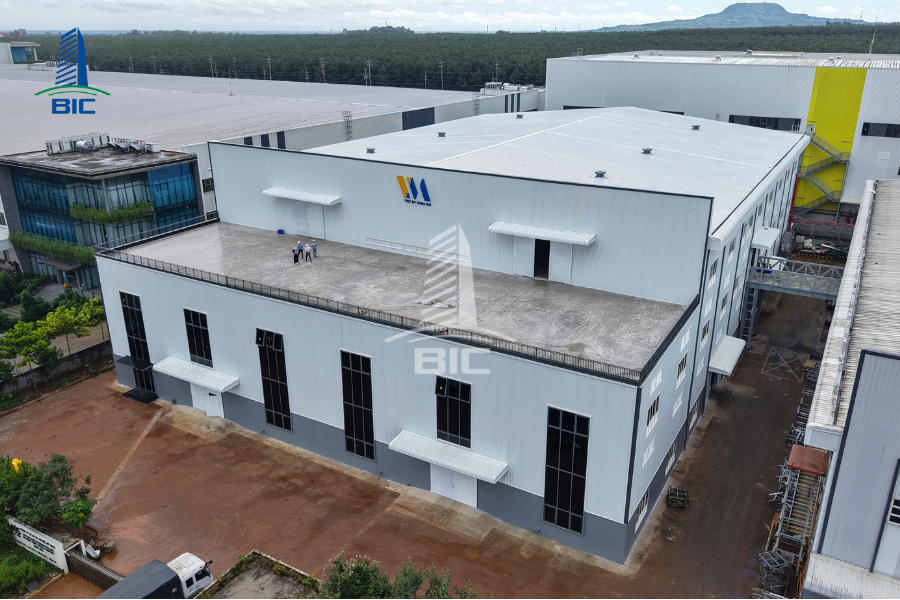
To achieve optimal project efficiency, investors should apply the following three practical management recommendations:
- Define long-term capital planning: Do not focus only on optimizing initial investment costs. Instead, calculate operating and maintenance costs throughout the entire lifecycle of the facility, from 30 to 50 years. Proper investment in insulated wall and roofing systems, high-grade hardener floors, and energy-saving lighting systems will help businesses significantly reduce electricity expenses and future repair costs.
- Tailor the design to expansion plans: The initial construction design dossier should include provisions for the company’s development plan over the next 5 to 10 years. Structural engineers should prepare reserved steel frame solutions or expandable foundation connections so that when the company increases capacity, additional factory bays can be assembled easily without disrupting the existing production line.
- Delegate to a reputable general contractor: Managing a large-scale industrial project requires deep expertise. Instead of directly coordinating many small teams, investors should prioritize the full-package Design & Build model from contractors with complete capacity certificates, modern machinery infrastructure, and a transparent BOQ quantity takeoff process. This is the safest solution to protect capital, optimize progress, and ensure that the facility operates stably, safely, and sustainably.