The decision to expand production capacity and invest in the construction of a new industrial factory is always a strategic turning point for any business. This project category not only requires a substantial capital investment but also demands a long-term vision to ensure operational productivity for decades to come. However, the biggest concern for many investors today is how to control cash flow, avoid cost overruns, prevent schedule delays, and eliminate the situation where the factory is completed but the functional production flow remains fragmented. In reality, the root cause of most of these consequences comes from investors not fully understanding the tasks involved in the design stage on paper.
To fully address this challenge, this article serves as a comprehensive guide to factory design. BIC will break down in detail the most essential components you need to know, from master planning and load-bearing structures to mechanical and electrical systems. Mastering this framework is the key to helping investors confidently supervise their projects, optimize budgets, and create a high-quality facility that is ready to generate sustainable returns.
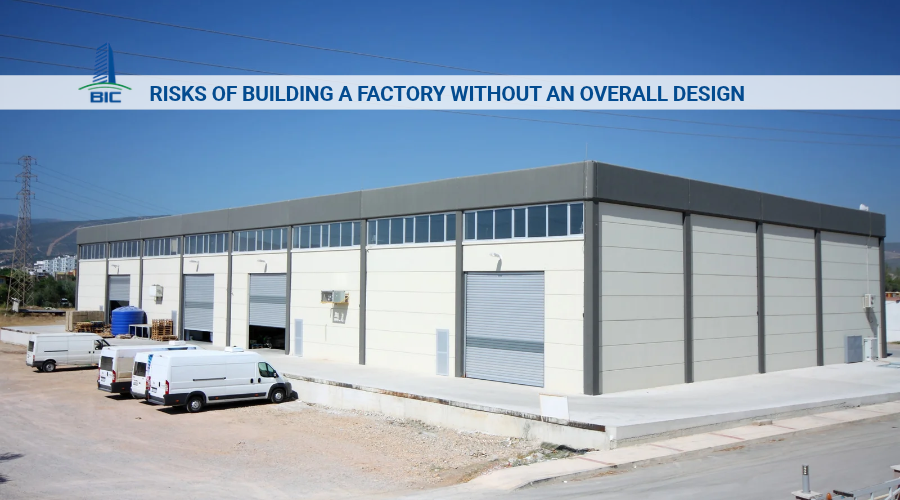
Many investors tend to reduce consulting costs by copying existing factory models or preparing a rough drawing and then adjusting it during construction. However, this is a critical mistake. Serious investment in the design stage is not a lost expense, but rather an “insurance policy” for the entire project for the following three core reasons:
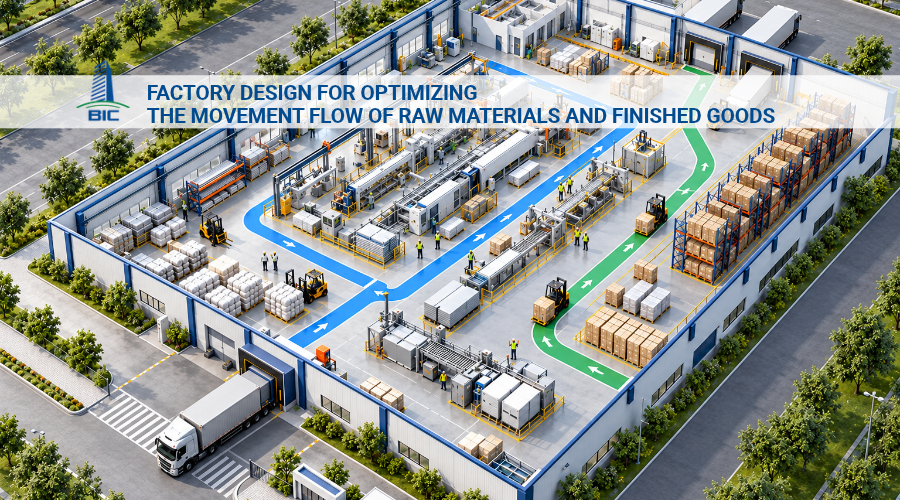
For an industrial factory, architectural space is not merely a shelter from sun and rain; it is the operating machine of the entire business. The success or failure of productivity depends greatly on the overall layout.
The scientific calculation and arrangement of machinery locations, the movement flow of materials from raw material input, semi-finished processing, to finished goods storage, as well as the design of separate routes for forklifts and workers, must be detailed on paper from the very beginning. An optimized functional production line design can help businesses reduce internal logistics time by 20% to 30%. This means you are directly accelerating production speed, minimizing labor costs, and thoroughly eliminating congestion and overlap during future operations.
Cash flow control is always the biggest concern for every business owner when deciding to build a factory. A precise construction design dossier, clearly showing every edge, weld, and type of steel, will help engineers produce a bill of quantities (BOQ) with up to 95% accuracy.
Once investors have a transparent and realistic cost estimate in hand, they can take full control of their budget. This helps eliminate the risk of cost overruns caused by over-purchasing materials, or the disaster of demolishing and rebuilding due to incorrect structural construction. Furthermore, if investors choose a full-package Design & Build model, the synchronization from drawings to the construction site will be smoother, helping shorten the project timeline and save hundreds of millions of VND in opportunity costs because the facility can be put into operation earlier.
Legal compliance is the greatest barrier that can cause an entire project worth tens of billions of VND to be put on hold indefinitely. Currently, regulations on fire prevention and fighting as well as environmental impact assessment in industrial parks are being tightened more than ever.
Factory design drawings are mandatory legal documents used to apply for a construction permit and fire protection design approval. If the initial drawings do not strictly comply with state regulations on safety distances, fire-resistance ratings, emergency exits, or wastewater treatment systems, the project will not be allowed to proceed with factory construction, or even if completed, it may not be accepted for operation. Remember: fixing a spacing error on paper only takes a few mouse clicks, but correcting a non-compliant fire protection item on-site can cost the investor billions of VND and disrupt production for months.
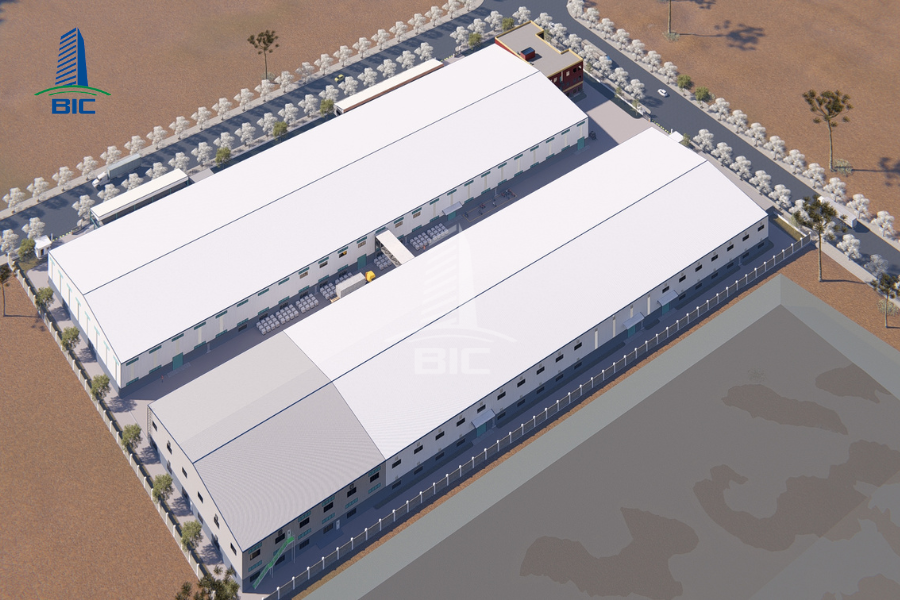
To turn an empty plot of land into a smoothly operating factory, the design drawing dossier must thoroughly address the five key components below. Understanding each component will help investors easily inspect and evaluate the capability of the factory design consulting unit.
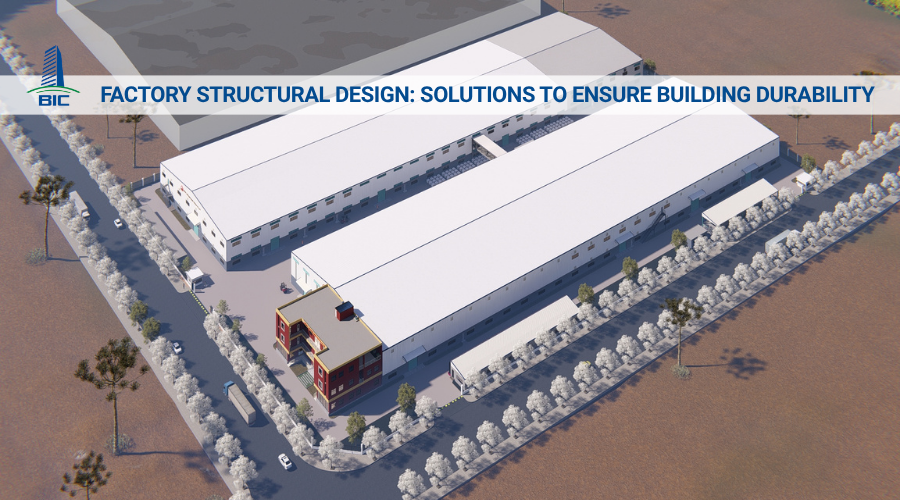
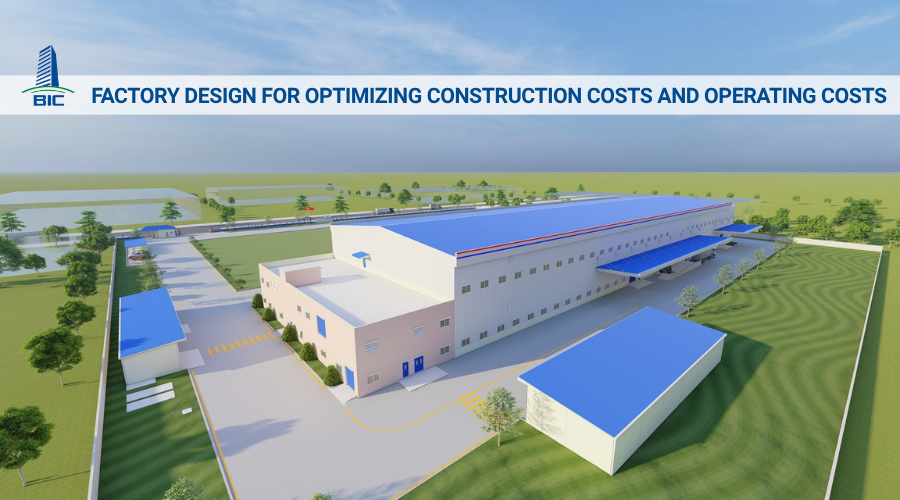
This is the step of outlining the overall picture and determining the location of each functional zone on the available land area. A good Master Plan must ensure the regulated construction density ratio of the industrial park while optimizing usable area.
- Positioning of building blocks: Reasonably arranging the relationship between the main production workshop, warehouses for raw materials and finished goods, administration office, canteen, parking area, power station, and underground fire protection water tank.
- Internal traffic system planning: Calculating independent traffic flows. The road around the factory must be wide enough for container trucks to turn around and load or unload goods easily. At the same time, traffic corridors must ensure that fire trucks can access every area in case of an incident.
Industrial factory architecture does not focus on complicated or excessive details, but instead prioritizes enclosure function, material durability, and adaptability to climatic conditions.
- Envelope solutions: Investors may choose brick walls combined with metal wall cladding, heat-resistant metal roofing systems, or soundproof and insulated panels, which are very common in food, pharmaceutical, and electronics factories.
- Natural lighting and ventilation solutions: This is a long-term economic consideration. The arrangement of skylights, ventilation louvers, or roof-mounted ventilation turbines along the roof ridge helps keep the interior space bright and airy, enabling businesses to save a significant amount of monthly electricity costs for lighting and cooling.
If architecture is the outer shell, the structure is the “skeleton” that carries the load of the entire building. An optimized structural construction design solution will help investors significantly reduce steel usage while still ensuring stability.
- Foundation structure: Depending on the results of geotechnical drilling and the load of the factory, engineers will advise whether to use isolated footings, strip foundations, or pile foundations. If the factory floor is used to place heavy machinery, the foundation must be specially reinforced.
- Factory body structure: Pre-engineered steel building solutions are currently the top choice thanks to their advantages of fast construction, large spans, and easy assembly, disassembly, and expansion. The design unit must optimize the “column spacing” to create a spacious factory area without obstructions when installing large production lines.
The M&E system, including Mechanical and Electrical systems, accounts for a considerable portion of the cost and directly determines the quality of production activities. These components include:
- Power supply system: Calculating total power consumption to design a suitable transformer station and Main Switchboard (MSB). The lighting system is clearly divided into two parts: lighting for production operations, ensuring standard illuminance according to each industry, and emergency lighting systems, including Exit and Emergency lights.
- Water supply and drainage system: The drawings must clearly separate the domestic water supply network from the water system serving production technology. In particular, the collection system and industrial wastewater treatment station must be designed strictly and meet discharge standards before being connected to the common system of the industrial park.
- Ventilation and air-conditioning system: HVAC: For specialized industries such as printing, electronic components, and clean rooms, the HVAC system maintains standard temperature and humidity, which is critical to protecting machinery and product quality while also ensuring that the working environment meets occupational safety and hygiene standards for workers.
This is an extremely strict component. Any mistake in the design can lead to delays in factory construction.
- Mandatory components: Depending on the scale and fire/explosion risk level of the industry, the factory will need to be equipped with an automatic fire alarm system, wall-mounted fire protection system, fire curtain or water curtain system, or automatic sprinkler system.
- Structural protection solutions: For steel-frame buildings, the design dossier must include solutions such as fireproof coating or fireproof wrapping for steel columns and rafters to ensure the required fire-resistance rating according to the current standards of the Ministry of Public Security.
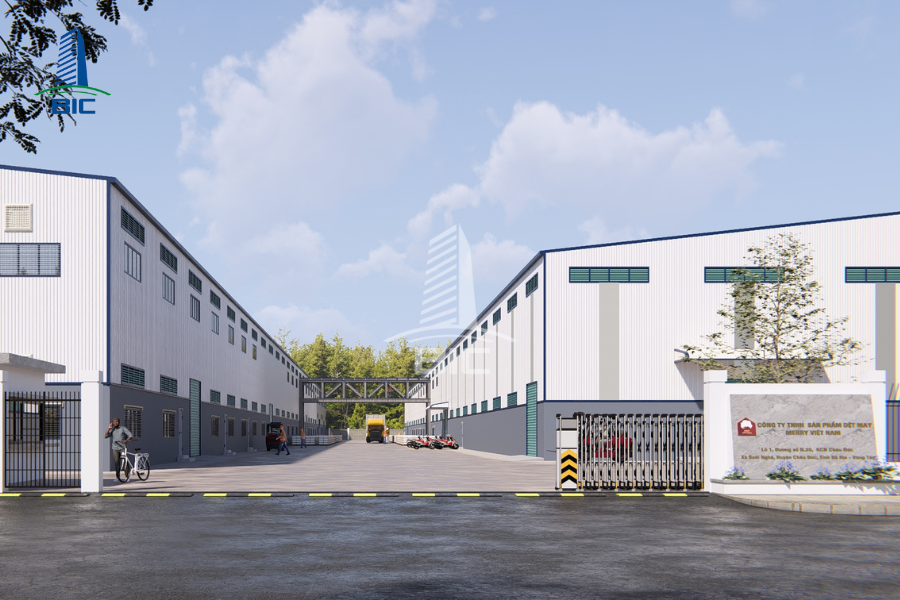
To avoid being misled or placed in a passive position, investors need to clearly understand the working process with construction design consulting units. A professional and transparent process is usually standardized through the following three core steps:
Every excellent drawing begins with a clear understanding of the investor’s needs. The consulting unit will work with the investor to clarify the production industry, because a garment factory is completely different from a heavy mechanical workshop or a food processing factory, the expected production technology line, and the investment budget. At the same time, the engineering team will conduct geotechnical drilling and actual topographic measurements to obtain original data for foundation calculations.
Based on the collected data, architects will develop the Master Plan and preliminary architectural design. This stage gives investors the most visual overview of the shape, functions, and zoning layout of the industrial factory. Once approved by the investor, the basic design dossier will also be used as a document for applying for a construction permit.
This is the step of “digitizing” all ideas into dry but highly accurate technical specifications. Construction drawings will detail every bolt, steel diameter, electrical wiring position, and water pipe route. This is the mandatory “guiding document” for engineers to carry out factory construction on-site.
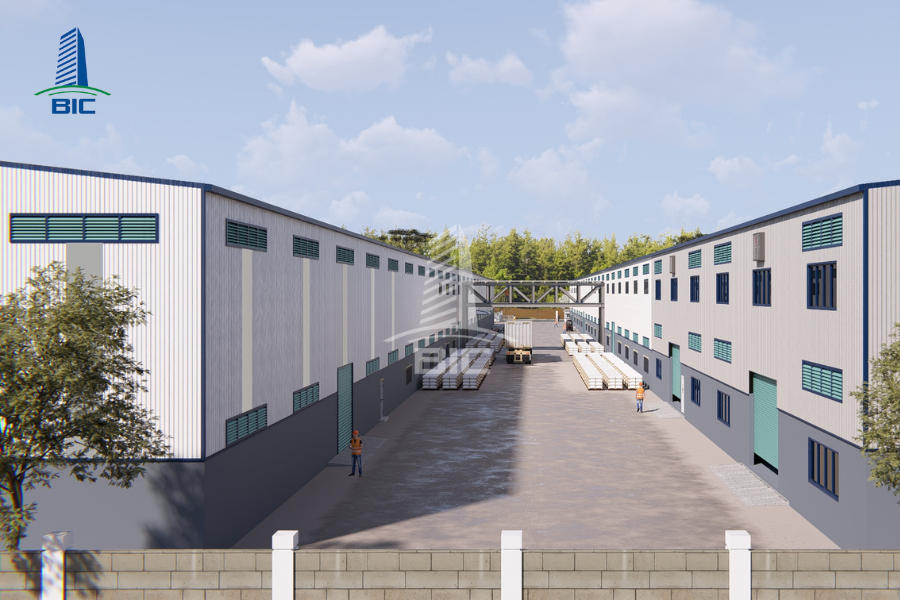
From practical experience across hundreds of projects, there are mistakes that investors only recognize after problems have already occurred. Below are three golden principles you must not overlook:
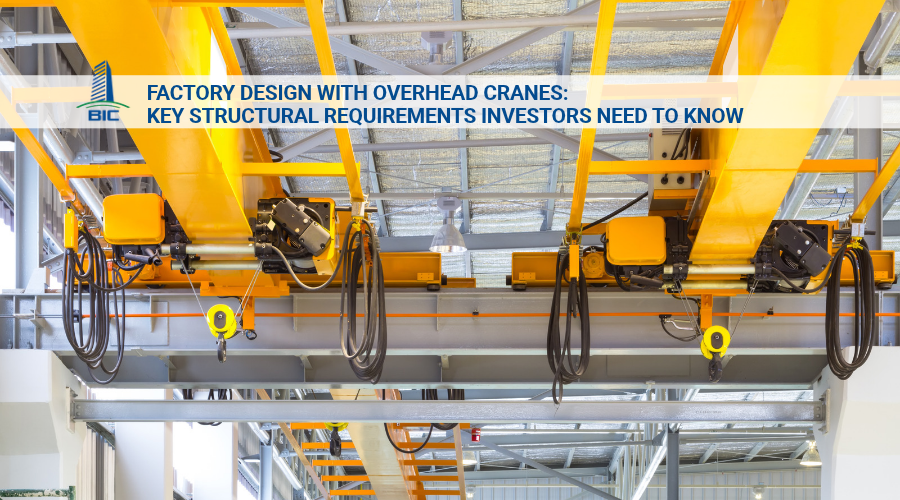
Absolutely avoid the situation of “building the shell first and fitting the core later.” Many investors only realize after construction is completed that the ceiling is too low to install an overhead crane, or that the foundation was designed too thin and cannot withstand the vibration of heavy stamping machinery. Factory design drawings must be tailored based on the dimensions and loads of the exact machinery system you plan to import.
As mentioned above, this is a critical legal factor. Investors should require the consulting unit to update the latest fire protection regulations right from the basic design stage. Revising a non-compliant drawing on software may only take a few hours, but if you have to demolish a wall built with incorrect fire separation distance on-site, the money wasted could reach hundreds of millions or even billions of VND.
Instead of hiring one design unit and then struggling to find another construction contractor, the current trend is to choose a full-package Design & Build model. The advantage of this solution is that the contractor takes full responsibility from the first drawing to handover. This completely eliminates the risk of different parties blaming each other when problems arise, shortens the implementation time by 20% to 30%, and most importantly, ensures budget commitment from the construction design stage until project completion.
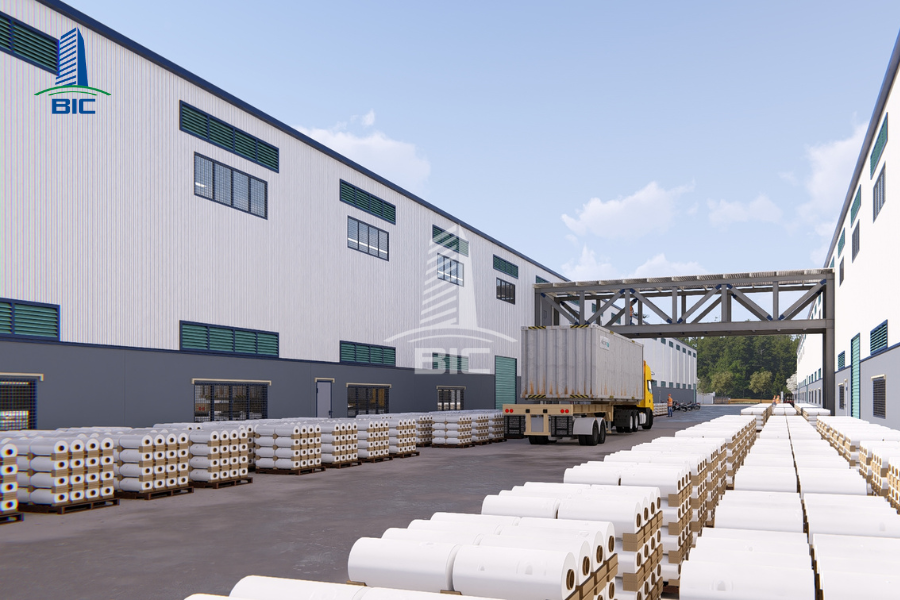
Investing in the construction of an industrial factory has never been an easy task. It is not simply about assembling steel members into a giant box-like shell, but about creating a safe, productive, and cost-optimized production “ecosystem.” Dedicating effort and resources to factory design right from the starting point is the smartest strategy to protect your capital.
If your business is preparing for an expansion project, do not hesitate to work with a reputable Design & Build general contractor with extensive practical experience. BIC’s experienced team of specialists will help you conduct surveys, provide free consultation, and propose an optimal planning solution for every budget from today.