Factory design with insulation solutions not only helps save energy but also contributes to enhancing production efficiency and ensuring a better working environment for workers. High temperatures in factories can lead to various limitations, from reducing equipment lifespan to negatively impacting workers' health and productivity.
Choosing the right insulation solutions for each type of factory not only addresses temperature issues but also ensures continuous and efficient production operations. Depending on the specific characteristics and requirements of each factory, selecting the appropriate insulation solution will maximize benefits. BIC recommends the following commonly applied insulation solutions in factory design.
- Effect on Workers' Performance: Factory design with high-temperature working environments can cause workers to become dehydrated, fatigued, and stressed, reducing their concentration and work efficiency. When workers have to work in high temperatures, rest periods increase, significantly affecting productivity.
- Damage to Equipment: High temperatures can overheat electronic devices and machinery, leading to reduced operational efficiency and an increased risk of malfunction. Equipment operating in high-temperature environments requires more frequent maintenance and repair, increasing operational costs.
- Increased Energy Costs: To maintain cool temperatures in the factory, cooling systems must operate continuously at high capacity, leading to large energy consumption and increased electricity costs. High temperatures reduce the efficiency of cooling equipment, forcing them to work harder to achieve the same temperature level.
- Impact on Product Quality: Unstable temperatures in factory design can affect temperature-sensitive production processes, leading to inconsistencies and reduced product quality. Some products require specific temperature conditions to maintain quality; high temperatures can damage or shorten the product's lifespan.
- Increased Equipment Lifespan: Insulation in factories helps maintain the ideal temperature for equipment operation, reducing the risk of damage and extending their lifespan. Fewer breakdowns and malfunctions mean lower maintenance and repair costs.
- Creating a Comfortable Working Environment, Enhancing Labor Productivity: Factory design that creates a comfortable working environment helps workers work more efficiently, with less fatigue and stress, thereby enhancing overall productivity.
- Ensuring Product Quality: A stable temperature workspace helps maintain ideal conditions for production processes, ensuring consistent product quality. Temperature-sensitive products are better preserved, extending their lifespan and maintaining quality.
- Contributing to Environmental Protection: Stable temperatures help save energy, reducing carbon emissions from factories, contributing to environmental protection. Reducing the need for energy from non-renewable sources helps conserve natural resources.
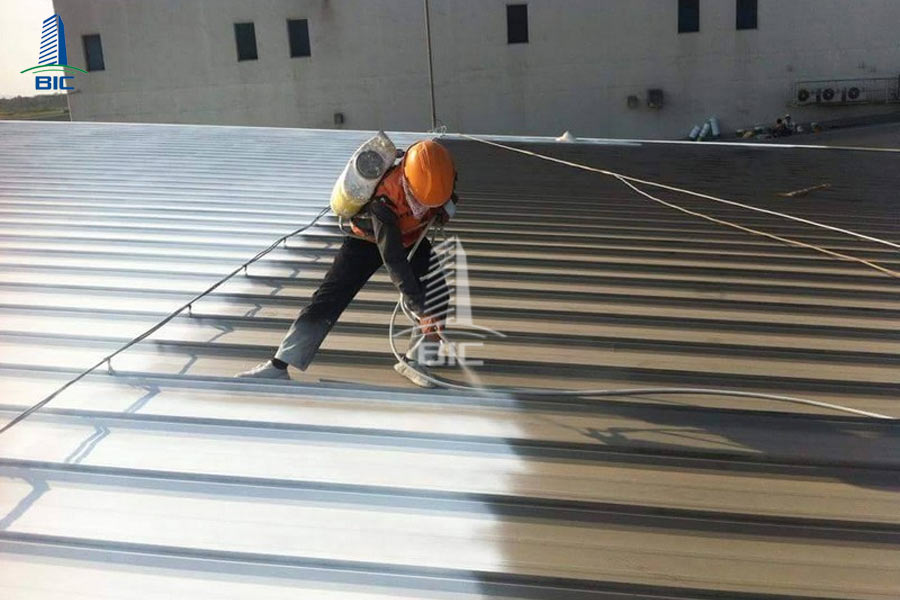
- Using Thermal Insulation Paint: Thermal insulation paint for corrugated iron roofs and walls in factory construction design is an effective measure for reducing heat. This paint contains film-forming agents that create a coating that blocks heat absorption from sunlight, helping to reduce the internal temperature of the factory and create a more comfortable working environment.
- Installing Ventilation Systems: Factory design with ventilation systems is an alternative method to windows, ventilation ducts, and fans, helping to eliminate moisture, hot air, and unpleasant odors in the factory. The main purpose of this system is to create airflow and reduce internal temperature. However, the heat resistance of ventilation systems is not superior to other methods.
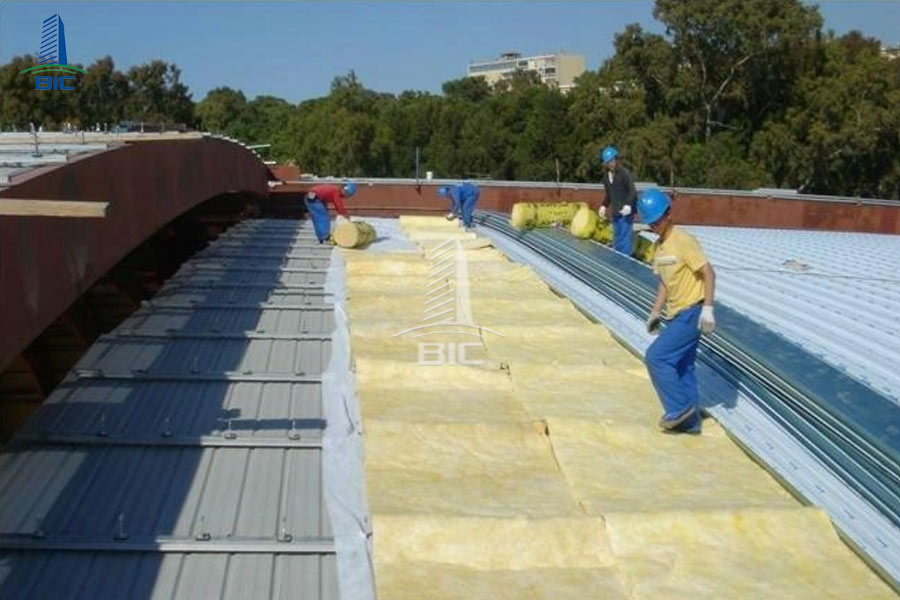
- Using Cold and Insulated Corrugated Iron: Instead of construction design factories and then installing heat-resistant materials for corrugated iron roofs, using cold or insulated corrugated iron from the construction stage will help save costs and time. Cold and insulated corrugated iron is highly effective in blocking temperature, ensuring a cooler and more comfortable working environment for workers.
- Installing Misting Systems on Factory Roofs: Installing misting systems on factory roofs is an effective measure in factory design to lower the temperature during hot days. This method helps cool the roof but does not significantly affect the internal air temperature of the factory. Therefore, misting systems mainly help reduce the surface temperature of the roof and cannot cool the entire internal space of the factory.
- Installing Evaporative Coolers: An effective solution in factory construction design to reduce corrugated iron roof temperatures is using evaporative coolers. This system works by pumping water and using fans to blow air through the water, creating a cool space and maintaining suitable humidity. Evaporative coolers not only help reduce internal factory temperatures but also create a more comfortable working environment for workers. However, this system has high initial investment costs and requires a continuous water supply. Therefore, factories with limited budgets may need to consider other options.
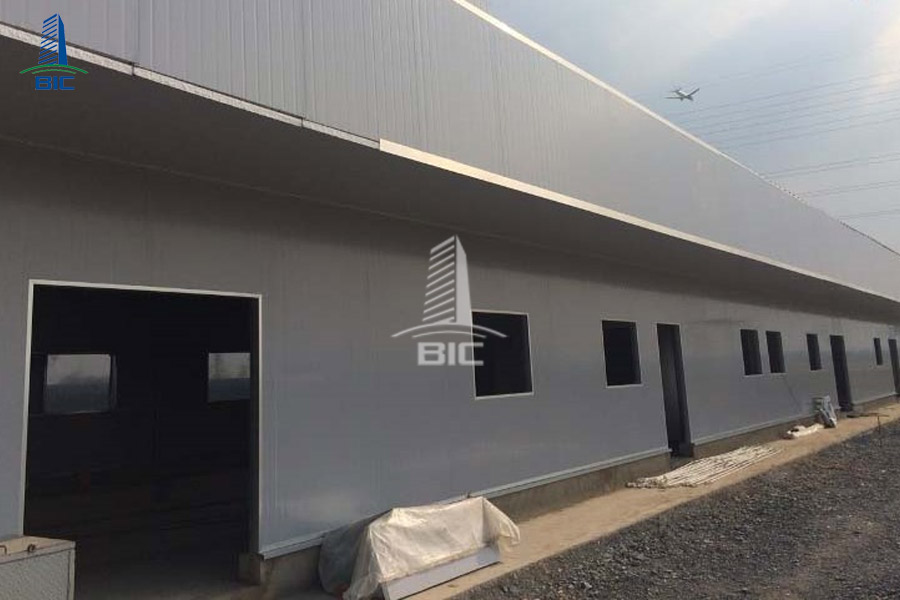
- Heat-Resistant Wall Cladding with Insulation Materials: This is a specialized solution chosen by many contractors in factory design. With simple installation, using insulation materials to directly clad the walls and partitions helps reduce the temperature from outside. Currently, there are many types of wall insulation materials such as cool tiles, insulation panels, iron ceilings, or other insulation boards. These materials not only provide insulation but also have good soundproofing capabilities, contributing to a comfortable working environment.
- Applying Heat-Resistant Paint to Factory Walls and Partitions: Heat-resistant paint is another effective measure in insulating walls and partitions in factory construction design. Heat-resistant paint contains heat-reflective substances, helping to reduce heat absorption from sunlight and creating a protective layer on the wall and partition surfaces against weather impacts. Additionally, contractors can use heat-reflective paints, such as darker or lighter colors, to help the factory become cooler.
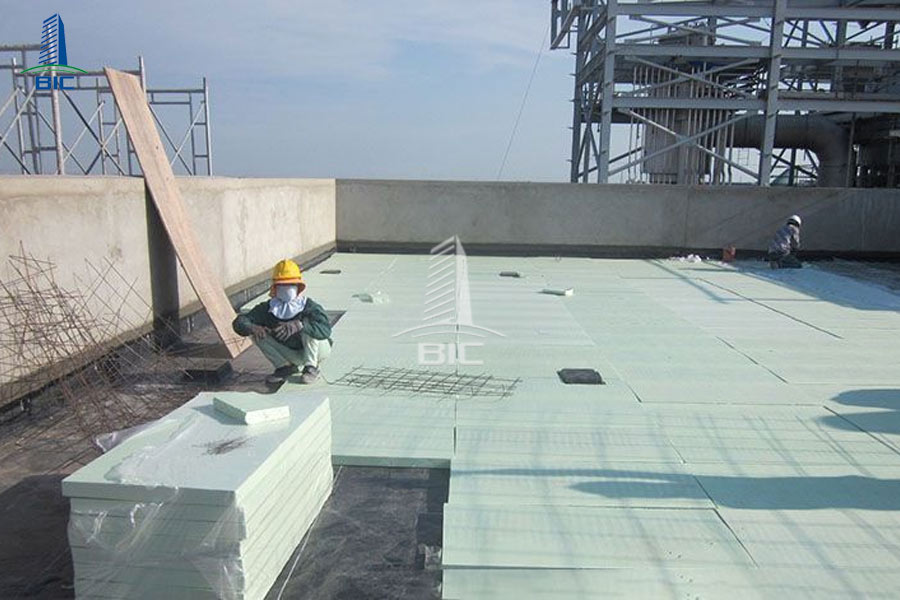
- EPS Foam: EPS foam (Expanded Polystyrene) is a lightweight and easy-to-install insulation material. EPS foam has good insulation properties due to the expanded polystyrene bead structure, helping reduce heat transmission from outside into the factory. Besides, EPS foam is reasonably priced and has moisture resistance, protecting the floor from moisture infiltration and preventing mold. However, it may not be suitable for areas requiring high load-bearing capacity.
- XPS Foam: XPS foam (Extruded Polystyrene) is another option with higher mechanical strength compared to EPS in construction design. XPS foam has superior insulation capabilities and good load-bearing properties, making it an ideal choice for areas with high load or pressure. XPS foam also has good water resistance, keeping the floor dry and preventing damage over time. The ease of installation and long lifespan are significant advantages of XPS foam.
- Glass Wool: Glass wool is an insulation material with effective soundproofing and fire resistance. The structure of glass wool helps minimize noise and provides a protective layer against fire for the factory floor. Glass wool also has good insulation properties, reducing heat transmission and helping maintain a stable temperature in the working space.
Choosing suitable insulation materials for the floor in factory design not only optimizes insulation effectiveness but also creates better working conditions for workers, saving energy costs, and protecting the floor from environmental factors.
When choosing insulation solutions in factory design, several factors must be considered to ensure effectiveness and suitability. The key criteria include:
- Region: The climate of the factory construction area significantly influences the choice of insulation materials. In regions with high temperatures or humidity, solutions with good heat and moisture resistance should be selected.
- Temperature and Humidity: Depending on the average temperature and humidity levels, you can choose insulation materials with the most suitable properties to maintain internal temperature stability and minimize moisture penetration.
- Production: Factory design in the production field usually requires a stable and strictly controlled environment, so choosing insulation materials with good heat retention is essential.
- Warehouse: Warehouses may primarily require insulation to protect goods from temperature fluctuations, so insulation solutions like panels or lightweight insulation layers may be suitable.
- Processing: For factory construction design in processing, it's necessary to ensure that insulation solutions not only retain heat but also do not affect the processing operations, such as selecting insulation materials that do not produce dust or unwanted additives.
- Initial Investment: The initial cost for installing insulation solutions may vary depending on the type of material and method used. It's essential to consider financial capability and choose solutions with appropriate costs.
- Operating Costs: Besides the initial investment in factory construction design, it's also essential to consider the maintenance and operating costs of the insulation system. Some materials may require periodic maintenance or replacement, affecting long-term total costs.
Fit with Overall Architecture: Insulation solutions must harmonize with the overall architectural design of the factory. The choice of materials and methods should ensure they do not affect the appearance and design of the structure.
Material Lifespan: The durability and lifespan of insulation materials are crucial factors to ensure long-term effectiveness. Materials should withstand environmental factors like high temperatures, humidity, and mechanical impacts to minimize the need for maintenance and replacement.
Selecting appropriate insulation solutions based on these criteria will help optimize work efficiency, save costs, and protect factory assets.
Investing in insulation for factories is a crucial decision that helps optimize operational efficiency, minimize energy costs, and create a safe and effective working environment. To build the most efficient factories, investors should choose design units with experience in industrial factory construction. Contact BIC now for free legal advice; we are proud to be the leading factory construction design unit in Vietnam.