With Vietnam's hot climate, the factory cannot avoid high temperatures, especially at noon in summer. The application of machinery and cooling methods is focused by businesses to ensure working conditions and efficiency for workers, as well as to prevent fire incidents, damage to machinery and equipment due to high temperatures. Applying the right factory heat-resistant method helps businesses optimize installation costs and still bring high efficiency.
Let's take a look at the ways to fight the heat used by many businesses
Yes to say this method is applied by many businesses because it is easy to install and saves the most costs. Applicable to factories with small scale with few workers and machines with low temperature during operation.
.jpg)
Principle: When the temperature inside the workshop is higher than the temperature outside, the cool wind from outside is brought into the workshop to dispel the high temperature in the workshop to the outside.
Advantages: simple, easy to install, save electricity
Cons: Depends on the weather outside, the wind direction has limited cooling effect.
Apply to textile, leather and shoe factories…
This method mainly installs the ventilation fan
The principle of operation of the fan when rotating, draws cool air from the outside to the inside of the workshop, and the hot air from the opposite side goes out.
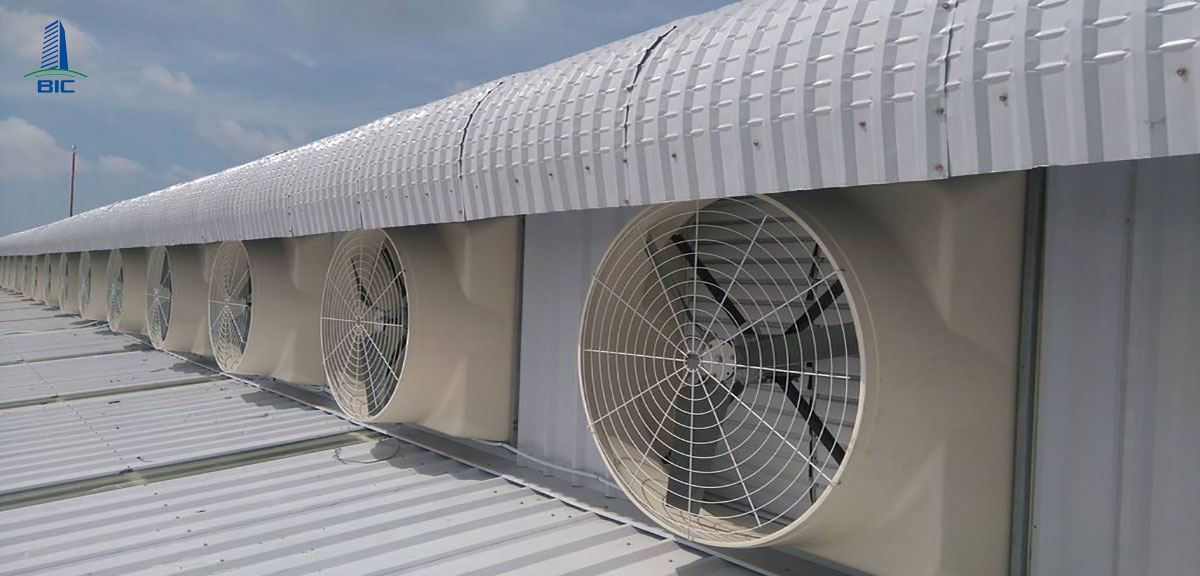
Advantages: easy to install, cost-effective, and more effective than the natural wind method of preventing factory heat.
Cons: only applies to small-scale workshops
Applicable to garment factories, wood workshops, carpentry workshops... not large in area
Insulation paint is a method of coating paint on roofs, corrugated iron roofs have the ability to insulate heat. This minimizes the absorption of hot heat caused by the weather outside.
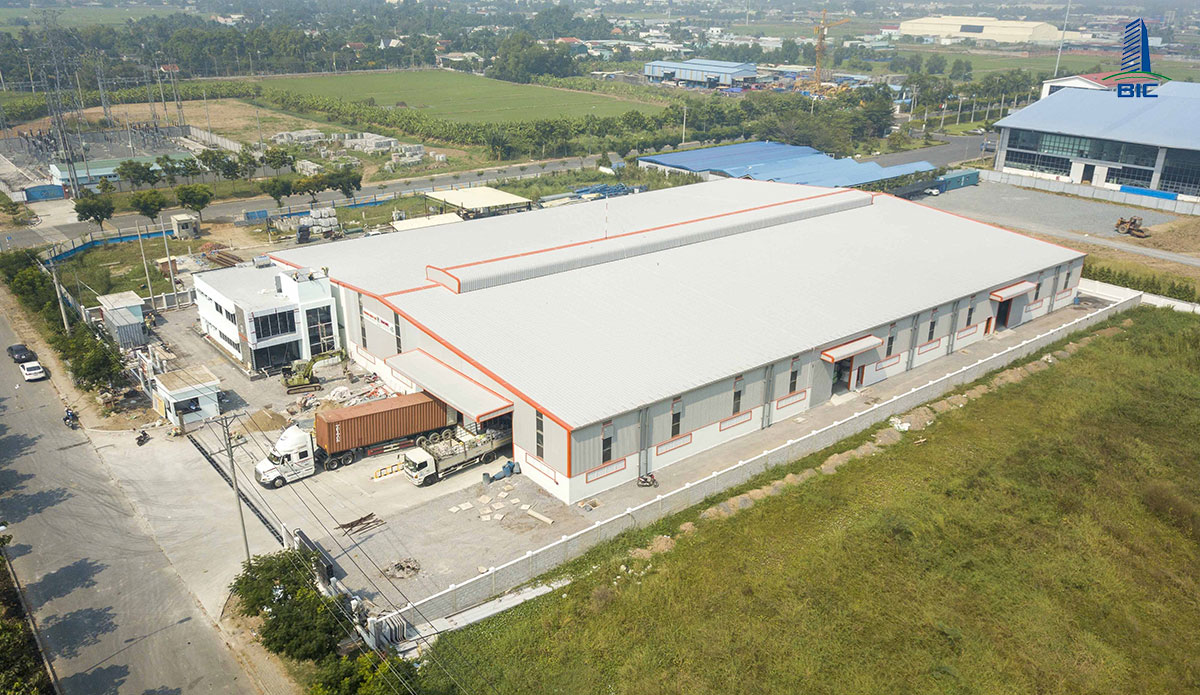
The principle is easy to understand: is the insulating roof coating to limit the heat absorbed into the factory, helping to keep the air inside the factory cool.
Advantages: energy saving, applicable to large-scale factories
Cons: Not suitable for factories that discharge a lot of dust and do not have the ability to filter the air, the efficiency is not high when the weather outside is hot and sunny.
Applied to electronic industrial factories, production workshops, food processing...
The method of preventing heat from cooling factories is the most used by businesses at present. Because of the diversity of many series of steam fans, standing fans, wall fans, ceiling fans, floor fans ... depending on the area of use and installation to suit the function to bring the best cooling effect.
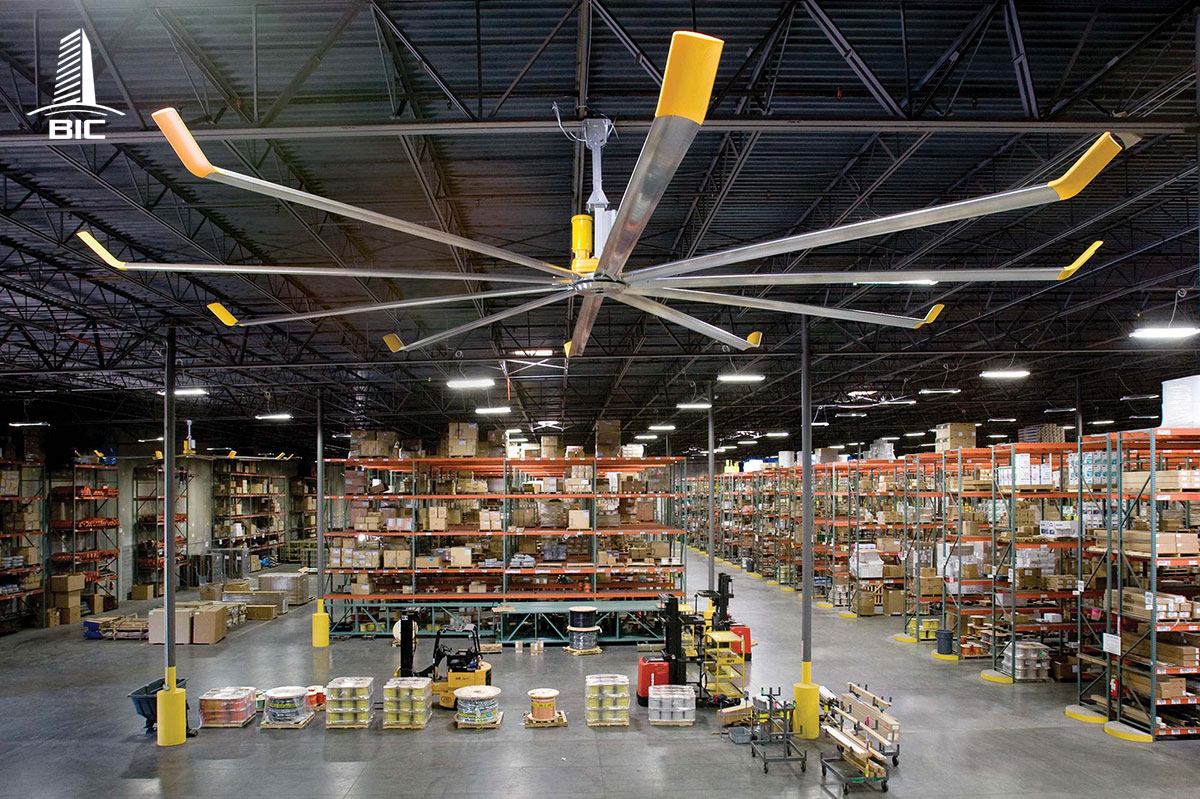
Principle: When the fan works, the air inside and dust is sucked out by the fan to help the factory cool and ventilated immediately.
Advantages: easy and flexible installation, long life, durable operation, can be used in factories and enclosed spaces, does not consume as much power as air conditioners
Cons: creating temporary cool air does not reduce ambient temperature, high-cost high-capacity fan.
Applied in factories that emit high heat such as steel casting, metallurgy, brick factories, etc.
The installation of an air conditioning system with an intermediate load of water always brings cool air to the factory.
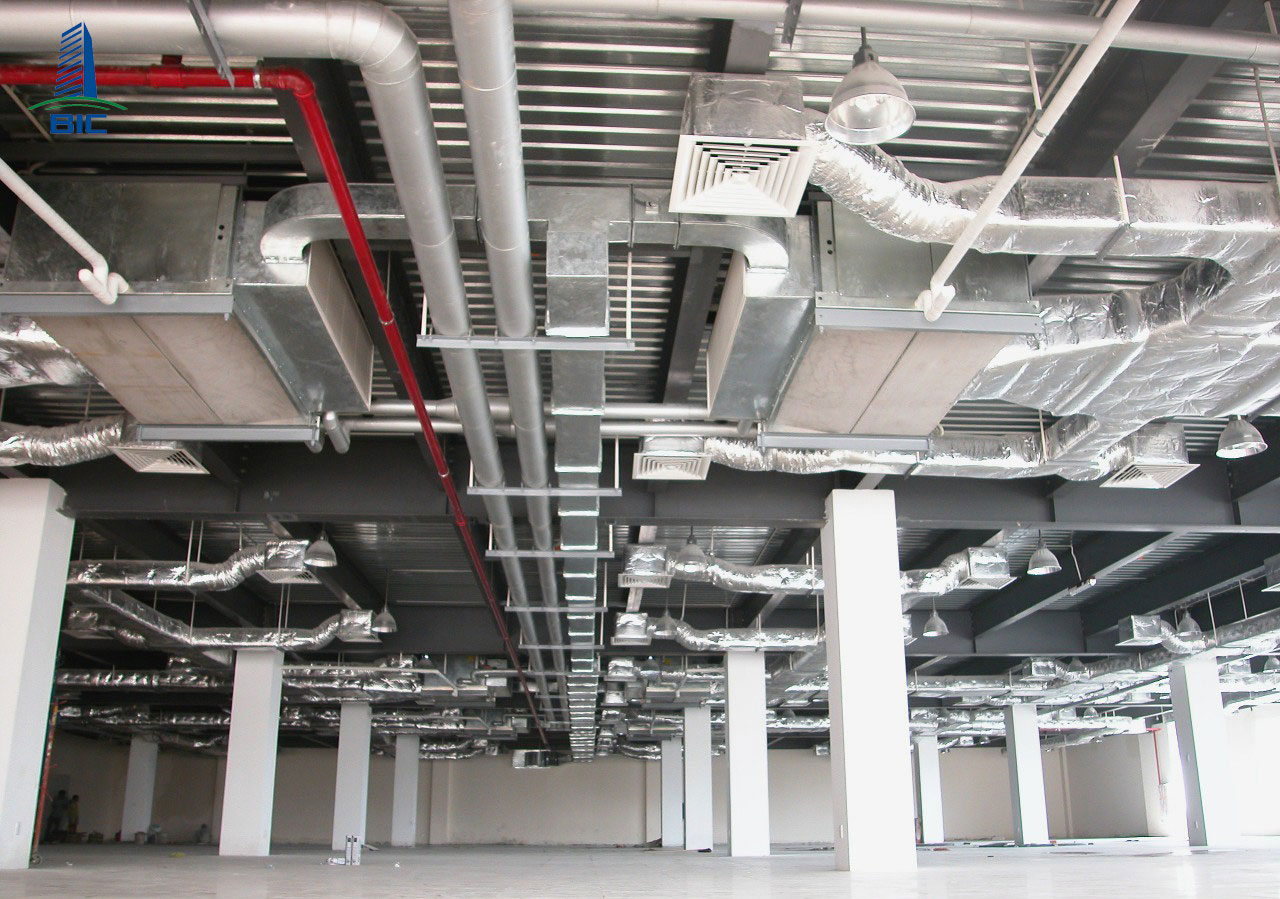
Principle: The water is cooled through the evaporator and is pumped to the indoor unit to cool the whole factory while removing dirt to the outside of the factory.
Advantages: The air conditioning system works throughout. Good anti-heat effect, long life, suitable for large and small factories. In addition to cooling the machine, there is a heating mode in the winter.
Cons: High system installation and maintenance budget. Power consumption 24/24 used in large-scale closed factories.
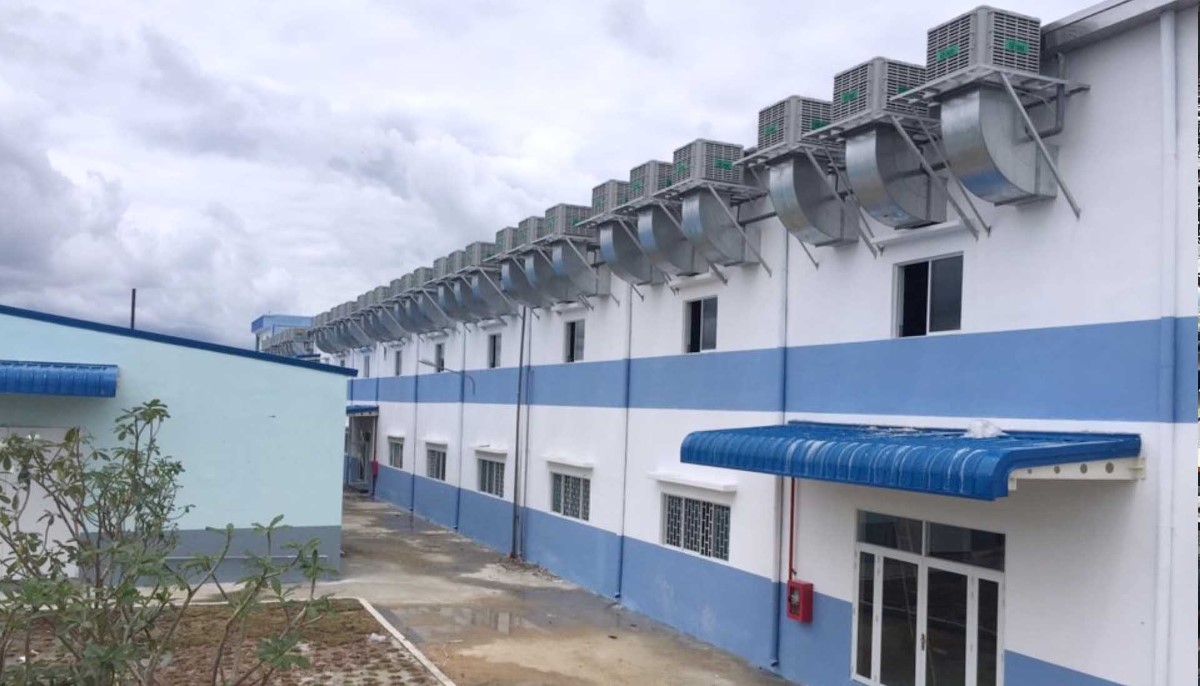
Cooling the factory with the Cooling Pad is a method of using a combination of the cooling pad and the ventilation fans to increase the efficiency of the factory's heat reduction.
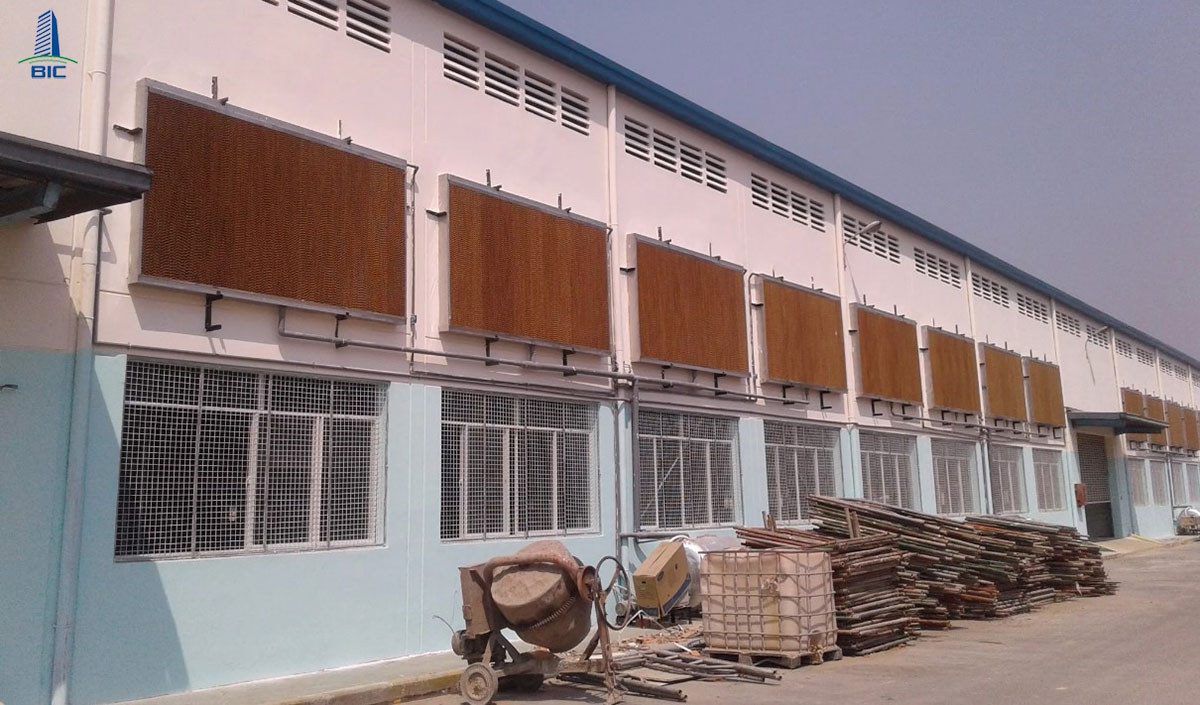
Principle: The exhaust fan is arranged opposite the Cooling Pad. The fan sucks hot air and dirt out. The outside wind enters the workshop through the cooling pad and is cooled and filtered and then follows the direction of the fan to the inside of the workshop. As a result, the temperature inside the workshop was significantly reduced and dust was removed.
Advantages: rapid air cooling, clean filtered air brought from outside, moderate installation costs, system warranty does not need too many times.
Cons: Does not cool at the base of hidden walls, moisture in the air causes mold
Applied in factories producing plastic, livestock, vegetable farms... do not apply to food and electronic factories that are prone to product damage.
Factory cooling with steam is very popular. The system is installed on a high ceiling, using a water pump with high pressure into the duct with a nozzle with a special structure to break water droplets into tiny water molecules in the form of mist. This layer of mist has the effect of cooling the air and increasing humidity without damaging machinery and products in the workshop.
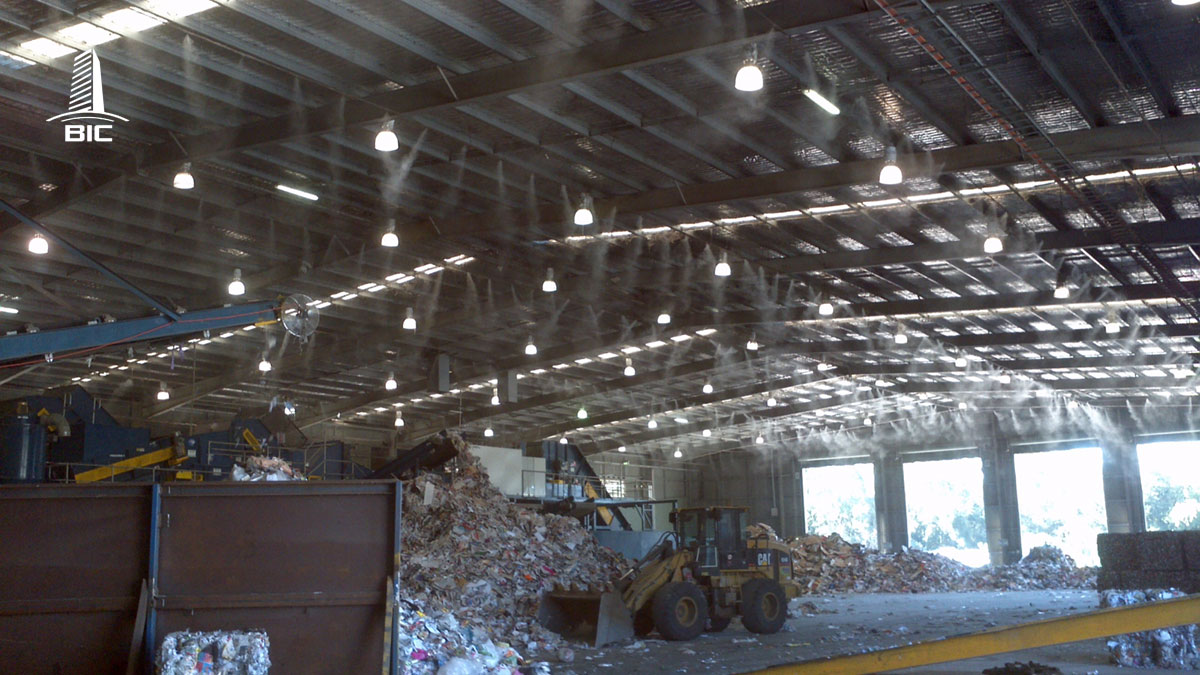
Principle: Mist sprays directly from above to cool below
Advantages: Cooling the dust-stamping workshop does not take much time and installation costs
Cons: Mist spray increases the wetness of the floor of fragile machinery
Applied in garage workshop, food processing.
Similar to the misting system but cooling for the factory, but the pump and duct are installed on the roof.
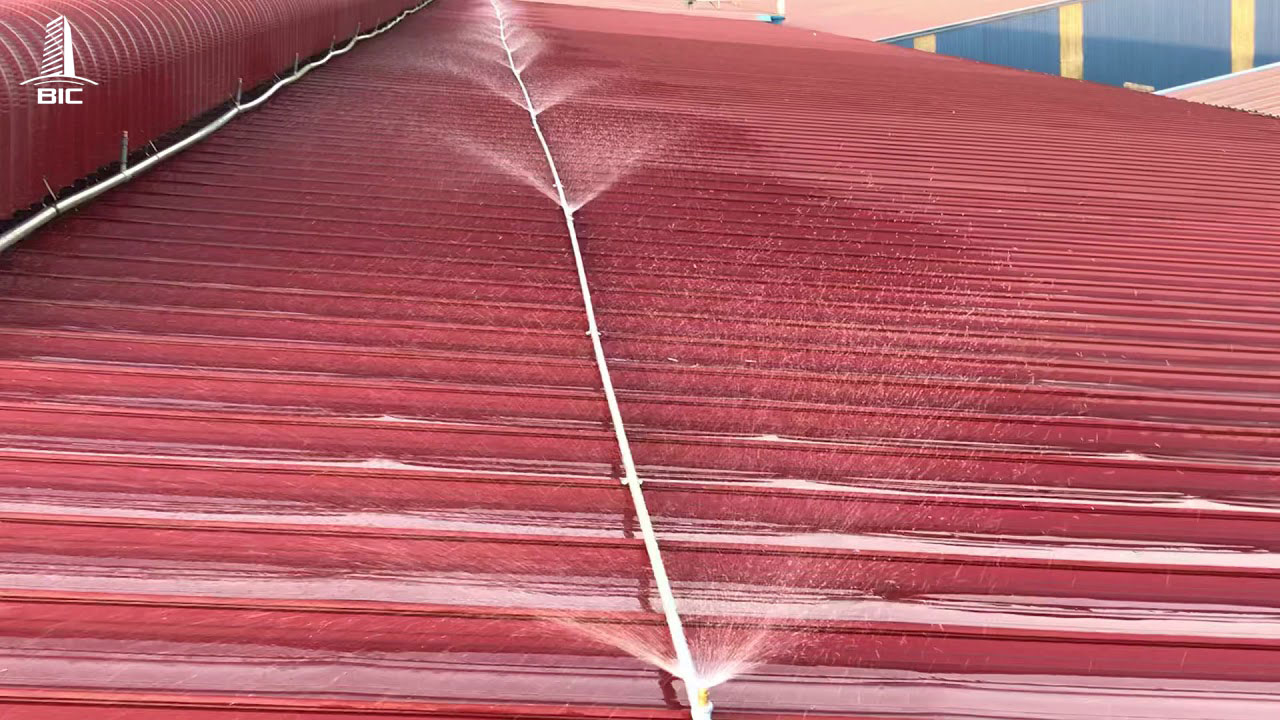
Principle: spray water on the entire roof to cool the factory from the outside
Advantages: Rapid heat reduction, low investment cost, applicable to both small and large factories.
Cons: Consume a lot of water, can't stamp out dust
Applied in welding workshop, animal husbandry, mechanical workshop...
There are many different ways to prevent heat from factories, but now businesses can refer to the above methods that have been and will be combined in the current popular industrial factory construction structure. Depending on the size of the factory and the usage features of each type of factory and the number of workers, a cooling system is applied to optimize costs and still bring high efficiency.