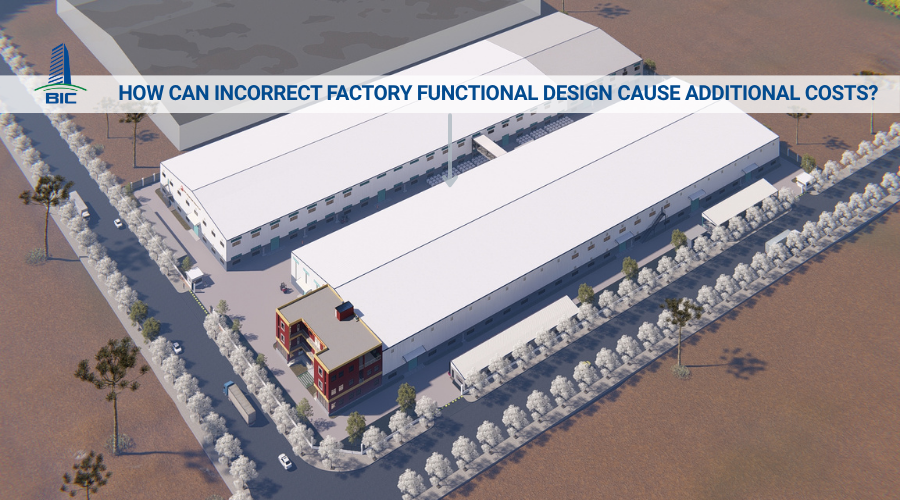
During the construction of the factory, there will be problems of concrete cracking in the concrete structure because the hard deformation of the concrete is too large, causing the tensile stress to arise beyond the allowable tensile limit of the concrete. This problem occurs when after a year when pouring concrete.
A concrete expansion joint can be called a settlement joint, a joint that allows concrete to expand and contract when there is a temperature change. The expansion joint acts as a break point between the concrete and other parts of the structure, allowing the structure to move without causing cracking. Must be arranged for large concrete structures such as foundations and floors

Finally, the expansion joint will be protected with construction glue to prevent accumulation of dirt, water, chemicals to ensure a flat surface to reduce the risk of accidents. There are two types of expansion joint sealant: PU-based adhesive (polyurethane) and MS glue (modified silicone).
Standards for cutting expansion joints of concrete roads need to comply with the provisions of National Standard TCVN 9345:2012.

+ Regulations on construction of joints
Insert wooden or styrofoam slotting material before application
After pouring concrete, there must be a trowel to create a slot
After 6-8 months of concrete has reached a certain hardness, cut with a cutter
+ Regulations on distance for shrink joints
Joints 6-9m apply to reinforced concrete structures subject to direct climate impacts.
+ Regulations on construction of expansion joints
Concrete road joints are 35-40m apart. Thanks to that, the expansion joint is distinguished from the joint with a distance of 5-6m .
According to the standard of cutting the expansion joint of the concrete road with the joint being a part of the thickness, the expansion joint cuts the whole thickness to separate the concrete table into two separate parts.

+ Regulations on distance for expansion joints
Joints 6-9m apply to non-reinforced or reinforced concrete structures subject to direct environmental impacts
Joints 18m are used for non-reinforced concrete or steel structures that are shielded from sunlight.
35m expansion joints apply to reinforced concrete structures that are directly impacted by the sun
Spacing 50m is used for reinforced concrete structures to be shielded from the sun.
The joints are spaced 24-36 times the concrete thickness. Usually about 30 times the case with 10cm thick concrete slabs, expansion joints in concrete should be about 3m apart.
The thickness of the joints must be cut to the necessary depth at least one-quarter of the thickness of the concrete slab in the case of 10cm thick sand, the concrete floor expansion joints are at least 2.5cm deep.
The expansion joint should be cut early before the concrete begins to shrink. Delaying more than 12g after placing concrete may cause cracks to appear. (If you use the method of placing the expansion joint brace on the concrete foundation first, it will take much less effort)
The expansion joint will maximize its effectiveness when the length: width ratio of the concrete floor tile is 1:1 (the width is equal to the width). Example: 5x5m. Can be maximized to the length: width ratio of the floor tile is 1: 1.5 . eg: 2x3m
If the concrete floor has reinforcement, the reinforcement should be separated at the location of the expansion joint
Should create expansion joints along the column axes
It is recommended to design the position of the slots under the carpeted areas later or under the walls => the slots will be "hidden" and support "revealing" -> increase the aesthetics of the building.
Drive rods should be used at heavily loaded concrete floors
Use the heat gap between the floor adjacent to the position of columns, walls, and foundations, curbs, sidewalks ....
Choosing the material /matite to insert expansion joints in concrete must have elasticity, absorb impact forces, after deformation can return to the original state
It is not recommended to use asphalt + jute rope to insert expansion joints (according to the traditional method) Because when it is hot, the asphalt will melt – stick to the wheels and dirty the concrete floor
=> If conditions allow, it is recommended to use expansion joints before placing concrete.
If you must use asphalt, you should pour it on the ground a bit so that if there is a flow, it will not spill onto the floor.
Read more: Industrial Factory Construction Construction