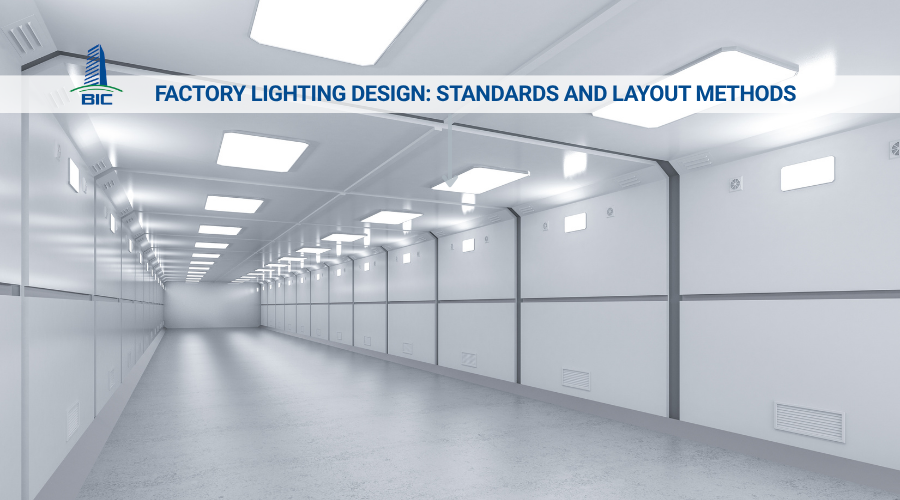
The factory lighting calculation formula calculates the number of lights needed for each workshop area. The formula is also approximate, the number of lights also depends on other factors such as the type of lamp, the number of furniture, the layout and color of the furniture, personal preferences ...
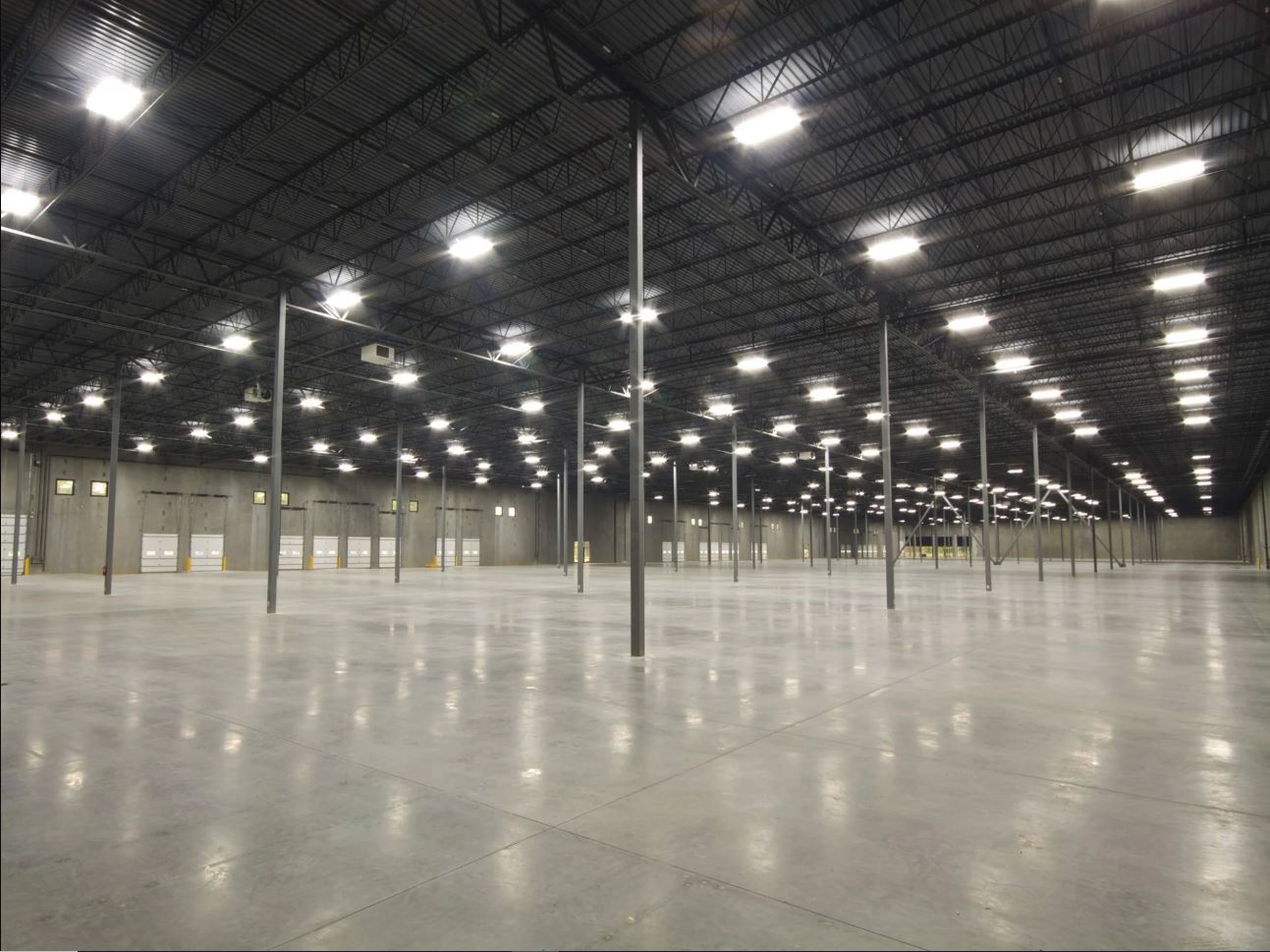
+ Floor area: the area of the room to install the light S = length x width recommended amount of lumens from the lighting designer: Each space will require different light levels. Recommended standard illuminance for lighting areas from professionals 1lux(lx) = 1lumen/1m2
Conference room meeting room 500lx (ie 500lumen/1m2)
Class: 300lx
Stairs, corridors of buildings 750lx
Room: 150lx
Hall room 150 – 300lx
Canteen ancillary items 400-800lx
The formula for calculating the number of lights needed is as follows:
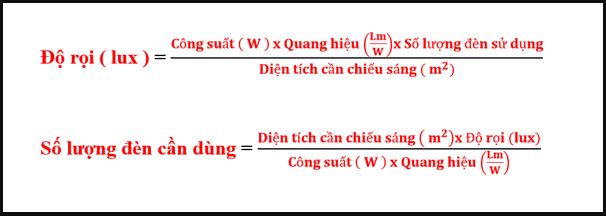
The actual case of calculating the number of LED lights needed for a 14m2 xưởng workshop room
- Data: according to her recommendation for the amount of lumens needed, the family living room should have a minimum illuminance of 150lux, equivalent to 150lumen/1m2. Multiply by 14m2
From the formula Lux = lumen/m2, we have the formula to calculate the total number of lumens: Total lumens = Standard illuminance (lux) x Area (m2) = 150 (Lux) x 14m2 = 2100 lumens
-Calculate the total wattage of the lights needed
A good quality LED product will provide about 100 lumens/watts. This parameter is provided by the distributor or written on the product packaging => Total power (w) = 2100/100 = 21 W
-Calculate the number of lights needed
Number of lights needed = total power (w): power of 1 lamp (W)
If you choose a led bulb with a capacity of 6W, the number of lights to use is: 21/6 = 3.5
=> It will need 4 6W led bulbs for a 14m2 room, calculate similarly according to this formula with lamps of different power levels, you will get a relative answer on the number of lights.
Several other factors affect the number of lights in a factory. Besides relying on the lumens calculation formula to get the right number of lights for each different area, the following factors also affect the number of lights and the distribution of lights in the house.
+ The color of the walls, machinery and equipment produced in the workshop will require more light than other places.
+ Height of the ceiling: If the ceiling is higher than the average in the architecture, more lights will be needed
+ The number of production machines and workers requires more lights
+ Small and large lamps In fact, many small-capacity lamps installed at appropriate distances in the room can provide better light efficiency than a single high-power LED.