The norm of reinforcement processing is estimated how to fit. In the estimation of construction norms, issued together with the document No. 1776/VP-BXD dated August 16, 2007 the production and erection of reinforcement is issued according to 3 types of diameters of reinforcement which are: reinforcement diameter <= 10 reinforcement diameter <= 18
To make an estimate for the production and erection of reinforcement according to the diameters of different steel bars such as 6mm steel, 8mm non-steel, etc., you can refer to the estimation steps as follows:
Step 1 Estimated production and erection of reinforcement according to the diameter of the steel by looking up the code

Hover your mouse over the MSVC box and proceed to look up the unit price code as you like. The production and erection of reinforcement will start with the code À.611… When you type this code, the software will display suggestions for you related codes. Currently, with different diameters of steel, the Eta estimate defines adding the A, B, C .. to the end of the work codes.

Step 2: Estimate the production and erection of reinforcement according to the diameter of the steel by looking up the job name
In this step, we will make an estimate according to the diameter of the bar, by placing the mouse pointer in the MSCV box and typing the keyword phrase related to the diameter of the bar. Specifically, you can check the 6mm diameter rebar or the 6mm rebar. Thus, the software will immediately suggest and display the desired job codes.

Steel type.
Steel is an important material in construction. The mechanical and mechanical criteria of the steel must be in accordance with the design regulations, the type must be exactly as in the contract given earlier.
When the steel is imported to the construction site, the engineer team together with the supervisory engineer and the investor check the quality certificate of the steel lot and then make a record of material acceptance.
Based on the quantity and type, the steel sample is cut in accordance with the standard TCVN 197: 1985 to determine the mechanical and mechanical criteria of the steel. After completing the cutting of the steel sample, the unit makes a record of sampling, sealing and transferring it to the laboratory.
The steel testing unit must be an independent unit, separate from the construction unit, and receive the approval of the supervisory engineer. During the experiment, there must be monitoring of the parties to ensure the most fair results.
Based on the test results to give the results of the steel lot in accordance with regulations or not. If true, it can be used for works and contract settlement.
Cleaning and polishing steel.
Before being put into construction, steel construction must go through cleaning, rusting and then installing into the structure. Note, with stainless steel, if the steel section is reduced by > 2%, this steel is considered "broken" and should not be used. Otherwise, the quality and safety of the project will not be guaranteed.
Clean steel with wire brush or machine. Chemical treatment of steel rust. For steel with only dirt, just spray or wipe it with a wet cloth.
Steel processing.
The requirements must be consistent with the steel details of the structure and the general provisions of the previously agreed design documents.
Carefully read the detailed steel drawings of the structure on the plan, cross-section, architectural drawings... From there, the detailed design of steel processing is deployed and supervised for approval. Steel details must comply with the position of steel joints. In the steel processing process, there should be supervision of both parties.

Steel erection.
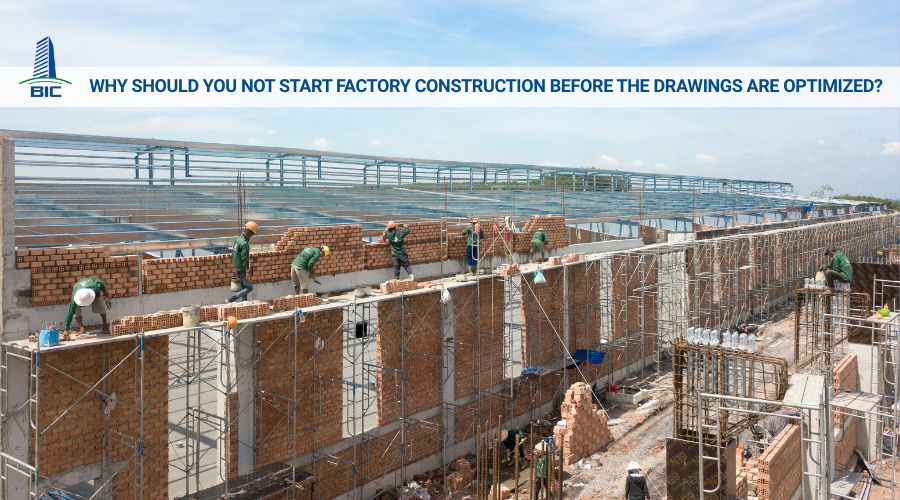
The technique of erecting rebar requires the right position, every inch exactly. For foundations, beams, floors, and stairs, it is necessary to follow the pre-processed floor beam positioning system.
For columns and walls, it is necessary to install reinforcement from the deployed shaft grid to the deployment floor, turn on the column foot section, the wall foot, edit the steel and ensure the protection layer, then proceed to erect the reinforcement.
The protection layer of the reinforcement system is consistent with the design regulations for each member. The main steel frame needs a stable format, the right structure, to ensure safety.
Construction belt steel needs to be vertical, at the correct distance by measuring rod and marked with chalk on the steel for workers to tie the belt. This step requires workers to be meticulous, precise, the steel belt must arrange the points of interlacing cross hooks in accordance with the regulations.
Steel connection
Connect in the right position (compression zone), right length and in accordance with design regulations. With floor beams, if not specifically specified, just pay attention not to join in the danger zone, a section must not connect more than 50% of the steel.
Splicing length as specified by the design. If there is no specific regulation, it is possible to apply the 30d joint in the compression zone, 40d in the tensile zone (limited use).
At the position of connecting steel, steel with diameter above or equal to 18, it is necessary to bend the steel at the connection position so that these two steel bars must have concentricity.
Steel millet creates a protective concrete layer.
Sufficient strength, ensure the thickness of the steel protection layer. Steel millet needs to be precast to ensure that the construction is not broken. In the position of beams, there must be 2 spacers so that the steel frame is not distorted and stable.
If there is no specific designation, the "dog's foot" should be made of steel and have a diameter of 10-12. Depending on each case, determine the most suitable steel for the project.
Concrete pouring process.
During the concreting process, pay attention to arrange the reinforcement team on duty to correct the warping areas, although the hook to fix the floor steel latex ensures the most standard reinforcement system. The correct reinforcement system ensures the highest quality and safest construction work.