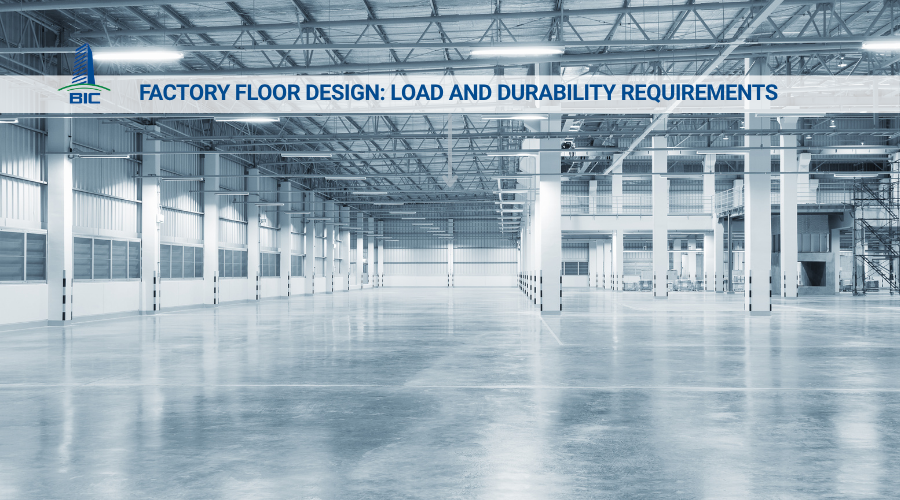
The calculation of the factory floor structure is carefully calculated by the engineer during the design of construction drawings. Because the thickness of the factory is an important factor in the production process, there should be sustainability when the factory operates throughout. According to the experience of more than 10 years in the field of factory construction, the volume of concrete floors used in the construction process accounts for 30% of the volume of concrete. The thickness of the workshop is easily chosen so that the rigidity of the project is not guaranteed.
The floor thickness chosen too large will increase the load on the project. Winter increases the volume of reinforcement as well as costs during construction. Usually the floor thickness will depend on factors such as span size, beam stiffness, effect of other factors. There are 2 common ways to determine the size of the thickness of the truss
In which HMIN value is specified for each floor type: 7cm for industrial floors; 8cm for industrial floors with cars running. LNG: Short Side Length Calculation D-Digit D = 0.8-1.4 depends on number M load numeric between 30-35 with denominator type M between 40-45 with version statistics four edge, Choose M small, M large with continuous version…
Determine the thickness of the AIC for a four-sided statement including beam type, AIC provides hmin values under conditional deflection conditions depending on beam stiffness and steel grade when floor thickness 0.2 α 2.0 not less than: H= LD [0.8 + (FY/ 200 000)] / [36+ 5ß (Alpha -0.2)] and 5 in. (2) When α 2, the floor thickness is not less than: H = LD [0.8 + (FY / 200 000)] / [36 + 9ß) and 3.5 in. (3) Where: α is the ratio of beam stiffness and floor stiffness (α = EDJD / ESJ) Factory floor must meet the following requirements: With good bearing: after 24 hours, people and objects Light can move on can.
When the floor is dry, make sure it is dry to the touch without moisture or cold that can absorb water. Flat floors have aesthetics, smoothness, porosity to create a sufficient friction band, good grip with the substrate.
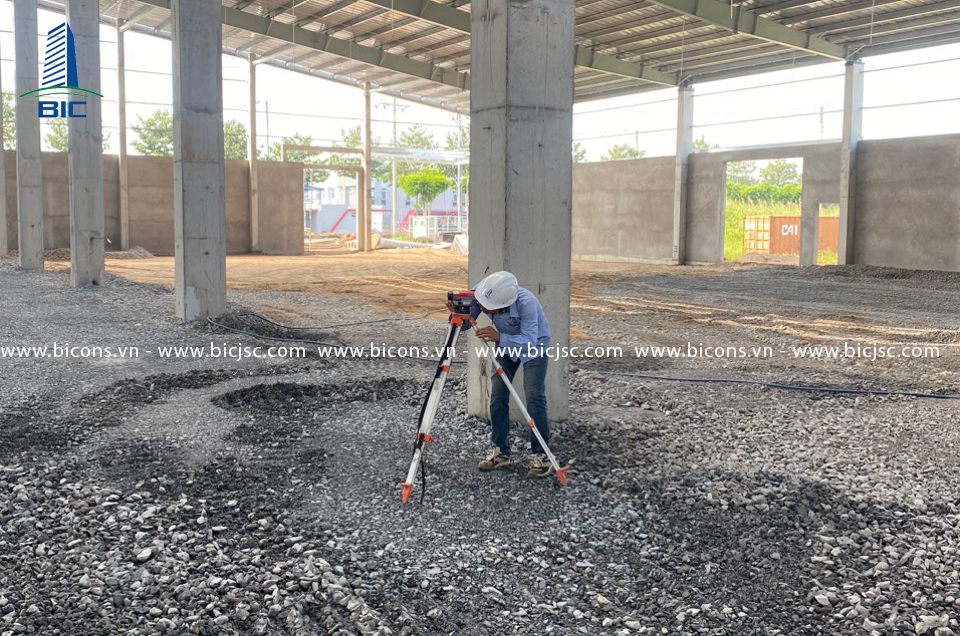
Construction of industrial factory floor
Normally, the factory floor is the place where there are many different impacts from the top down and from the bottom up due to the production process and the impact of the environment.
Dynamic force generated by production equipment operation, human movement, vibration and impact force when production lines and machines operate.
Static force, weight of equipment, materials, people, and products in the factory
Forces acting from the bottom up on aggressive substances in the form of gas, water.
The structure of the industrial factory has 3 types: The foundation has a continuous layer, the base is made of loose materials, and the base is made of synthetic materials.
1.Continuous coat type substrate
Platform:
The foundation made of soil has a simple structure, low cost, easy construction and repair, but often generates dust. The ground is used for workshops with large dynamic and static loads and high temperatures acting on the foundation. The mantle is made of earth; soil concrete (soil mixed with sand, gravel, crushed stone, slag) compacted.
Distribution background:
The leveling foundation is made from a mixture of gravel, sand and clay; a mixture of large and small crushed stone with or without asphalt, cement and sand mortar. They are often used in places of traffic, for warehouses.

Cement-concrete, asphalt-concrete foundations: Cement-concrete foundations (with or without reinforcement), asphalt with high strength and abrasion resistance, etc., are used in manufacturing workshops with high strength and abrasion resistance. High humidity, has the effect of oil, grease, alkali, acid, storage, where cars often go. The ground surface is made of yellow sand cement mortar or cement concrete (resistant to oil, grease, alkali); reinforced concrete with impact resistant steel chips; asphalt concrete (acid resistant) high grade. The buffer layer is made of ordinary crushed stone concrete, low grade.
Acid-resistant mortar and concrete foundations: Acid-resistant mortar and concrete bases are coated with acid-resistant materials such as liquid glass mortar with the necessary additives; low-lime cement mortar, blast furnace slag cement, volcanic ash. On the backing layer must be covered with bitumen.
Grindstone base: The ground is made of a grinding stone with a cement coating – polished granary (granite), a backing of compacted crushed stone concrete. This type of substrate is beautiful, hygienic, resistant to grease and alkali.
2. Base made of loose material
Characterized by the surface coating is formed from panels, loose blocks linked together with mortar or without mortar such as bricks, stones, paving slabs, metal sheets ...
Ceramic tile floor: Ceramic tile floor has not great bearing capacity, but simple construction, low cost. Tiles are laid or seams, bonded with cement-sand mortar or asphalt mortar. The buffer layer is made of sand, slag, compacted crushed stone or low grade concrete.
Stone foundation: Stone foundation has great bearing capacity, impact resistance, low cost, but is not flat, generates dust, etc., is often used for production rooms with high temperature, strong impact, equipment storage. heavy, road cars…
The stone may not be machined (rocket) or machined into a rectangular block. The rocks are paved with regularity on the sand layer of sand, slag, mixed soil, etc., even concrete cushions. The openings may not be inserted or filled with cement mortar, asphalt mortar, depending on the requirements and performance characteristics of use.
Floor with paving slabs: The floor is made of paving slabs covered with grinding stone slabs, ceramic tiles, cement concrete slabs or asphalt concrete slabs, granite slabs, synthetic resin panels, etc. buffer with sand, rammed earth, compacted crushed stone or crushed concrete. Binding materials are usually cement mortar, asphalt mortar, depending on the characteristics and production requirements.
Platform with metal plates: The base is made of metal plates with surface coating of cast iron or steel plates, used for metallurgical workshops, with high impact loads. Sheet metal is placed on a bed of sand, rammed earth, compacted crushed rock (or concrete)….
Wooden background: Wooden base is highly elastic, light, warm, hygroscopic, does not generate dust... but is flammable and rotten. They are often used for working areas of workers in textile and yarn factories, for service houses, administration - management, service.
Wood is processed in block (cross section) or plate type (vertical cut).
3. Base made of synthetic resin material
In addition to the above-mentioned types of flooring, industrial construction also uses a surface covered with rolls of synthetic plastic. They meet many requirements of some types of production with active chemicals, hygiene, soundproof and waterproof requirements.
Coatings of this type of substrate are manufactured in continuous, sheet or roll form. They are glued with synthetic adhesive to the leveled concrete backing.