What is the LOTUS standard?
LOTUS is a green building certification system developed by the Vietnam Green Building Council VGBC
VGBC is a member of the World Green Building Council, an international non-profit organization. Over 8 years of development, LOTUS certification now includes 7 assessment systems, applicable to most types of construction projects such as residential buildings, condominiums, operating buildings, individual houses, small-scale works and interior space. LOTUS serves as the guiding standard and goal setting tool for building environmentally friendly and user-friendly buildings with lower operating costs.

LOTUS Standards
LOTUS was officially released in September 2011 with the aim of assessing the environmental friendliness and sustainable development of construction works in Vietnam.
LOTUS standards are derived from practice, in 2008, the VGBC references the green building assessment criteria of advanced countries in the world, based on the real situation in Vietnam to select and build criteria to suit our country's characteristics.
Compared with the world's popular green building certification systems such as LEED, Green Mark, Green Star,... LOTUS has some similarities such as the scoring system, prerequisites and criteria and requirements at items.
However, LOTUS has many important differences to become the most suitable green building certification system for the built environment of Vietnam. The most prominent difference is the reference and documentation of Vietnamese norms, standards and norms in LOTUS.
The foundation of LOTUS
With the main goal of assessing the environmental friendliness and sustainable development of construction works in our country, so the LOTUS green building standard includes many “green” criteria for each work items.
During the research process, VGBC has consulted many green building standards that have been researched, developed and tested in practice for a long time in advanced countries such as LEED standards (USA), GREEAM (UK ), Green Star (Australia),... and regional standards such as: Green Mark (Singapore), GBI (Malaysia)... Since then, VGBC has selected and built the criteria to match. most with conditions in Vietnam.
It can be said that the LOTUS “green” criteria such as: E-2, E-4, E-5, E-6, E-7 criterion on energy use - comply with National Standards on construction works using energy efficiently; WP-1 criterion - minimizing waste water - comply with QCVN 14: 2008 / BTNMT - National technical regulation on domestic wastewater; Prerequisite H-PR-2 - no smoking - complies with Decree No. 45/2005 / ND-CP on sanctioning of administrative violations in the health sector and Decision No. 1315 / QD-TTg on plan to implement the Framework Convention on Tobacco Control...
Development process
LOTUS Non Residential (LOTUS Non Residential) pilot was released in June 2010; The first official version (LOTUS Non Residential Version 1) was released in September 2011.
LOTUS for residential projects (LOTUS Residential): release the trial in September 2011.
LOTUS for existing and renovated works: the end of 2011 will be issued.
The LOTUS system is made up of basic elements:
Prerequisites - Clause - Score
Prerequisites are mandatory requirements for a LOTUS Certification registration project, to ensure that the building meets Vietnam's minimum standards of energy and water efficiency, and environmental quality. indoor school and the ability to limit environmental impact. The project cannot receive certification points for fulfilling these requirements.
Score
The higher the score the project achieves, the greater the benefits LOTUS offers. Higher scores mean higher performance, lower operating costs (saving electricity, saving water, reducing maintenance - repair, ...) and more convenience for users.
Projects will be awarded LOTUS Certifications at different levels based on scores obtained. The lowest certification level is set at 40% of the total points (LOTUS Certification). The higher certification levels represent 55% (LOTUS Silver), 65% (LOTUS Gold) and 75% (LOTUS Platinum) of the total points.
.png)
Types of LOTUS certification
Base model and performance rating
LOTUS uses the baseline model and benchmarks to compare the performance of a green building project with conventional buildings in Vietnam.
Norm is a reference value (energy consumption, water consumption, ...) that is set based on information about the same type of buildings, national survey results, history of public performance. program or project goals towards. For example, the baseline demand for garden irrigation water is 1.1m3 / m2 for garden / year.
The basic model is one that carries the project's design features (such as GFA, number of users, total number of floors, building shape, local climatic conditions, number of days of operation, ...) but using use traditional materials and equipment instead of the green solutions applied by the project. The baseline model will be compared with the project's design model, thereby determining the rate of performance improvement when applying green solutions.
LOTUS and Vietnam's system of construction codes and standards
LOTUS NR documents 22 construction codes and standards of Vietnam and 6 international standards applied in the field of green building construction. In which, a number of standards and standards are mandatory requirements for all construction works in Vietnam. The VGBC has an important role to play in ensuring that LOTUS projects are in strict compliance with government regulations, while at the same time raising awareness of existing regulations. Accordingly, LOTUS aims to integrate as much as required in Vietnam's construction codes and standards when establishing a certification assessment facility.
LOTUS applies Vietnamese regulations and standards in such aspects as:
1. Establish requirements at the prerequisites (for example, for wastewater treatment, the LOTUS project needs to meet the requirements of QCVN 14: 2008 / BTNMT National technical regulation on domestic wastewater or QCVN 28: 2010 / BTNMT - National technical regulation on medical wastewater)
2. Develop a method to calculate the performance improvement of a LOTUS project (eg, for the building envelope, the project will receive 1 point for every 10% of the average building OTTV reduced from the required level). requirements of QCVN 09: 2013 / BXD - National technical regulation on construction works using energy efficiency)
3. Determine the requirements under LOTUS credits (e.g. the quality of recycled, reused or rainwater needs to meet the minimum requirement of QCVN 39: 2011 / BTNMT - Water Quality Technical Regulation for irrigation or QCVN 02: 2009 / BYT - National technical regulation on domestic water quality)
In the case that relevant standards are already in place in Vietnam, LOTUS will document or integrate those standards in the required content in the items. In fact, the Vietnamese construction industry references a lot from international standards. Therefore, the VGBC gives a higher priority to implementation and awareness of domestic standards. The integration of international standards (such as ASHRAE 62.1, ASHRAE 55, NSF / ANSI Standard 350, ...) has the effect of complementing and completing existing Vietnamese standards.
Scope of application
For projects that have not yet achieved LOTUS green building certification: developers and consultants will apply the criteria most suitable to project conditions to ensure the building is friendly to a certain extent. with people and surroundings.
Architects can use LOTUS as a useful design standard, especially applying passive design principles that are both effective and cost-effective.
LOTUS standards
Below is a summary of the contents of the 10 groups of LOTUS green building indicators
Minimize consumption of artificial energy sources, make use of natural energy sources, renewable energy, and self-renew.
Saving the need to use construction materials, recycled materials, materials that are easy to fabricate, and materials that are made up with little energy consumption.
The goal of protecting ecological resources, minimizing negative impacts of construction on surrounding ecosystems, conserving biodiversity, developing vegetation, planting trees on roofs or floors home.
Minimize waste and environmental pollution, reduce wastewater discharge, solid waste, and emissions, and encourage solutions for recycling and reusing waste during construction and operations.
Ensure comfort and health, indoor air quality, thermal comfort, microclimate, light comfort, noise comfort, and vibration.
Green building standards raise resilience and mitigation capacity when natural disasters, ability to prevent flooding, and ensure the sustainability of works in case of storms, earthquakes and natural disasters. Ensure the building does not cause a heat island effect, encourage cycling and the use of public transport, a community space and adequate amenities for all.
Ensure optimization of most management activities in the building design phase, construction phase and construction operation phase, encouraging the application of additional environmental management systems.
Encourage initiatives that benefit the environment outside of the above requirements.
It can be said that the LOTUS Vietnam green building standard is to combine the quintessence of the pioneering countries. In order for LOTUS Vietnam standards to be widely applied in practice, in addition to the efforts of the Vietnam Green Building Council (VGBC), there is also a need for the support of many experts, investors, management agencies. to bring really good benefits to the community, towards sustainable development for our country.

Several types of green building standards
BIC is a company specializing in the design and construction of high-quality factories, pre-engineered steel buildings, industrial warehouses. In addition, BIC also designs and constructs office buildings, participates in surveying, testing,...
BIC has participated in many construction projects across the country. We have a lot of experience in building large-scale projects of famous investors from countries around the world such as Japan, Korean, Taiwan, America (USA), Singapore,...
BIC's reputation has been strengthened more and more as we are known more for its professional attitude, seriousness, integrity and honesty in business. BIC is now a trusted brand name for well-known investors in the Vietnamese market.
Benefits of Customer:
We have been implementing large-scale factory projects from 70,000 square meters to more than 200,000 square meters of foreign enterprises investing in Vietnam such as: Korean, Japan, Taiwan, .... We more and more efforts to become one of the leading brands in terms of prestige, project implementation capacity in Vietnam, reaching out to markets in countries in Southeast Asia and the World.
BIC is committed to providing customers with the best building service, office building, high-rise apartment building. By the enthusiasm and unrelenting efforts of all officials and employees. Especially, we have conquered many big projects and gained the confidence and satisfaction of the "Big Men" in the world who came to Vietnam to invest in the construction.
BIC is very pleased to serve you with the spirit: "COOPERATE TO DEVELOP TOGETHER"
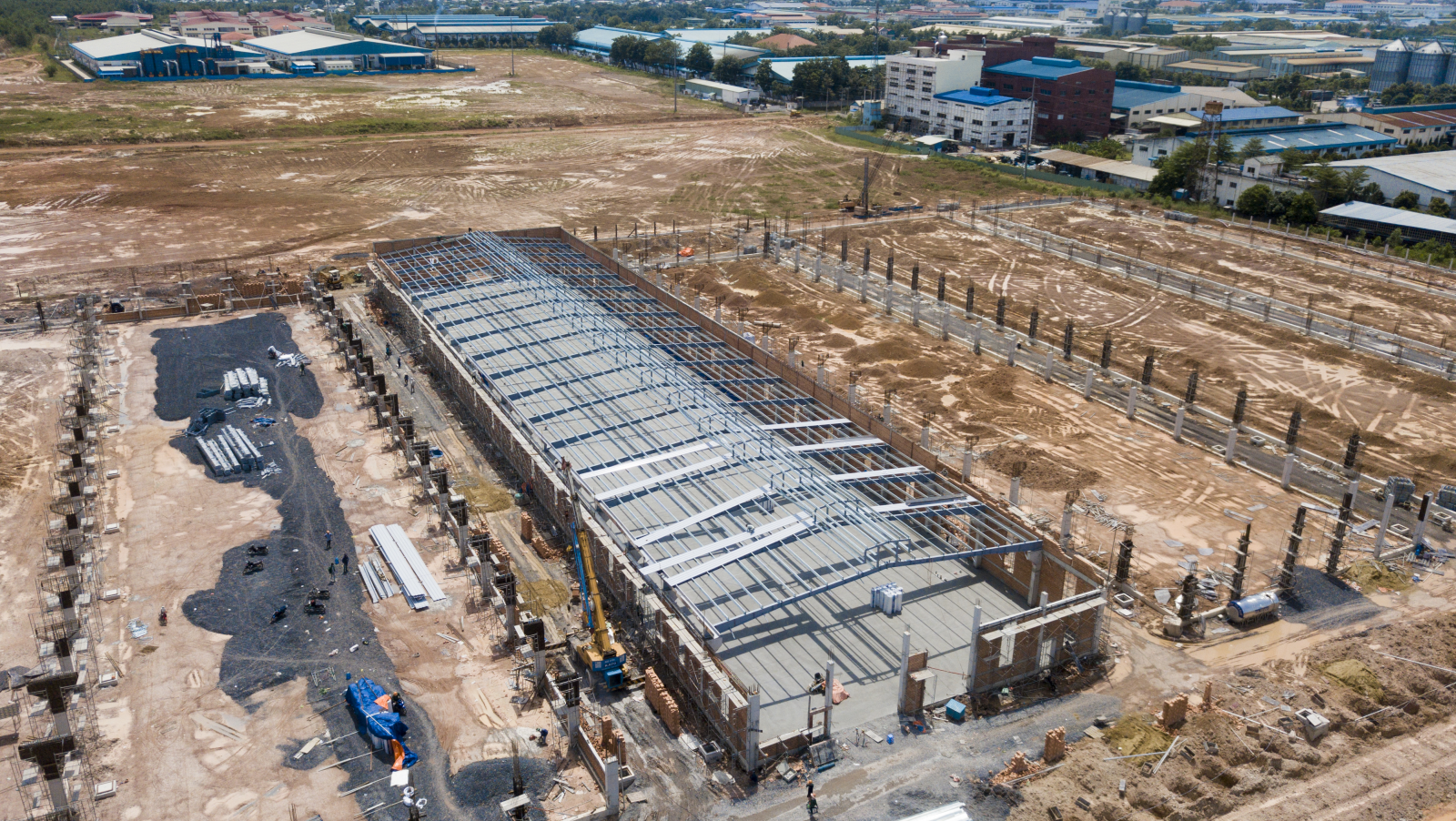
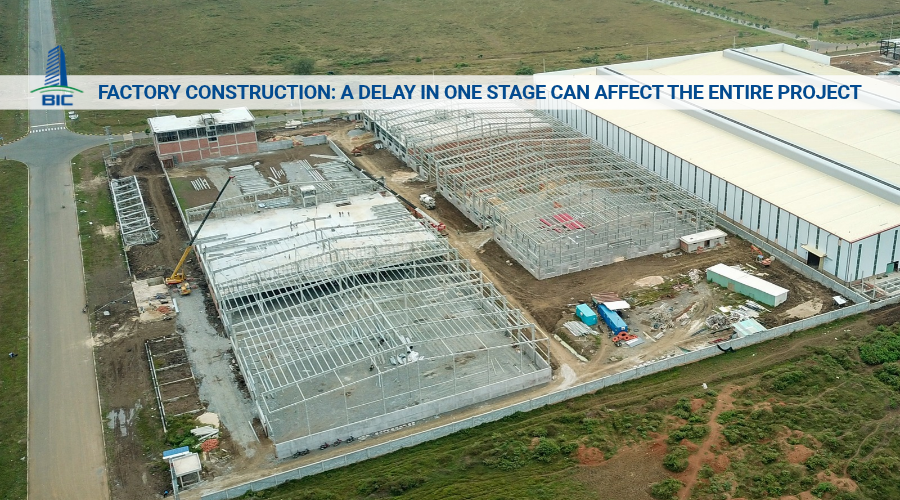
BIC is constructing an industrial factory
BIC CONSTRUCTION ARCHITECTURAL JOINT STOCK COMPANY
Ho Chi Minh Branch: 7th Floor, Gia Dinh group, 566 National Highway 13, P.Hiep Binh Phuoc, Thu Duc District, Ho Chi Minh City
☎️ Hotline: 0901.815.069
Mail marketing: marketing@bicons.vn
Hanoi Branch: 4th Floor, HUD3 Tower, No. 121-123 Pho To Hieu, Ha Dong District - Hanoi.
☎️ Hotline: 0243.91.92.789
Mail: bic@bicons.vn - Fax: (028) 38 800 892
Mail marketing: marketing@bicons.vn
Website: bicons.vn - bicjsc.com