Factory design plays a crucial role in the production process of any business. An optimized factory design maximizes production efficiency, reduces costs, and enhances product quality. By effectively utilizing space and arranging work areas logically, businesses can minimize wasted time and increase labor productivity.
This article, BIC provides useful and specific information and solutions to help businesses optimize space and costs, enhance production efficiency, and protect the environment.
Choosing the location of the factory is the first crucial step in the design process. The location should be convenient for the transportation of materials and products, close to sources of electricity, water, and other utilities. Environmental factors should also be considered to ensure they do not adversely affect production activities.
The scale of the factory should be determined based on current production levels and future expansion plans to ensure space optimization for the necessary equipment and machinery.
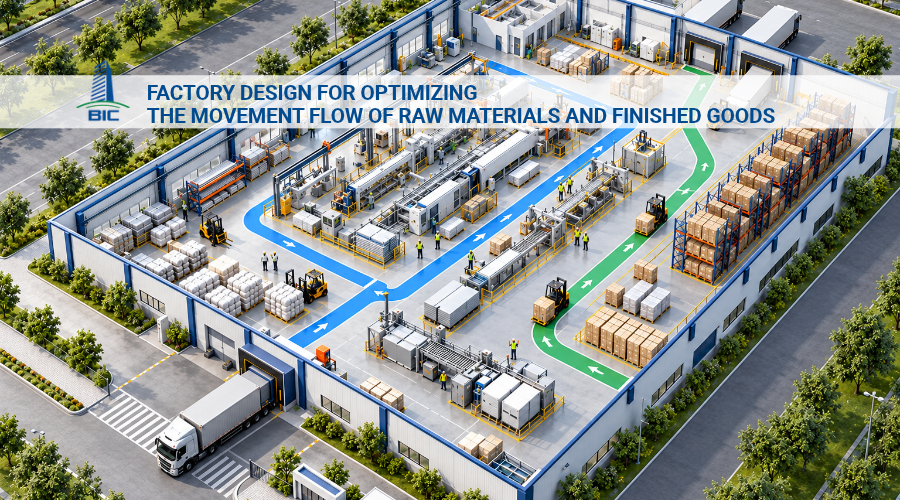
A reasonable space layout is key to optimizing work efficiency in factory design. Walkways should be designed to be spacious, ensuring safety and convenience for the movement of employees and equipment. Work areas, storage, and other functional areas should be clearly divided and scientifically arranged to minimize movement time and increase productivity. The arrangement of machinery and equipment should follow logical rules to optimize space, production processes, and ease of maintenance.
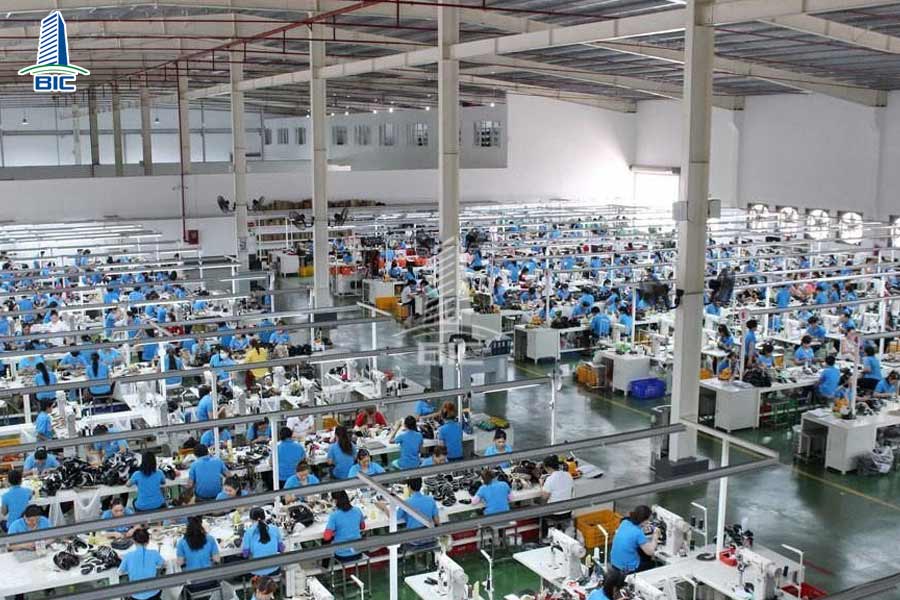
Ventilation and lighting systems in factory design play an important role in creating a cool and bright working environment. Proper ventilation design helps maintain fresh air, prevent the accumulation of harmful gases, and ensure employee health.
Maximizing natural light saves electricity costs and creates a pleasant working space. Additionally, appropriate artificial lighting systems should be installed to ensure sufficient light for all areas in the factory, especially detailed and precise work areas.
Optimizing factory space is extremely important and necessary for a business's production activities because:
- Enhancing Operational Efficiency: Optimizing space makes it easier to arrange machinery, equipment, materials, and finished products, thereby saving space and increasing production efficiency.
- Effective Warehouse Management: When factory space is optimized, finding and transporting goods becomes more convenient, reducing inventory check time and helping manage and coordinate production effectively.
- Maintaining Stable Operations: Optimizing space also ensures worker safety, minimizing the risk of accidents during work.
- Maximizing Space Utilization: Factory space will be freed up and used to the fullest, facilitating communication and coordination between departments in the factory.
In the operation of a factory, optimizing space is a key factor to increase productivity and production efficiency. Here are some of the most effective ways to optimize factory space:
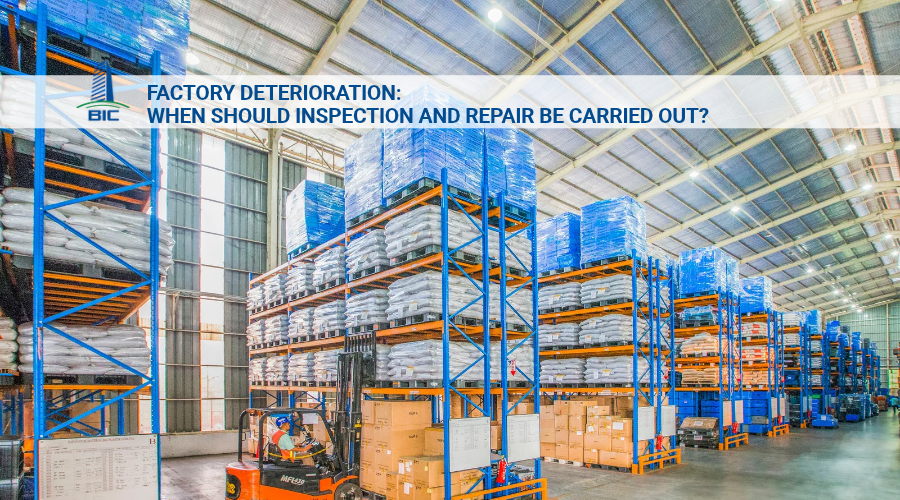
Using shelves and storage cabinets is a top method to optimize space in factory design. These shelves and cabinets not only save floor space but also create a more tidy and organized working environment.
These shelves can be placed along walls or in the middle of the factory to make the most of vertical space. This arrangement saves floor space, making the factory more airy and easier to move around. When using storage shelves, it is important to categorize and arrange items logically. You should divide the shelves into separate compartments or areas for easy management and search.
Finished products can also be stored on shelves to save space and improve preservation. This not only reduces the amount of space needed to store products but also makes the transportation and shipping process faster and more efficient.
Using shelves and storage cabinets is an effective solution to optimize space in factory design. This helps create an organized working environment, saves space, and increases production productivity. By arranging logically and categorizing scientifically, you can maximize space utilization and enhance factory operation efficiency.
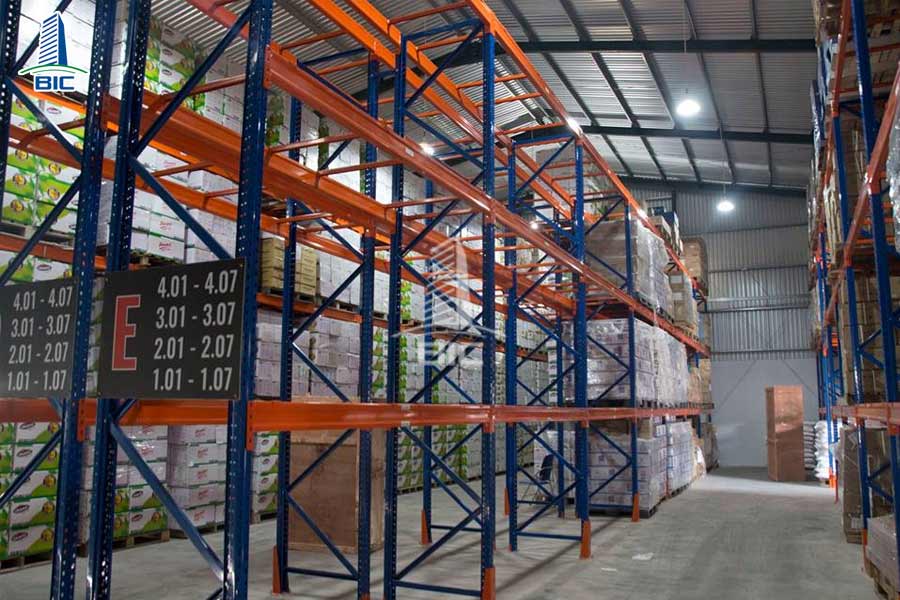
To optimize space in factory design, using hanging systems is an effective solution. By installing hanging racks to store products and items, you can effectively utilize overhead space. This not only saves floor space but also makes the working space more tidy and accessible.
Using hanging storage systems also improves the organization and management of items in the factory, thereby enhancing production efficiency and reducing the time needed for searching and arranging. Moreover, hanging systems reduce the risk of product damage due to collisions and save maintenance costs.
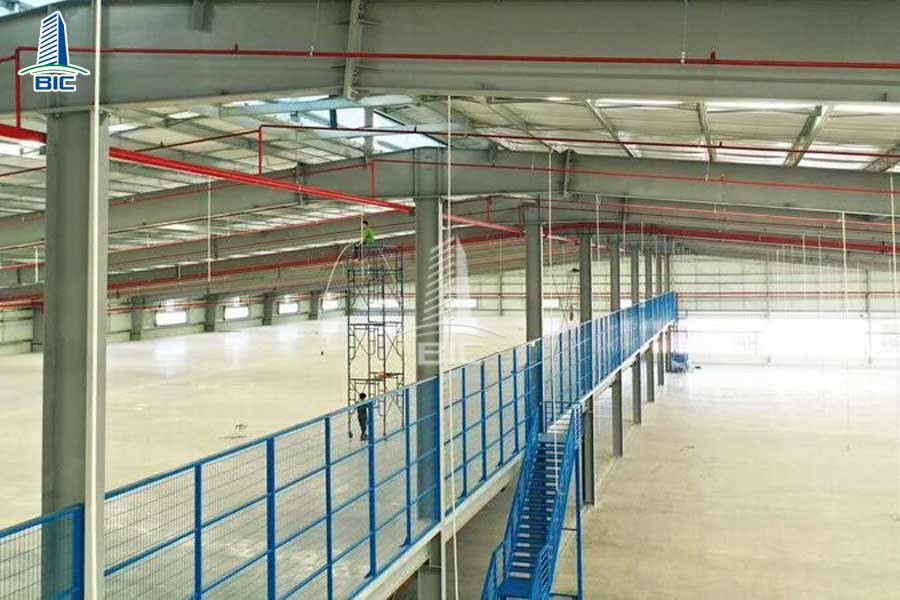
To optimize factory space in a simple and cost-effective way, installing mezzanines is one of the effective solutions. Mezzanines primarily double the floor area and significantly increase working productivity.
- Utilizing Overhead Space: Installing mezzanines helps use the previously unused space effectively, creating new storage areas.
- Freeing Up Warehouse Space: By using mezzanines, you can effectively free up vertical warehouse space, optimizing the use of the factory area.
- Improving Organization and Management: Mezzanines make it easier to organize and manage goods, reducing the time and effort needed for moving and searching for goods.
- Cost Savings: Compared to expanding the floor area by building new structures, installing mezzanines is a significantly cost-saving solution.
Designing factories with mezzanines is a smart solution to optimize factory space, bringing many benefits in terms of productivity, organization, and cost savings. This is one of the simple yet effective ways to enhance the operational efficiency of manufacturing businesses.
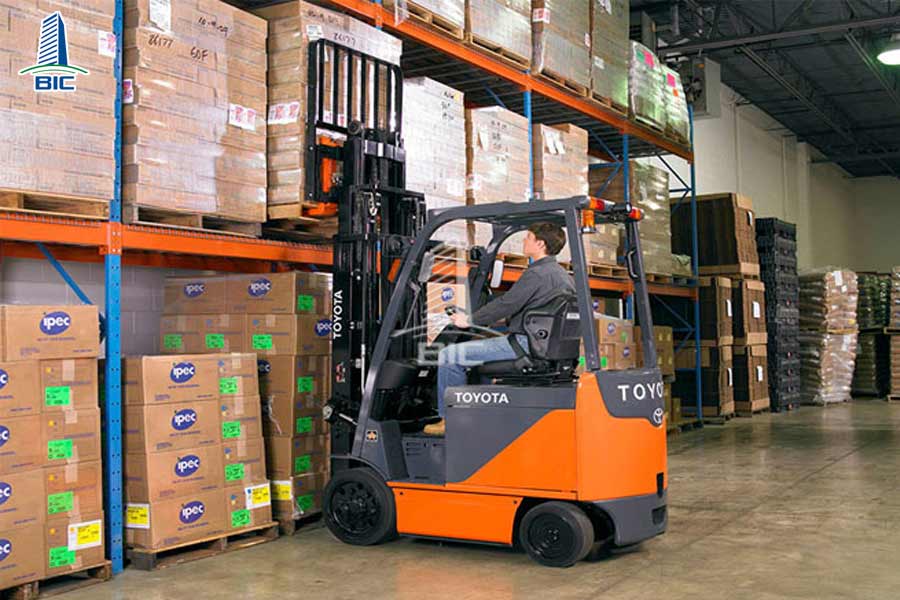
Using transportation equipment such as forklifts, pallets, and similar tools is a smart solution to optimize operations in the factory. These devices not only help move and transport goods more conveniently but also bring other benefits:
- Flexible Movement: Forklifts and pallets allow flexible and quick movement of goods, reducing the time and effort needed for storage and production processes.
- Space Savings: Using mobile devices helps optimize factory space by efficiently arranging goods. This helps you make the most of the floor area and save maintenance costs.
- Ensuring Safety: Devices like forklifts are designed to ensure the safety of users and other workers in the factory. Using these mobile tools helps minimize the risk of workplace accidents and enhances safety in the working environment.
Investing in and using transportation equipment is one of the important strategies to improve the efficiency of factory design and help businesses achieve their production goals most effectively.
Narrowing the width of walkways in factory design is a solution to optimize floor space and improve the logistics chain. This brings several benefits:
- Increasing Floor Space: Narrowing walkways increases the floor area of the factory, allowing more efficient use of space for production and storage activities.
- Convenience for Logistics Chains: Neatly arranged walkways help optimize the logistics chain, reduce movement time, and increase production efficiency.
- Easier Management and Control: Narrowing walkways makes managing and controlling activities in the factory more convenient, reducing chaos and maximizing organization.
However, when designing factories and narrowing walkways, it is essential to ensure that walkways remain safe for workers and comply with safety regulations. This ensures that the working environment in the factory is always safe and efficient.
To ensure that factory design meets standards, the first thing to do is to understand and comply with relevant legal regulations. This includes understanding construction standards, labor safety, environmental protection, and technical regulations. Ensuring that the factory fully complies with regulations will help avoid legal risks and ensure a safe working environment for employees.
Additionally, preparing and maintaining complete legal records is very important. This includes collecting and storing relevant documents such as construction permits, technical inspection certificates, labor contracts, and documents related to safety management.
Detailed and specific cost calculation is crucial to ensure the factory design project is effectively implemented within the budget. First, a detailed budget plan should be prepared, including costs such as construction materials, equipment, labor, and costs related to permits and legalities.
Additionally, it is essential to anticipate potential additional costs during construction, such as design changes, technical adjustments, or unforeseen expenses. Careful cost calculation and anticipation will help avoid financial issues and ensure the project is completed on time and with quality.
Applying optimal solutions in factory design helps enhance production efficiency by optimizing space usage and improving work organization. At the same time, cost savings in terms of materials and area are significant benefits. More importantly, these solutions create a safe and sustainable working environment, improving the quality of life for employees and maintaining the long-term sustainable development of the business.