Factory design to meet the construction needs of a rapidly developing industry is a key factor that helps businesses enhance productivity and optimize operational costs. A scientifically designed factory not only optimizes space but also ensures functionality and meets safety standards in construction.
What constitutes a perfect design that aligns with the production needs and long-term development orientation of a business? In this article, BIC will provide the most optimal construction design solutions to help businesses operate efficiently and sustainably over time.
Factory design is not just about creating a production space; it must also meet technical standards and optimize costs. Investors need to pay attention to important factors when designing a factory.
Choosing the location for factory construction is one of the crucial factors that directly affects operational costs and the potential for future expansion. Factors to consider when selecting a construction site include:
- Convenient location: A geographical position with a convenient transportation system near major roads, ports, and airports facilitates the movement of goods.
- Labor supply: Choosing an area with a plentiful workforce reduces recruitment costs.
- Raw material supply: Prioritize locations near suppliers to minimize transportation time and costs.
Regarding site planning, it is essential to ensure:
- A logical layout of the production area to avoid wasting workspace.
- An optimized storage system that meets storage needs.
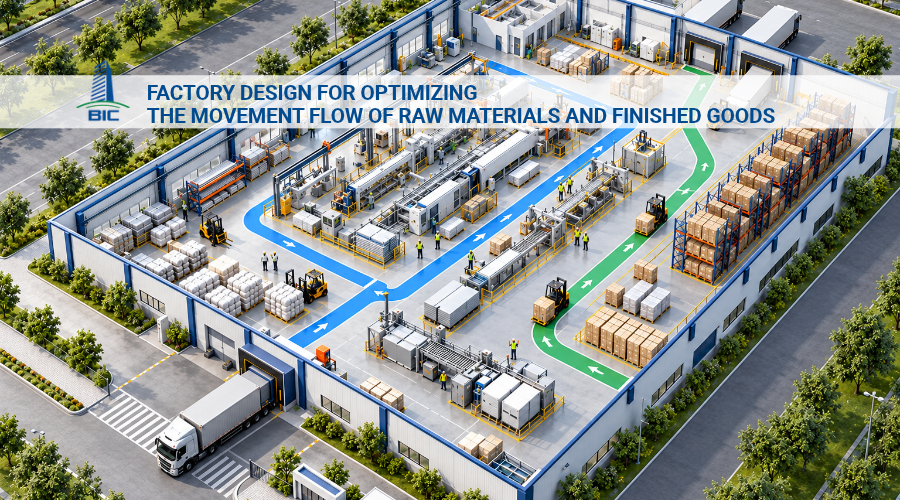
- Convenient internal road systems that provide access for employees and transport vehicles.
- Auxiliary areas such as offices, canteens, and restrooms should be separated but easily accessible.
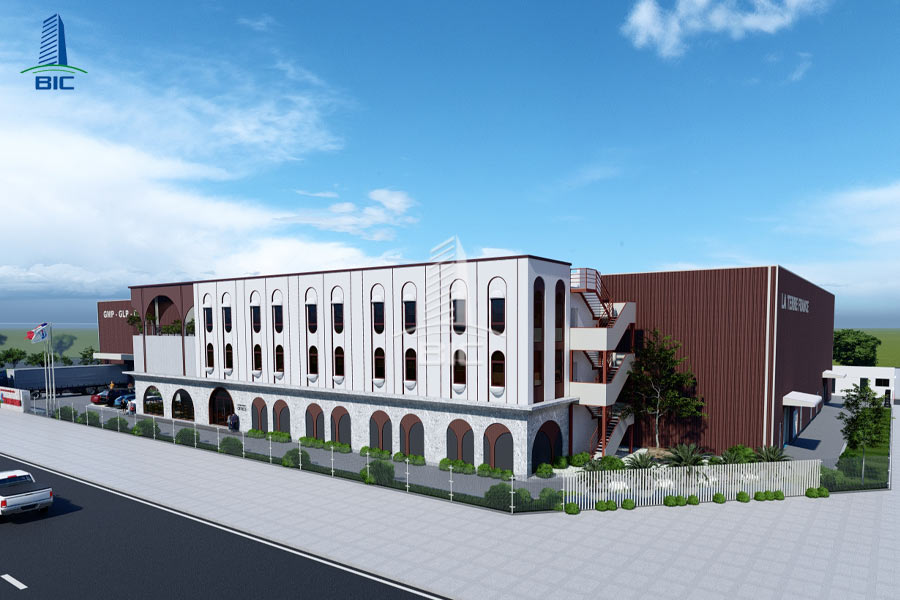
The choice of steel structure and construction materials should be appropriate to ensure that the factory design maintains high durability, meets safety criteria, and optimizes costs, including the following solutions:
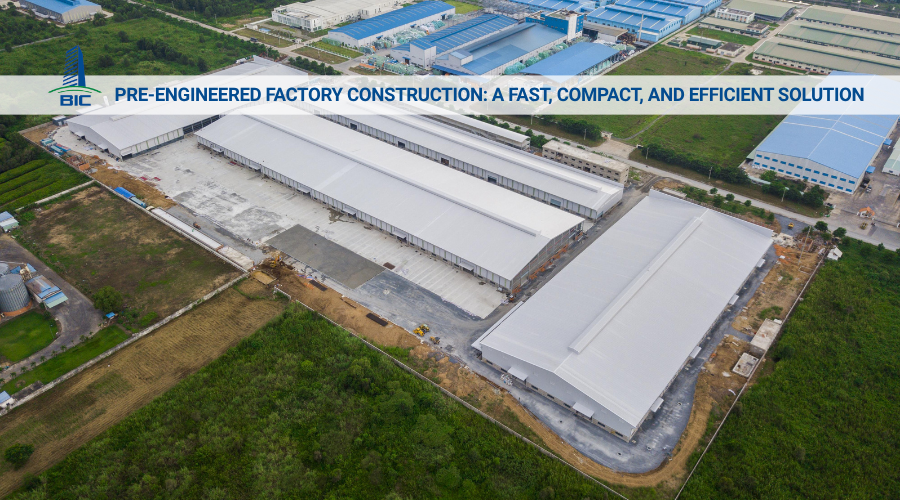
- Pre-engineered steel factory: Low construction design costs, quick construction time, and easy scalability when demand arises.
- Reinforced concrete factory: Good load-bearing capacity and high sustainability, but longer construction time, which increases labor costs.
- Combination of both methods: Using pre-engineered steel for the factory frame and reinforced concrete for the foundation and surrounding walls.
In addition, the factory should prioritize the use of sustainable materials such as:
- Insulated panels that help reduce the internal temperature of the factory, creating a comfortable working environment.
- Heat-resistant paint and insulated roofing to save energy.
- High-quality aluminum and glass doors to take advantage of natural light.
Large-scale factories often face issues with ventilation and lighting systems, affecting labor productivity and worker health. Optimal solutions include:
Ventilation:
- Natural ventilation system: Utilizing windows, windbreaks, and vents on the roof.
- Using industrial fans, exhaust fans, and evaporative cooling machines.
- Air conditioning systems.
Lighting:
- Utilizing natural light: Designing glass roofs and large windows.
- Energy-saving LED lighting systems: Providing stable lighting and reducing electricity costs.
- Installing light sensors to adjust brightness according to the time of day.
The FPS is a mandatory element in the design of factories that must comply with current standards. Important factors include:
- Automatic fire alarm system: Utilizing smoke and heat sensors to detect fire risks early.
- Firefighting system: Equipping fire extinguishers, automatic sprinkler systems, and fire hoses.
- Safe escape routes: Designing emergency exits, illuminated exit signs, and spacious corridors to facilitate quick evacuation in case of fire.
- Fire safety training and drills for employees to enhance awareness and skills in handling emergencies when incidents occur.
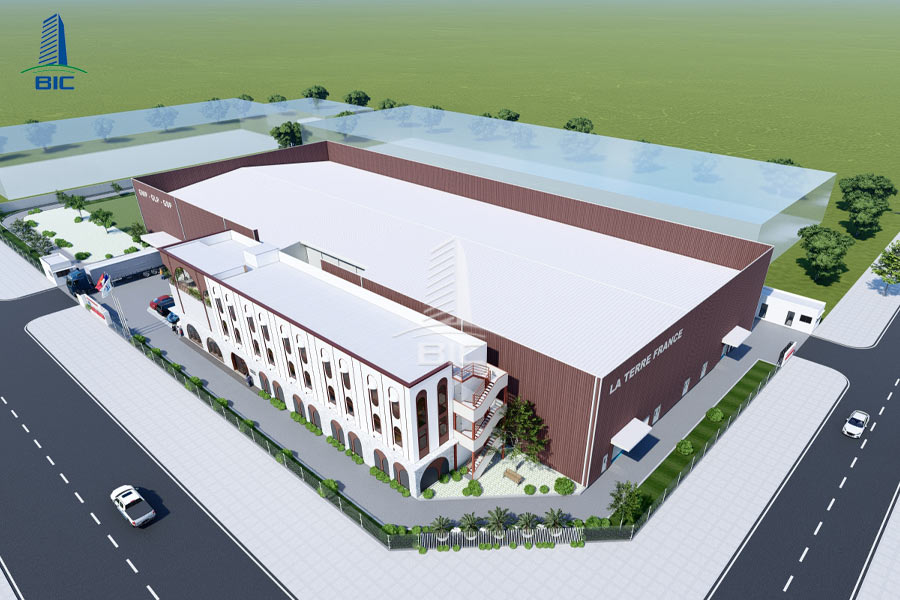
Sustainability and energy efficiency are trends in factory design aimed at focusing on production efficiency and optimizing costs. Some solutions include:
- Utilizing clean energy sources: Installing solar panels on factory roofs to reduce electricity costs.
- Using thermal insulation building materials: Ensuring stable internal temperatures and reducing the need for air conditioning to save energy.
- Constructing rainwater drainage systems: Arranging rainwater storage tanks for irrigation and cleaning the factory, reducing clean water costs.
- Wastewater treatment systems that meet standards to ensure environmental hygiene and comply with legal requirements.
Factories need to be invested in professional design to ensure the above factors help businesses operate effectively in the long term. In the next section, we will explore modern factory design trends that help businesses keep up with the times and enhance their competitive capabilities.
Today, in addition to functionality and construction costs, businesses are also focusing on modern, sustainable, and intelligent design solutions. Below are the latest trends in factory design that help businesses enhance production efficiency and optimize operational costs.
Smart factories are an inevitable trend in the era of Industry 4.0, helping to automate production processes, monitor, and manage more effectively.
Characteristics of smart factories:
- IoT (Internet of Things) application: Devices and machinery are connected to a central control system, allowing for monitoring of operational status, error alerts, and production optimization.
- Production automation: Utilizing industrial robots and smart conveyor systems to reduce labor and increase productivity.
- Energy Management System (EMS): Controlling and optimizing the use of electricity, water, and compressed air to reduce waste.
- Remote monitoring via software: Businesses can check production status anytime, anywhere through applications on phones or computers.
BIM (Building Information Modeling) is a technology that helps model construction information, allowing businesses to visualize the entire project before construction begins.
Benefits of applying BIM in factory design:
- Accurate estimation of costs and materials, minimizing waste.
- Simulation of structures and technical systems to optimize space and functionality.
- Early detection of design errors, avoiding costly repairs during construction.
- Integration with factory management systems, facilitating easier maintenance and upgrades.
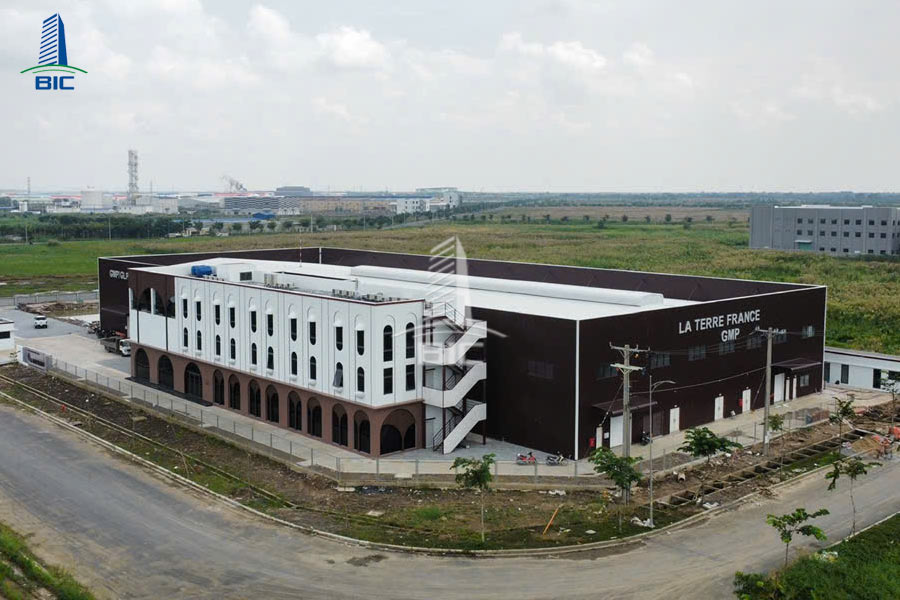
The trend of "green factories" not only helps businesses save on operating costs but also meets international environmental standards, enhancing brand reputation.
Solutions for designing green factories:
- Utilizing natural light: Designing large windows and glass roofs to reduce electricity usage.
- Solar energy systems: Installing solar panels on roofs to lower electricity costs.
- Using insulation and heat-resistant materials: Such as PU panels and insulated metal sheets to reduce indoor temperatures.
- Wastewater treatment and rainwater collection systems: Used for watering plants and cleaning the factory, reducing the consumption of clean water.
- Greenery and landscaping: Arranging plants inside and outside the factory area to create a cool working environment.
A modern design trend is to integrate production areas with office and rest spaces for employees to enhance productivity and worker satisfaction.
Key factors in design:
- Modern office areas: Designed to be open, utilizing natural light, and using environmentally friendly furniture.
- Recreation and relaxation areas: Arranging dining rooms, relaxation zones, and gym facilities to help employees recharge.
- A logical layout between the production workshop and office to facilitate management and supervision while ensuring a comfortable working environment.
Businesses that adopt these trends will enhance their competitive capacity, save on long-term costs, and meet international standards.
Optimizing factory design not only helps businesses enhance production efficiency and save on operating costs but also ensures safety, sustainability, and flexibility for future growth. If your company is looking for a professional factory design solution that optimizes costs and guarantees quality, please contact BIC immediately. Our team of experienced experts will provide you with free consultation, develop a suitable design plan, and offer the most effective construction solutions.