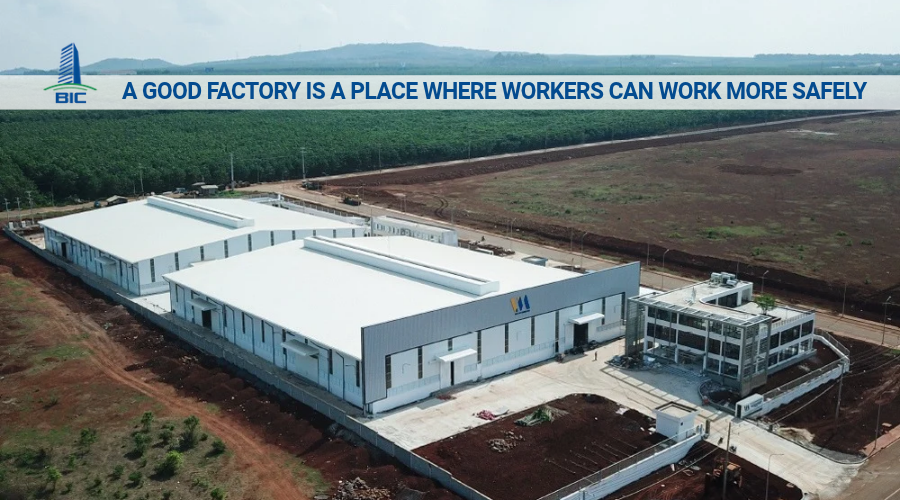
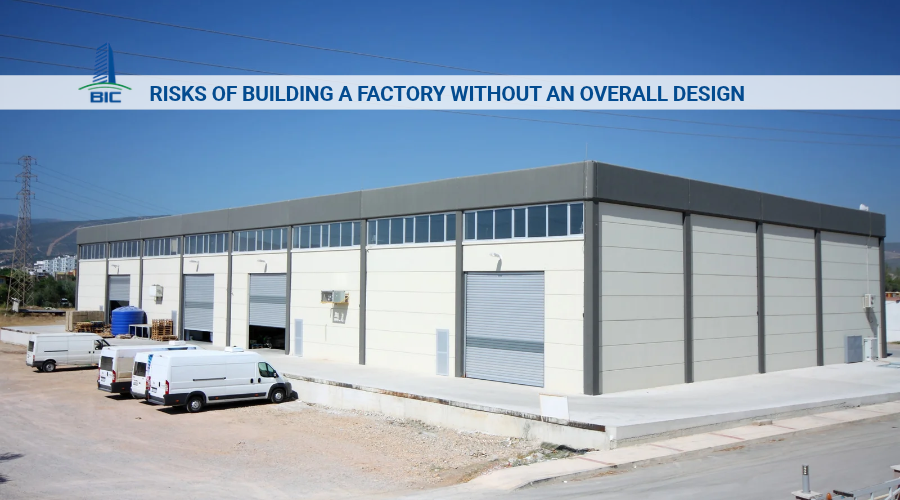
The technical documentation stage is a critical starting point that shapes up to 80% of the investment cost and long-term operational capacity of an industrial project. For manufacturing businesses, a layout drawing is not merely the arrangement of basic construction components, but the concretization of a technology production line into an actual on-site space. An inaccurate or unsynchronized drawing dossier not only wastes tons of steel billets and causes incorrect concrete grades for load-bearing floors, but also directly creates conflicts between the mechanical and electrical network and the fire prevention and fighting system, delaying the entire on-site implementation schedule.
Using professional factory design services helps investors comprehensively solve the problem of optimizing clear usable space, tightly controlling budgets through a transparent BOQ quantity estimate, and shortening the time required to obtain a construction permit. In this article, BIC provides a comprehensive summary of the standard technical documentation process, breaks down the mandatory drawing groups, and identifies criteria for selecting a reputable construction design consulting unit. This practical information will help business owners proactively manage technical risks, anticipate modern information modeling trends, and select the most optimal design and construction solution for their factory.
Technical drawing documents do not only serve construction permit procedures. They are a comprehensive architectural solution that addresses factory operation, investment cash flow, and safety throughout the entire operating lifecycle. Using professional services brings investors the following three practical benefits.
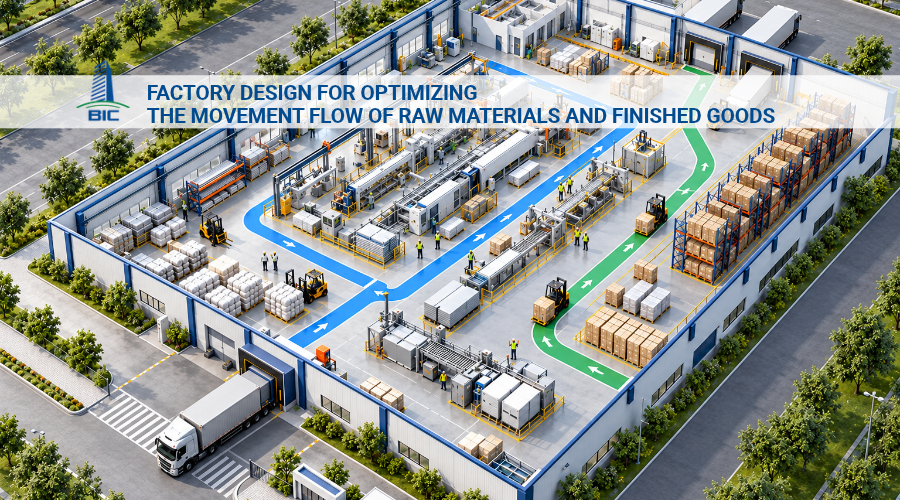
Each manufacturing industry has a specific technology line with strict requirements for the movement flow of materials and workers:
- Closely following the operating process: Professional architects measure and calculate travel distances between the raw material warehouse, preliminary processing area, main assembly line, and finished goods warehouse according to a one-way flow principle. This optimization completely eliminates internal traffic bottlenecks, reduces labor waste, and improves productivity.
- Large-span structural solutions: Using specialized factory design services helps businesses apply pre-engineered steel frame systems with large-span solutions, with flexible spans from 30m to more than 60m without intermediate columns. The clear internal space is maximized, creating favorable conditions for arranging large-scale machinery systems and safe movement routes for high-capacity forklifts.
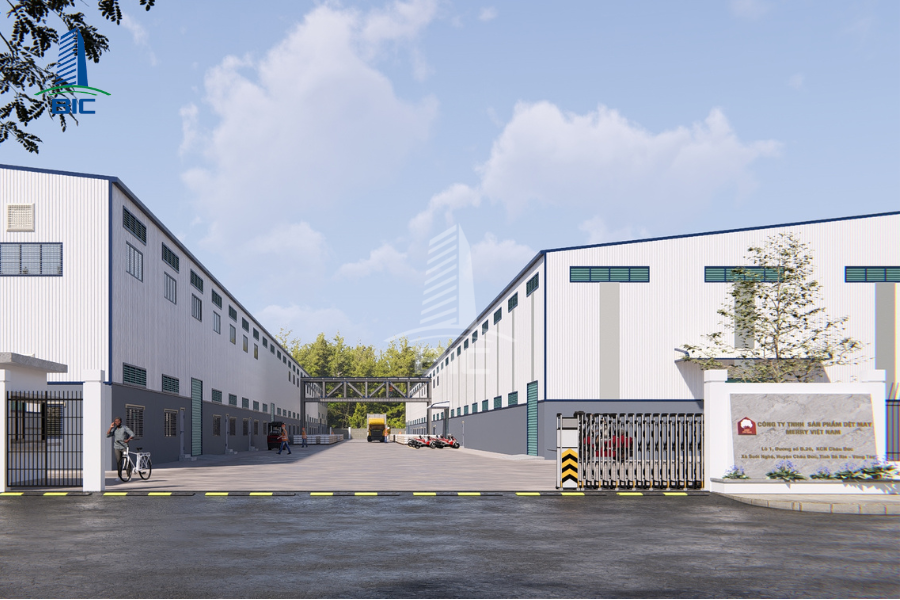
One of the biggest risks for investors is project cost overrun caused by insufficiently detailed technical documents:
- Transparent quantity takeoff: A reputable factory design unit provides a detailed Bill of Quantities (BOQ) for materials. All specifications, from the quantity of structural steel billets, roof sheet area, concrete grade quantity for load-bearing floors, to the number of sprinkler heads, are quantified with accurate figures based on technical standards.
- Fixing costs and eliminating additional cost risks: Based on this BOQ, business owners can proactively negotiate contracts with factory construction contractors, fix material unit prices from the beginning, and completely prevent contractors from underquoting to win the bid and later forcing investors to sign additional cost appendices.
An industrial factory is a complex entity that requires close coordination between the construction envelope and the internal auxiliary technical systems:
- Compatibility of technical networks: Professional design and construction services ensure absolute synchronization between the main load-bearing frame and the mechanical and electrical (M&E) network, including transformer stations, power cable trays running to each machine cluster, production water supply and drainage systems, and HVAC ventilation ductwork.
- Eliminating system conflicts: Construction design engineers calculate in advance the wall and beam penetration points of technical pipes. This synchronization prevents contractors from having to demolish previously cast concrete components or cut steel frames when installing on-site equipment, protecting the original connection integrity and load-bearing capacity of the building.
A design dossier that meets technical and legal standards must go through the following three sequential and disciplined implementation stages.
This is the initial step that defines the overall structure of the entire project on the company’s land area:
- Functional zoning planning: The locations of the main production workshop, warehouse system, administration office, workers’ canteen, transformer station, parking area, and underground fire protection water tank are positioned.
- External traffic infrastructure design: Turning radius and internal road width are calculated to ensure convenient movement, loading, and unloading for heavy transport vehicles such as container trucks and cargo trucks. At the same time, this basic design stage also determines construction density and red-line boundaries for submission in the construction permit application dossier.
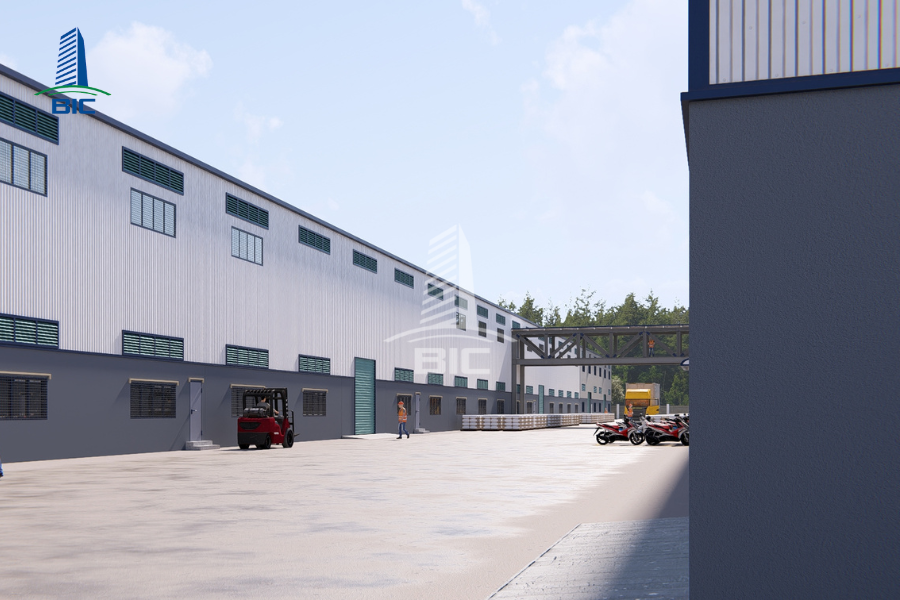
This stage focuses on solving the durability, load-bearing capacity, and mechanical safety of the building:
- Processing actual geotechnical data: Based on the geotechnical drilling survey report, structural engineers calculate and select the appropriate load-bearing foundation solution, such as isolated footings, strip foundations, or reinforced concrete spun piles.
- Calculating steel frame sections: Specialized simulation software is used to accurately calculate the sections of steel columns, rafters, purlins, and spatial stability bracing systems. These calculations are based on load combinations including the self-weight of materials, storm and wind loads according to geographical location, roof loads, and dynamic loads caused by high-vibration production machinery in the factory.
This is the stage of completing the factory design dossier at the highest level of detail, ready to be handed over to the contractor for on-site implementation:
- Detailing envelope components: The drawings specify each bolted base plate connection at column bases, roof cladding screw installation standards, insulated panel wall installation, emergency exits, and natural skylight systems.
- Integrating statutory fire safety solutions: The design details the automatic fire alarm network, high-pressure sprinkler fire suppression system, fire department connection locations, and fireproof mortar wrapping or fireproof coating solutions for pre-engineered steel frame structures in accordance with QCVN 06:2022/BXD. The dossier at this stage must be technically sufficient for the investor to submit to the Fire Prevention and Fighting Police authority for approval before construction begins.
The development of material technology and digital engineering solutions has completely changed the way factory design documents are prepared. Modern trends do not only focus on structural durability, but also aim to optimize operational efficiency and sustainable development for manufacturing businesses.
Pre-engineered steel factory structures have become an essential standard for most modern factories thanks to their outstanding advantages over traditional reinforced concrete:
- Freeing up floor area: By using high-strength steel and optimized calculation technology, engineers can completely eliminate intermediate column rows with flexible spans from 30m to more than 60m. Without obstruction from columns, businesses can flexibly rearrange production lines or change warehouse functions when necessary.
- Superior implementation speed: All heavy-load-bearing frame components are prefabricated at the mechanical factory, or off-site, then transported to the construction site for erection using specialized cranes. This process shortens on-site factory construction time by 3 to 6 months, allowing businesses to put the factory into operation earlier and recover capital faster.
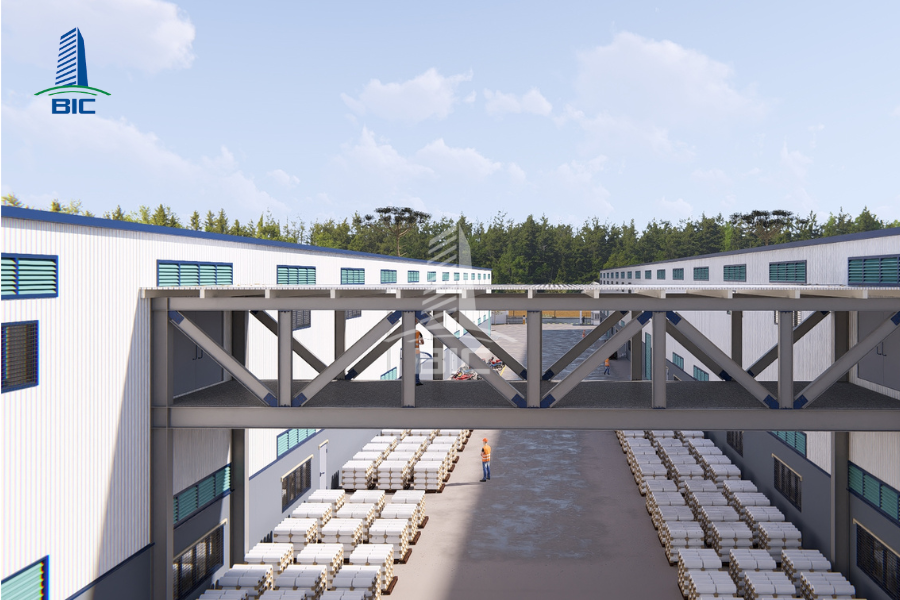
Energy costs, including lighting electricity and cooling air-conditioning, account for a large proportion of monthly operating expenses for businesses. Modern architectural design aims to make use of natural factors to reduce these costs:
- Optimizing natural lighting and ventilation: Architectural drawings scientifically arrange skylights, translucent roof sheets, and louver systems around the building envelope to capture wind. This combination keeps the factory well-ventilated and sufficiently lit by natural daylight without excessive reliance on high-capacity electric lighting systems.
- Using environmentally friendly insulation materials: Applying insulated panels such as EPS, PU, and PIR for wall systems and insulated roofing helps prevent maximum solar radiation heat from entering the workshop. At the same time, the design dossier calculates reserved roof loads so the business can easily install a rooftop solar power system later.
Building Information Modeling (BIM) is a breakthrough in the current construction design process, replacing traditional 2D drawings:
- Visual 3D spatial simulation: BIM allows the integration of all data from architectural, steel structural, M&E, and fire protection disciplines into a single three-dimensional digital model. Investors can visually explore the entire factory on a computer before the building is constructed on-site.
- Comprehensively resolving technical conflicts: The software automatically scans and detects technical clashes early, such as a fire water pipeline penetrating a load-bearing steel beam, or an electrical cable tray conflicting with a ventilation fan. Fixing errors in the virtual environment eliminates the risk of stopping work, demolition, and rework on-site, protecting both project progress and budget.
A quality factory design drawing requires the consulting unit to have deep professional expertise and practical site understanding. Investors should rely on the following three core criteria to evaluate and select the right partner.
This is a mandatory legal measure to determine the authority and responsibility of the design consulting unit:
- Capacity certificate grade: Investors need to check the Construction Activity Capacity Certificate issued to the organization by the Ministry of Construction or the Department of Construction. Ensure that the certificate grade of the unit, whether Grade I, Grade II, or Grade III, is fully suitable for the land area scale and statutory construction grade of the project the business plans to implement.
- Individual capability records: Appraise the practice certificates of discipline design leaders such as the structural design leader, architectural design leader, and M&E technical system design leader. This ensures that drawings are approved and signed by qualified engineers who bear legal responsibility before the law.
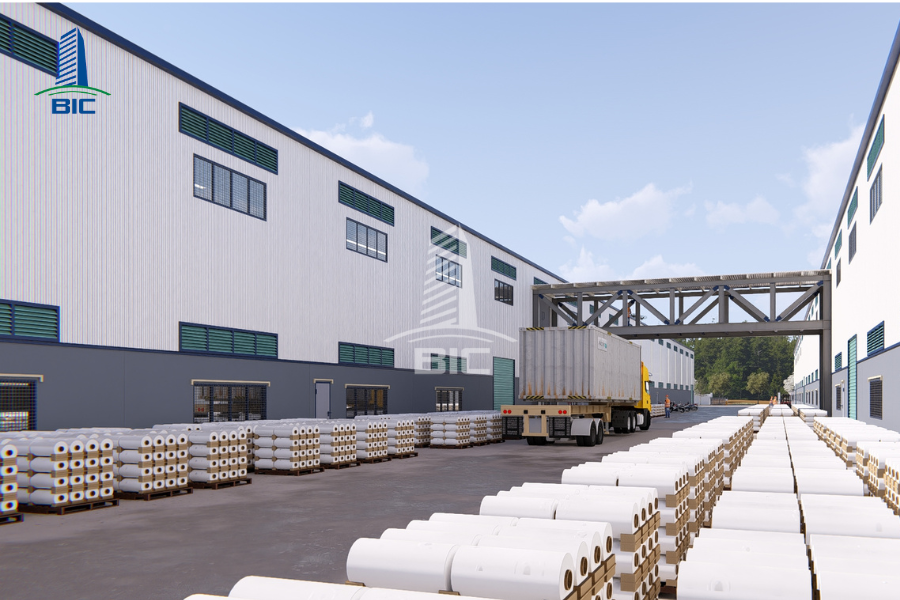
Each manufacturing industry, such as garments, mechanical engineering, pharmaceuticals, food processing, or chemicals, has very strict internal technical standards:
- Understanding industry characteristics: A contractor with extensive practical experience will understand that pharmaceutical factories must comply with GMP clean standards, electronic component factories must control humidity and anti-static conditions, and logistics storage warehouses must carefully calculate the compressive load of racking systems on concrete floors.
- Surveying actual projects: Investors should ask the consulting unit to take them to visit industrial factory projects of similar scale that were designed by that unit and have already entered stable operation. This helps visually assess practicality, structural durability, and convenience during factory operation.
The current trend in industrial construction prioritizes companies capable of providing full-package general contracting services instead of splitting work packages:
- Synchronization from concept to site: A unit that handles the entire process from geotechnical surveys and construction design drawings to complete factory construction will ensure absolute synchronization of technical solutions. On-site construction engineers will deeply understand the intent of the drawing engineers, completely eliminating errors caused by misinterpreting specifications.
- Cost optimization and risk management: This model shortens the overall timeline through a fast-tracking process for work packages. At the same time, the general contractor takes full responsibility to the investor for quality, progress, and the commitment of no costs arising beyond the estimate, helping businesses confidently manage long-term capital.
Professional factory design services are the first and most important component determining the success or failure of an industrial construction project. A well-invested technical dossier, with solid foundation calculations based on actual geotechnical data, maximum clear space created by large-span pre-engineered steel frames, and full synchronization with the M&E system, is the key to helping manufacturing businesses optimize operational productivity.
In addition, transparent material quantity takeoff through a detailed BOQ and strict integration of current fire protection legal standards, such as QCVN 06:2022/BXD, will protect investors from cost overruns or delays in project completion procedures. By seriously appraising contractor capability, prioritizing companies with full-package Design & Build general contracting capacity, and applying modern technologies such as BIM, business owners can take full control of investment capital, bring the factory to completion safely and on schedule, and be ready to activate maximum sustainable production and business capacity. Contact BIC for comprehensive consultation on your industrial factory design and construction project.