Designing a construction project in compliance with legal standards is a key factor in ensuring the safety and sustainability of the project while avoiding unwanted legal risks. In this article, BIC will delve into the detailed steps of designing a construction project in accordance with legal standards, from the research and analysis phase to implementation and supervision. Through this, you will grasp the standard process of designing a factory, helping your project fully comply with current legal regulations.
Construction design is the process of creating detailed drawings and plans for a construction project. This foundational step turns ideas into reality, ensuring the project is built according to desired specifications and technical requirements.
However, to ensure safety and legal compliance, construction design must adhere to current legal regulations. According to the consolidated document of Decree No. 02/VBHN-BXD dated July 20, 2018, by the Ministry of Construction on the management of construction investment projects, the regulations are as follows:
1. Construction design includes steps such as preliminary design (for pre-feasibility study reports), basic design, technical design, construction drawing design, and other design steps (if any) according to international practices, determined by the investment decision-maker when deciding on the project.
2. A construction investment project may include one or more types of works, each type having one or more grades. Depending on the type, grade of the work, and the project implementation method, the number of design steps will be determined by the investment decision-maker, specifically as follows:
a) One-step design is construction drawing design, applied to works requiring an economic-technical report.
b) Two-step design includes basic design and construction drawing design, applied to works requiring a construction investment project.
c) Three-step design includes basic design, technical design, and construction drawing design, applied to large-scale construction projects with complex technical and construction conditions.
d) Design according to other steps (if any) according to international practices.
3. For projects requiring more than one design step, the subsequent design step must conform to the main contents and parameters of the previous design step.
4. In the case of three-step design, if the construction contractor has sufficient legal capacity, they can carry out the construction drawing design step.
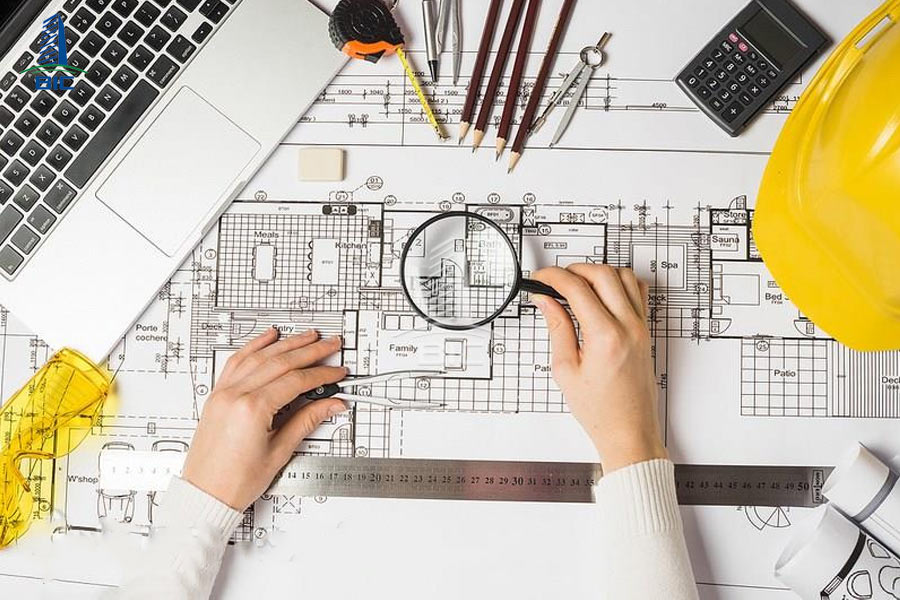
The technology solution involves using advanced technologies in construction. For example, in factory design, there are methods like foundations, roofs, retaining walls, steel structures, etc. For housing, there are solutions like pile foundations, bored piles, or retaining walls. Depending on the type of construction, appropriate technology is chosen. The construction design consultant's role is to provide suitable solutions for clients to choose from, ensuring the suitability for the project.
Depending on the needs of different entities and societal development, such as factories, warehouses, export processing zones, shopping centers, or transportation works, the construction design consultant will provide the best solutions. Architects need to adhere closely to functionality and usage needs to offer reasonable solutions.
There are various architectural solutions for each project. The construction design consultant will help clients choose the optimal solution, ensuring quality and cost-effectiveness. For example, for the same area, there can be different designs: one for a food processing factory, another for a mechanical manufacturing plant, depending on the investor's needs.
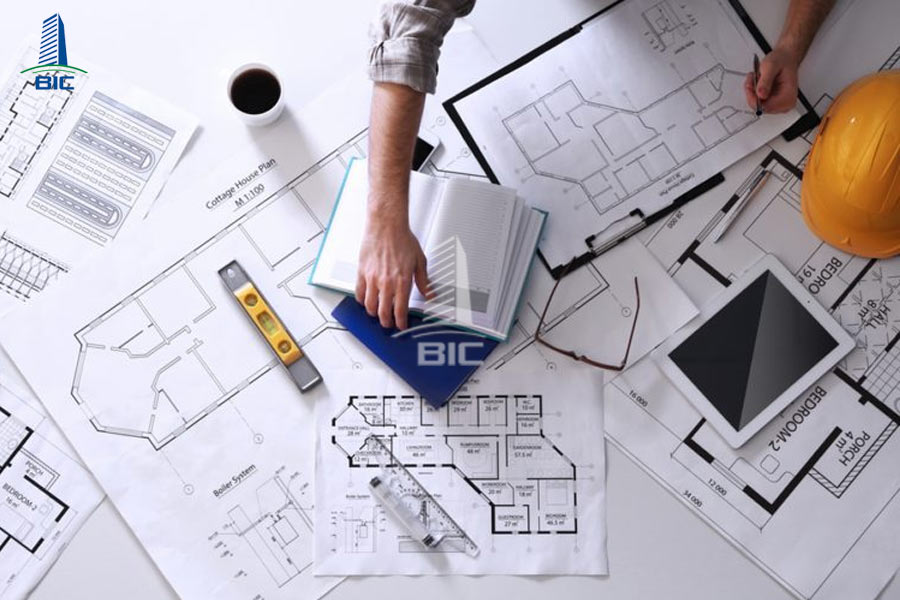
The project lifespan is the duration for which the project exists. For example, a pre-engineered steel frame factory can be designed to last for decades before requiring repairs or rebuilding. The lifespan is calculated from the time the project is put into use until it reaches its limit state. The lifespan depends on construction materials and construction techniques.
The structural solution involves calculating the supporting forces, internal forces, and deformations due to external forces on the project's load-bearing system. The basic requirement of the structure is to ensure the load-bearing system is in a stable equilibrium state.
Fire protection is a crucial factor in construction design, especially as fires often occur due to electrical short circuits or leaks. Advising users on the best fire protection solutions is essential.
Utilizing natural energy sources like solar, wind, and water to ensure safety and energy savings. Clearly explain the benefits of energy-efficient devices to clients.
Using environmentally friendly materials and sustainable construction practices. Projects should be designed and built to operate according to certain standards, including environmental protection solutions like natural ventilation.
Estimates are made for each construction design project. The project estimate is the basis for planning and managing construction investment capital. Estimating and drawing up a budget plan accurately determines the necessary costs, thereby enabling effective financial planning and capital management during the project implementation.
The investor can develop or hire an organization or individual with appropriate competence to develop construction design tasks. This initial and crucial step sets the direction for the entire design and construction process.
The design task must align with the investment policy and is the basis for developing a construction investment project as well as the construction design. The investor can hire a consulting organization or expert to review or verify the design task when necessary to ensure the project's feasibility and effectiveness.
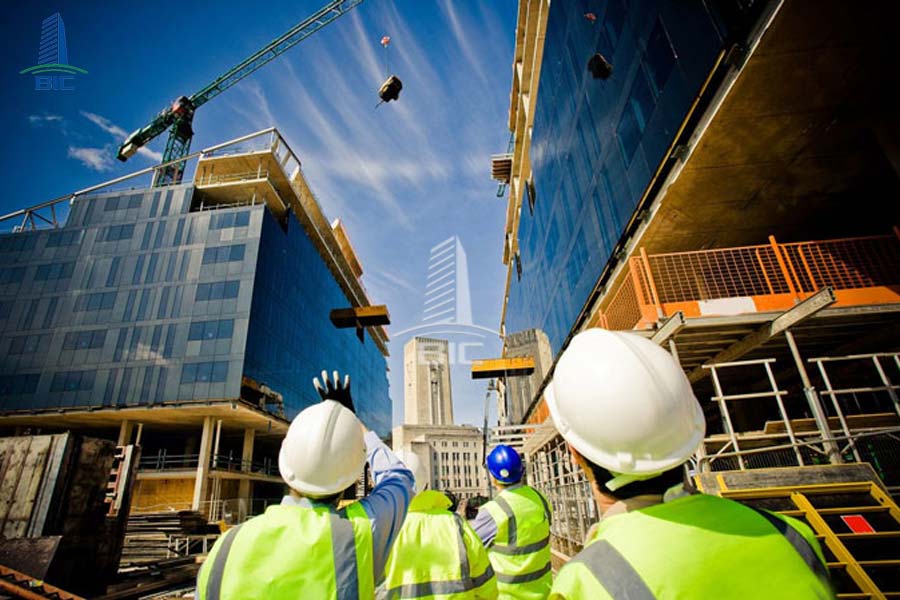
The construction design task includes the following main contents:
a) Basis for developing the design task: Includes legal documents, technical standards, and current regulations related to the project.
b) Project construction objectives: Clearly define the purpose and requirements of the project, such as creating living, working spaces, or public services.
c) Project construction site: Identify the specific location of the project, including factors such as terrain, geological conditions, climate, and surrounding environment.
d) Requirements for planning, landscape, and architecture: Provide requirements for overall planning, landscape design, and project architecture to ensure harmony with the surroundings and compliance with planning regulations.
e) Requirements for project scale, lifespan, functionality, and other technical requirements: Determine the project scale (area, number of floors, volume, etc.), expected lifespan, functionality (room functions, spaces, etc.), and other technical requirements (structure, electrical system, water system, ventilation, etc.).
Construction design tasks can be modified and supplemented to fit actual conditions and ensure the project's effectiveness. These modifications must be carried out carefully to avoid affecting the overall project and must be verified by competent experts or consulting organizations.
Designing and constructing according to legal standards not only ensures the project's safety but also protects the rights of both the investor and the users. Adhering to regulations and technical standards will help projects gain approval quickly and avoid legal risks later. Hopefully, the steps outlined in this article provide you with a comprehensive understanding of the standard construction design process, ensuring your project is completed safely and effectively.