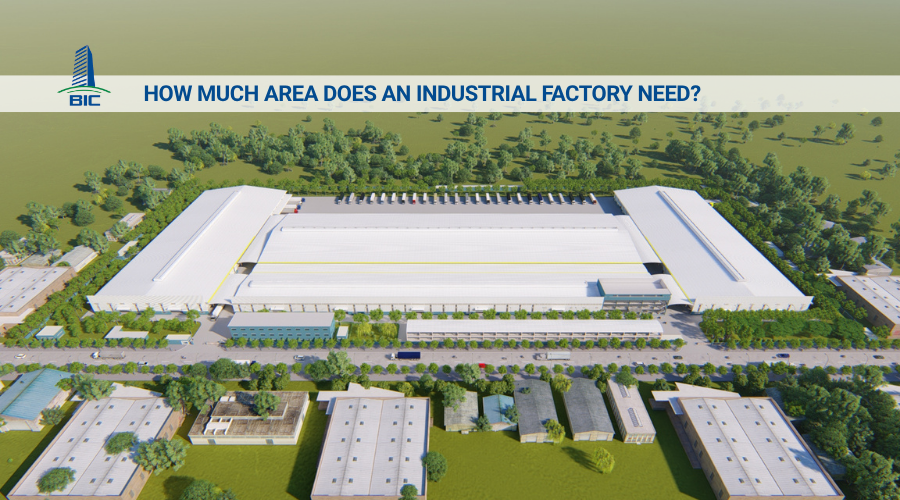
Designing a factory to meet standards and achieve high quality is an important factor that helps investors optimize land use and save costs, while also creating an ideal working environment that enhances workers' productivity. This article, provided by BIC, will share important factors that investors need to consider when designing and constructing a factory, from technical standards to the latest trends to ensure that every project is executed with maximum professionalism and efficiency.
Factory design plays a crucial role in any construction project, determining the success and efficiency of the entire project. First, a professional and detailed design helps clearly define technical requirements, functional uses, and space layout. This ensures that the factory will fully meet production needs, from optimizing workflow to ensuring worker safety.
Economically, factory design directly affects construction costs and timelines. A good factory design allows for accurate cost estimation, thus avoiding unexpected expenses and ensuring smooth project progress. Moreover, using advanced building materials and technologies in the design enhances the sustainability of the construction, minimizing future maintenance and repair costs.

Finally, factory design also plays a significant role in creating a flexible production space that can be expanded in the future. This is crucial for businesses planning to expand production or change production processes according to market demands. A flexible design allows businesses to easily adjust and upgrade without much difficulty or expense.
In summary, the role of factory design in a construction project is extremely important, impacting all aspects from costs, timelines, production efficiency to safety and future expansion capabilities. A good construction design not only brings economic benefits but also contributes to the sustainable development of the business.
To optimize land use, investors need to clearly and specifically divide the factory, grouping workshops, facilities, and equipment according to their distinct functions. The layout in factory design is often divided into the following areas:
- Front Area: In factory design, the front area typically includes the entrance gate, administrative area, reception room, and product display area. These areas can be concentrated at one point or separated into different rooms, depending on the scale and overall planning of the industrial zone.
- Production Area: This area houses the main production workshops, auxiliary production workshops, and production lines. This arrangement ensures effective operation and optimization of production processes.
- Production Support Area: This is where facilities that support the production line, such as workshops, energy facilities, power stations, substations, management offices, pump stations, and technical networks, are concentrated.
- Warehouse and Transportation Area: This area is used to store raw materials, manage imports and exports, and preserve transport equipment, ensuring smooth storage and transportation processes.
To optimize time and increase labor productivity, the factory layout should minimize travel time and facilitate the production process. Therefore, the factory areas are divided into:
- Main Transportation Area: This is where raw materials and inputs are received and where products are exported.
- Secondary Transportation Area: This area handles the transfer and transportation of products between workshops.
- Final Transportation Area: Used for transporting and receiving the final stages of the production process.
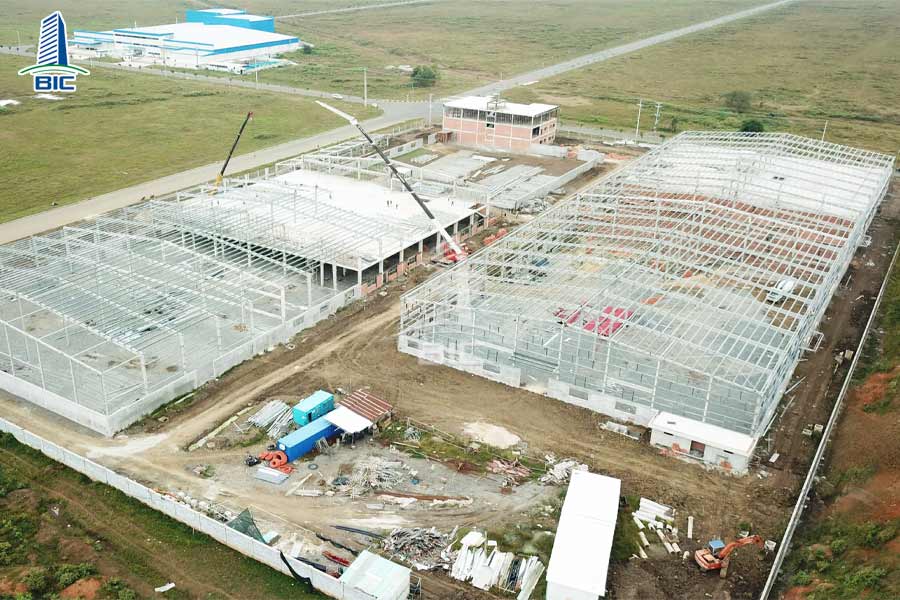
To optimize management and coordination of zones in the factory design, as well as organize the flow of goods and personnel, it is necessary to divide them into specific areas to ensure a harmonious and effective worker density. The workshops are arranged as follows:
- Goods Flow: This area manages the transportation of goods and raw materials into the factory to ensure continuous production.
- Personnel Flow: This area manages the movement of workers to and from different workshops or factories.
To avoid congestion and ensure convenient movement and transportation of goods, these flows need to be organized logically and avoid crossing points. If the intersection of these flows cannot be avoided, it is necessary to arrange facilities such as overpasses or throughways to ensure all activities run smoothly and efficiently.
To optimize land use, factory design needs to apply methods to save land and avoid unnecessary costs. Here are some commonly applied methods in design:
- Consolidating Areas: If departments and areas such as administration or workshops have similar requirements for hygiene, climate, and construction specifications, they can be consolidated into one area. This consolidation helps reduce the number of construction items and operational costs like electricity and water, as well as shorten traffic and technical pipeline networks.
- Simple Architectural Design: Building factories with simple architecture such as box or rectangular shapes to optimize construction costs and save land. These designs usually use conventional floors to simplify construction and optimize usable space.
- Increasing Number of Floors: Increasing the number of floors is a common solution to expand usable space and increase construction density. However, constructing multiple floors also needs to comply with state regulations on construction to ensure safety and adherence to technical standards.
These methods not only help optimize costs and land use efficiently but also ensure the aesthetics and operational efficiency of the factory during production.
These factors not only help optimize the flexibility and efficiency of the factory but also ensure that the structure will not become obsolete and can adapt to changes in products, processes, or production technologies. To ensure flexibility in factory design, consider the following points:
- Column-Free Floor Space: Provide large floor areas unobstructed by columns to facilitate easy changes in factory layout according to production needs.
- Suitable Roof Truss Strength and Ceiling Height: Ensure the strength of roof trusses and appropriate ceiling height to install new material handling equipment and control the internal temperature of the factory.
- No Fixed Barriers: Avoid using fixed walls and partitions on the production floor to maximize flexible space.
- Overhead Electrical Grid: Provide an overhead electrical grid to easily supply power to equipment near production machinery.
- Heavy Load Bearing Floors: Design floors to withstand the weight of heavy machinery.
- Mobile Equipment Installation: Install machinery and equipment so that they can be easily moved when changes in production layout are needed.
In the design process, calculating the expansion capability of future rooms within the factory is extremely important. Especially in today's rapidly developing business environment, the need for business expansion is very high. Therefore, the requirement for expansion capability of the structure is also increasing.
Thus, from the early stages of industrial design, there must be plans to reserve land. This helps avoid the situation where existing areas have to be dismantled or demolished in case of future expansion, which can be costly and wasteful.
Having a land reserve plan from the early design stages also makes future expansions easier and more efficient. This not only brings economic benefits but also ensures sustainability and flexibility for the factory during the operation and development of the business.
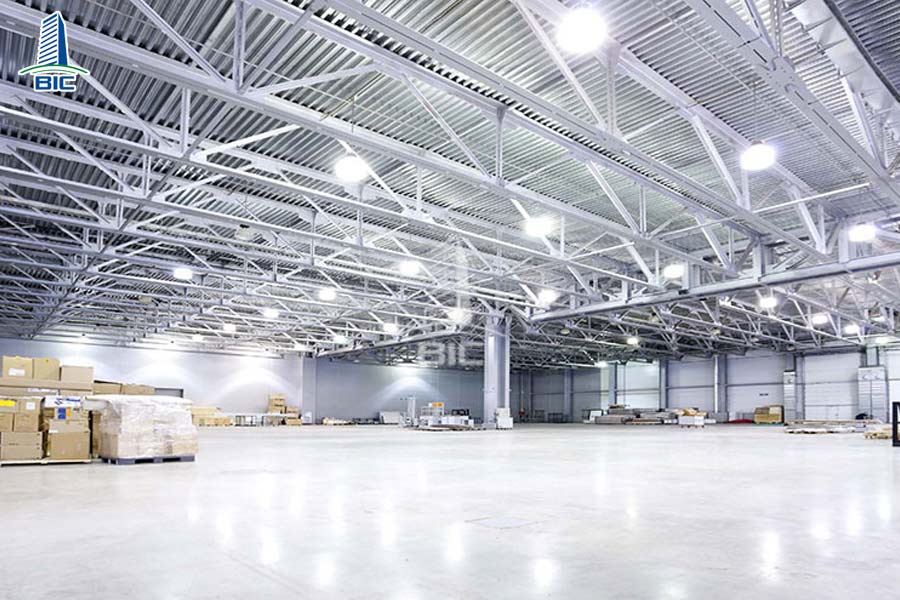
Lighting plays a very important role in the design of industrial factories, not only helping to increase productivity and work efficiency but also ensuring labor safety. Therefore, during the design and construction process, special attention should be paid to lighting.
Characteristics of good lighting include:
- Adequate Light Intensity: The light must have a suitable brightness to serve specific activities performed in the factory.
- Even Distribution Throughout the Space: Lighting should be evenly distributed so that the workspace does not have bright and dark spots.
- Diffuse and Non-Glare: Use design solutions to diffuse light and prevent glare for workers.
- Reasonable Contrast: Ensure sufficient but not overly sharp contrast between details of objects and the surrounding background.
- Avoid Glare: Limit the use of glare, especially in positions where workers have to look directly at the light source.
By ensuring these factors, not only the working environment is improved but also safety and comfort for employees in the factory are enhanced. Lighting is an indispensable component in building a modern and efficient industrial factory.
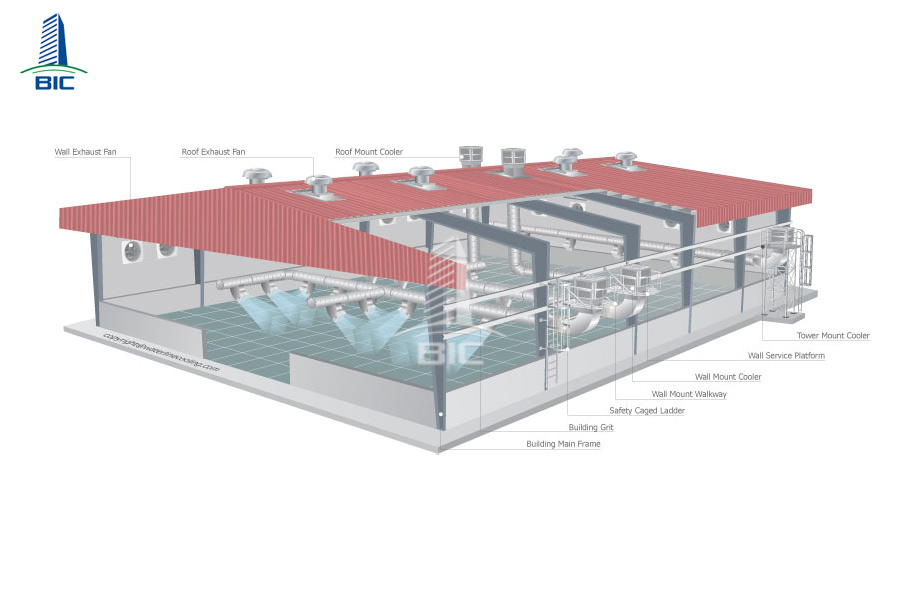
The ventilation system in factory design is seen as the process of replacing old air with fresh air, ensuring that the working environment in the factory is always comfortable and safe. Without effective ventilation, old air will accumulate odors, humidity, and temperature, causing discomfort and fatigue for workers.
Ventilation methods include:
- Natural Ventilation: Through windows and ventilation fans on the roof or walls. This method relies on the natural circulation of air to replace old air with new air from outside.
- Mechanical Ventilation: Using exhaust fans to remove old air from the factory. Fresh air is - then brought in through doors and windows to replace the air that has been removed.
- Ventilation Fans: Using exhaust fans to bring fresh air into the factory and push polluted air out naturally. This is an effective ventilation method suitable for factories and production workshops.
Air conditioning, on the other hand, is the process of controlling the temperature, humidity, and cleanliness of the air inside the factory. Air conditioners used in factory design cool the workspace and adjust humidity, creating a comfortable working environment for workers. This may include adding humidity to the air in winter and removing humidity in summer to maintain an ideal working environment.
These methods ensure that the factory not only has a safe working environment but also is effective in terms of productivity and worker health.
Here are the important principles and processes in industrial factory design:
- Develop Multiple Feasible Design Options:
+ To choose the optimal design option in terms of cost, functionality, and economic efficiency, multiple options should be developed for comparison.
+ Analyze and identify feasible options, ensuring clarity and ease for later inspection and adjustment.
+ Follow design stages from sketching to detailed drawings and specific calculations to achieve a complete and effective design proposal.
- Implement Factory Design in Stages:
+ Apply the principle of phased design to avoid overlap or omissions during the design process.
+ Coordinate work scientifically and closely to ensure accuracy and integrity of the proposal.
- Stay True to the Selected Design:
+ Only adjust the design when there are clear reasons and strong evidence of economic, quality, and technical impact.
+ Pay attention to the impact of changes on the components of the design proposal.
- Principle of Scientific and Close Coordination in Factory Design:
+ Industrial design is a complex and interconnected process involving multiple participants.
+ To ensure the project adheres to progress, quality, and economic efficiency, it is necessary to coordinate work scientifically and closely among stakeholders, following the principle of mutual respect and support.
- Use Modern Design Tools and Software:
+ Apply advanced design tools and software to enhance quality and efficiency.
+ Tools like CAD and BIM are useful for creating design plans, managing information, and ensuring accuracy.
+ Using design software helps manage data, calculate structures, estimate costs, and minimize errors during the design process.
In summary, industrial factory design is a complex and meticulous process requiring adherence to the principles and scientific coordination among the design team. Applying these principles ensures that the factory design is optimized, effective, and compliant with technical and quality standards, bringing significant benefits to investors.