In the capital structure of industrial projects, factory infrastructure construction costs always account for a large proportion and play a decisive role in the long-term asset utilization efficiency of a business. Practical operation shows that a standardized factory project, fast handover schedule, and avoidance of additional cost traps depend up to 80% on the practical capability of the general contractor. Conversely, working with weak and inexperienced contractors often leads directly to serious consequences: prolonged project schedules, deviations in steel components, conflicts in mechanical and electrical systems, and deadlocks in completing fire prevention and fighting acceptance or legal completion procedures.
In a construction market filled with scattered and confusing advertising information, establishing a quantitative criteria framework to appraise the actual capability of construction contractors is a vital task for business owners. A reputable construction partner is not proven only through a competitive bid price, but must be demonstrated through legal practice capability, an independent steel structure fabrication factory system, material optimization solutions from the factory design stage, and a strict occupational safety risk management process on-site. Correctly identifying these core values helps investors protect capital, control construction quality from foundation to roof, and ensure absolute synchronization with industrial operating standards.
In this article, BIC provides expert insights and five golden criteria to help investors appraise, evaluate, and accurately select a reputable factory construction contractor, thereby creating a solid foundation for the sustainable development of the project.
For a business, deciding to invest in a new factory always comes with the expectation of optimizing productivity and expanding market share. However, this project can also become a major financial burden if the investor chooses the wrong partner.
Appraising contractor capability before signing a contract is not merely an administrative procedure, but a critical step. From a management perspective, carelessness at this selection stage can directly push the business into serious economic and legal crises.
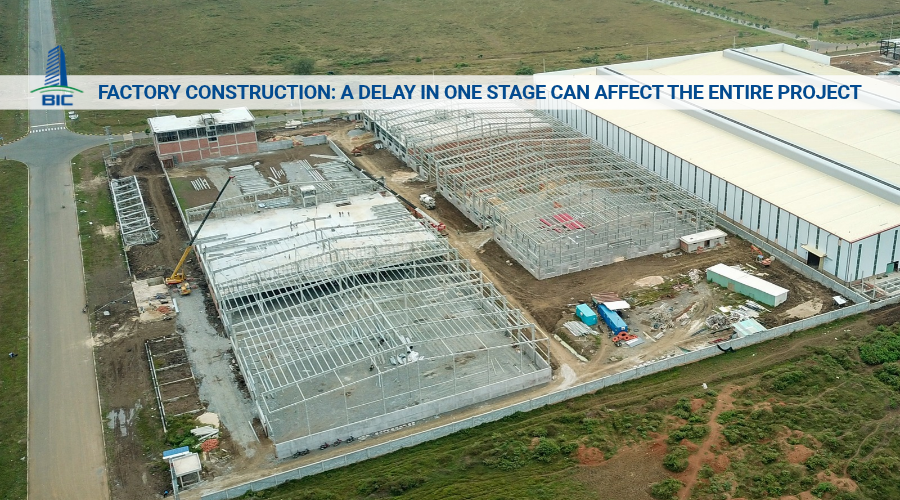
When a factory construction project is delayed, economic damage does not stop at additional costs on-site. More dangerously, it can disrupt the entire business plan of the company:
- Loss of market opportunities: Late factory handover means the production line cannot operate on time. The business may miss major orders with partners, face contract penalties, and lose market share to competitors.
- Hidden cost burden: While the project is delayed, the business still has to pay bank loan interest on disbursed capital, maintain the project management team, and rent temporary warehouse space to store imported machinery and equipment that has no installation site yet.

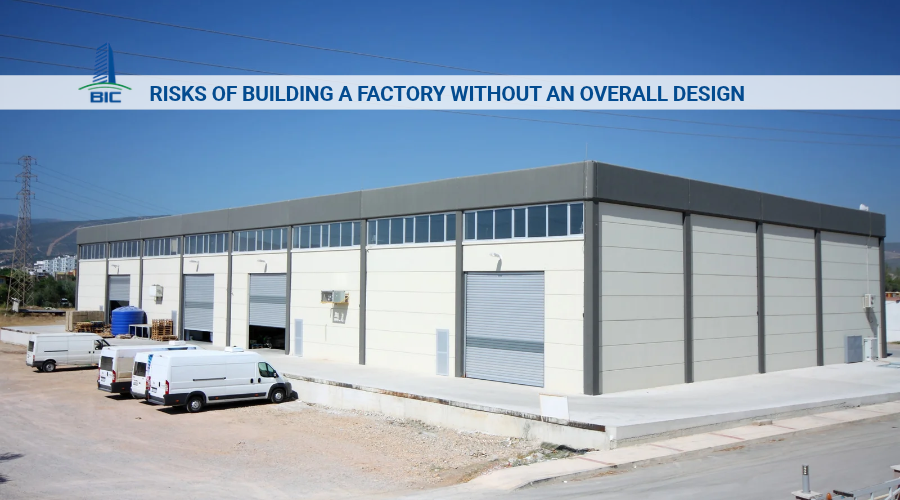
One of the most common “traps” used by weak construction contractors to win bids is offering an extremely low base price. However, this is usually accompanied by a BOQ that is superficial, vague, and missing many mandatory technical items.
Once the project officially begins, these contractors use additional clauses to continuously request the investor to approve extra costs. These can arise from foundation reinforcement, the thickness of anti-rust coating for steel structures, roof accessory systems, and many other items. The final accumulated additional costs often far exceed the original contingency budget, putting the investor into a difficult position when the project is already under construction.
The greatest and longest-lasting risk in an industrial project is the technical quality of the foundation structure and pre-engineered steel frame system. By choosing an unreliable contractor, businesses may face costly lessons:
- Structural safety incidents: If the contractor arbitrarily uses underweight steel, tightens connection bolts with insufficient force, or casts concrete floors with the wrong grade, the project may experience settlement, cracking, floor deflection, or even structural instability under extreme weather conditions.
- Post-construction legal deadlock: A contractor that does not fully understand current construction regulations, such as the latest amendments to QCVN 06 on fire safety, may incorrectly arrange emergency exits or use building envelope materials without required fire-resistance certificates. The direct consequence is that the completed facility may be rejected during fire protection approval and acceptance, preventing the investor from completing ownership registration for assets attached to the land and legally putting the factory into operation.
In a market with hundreds of service providers, investors need a quantitative and practical measurement framework to screen capability profiles. A truly capable and reliable construction contractor must fully meet the following five core criteria.
This is the mandatory “passport” proving that the contractor has full legal status and professional capability certified by the state:
- Construction activity capacity certificate: The contractor must hold a Construction Activity Capacity Certificate issued by the Ministry of Construction or the Department of Construction, clearly stating the permitted scope of industrial construction works, such as Grade I, Grade II, or Grade III, aligned with the project’s area, scale, and structural complexity.
- Capability of the personnel team: The positions of site commander, structural engineer, and mechanical and electrical (MEP) engineer must have appropriate practice certificates. This ensures that the people directly managing the site deeply understand factory design standards and complex technical handling procedures.

An impressive capability profile on paper is not as valuable as real projects that have already entered stable operation. Investors should evaluate:
- Completed project portfolio: Review the number and scale of industrial factory projects completed by the contractor within the last 3 to 5 years.
- Ability to handle specialized facilities: Each industry has its own infrastructure standards. A reputable contractor must have experience handling specialized requirements such as chemical-resistant floors for mechanical factories, cleanroom systems with humidity control for electronics workshops, or non-toxic material certificates for GMP-standard food factories.
For modern factory models, the steel frame structure accounts for 30% to 40% of project cost and determines the overall construction schedule. A contractor that owns its own steel structure fabrication factory brings major advantages to investors:
- Schedule control: Steel rafters and frames can be automatically fabricated at the factory in parallel with foundation works on-site, completely eliminating delay risks caused by dependence on third parties.
- Control of steel billet quality: Automatic cutting and welding processes, shot-blasting surface cleaning to Sa 2.5 standard, and strictly inspected anti-rust coating procedures help ensure long component lifespan and strong resistance to harsh environments.
The mindset of a reputable contractor is always focused on protecting the client’s capital through intelligent engineering solutions:
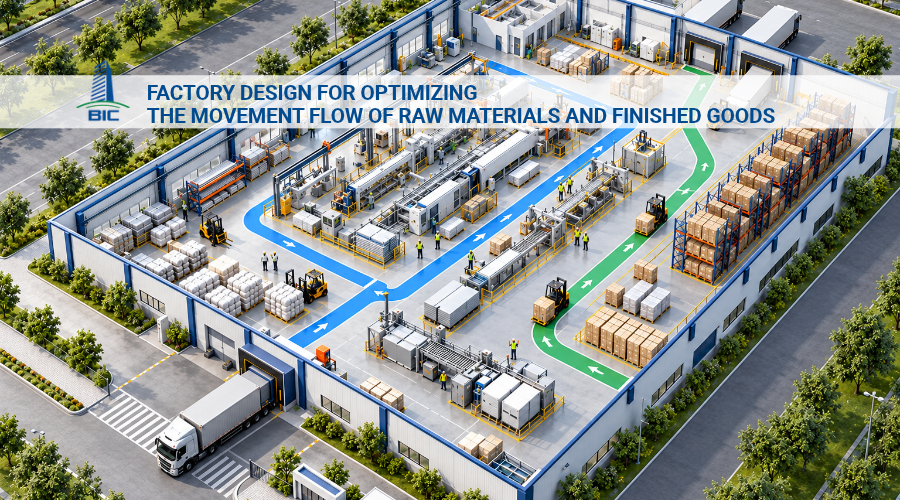
- Optimizing material quantities: Based on strong technical expertise, the contractor will advise on solutions to optimize column spacing, free up floor space, and accurately calculate frame loads to avoid steel waste while still ensuring a high structural safety factor in construction design.
- Detailed Bill of Quantities (BOQ): Every cubic meter of concrete, steel quantity, roofing sheet thickness, and electrical device is transparently listed by type, origin, and unit price, together with a commitment to no additional costs under a fixed-price turnkey contract.
After-sales policy is the strongest statement of confidence in the construction quality of a design and construction contractor:
- Outstanding warranty period: A reputable contractor is willing to commit to a 5-to-10-year warranty for the pre-engineered steel frame structure, a 2-to-3-year warranty for roof leakage prevention, and annual periodic maintenance.
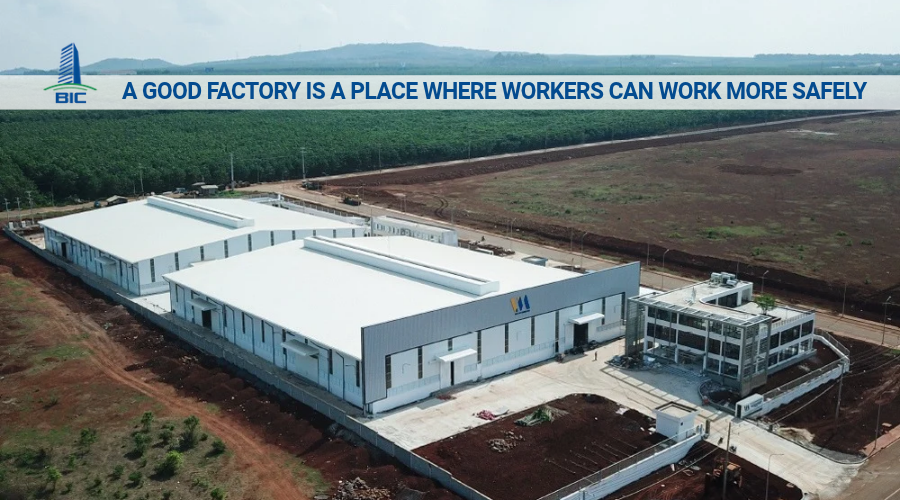
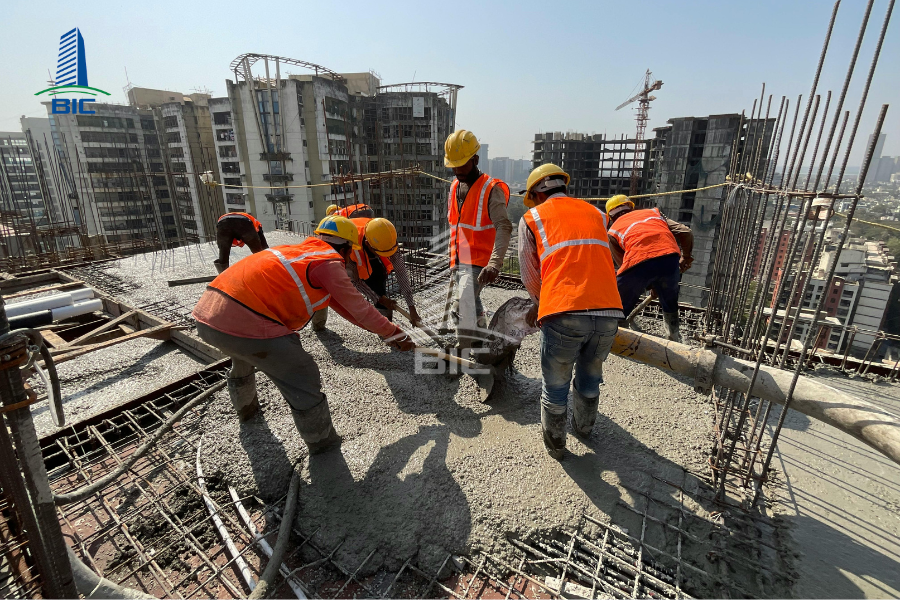
- Strict occupational safety documentation: The contractor must present safe construction methods for working at height, provide full fall protection nets and lifelines, and obtain mandatory third-party liability insurance for the entire project.
Working style and coordination process reflect the management capability of a contractor. A professional unit always implements projects through a standardized process:
Step 1: Existing site survey and solution consultation: Receive the production brief, survey the topography, measure technical infrastructure connection points, and propose a preliminary layout solution.
Step 2: Technical dossier development and BOQ preparation: Complete construction design drawings, calculate structural internal forces, prepare a detailed Bill of Quantities, and support the investor in completing fire protection approval and construction permit procedures.
Step 3: Structural fabrication and synchronized construction: Activate the steel fabrication line at the factory while simultaneously carrying out excavation and concrete works on-site. Proceed with frame erection, roofing and building envelope installation, floor completion, and MEP systems according to committed milestones.
Step 4: Technical testing, completion, and handover: Conduct fire protection pressure tests, perform roof leakage rain simulation tests, prepare as-built drawings, and coordinate with the investor to invite competent authorities for acceptance before putting the facility into use.
To choose the right partner and verify real capability instead of relying only on advertising claims or polished printed profiles, investors should apply the following three practical methods:
- Directly visit the steel structure fabrication factory: Ask the contractor to take you to their production facility. A large-scale factory equipped with CNC cutting machines, automatic welding machines, and a structured quality control process is the most reliable proof of component supply capability.
- Inspect previous completed projects: Propose visiting one or two factory projects that the contractor handed over and that have been operating for 2 to 3 years. Directly observe whether the concrete floor has settlement or cracking, and whether the metal roof has leakage or rust.
- Indirectly interview the contractor’s previous clients: Try to contact the management board or investors of previous projects to ask about the contractor’s coordination attitude, honesty in material use, and warranty responsibility when issues arise.
Choosing the right construction contractor is not only a construction decision. It is a strategic decision that protects the company’s largest fixed asset. A reputable partner with strong practical capability and a transparent workflow will help investors completely eliminate additional cost risks, stay legally secure, and optimize the operating efficiency of investment capital.
The optimal recommendation for businesses is to prioritize the full-package Design & Build general contractor model with independent steel fabrication capability. This ensures absolute synchronization from factory design to on-site implementation, saves intermediary coordination time, and creates the smartest and most sustainable production infrastructure.
Is your business looking for a reputable contractor to realize its factory project, or do you need a detailed cost estimate by square meter? Contact BIC today to receive completely free in-depth consultation from our leading expert team.