Factory design is a meticulous and thorough process that requires consideration of various factors to ensure that the structure meets production requirements while ensuring safety and efficiency.
To ensure that your factory is designed scientifically, aligns with actual needs, and meets safety standards, contact BIC immediately. Our professional team will help you come up with optimal solutions, turning your ideas into reality in the most effective way.
The intended use is a fundamental factor that guides the design of the factory. Clearly defining the purpose of the factory will determine the layout of the space, technical systems, and supporting utilities. This ensures that the factory not only meets current needs but also has the capacity to expand or change when necessary.
First, you must identify the intended use of the factory: the type of products being manufactured and the production process. This will directly affect the layout of equipment, machinery systems, and the storage of raw materials and products.
Additionally, modern production technologies require special considerations, such as ample space for product assembly lines, a stable electrical system, effective ventilation, and optimal waste treatment methods to protect the environment.
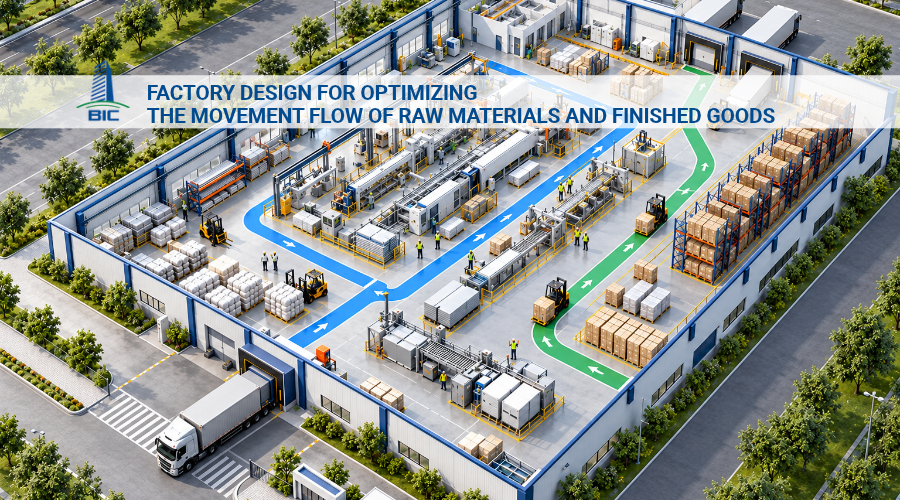
Finally, the flow of goods within the factory is also an important factor. A well-organized internal transportation system, including pathways for forklifts and loading areas, will ensure that the movement of raw materials and products is convenient and swift, optimizing the production process.
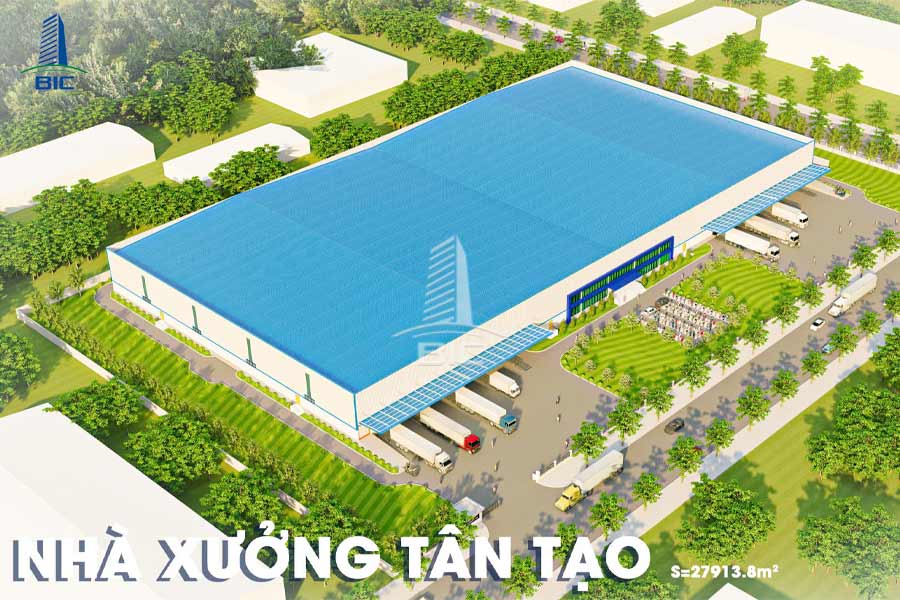
The selection of building materials and structural design is a key factor in ensuring the durability and load-bearing capacity of the factory. Materials such as pre-engineered steel, reinforced concrete, or insulation materials are often prioritized to suit production conditions, specific climate, and soil characteristics. The structure needs to be meticulously calculated to withstand loads from machinery, goods, and environmental impacts such as wind, rain, or earthquakes. Using high-durability materials not only extends the lifespan of the facility but also reduces maintenance costs over the long term.
The electrical system in factory design must ensure safety and adequately meet the power needs of machinery and equipment. This includes installing high-capacity wiring, backup power supply systems such as generators, and protective devices like circuit breakers to prevent electric shocks and overloads. Particularly for factories using modern technology, a stable electrical system is essential to avoid production interruptions. Additionally, the arrangement of electrical panels and outlets should be convenient for maintenance and safe usage.
A well-designed drainage system plays a crucial role in protecting the ecological environment and minimizing fire hazards. The water supply system must meet the needs for both production and daily activities, while the drainage system should be designed to effectively handle wastewater and prevent flooding. Especially for industries that require wastewater treatment, it is necessary to integrate a treatment system that meets standards before discharging into the environment.
Ventilation is an essential factor to ensure a safe and comfortable working environment. An effective ventilation system helps provide sufficient clean air, reduces unpleasant odors, heat, and humidity in indoor gardens. Natural ventilation can be utilized through windows, roofs, or mechanical ventilation using exhaust fans and air conditioning systems. This system not only protects the health of workers but also extends the lifespan of equipment and machinery.
Fire safety is one of the mandatory criteria in the design of factories. The FPFS needs to be equipped with all necessary fire prevention and fighting equipment and designed with emergency exits. Additionally, fire-resistant building materials and safe methods between production areas must be carefully calculated to minimize the risk of fire and explosion. Adhering to fire safety regulations not only ensures the safety of people and property but also minimizes damage in the event of an incident.
The technical factors in factory design not only ensure safety and efficiency during use but also provide a solid foundation for product operation. Proper investment in configuration, electrical systems, water supply and drainage, ventilation, and fire safety will help the factory operate stably, optimize costs, and meet technical and legal standards.
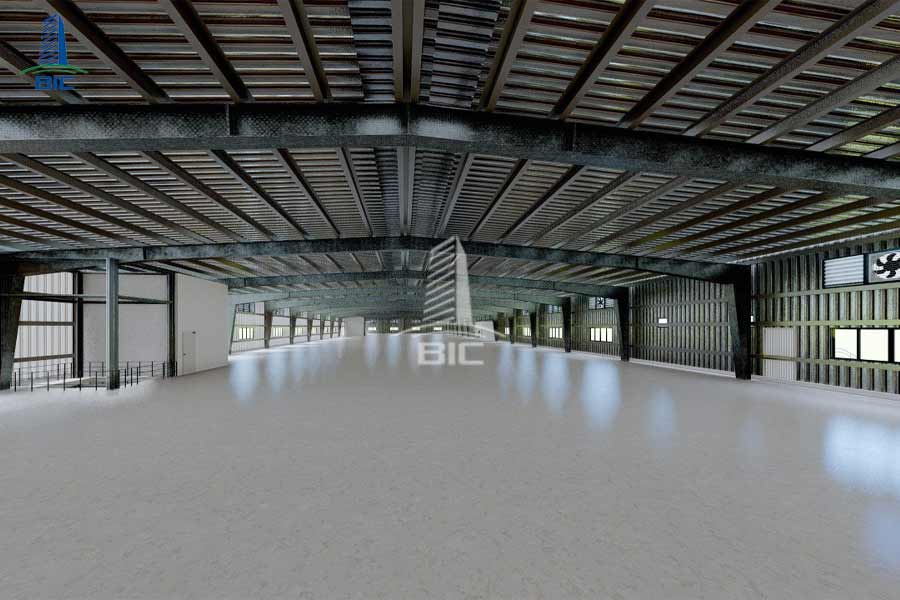
The construction and operation of factories need to pay special attention to the negative impacts on the surrounding environment. Factors such as noise, dust, and industrial waste can adversely affect the nearby community and ecosystem.
- Noise: Solutions to reduce noise should be implemented, such as using soundproof walls, placing machinery in isolated areas, or arranging sound barriers.
- Dust: Ventilation systems and necessary filtration devices must be installed to minimize dust emissions during the production process.
- Waste: Wastewater, garbage, and emissions from the factory must be treated according to environmental standards before being released. Integrating advanced waste treatment systems will minimize negative impacts on the environment and comply with legal regulations.
In the context of rising energy costs, designing factories with energy efficiency in mind not only reduces operating costs but also contributes to environmental protection.
- Insulation Materials: Using materials such as insulation panels, reflective paint, or insulated glass to reduce heat absorption, keeping the space cool and saving energy for cooling.
- Natural Lighting: Utilizing natural light through windows, skylights, or light tubes helps reduce electricity consumption from artificial lighting systems.
- Solar Energy: Installing solar panels on rooftops to generate clean, stable electricity, reducing dependence on the power grid.
A poor environment is not only the responsibility of businesses but also an opportunity to optimize costs and enhance operational efficiency. A modern factory needs to focus on minimizing negative impacts on the surrounding environment and implementing energy-saving solutions for sustainable development in the future.
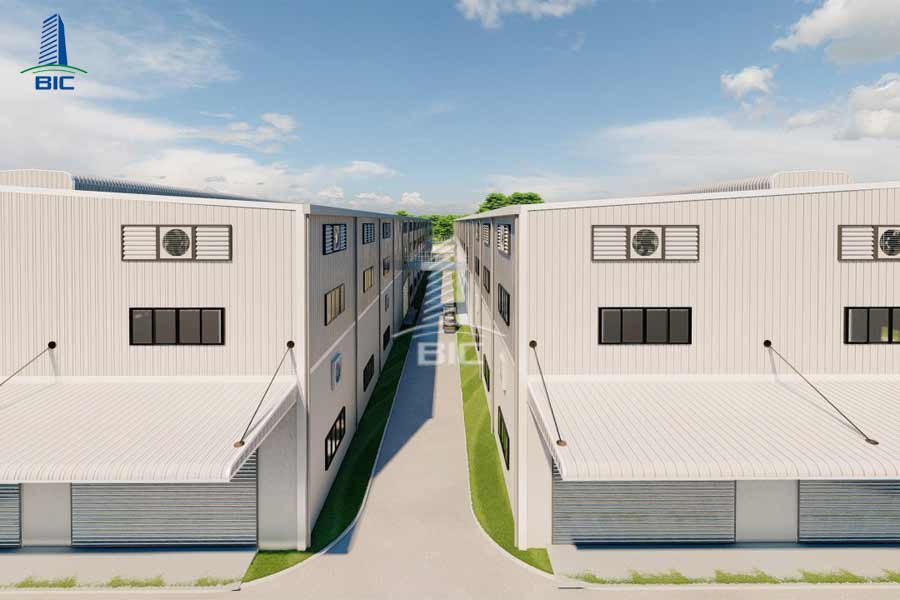
Construction costs are an important economic factor that needs to be considered from the planning stage. To optimize costs while ensuring quality, it is necessary to:
- Choose appropriate building materials: Prioritize the use of materials such as pre-engineered steel, insulated roofing panels, or lightweight concrete, which not only save costs but also meet durability and aesthetic requirements.
- Use standardized designs: Utilizing modular designs or simple structures helps reduce construction time and save labor costs.
- Select a reputable factory design company: An experienced design firm can provide solutions to optimize resources, helping to save costs without compromising the quality of the project.
Operating costs are detailed expenses that extend throughout the use of the factory, making energy-efficient design essential:
- Electricity savings: Implementing solutions such as LED lighting systems, solar energy, and energy-efficient electrical appliances can significantly reduce electricity bills.
- Ventilation and insulation systems: An effective wind effect system combined with good insulation materials helps lower cooling costs and maintain a comfortable working environment.
- Simple maintenance: Designing technical systems that are easy to access and maintain helps reduce repair costs and extend the lifespan of equipment.
Operating costs are a detailed account that extends throughout the use of the factory, making energy-saving design essential:
- Electricity savings: Utilizing solutions such as LED lighting systems, solar energy, and energy-efficient electrical devices can significantly reduce electricity bills.
- Ventilation and insulation systems: An effective wind effect system combined with good insulation materials helps lower cooling costs and maintain a comfortable working environment.
- Simple maintenance: Designing technical systems that are easy to access and maintain helps reduce repair costs and extend the lifespan of equipment.
- Investment efficiency: Optimizing construction costs provides businesses with additional resources to invest in other activities such as machinery, workforce, and marketing.
- Reduced operational burden: Saving on operating costs enhances the competitiveness of the business, especially in low-margin manufacturing products.
- Sustainable development: An economically optimized design not only brings short-term benefits but also ensures stability and long-term growth for the business.
Economic factors are one of the core aspects when designing a factory. By carefully considering the costs of construction and operation, businesses can not only save resources but also create sustainable value for their production and business activities.
Designing a factory is a process that requires careful consideration based on many important factors, including functionality, technical requirements, environmental factors, and economic aspects. An optimal design not only ensures production efficiency but also contributes to cost savings, environmental protection, and increased sustainability for the business.
To ensure that your factory is designed scientifically, meets practical needs, and complies with safety standards, please contact reputable design experts. A professional team will help you come up with optimal solutions, turning your ideas into reality in the most effective way.