As the industrial economy continues to develop at a rapid pace, the greatest challenge facing investors is not only finding markets for their products but also optimizing initial investment capital and minimizing the time required to put a factory into operation. In the past, traditional reinforced concrete construction was considered the standard solution for all projects. However, in today's fast-moving market environment, conventional construction methods have gradually revealed significant limitations, including slow construction progress, bulky structural systems, and a lack of flexibility when businesses need to modify operational functions.
In response to these challenges, the rise of pre-engineered steel buildings has sparked a genuine revolution, completely transforming the landscape and mindset of industrial construction. Not only does this solution effectively overcome the shortcomings of heavy concrete structures, but it also delivers exceptional advantages in financial control and long-term durability.
So, what exactly is a pre-engineered steel building? In this article, BIC will provide a detailed explanation of the concept, explore the key advantages behind its growing popularity, and examine the practical applications of steel structures in modern manufacturing. This will help business leaders gain a comprehensive understanding and make well-informed investment decisions.
To understand why this solution dominates the modern construction market, investors must first grasp its fundamental nature and operating mechanism. The greatest distinction of this construction method lies in shifting much of the work from the dusty construction site to a highly controlled manufacturing environment.
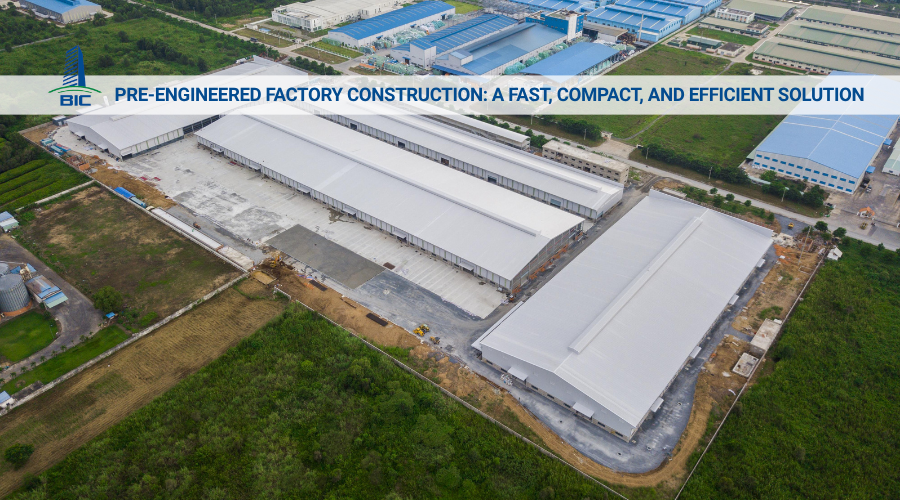
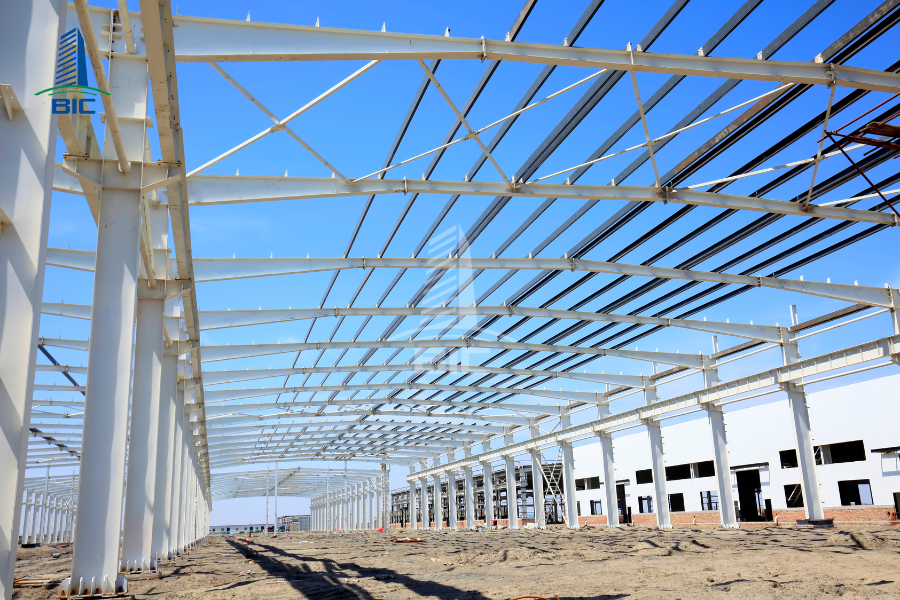
From an engineering perspective, a pre-engineered steel building (PEB) is an industrial facility constructed entirely from steel load-bearing components. Instead of casting columns, assembling formwork, and pouring concrete directly on-site as in traditional methods, the entire structural framework—including columns, beams, and steel rafters—is manufactured and fabricated in a specialized factory.
Every component detail, including dimensions, thickness, and hole locations, is produced according to technical drawings carefully designed and calculated by engineers. Only after the fabrication process is completed are these components transported to the construction site for assembly, forming a complete production facility.
The superior speed and quality of this solution are achieved through a highly specialized and sequential implementation process consisting of three integrated stages:
This is the most critical phase that determines the overall success of the project. After evaluating the company's operational requirements and machinery loads, engineers use specialized structural analysis software to develop the architectural concept.
This factory design stage helps accurately calculate material quantities, optimize the column grid system, and ensure structural safety requirements are fully met.
Based on the approved design documents, the steel fabrication process begins. This stage includes highly precise operations such as CNC steel cutting, assembly welding, thermal straightening, bolt-hole drilling, surface cleaning through shot blasting, and protective anti-corrosion coating.
All procedures are carried out under strict quality control to minimize technical deviations and ensure maximum accuracy.
After inspection and acceptance at the fabrication plant, steel components are packaged and transported to the construction site.
At this stage, factory construction progresses rapidly with the assistance of specialized cranes. Technicians connect steel beams and columns using high-strength bolts, creating a robust structural framework before installing roofing sheets, wall cladding, and MEP infrastructure systems.
It is no coincidence that this solution has quickly gained the trust of business owners worldwide. The pre-engineered steel structure model offers outstanding inherent advantages, effectively solving the two biggest concerns of any construction project: time and money.
One of the greatest competitive advantages of pre-engineered steel buildings is their ability to significantly shorten project schedules.The implementation process allows steel component fabrication at the factory to occur simultaneously with excavation and foundation construction on-site.
By the time the foundation reaches the required strength, the steel components are ready for delivery and installation. This synchronized approach can reduce overall construction time by up to 50% compared to conventional cast-in-place concrete methods. As a result, businesses can install machinery sooner, start production lines earlier, and generate revenue faster.
Economic considerations are always a top priority for investors. Choosing a pre-engineered steel solution helps reduce financial burdens through several factors:
- Reduced Foundation Costs: Steel possesses excellent tensile and compressive strength, making the overall structure significantly lighter than reinforced concrete systems. A lighter building imposes less load on the ground, reducing the need for expensive foundation reinforcement and piling, especially in areas with weak soil conditions.
- Lower Labor and Management Expenses: The modular assembly process is quick and efficient, minimizing the need for scaffolding, formwork, and extensive on-site labor. Shorter construction durations also reduce project management costs and limit exposure to fluctuations in material prices.
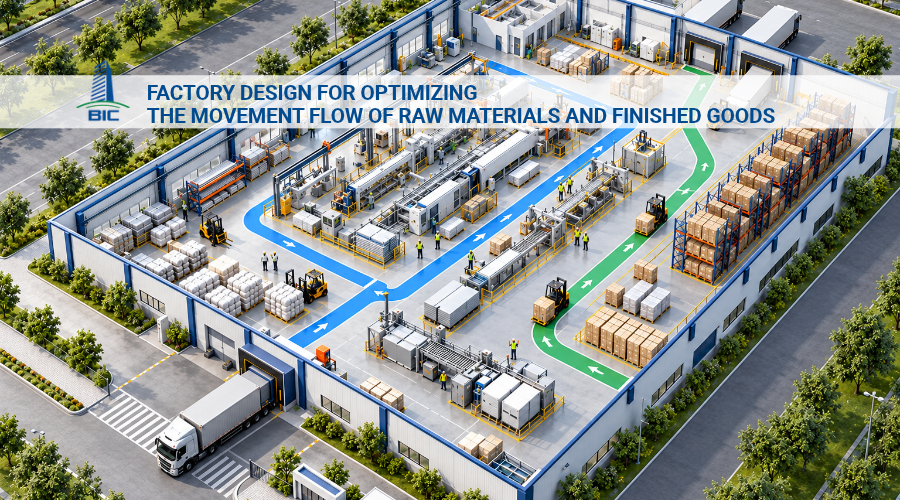
Modern industrial production lines require wide, open spaces for conveyor systems and forklift traffic.
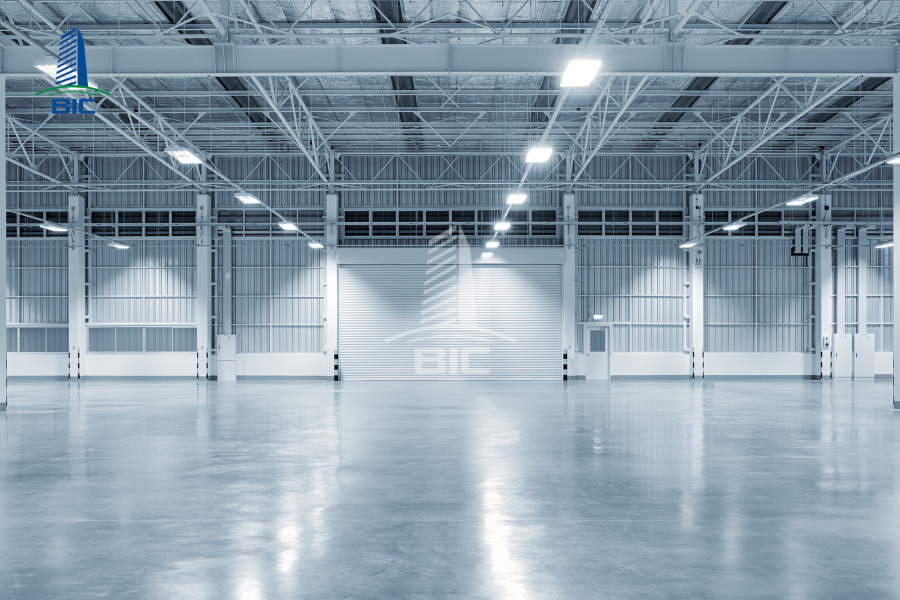
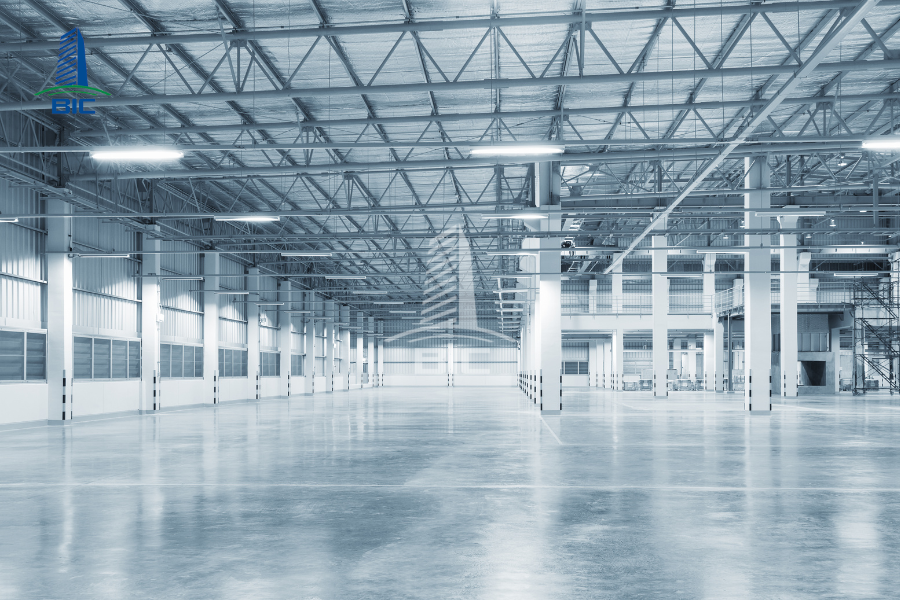
Steel structures allow engineers to design factory buildings with clear spans ranging from 20 meters to over 60 meters without intermediate support columns. This open-floor concept provides businesses with complete flexibility in machinery layout planning and storage area reconfiguration without structural constraints.
Forward-thinking investors always consider future growth. When a company expands, pre-engineered steel buildings demonstrate unmatched adaptability compared to concrete structures.
- Modular Expansion Solutions: Additional floor area can be created simply by connecting new steel frames to the existing structure using pre-installed connection systems. Expansion work is clean, fast, and can often be completed without disrupting ongoing factory operations.
- Reusability and Relocation: If a company needs to relocate due to business strategy changes or land lease expiration, the entire industrial steel building can be safely dismantled, transported, and reassembled at a new site. This capability helps preserve asset value and maximize investment returns.
A durable and cost-effective facility is never the result of luck. For steel structures, project success depends entirely on engineering discipline and seamless coordination throughout the following three key phases.
Every design concept must originate from the operational requirements of the business. During the initial design phase, engineers do far more than simply draw an empty building shell.
- Site Investigation and Geotechnical Assessment: Consultants conduct geological surveys to determine the most suitable foundation solution while calculating machinery loads, overhead crane capacities, and local wind loads.
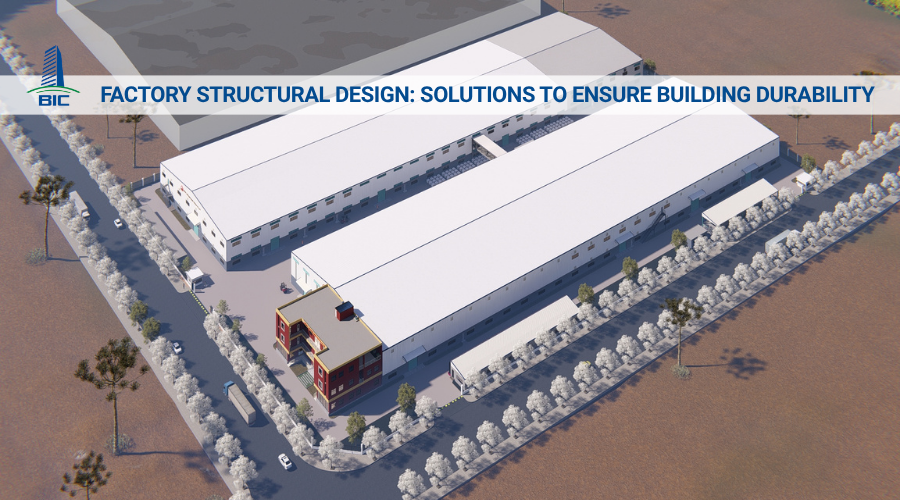
-Space Optimization Through Design: Developing factory design drawings requires balancing current operational needs with future expansion plans. From determining optimal column spacing to selecting insulated roofing and wall materials, every detail is optimized through 3D modeling to eliminate errors before production begins.
Once technical documents are approved, project activities shift to the fabrication workshop. This stage determines the physical accuracy of all structural steel components.
- Advanced Automation Technology: Raw steel plates are cut using CNC machines according to detailed production drawings. Automated welding systems then assemble the steel plates into I-beams or H-beams that meet strict engineering standards.
- Surface Quality Control: After fabrication, components undergo shot blasting to remove rust and create an ideal surface profile before painting. Applying anti-corrosion coatings and protective paint systems according to industry standards enhances the durability of industrial steel structures, enabling them to withstand chemical environments and harsh weather conditions.
While steel fabrication is underway, foundation construction and anchor bolt installation are completed on-site. The factory construction phase then proceeds to the assembly of the large structural components.
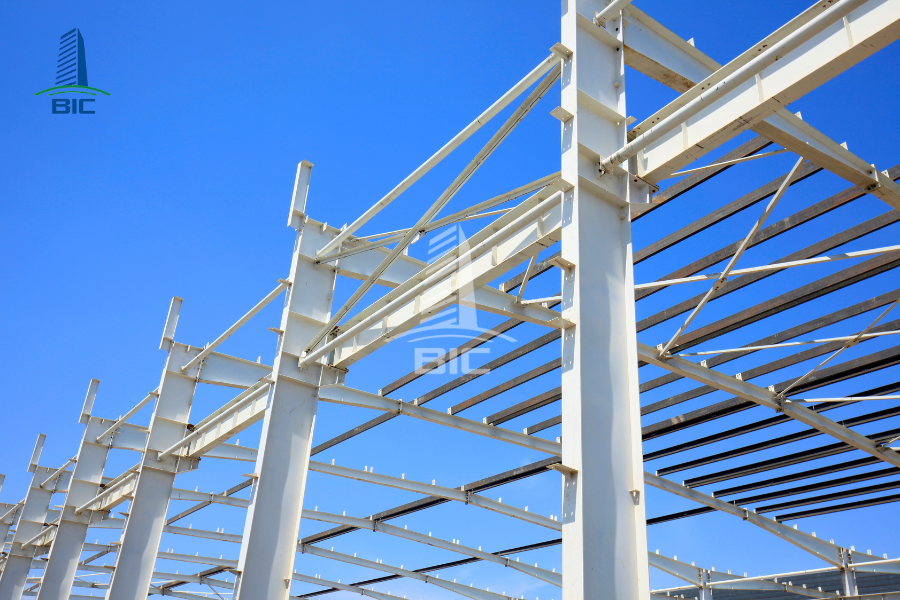
- Modern Mechanized Installation: Engineers coordinate heavy-duty cranes to lift steel columns and rafters into position accurately and efficiently.
- Alignment and Architectural Completion: All primary structural connections are secured using high-strength bolts tightened according to specified torque requirements. The construction team then installs purlins, roofing sheets, wall cladding systems, and internal infrastructure. This highly mechanized process minimizes workplace safety risks while significantly reducing project completion time.
Thanks to their outstanding flexibility and space optimization capabilities, pre-engineered steel structures are no longer limited to a few specific industries. Today, they play a dominant role across industrial parks in a wide range of applications.
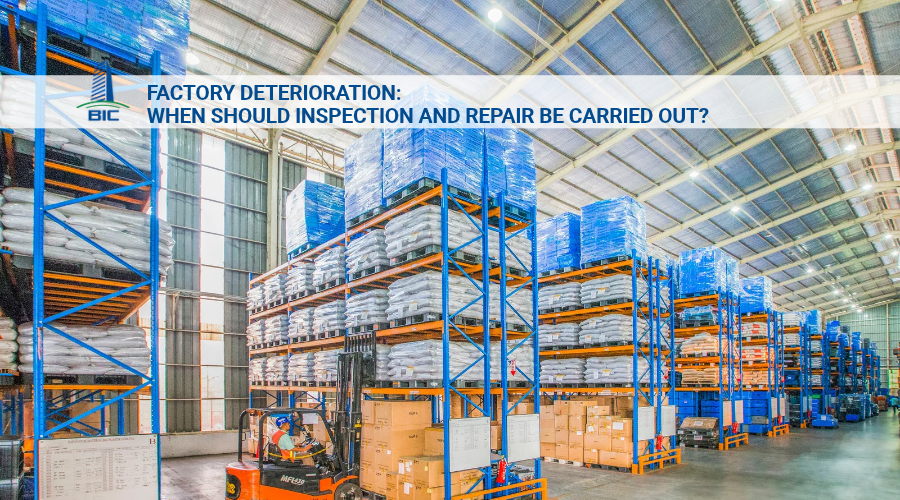
In the era of booming e-commerce and global supply chains, logistics centers require enormous storage and distribution capacity. Pre-engineered steel buildings provide the perfect solution.
- Maximized Vertical Storage Capacity: Steel structures allow greater clear heights, facilitating the installation of multi-level smart storage systems.
- Improved Material Handling Efficiency: The absence of interior columns creates unobstructed floor space, enabling forklifts to move, turn, and handle pallets safely and efficiently.
From light industries such as textiles and footwear to high-tech sectors such as electronics assembly and food processing, steel structures meet demanding operational requirements.
- Integration of Building Systems: Strong purlin and rafter systems allow easy installation of ventilation ducts, natural lighting systems, and fire protection networks throughout the facility.
- Production Environment Control: For industries requiring controlled environments, such as pharmaceuticals and electronics manufacturing, steel frames can be combined with insulated sandwich panels and anti-static flooring systems to meet strict cleanliness and temperature standards.
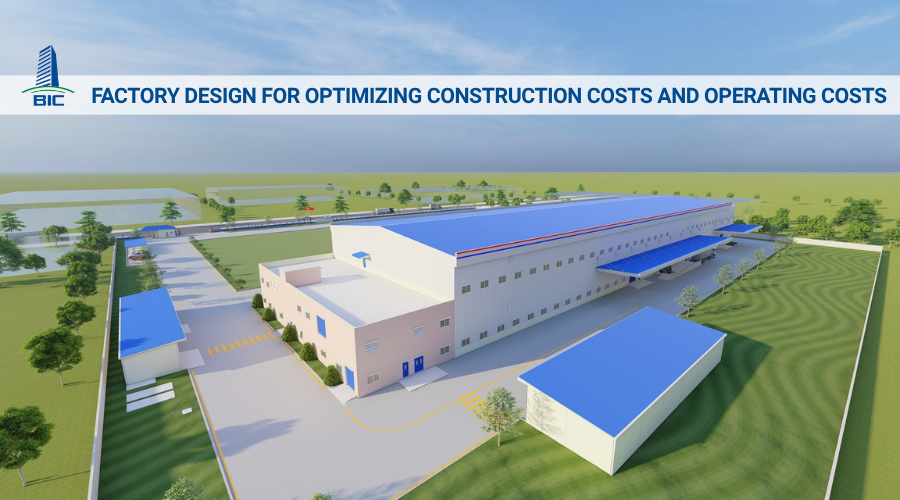
The application of pre-engineered steel technology extends beyond single-story production facilities. Modern design and construction technologies now allow steel structures to be used for multi-story buildings with excellent aesthetics and durability.
- Land Optimization: Companies can develop office buildings, worker cafeterias, and multi-level parking facilities within factory compounds using steel construction systems.
- Architectural Consistency: Using a unified steel structural solution creates a cohesive architectural identity throughout the industrial complex, presenting a professional and modern image to customers and business partners.
The rapid growth of industrial construction has resulted in numerous contractors offering varying capabilities and pricing structures. To protect investment capital and ensure building longevity, business owners should evaluate potential partners using the following three key criteria.
An industrial project achieves maximum efficiency only when design and execution are perfectly aligned. Investors should prioritize EPC contractors capable of handling the entire process—from factory design and steel fabrication to professional on-site erection.
This integrated approach ensures that technical specifications developed during the design stage are accurately translated into the actual structure, eliminating risks caused by communication gaps among multiple parties.
The lowest price is rarely the wisest choice in industrial construction. Business leaders should be cautious of unusually low lump-sum quotations lacking detailed breakdowns. A professional contractor should provide a comprehensive quantity takeoff covering every project item.
Specifications for structural steel, roofing thickness, paint brands, and connection bolts should be clearly identified. This transparency protects businesses from unreasonable cost overruns throughout the construction process.
Legal compliance is a critical factor determining whether a facility can operate lawfully.The selected consultant must fully understand current regulations regarding building density, environmental protection requirements, and especially fire safety approval standards for specific manufacturing sectors.
A contractor with strong regulatory expertise can help projects pass approval procedures smoothly and maintain construction schedules. Pre-engineered steel buildings have firmly established themselves as an inevitable trend, redefining the standards of modern industrial construction. With exceptional advantages in construction speed, initial investment savings, and operational flexibility, they provide the ideal platform for manufacturers to improve efficiency and strengthen their competitive position in the market.
However, fully realizing these economic benefits requires careful investment in the building design phase from the very beginning and selecting a qualified EPC contractor with proven expertise. Instead of pursuing fragmented low-cost solutions, partnering with a professional contractor provides the strongest assurance for investment security and the sustainable long-term growth of your business.