In the development of modern industrial construction, finding optimized material solutions to replace traditional brick walls has become a strategic priority for many businesses. For investors, a compliant factory project must not only have a durable structure and a fast completion schedule so it can enter operation early, but also satisfy strict requirements for thermal insulation, noise control, and fire prevention and fighting safety. Meeting these technical and economic requirements comprehensively, insulated metal panels, commonly known as sandwich panels, are becoming a core material widely used in industrial factory projects of all scales.
From a technical perspective, this is a lightweight multi-layer material system that integrates thermal insulation and high mechanical strength. Incorporating this product into construction methods completely eliminates complex masonry and plastering processes while significantly reducing dead loads on the foundation system and pre-engineered steel frame. This allows engineers to optimize the entire construction design solution from the initial project planning stage, reduce rough construction investment costs, and still ensure a building lifespan of several decades.
To help businesses gain a comprehensive and accurate understanding before making investment decisions, this article from BIC provides an in-depth analysis of industrial-standard panel construction, common core material types available on the market, and the practical economic benefits these products bring to modern factory systems.
A sandwich panel, widely known in the construction industry as an insulated panel, is a new-generation lightweight building material with a flat or ribbed multi-layer structure. Unlike traditional construction materials that require wet construction methods, such as bricks, sand, and cement, sandwich panels are manufactured in synchronized prefabricated modules at the factory.
This product integrates three functions in one finished panel:
- Building envelope formation
- Architectural surface finishing
- Advanced sound and thermal insulation
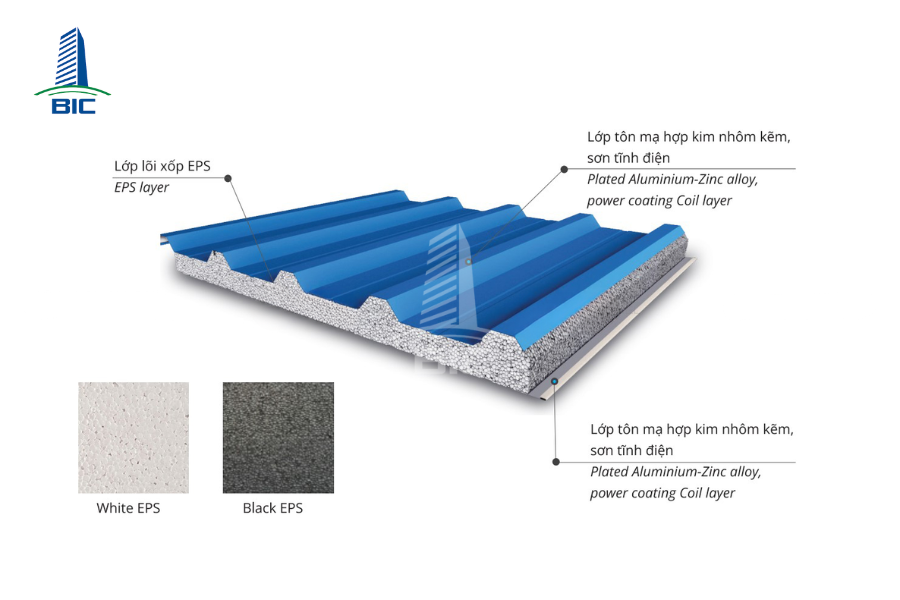
The superior load-bearing capacity and thermal resistance of sandwich panels come from a three-layer structure tightly bonded using specialized high-adhesion polyurethane adhesive.
This layer protects the building against mechanical impacts and weather exposure.
It typically uses aluminum-zinc alloy coated steel sheets, or galvanized steel sheets, finished with a high-quality protective coating to resist oxidation, ultraviolet radiation, and salt corrosion. Standard industrial thickness generally ranges from 0.35mm to 0.50mm.
The sheet surface is often formed with shallow ribs to improve stiffness, optimize resistance to wind loads and impact, and support rapid rainwater drainage when used as roofing panels.
This is the core component that determines the panel’s most important technical properties.
Depending on project requirements, the core can use high-density insulation materials with densities ranging from approximately 11 kg/m³ to more than 120 kg/m³, including:
- EPS
- PU
- PIR
- Rockwool
The insulation core blocks heat transfer, reduces sound transmission, and increases the compressive stiffness of the entire panel.
This layer forms the internal finished surface of the factory.
It may consist of a thinner pre-painted metal sheet or reinforced aluminum foil facing. The inner surface is generally flat or lightly embossed to improve aesthetics, resist moisture and mold, reduce dust accumulation, and allow frequent industrial cleaning with water without peeling or moisture damage.
The key factor that allows sandwich panel walls to form a strong, stable, and highly airtight system is the interlocking edge design along both longitudinal sides of each panel.
Today, manufacturers commonly use two main locking systems:
- Z-Lock joints: Commonly used for thick panels and external wall systems
- Concealed-fixing joints: Commonly used for internal partitions
During installation, the male edge of one panel fits tightly into the female edge of the next panel.
This male-and-female locking design helps eliminate gaps between adjacent components, minimize thermal bridging caused by temperature leakage through structural joints, maintain stable indoor factory temperatures, prevent rainwater infiltration, and optimize pressure control in industrial cleanroom zones.
To optimize investment costs and functional performance, investors need to clearly distinguish the technical characteristics of each insulation core type. Choosing the correct panel type directly determines operating efficiency and the project’s ability to pass acceptance procedures.
This is the most widely used sandwich panel type due to its strong cost advantage. The core consists of expanded EPS beads containing up to approximately 98% air, creating a lightweight cellular structure.
- Technical characteristics: Ultra-lightweight, with densities commonly from 11 kg/m³ to 14 kg/m³; easy to cut and process directly on-site; lowest material cost among common panel systems.
- Recommended applications: Considered a highly economical solution for administration office partitions, external walls of light industrial factories, garment workshops, and general warehouses without strict temperature control requirements.
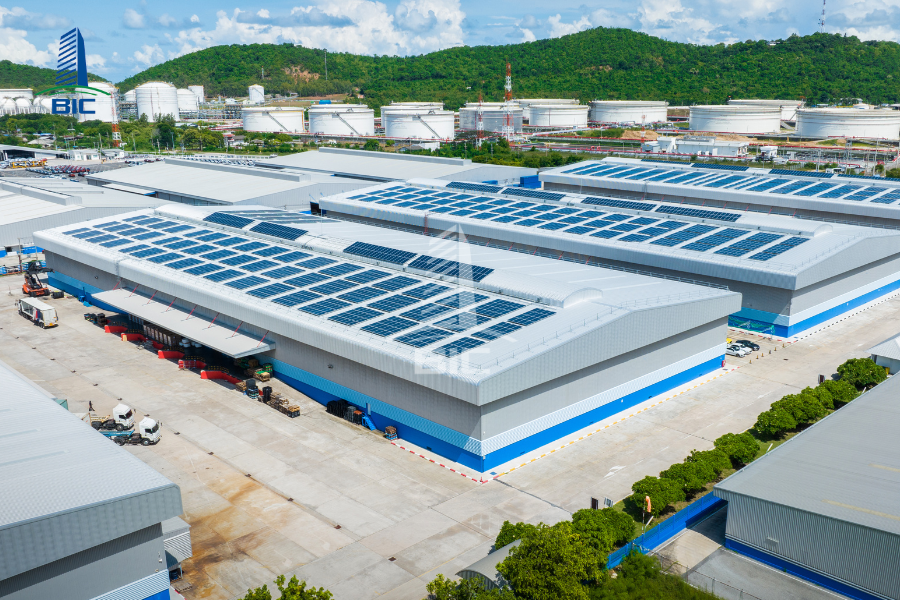
These are premium panel systems using high-density injected foam cores with closed-cell content of up to approximately 95%. PIR is an advanced development of PU, incorporating more thermally stable polyisocyanurate ring structures.
- Technical characteristics: Among the lowest thermal conductivity values of industrial insulation materials, with excellent water and moisture resistance. PIR panels in particular offer improved heat resistance and can self-extinguish after the ignition source is removed, subject to the certified fire classification of the specific product system.
- Recommended applications: Specialized for cold storage facilities, deep-freezing warehouses in seafood processing, semiconductor cleanrooms, GMP-standard pharmaceutical factories, and biological laboratories requiring strict pressure control and sterile environments.
Unlike polymer foam core panels, these systems use cores made from mineral fibers produced from molten basalt rock, in the case of Rockwool, or synthetic glass fibers derived from silicate materials, in the case of Glasswool.
- Technical characteristics: Non-combustible or highly fire-resistant depending on the tested system, with excellent high-temperature performance and strong sound absorption due to the interwoven fiber structure.
- Recommended applications: Positioned as strategic fire-spread prevention solutions for chemical storage warehouses, paint workshops, woodworking factories, generator rooms, or external wall systems required to achieve specified fire-resistance ratings such as EI classifications in fire protection approval dossiers.
One square meter of sandwich panel wall generally weighs only around 10kg to 15kg, significantly lighter than a brick wall of the same area.
This characteristic substantially reduces dead loads on tie beams, structural framing, and pre-engineered steel systems. By reducing load demand from the construction design stage, engineers can optimize foundation solutions, such as reducing pile density or decreasing strip foundation dimensions, thereby helping investors reduce rough construction costs.
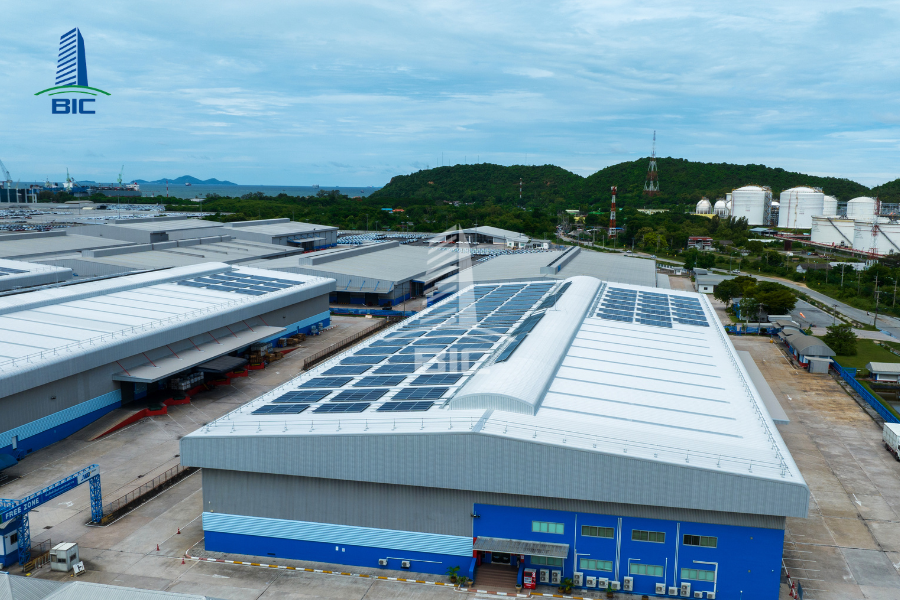
Factory construction using sandwich panels relies entirely on a dry assembly method with screws and aluminum profile accessories.
The process is fast, clean, generates minimal construction debris, and is less dependent on weather because there is no need to wait for masonry mortar, plaster, or concrete to dry and cure.
Shortening the handover schedule by one to two months can help businesses:
- Reduce site management costs
- Install machinery lines earlier
- Put the factory into production sooner
- Accelerate revenue generation
With very low thermal conductivity, sandwich panels act as a protective envelope that significantly reduces heat gain from solar radiation while also limiting the loss of conditioned cool air.
This reduces continuous operating pressure on central air-conditioning systems and chillers.
In suitable applications, an optimized insulated panel envelope can significantly reduce cooling energy consumption compared with conventional uninsulated factory envelope solutions.
Thanks to protective external metal sheets combined with chemically stable insulation cores, sandwich panels can achieve long service lives under appropriate environmental conditions, maintenance regimes, and material specifications.
A particularly important advantage is their high flexibility.
When a business needs to:
- Change production functions
- Expand factory scale
- Relocate the factory
the panel wall system can often be dismantled and reused, helping preserve the value of the company’s investment.
The flat, low-dust, and water-resistant surface of panel walls helps factory interiors remain clean, bright, and professional while supporting demanding hygiene requirements in facilities operating under systems such as HACCP, ISO, or GMP.
In addition, certified fire-resistant panel systems such as PIR or Rockwool can help investors satisfy fire protection approval and acceptance requirements when the exact tested product configuration, supporting frame, joint treatment, and installation method comply with the approved fire safety dossier.
To optimize the full functionality and cost efficiency of the material, sandwich panels should be integrated into structural and architectural calculations from the initial drawing stage.
Modern sandwich panel factories generally operate automated industrial production lines with fixed standard commercial widths.
During factory design, architects should calculate:
- Column spacing
- Wall purlin spacing
- Ceiling elevations
- Opening locations
based on the commercial dimensions of the selected panel system.
Finalizing exact panel specifications during the design and construction stage allows the manufacturer to cut panels according to actual project dimensions.
Once delivered to the site, the factory construction team only needs to install the panels sequentially, minimizing manual cutting and patchwork.
This synchronization:
- Improves wall flatness
- Enhances architectural consistency
- Reduces material waste
- Generates significant savings for investors on large-scale projects
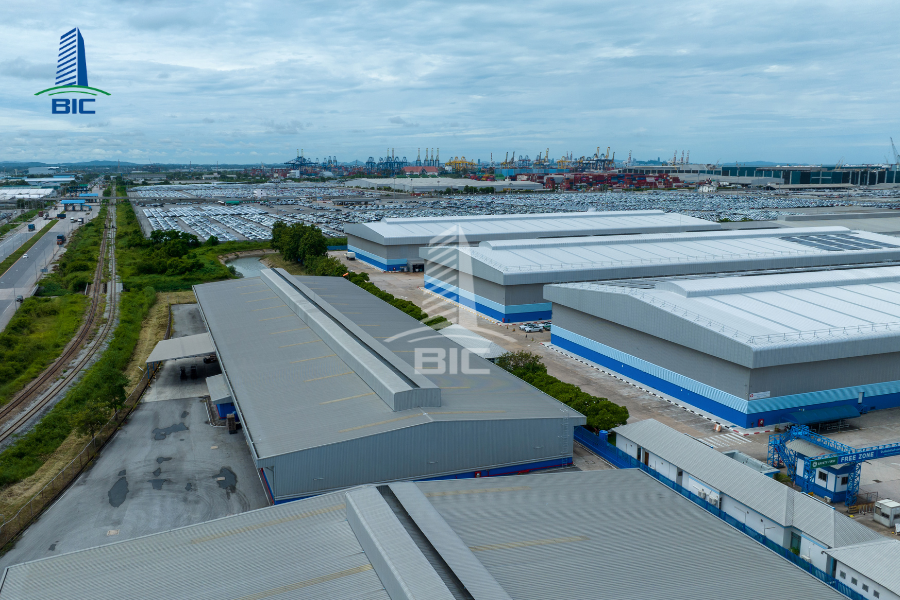
Choosing panel thickness, such as 50mm, 75mm, 100mm, or 150mm, and determining insulation core density must not be based on intuition. It should be based on actual operating requirements for each production zone.
Recommended for:
- Interior partition systems
- Administration office divisions
- Worker changing rooms
- Light industrial workshops without major temperature differences from the external environment
Recommended for:
- External industrial factory walls
- Areas directly exposed to wind, rain, solar radiation, and ambient temperature fluctuations
- Food processing cleanrooms
- Standard electronic component assembly areas
Specifically intended for:
- Cold storage envelopes
- Deep-freezing warehouses
In these applications, PU or PIR cores should have appropriate density and certified thermal performance to minimize heat loss and prevent refrigeration compressors from operating under excessive loads.
Sandwich panels are not merely a trending material. They are a strategic technical solution that helps investors address the three critical objectives of modern industrial construction:
- Optimizing initial investment costs
- Accelerating project handover
- Reducing long-term operating costs
The economic efficiency of the material reaches its highest level when businesses select a reputable full-package Design & Build general contractor whose engineering team can synchronize material selection from the geotechnical survey and foundation structural planning stages onward.
To receive technical catalogs, the latest applicable 2026 fire protection testing certificates, and an optimized factory-direct sandwich panel quotation, contact BIC’s expert team for free quantity takeoff support based on your drawings.