Rental factories are becoming an increasingly popular option in industrial real estate investment strategies, especially in areas with strong growth in manufacturing and logistics demand. This model enables investors to efficiently utilize available land resources and generate stable long-term cash flow. However, investing in rental factories goes beyond construction and operation; it is closely linked to factory design solutions, construction costs, and the ability to meet the diverse requirements of tenants.
In practice, not all rental factory projects achieve the expected efficiency. Limitations in functionality, inflexible design solutions, or excessively high initial investment costs can reduce market attractiveness. In contrast, projects that are well-designed and systematically constructed typically achieve high occupancy rates, reasonable operating costs, and increasing asset value over time.
In the following sections, BIC will provide a detailed analysis of the advantages and disadvantages of rental factories from the investor’s perspective, while clarifying the role of factory design and construction in optimizing investment efficiency.
Demand for rental factories from manufacturing enterprises continues to grow steadily, particularly in processing, assembly, logistics, and supporting industries. Many companies prefer renting instead of building their own facilities to reduce initial capital investment and shorten the time required to commence operations. Rental factory models also allow businesses to flexibly expand or downsize according to production needs, while reducing the burden of infrastructure management and legal procedures.
The current market offers various rental factory models. The most common is the ready-built factory with standardized floor areas, suitable for a wide range of tenants. Another model is the build-to-suit factory, where investors design and construct facilities based on specific tenant requirements. In addition, there are multi-storey factories, warehouse–logistics complexes, and factory clusters within industrial zones, all designed to meet diverse operational needs.
Rental factories play an important role in industrial investment strategies thanks to their ability to generate stable cash flow and maximize land utilization. For investors, this model helps diversify risk compared to direct manufacturing investment and allows flexible adjustment of exploitation strategies in response to market fluctuations. When properly designed and constructed, rental factories not only meet short-term demand but also become long-term income-generating assets within an industrial investment portfolio.
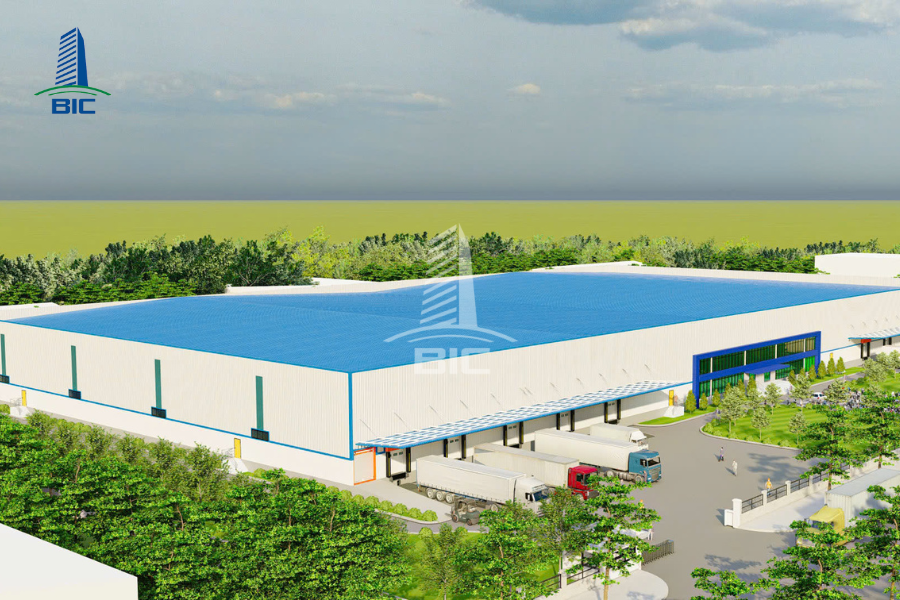
Rental factories provide relatively stable income through medium- and long-term lease contracts. Consistent cash flow enables investors to plan finances proactively, balance operating and maintenance costs, and reinvest effectively. Compared to many other real estate segments, rental factories are less affected by seasonality and can maintain high occupancy rates when developed with the right strategy.
Developing rental factories allows investors to make efficient use of available industrial land. Instead of leaving land idle or underutilized, rental factories enable flexible subdivision of space to serve multiple tenant groups. This approach enhances land-use efficiency and maximizes long-term asset value.
Compared with investing directly in manufacturing operations, rental factories help investors mitigate risks related to market volatility, raw material costs, and production management. Investors focus on asset and lease management, while business risks are borne by tenants. This contributes to greater stability in overall investment performance.
Rental factories allow investors to flexibly choose leasing strategies suitable for each market phase. Short-term leases enable rapid rental price adjustments based on supply and demand, while long-term leases ensure stable cash flow. This flexibility helps investors optimize financial performance over time.
When designed and constructed in compliance with technical and legal standards, rental factories tend to appreciate in value over time. Facilities with high occupancy rates and stable income streams are highly valued in asset transfers or portfolio restructuring. This allows investors not only to benefit from rental income but also to enhance long-term asset value.

Rental factories are typically designed according to general standards to serve a wide range of tenants. As a result, their functionality may not fully meet the specific production requirements of every enterprise. Compared to purpose-built factories, tenants often face limitations in layout configuration, clear height, or floor load capacity, which can affect operational efficiency in certain industries.
Tenants must work within the existing conditions and design solutions implemented by the investor. Constraints related to structure, technical systems, or supporting infrastructure may be difficult to modify during the lease term. This dependence limits tenants’ ability to proactively adjust space to meet evolving production needs.
For industries with complex production lines or high technical requirements, rental factories may not be fully suitable. Renovation or additional equipment installation is often restricted by lease agreements or structural load capacity. This may force tenants to adjust production processes or incur additional costs.
Lease agreements for rental factories may give rise to disputes related to lease terms, renewal clauses, maintenance responsibilities, or renovation rights. If terms are not clearly defined from the outset, both investors and tenants may face operational difficulties. Such risks can affect business stability and long-term planning for tenants.
Rental costs tend to increase over time, especially in high-demand areas. This makes it difficult for tenants to accurately forecast long-term operating expenses. Compared to owning a factory, long-term leasing may result in higher total costs, potentially affecting a company’s financial efficiency.
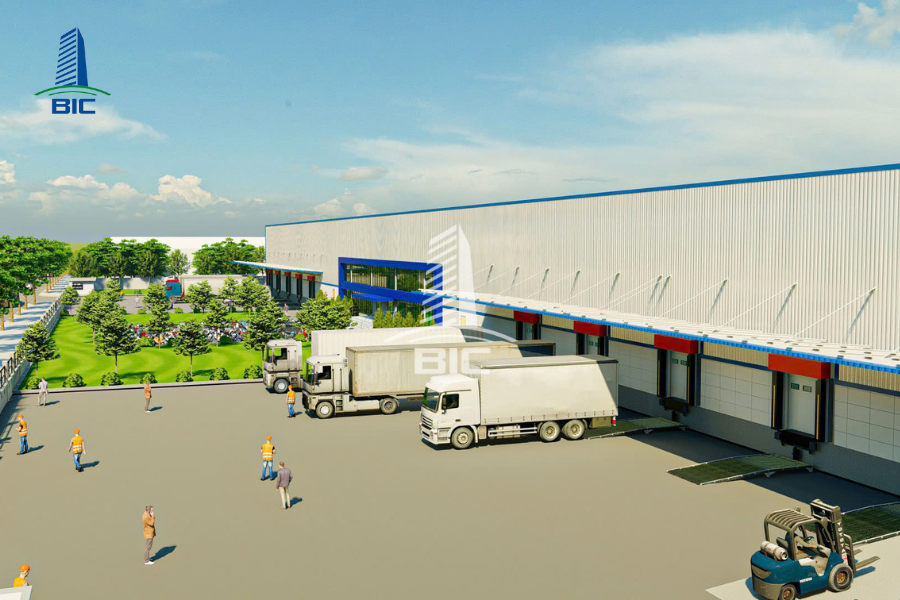
Factory design directly determines how well a facility matches market leasing demand. Factors such as flexible floor area, clear ceiling height, floor load capacity, and production line adaptability significantly influence tenants’ leasing decisions. Well-designed factories allow investors to reach a broader tenant base and shorten vacancy periods.
Flexible design solutions enable subdivision or consolidation of factory spaces according to tenant demand. Properly planned structural systems and reserved technical infrastructure allow easy functional adjustments when tenant profiles change. This flexibility helps maintain stable occupancy rates and reduces downtime during operation.
Factories designed in full compliance with technical and legal standards can attract tenants from various industries. Standardized design enables tenants to commence operations with minimal renovation, while reducing safety and legal risks. This enhances project competitiveness in the rental factory market.
Optimized design solutions help reduce operating costs through efficient lighting, ventilation, and technical infrastructure layouts. Appropriate material selection and system design lower maintenance and energy consumption throughout the facility’s lifecycle, benefiting both investors and tenants in the long term.
Rental factories are suitable when investors already own legally compliant industrial land with convenient infrastructure connections. Developing factories on existing land resources maximizes land utilization, reduces input costs, and shortens project preparation time. In this case, rental factories effectively convert land assets into stable income-generating properties.
The rental factory model is well suited to investors who prioritize stable medium- and long-term cash flow. Multi-year lease contracts provide predictable and consistent income, enabling effective financial planning, cash flow management, and reinvestment.
Compared to direct manufacturing investment, rental factories help reduce risks related to market fluctuations, raw material prices, and operational management. Investors focus on asset and lease management, while business risks rest with tenants. This approach is ideal for investors seeking long-term stability and lower risk exposure.
Rental factory investment is most effective in areas with stable demand, close to industrial parks, major transportation routes, or logistics hubs. Sustained demand helps maintain high occupancy rates and reduces vacancy risk. Thorough market assessment prior to investment is essential to ensure long-term operational efficiency.

Modular design allows factory spaces to be subdivided or combined flexibly to suit different tenant needs. This approach enables investors to adjust leasing scale without major structural intervention. Modular factories are suitable for various production types, from small enterprises to rapidly expanding companies, thereby enhancing utilization efficiency and occupancy rates.
Effective design solutions should consider future renovation needs. Open layouts, minimal fixed partitions, and reserved technical infrastructure make it easier to adapt factories to new tenant requirements. Renovation-friendly design reduces adjustment costs and downtime between lease cycles, increasing market attractiveness.
Standardizing structural systems and technical infrastructure is critical for optimizing rental factories. Structures designed with common load capacities, along with standardized electrical, plumbing, and fire protection systems, can accommodate a wide range of tenants without major modifications. Standardization also simplifies operation, maintenance, and cost control throughout the facility’s lifecycle.
Optimized design and construction solutions balance initial investment costs with long-term operating expenses. Appropriate material selection and efficient lighting and ventilation systems help reduce construction costs and save energy during operation. Well-controlled operating costs make rental factories more attractive to tenants and deliver sustainable financial performance for investors.
Investing in rental factories offers many advantages for investors, including stable cash flow generation, efficient land utilization, and reduced risk compared to direct manufacturing investment. However, this model also has certain limitations, such as lower customization compared to purpose-built factories, dependence on predefined designs, and risks related to lease contracts or rental price fluctuations over time.
Therefore, investors should consider rental factory investment when they own suitable land, operate in areas with stable rental demand, and pursue long-term exploitation strategies. In this context, factory design plays a decisive role by ensuring functional flexibility, accommodating diverse tenant groups, and effectively controlling construction and operating costs. A well-structured design and construction solution from the outset is a critical foundation for achieving sustainable investment efficiency in rental factory projects.