Cost overruns are among the most significant risks affecting investment efficiency when businesses develop industrial facilities. Through years of consulting on and managing industrial projects, BIC has found that most cost increases stem from incomplete site surveys, inconsistent design documents, or changes to the scope of work during construction. These issues raise the total investment cost, extend the schedule, and disrupt the owner’s expected production plans.
To minimize risks, factory construction must be standardized from the surveying and design stages through execution. BIC’s approach focuses on comprehensive design, accurate cost estimation, and tightly coordinated construction management to help owners control expenses, ensure structural quality, and maintain project timelines. When the process is properly established, businesses can more accurately predict actual costs, reduce overruns, and optimize the operational efficiency of their factories.
The following sections analyze the main causes of cost overruns and present the solutions BIC applies to help investors maintain tighter control over their projects.
Cost overruns occur when real-world site conditions differ from the initial design or cost estimate. Common causes include incomplete site surveys, inaccurate assessment of soil conditions, drainage systems, existing structures, or underground utilities. When construction begins, these discrepancies require additional materials, revised methods, or extended time to resolve.
In addition, inconsistent designs across architectural, structural, and MEP disciplines lead to adjustments in quantities during construction. Scope changes requested by the owner based on new operational needs also create additional costs and strain the approved budget.

Most factory construction projects experience cost increases ranging from 5% to 15% of the contract value, depending on design completeness and site conditions. Projects involving weak soil, renovation of old buildings, or specific technical requirements may incur even higher overruns if the survey was insufficient before budgeting.
Projects supported by complete design packages, thorough surveys, and itemized cost estimates typically maintain lower overrun ratios and better manage financial risks throughout construction.
Cost overruns not only raise total investment but also affect construction timelines, cash flow, and operational plans. When unexpected work arises, contractors need extra time to add manpower, adjust construction methods, or wait for approval of changes—resulting in project delays.
Budget adjustments for overruns can also disrupt the owner’s financial plans related to equipment procurement, staffing, or expansion phases. In cases where delays occur, production schedules and supply chain commitments may also be affected.
Factory design is the foundation of accurate cost estimation and stable project expenditure. When design documents lack detail or are not properly coordinated between architectural, structural, and MEP disciplines, cost-related issues arise immediately during construction.
Examples include mismatched pipe routing and structural beams, floor loads incompatible with machinery, or undersized drainage systems. These issues require drawing revisions, extra materials, and modified construction methods raising costs and extending the schedule.
In many industrial projects, major cost overruns originate from concept designs lacking functional data, inaccurate load assessments, or outdated standards. This highlights the importance of investing adequately in the design stage.

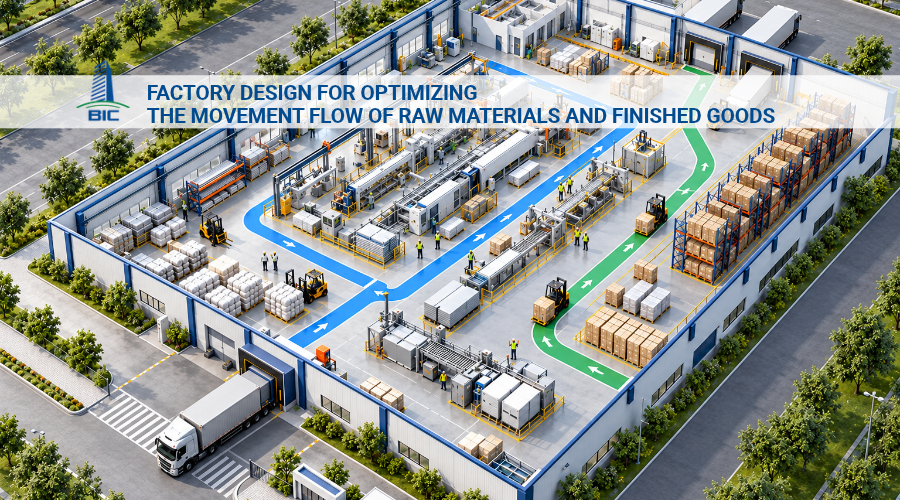
A complete and well-prepared design significantly reduces cost overruns because all technical requirements are clearly defined from the start. A proper design includes functional layouts, equipment placement, floor loading, working height, material flow, and safety systems. When these factors are accurately identified, owners can prepare realistic budgets, avoid missing quantities, and reduce changes during construction.
Robust design also supports optimal material selection and structural solutions, preventing over-specification or underperformance. For large-scale projects, complete design ensures a feasible construction schedule and reliable cash flow planning.
Coordinated design ensures consistency across architecture, structure, MEP, fire protection, and site infrastructure. When disciplines are aligned early, drawing clashes are minimized reducing costly rework caused by conflicts between utilities and structural elements.
A coordinated design enables contractors to plan quantities and methods correctly, helping owners control costs and limit design-induced changes during construction. Projects with synchronized designs typically achieve better progress and lower technical risk during commissioning.
Geotechnical and site surveys are crucial for determining soil conditions, load-bearing capacity, and existing utilities. Incomplete or inaccurate data can lead to designs that require reinforcement, ground improvement, or unexpected infrastructure modifications during execution. Thorough surveys help reduce overruns related to excavation, drainage, ground settlement, and underground systems.
A holistic design ensures alignment between architectural, structural, MEP, fire protection, and functional requirements. Coordinated design prevents system clashes and reduces drawing revisions. When disciplines collaborate early, owners can accurately predict quantities, select suitable materials, and build feasible schedules minimizing overruns caused by design inconsistencies.

Material prices—steel, cement, cladding, and technical equipment, can fluctuate significantly. Allocating contingencies within the budget helps owners manage these risks. Estimates should include a reasonable allowance to cover market fluctuations or small quantity adjustments, ensuring budget continuity throughout construction.
A detailed construction plan supports resource management and sequencing. When schedules are clearly defined, contractors can allocate equipment and manpower efficiently, avoid task overlap, and reduce delays. Effective schedule control minimizes overtime, reduces congestion, and lowers the risk of costly disruptions.
Construction methodology dictates safety, efficiency, and actual costs. Pre-reviewing methods ensures they are suitable for the site conditions, structural requirements, and technical constraints. Identifying risks early, such as insufficient equipment or access limitations helps reduce unplanned costs during execution.
Quantity control directly impacts total project cost. Monitoring actual work against the design prevents deviations and detects discrepancies early. Owners should verify quantities at each stage rather than waiting until the entire scope is complete to avoid unexpected cost claims.
Stage inspections ensure quality and quantities are verified as work progresses. This practice prevents technical errors from compounding, which could lead to demolition or rework. Frequent inspections ensure compliance with design and reduce cost overruns associated with corrections or repairs.
One of the biggest contributors to cost overruns is starting construction based on unreviewed or incomplete designs. If drawings contain errors or inconsistencies, contractors must adjust methods or materials during execution leading to increased costs and delays. Thorough design review is essential to reduce unnecessary overruns.
During construction, functional or layout changes are common. Without a strict change control process, costs escalate quickly. Even minor changes can affect structural elements, MEP systems, and construction methods. All changes must be evaluated for technical impact, schedule, and cost before approval.

Choosing contractors based only on low pricing leads to significant risks. Low-bidding contractors often reduce equipment, manpower, or material quality, resulting in poor workmanship and future repair costs. They also tend to generate more variation claims when designs are incomplete. Contractor selection should be based on capability, experience, and management systems, not just cost.
Ambiguous quantities and unclear scopes lead to disputes and unplanned costs. If the bill of quantities lacks detail or is inaccurate, discrepancies arise during verification. Clear scope and accurate quantity takeoff from the design stage are critical to reducing overruns throughout the project lifecycle.
Controlling cost overruns in factory construction requires a consistent process spanning surveying, design, and construction. When these steps are executed thoroughly and coordinated effectively, projects can remain within budget, reduce technical risks, and maintain operational schedules. This ensures financial stability and long-term investment efficiency for businesses.
BIC supports investors by providing comprehensive design and construction management solutions with strict cost control. Our process emphasizes accurate site surveys, coordinated design, and continuous technical supervision to minimize overruns. With solid design foundations and optimized construction methods, businesses can achieve stable building quality and maximize the operational performance of their factories.