Lightweight industrial factories are increasingly becoming a popular choice in industrial projects thanks to their advantages in investment cost, construction time, and flexibility for future expansion. However, for this factory model to perform effectively, selecting the right materials plays a decisive role. Materials not only directly affect the total investment cost but also determine durability, operational efficiency, and maintenance costs throughout the building’s life cycle.
In lightweight factory construction, every group of materials—from the primary structure and building envelope to finishing materials—must be considered based on functional requirements, production conditions, and long-term investment objectives. If materials are not properly matched with the factory design and production characteristics, investors may face issues such as cost overruns, reduced service life, or operational difficulties.
In the article below, BIC analyzes suitable materials for lightweight industrial factories from a construction design perspective, helping investors establish a solid basis for selecting effective material solutions, optimizing costs, and ensuring long-term usability of the facility.
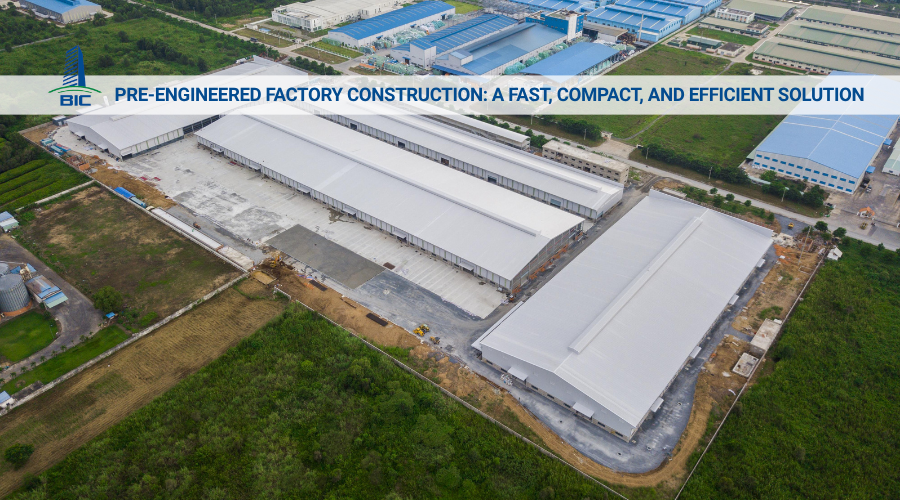
A lightweight industrial factory is an industrial building that uses a primary structural system with relatively low self-weight compared to traditional structures, most commonly pre-engineered steel or built-up steel structures. The defining characteristics of this model include optimized load-bearing materials, reduced foundation loads, and fast erection. In industrial construction, lightweight structures are often selected for projects requiring rapid deployment, functional flexibility, and effective investment cost control.
Lightweight factories offer notable advantages such as short construction time, large clear spans, and ease of future expansion. The primary structural components are typically prefabricated in factories and assembled on site, reducing errors and dependence on on-site construction conditions. However, due to their lightweight nature, the selection of appropriate cladding materials, finishing materials, and technical solutions is critical to ensuring durability and overall performance.
In the context of rising investment costs and increasingly limited industrial land availability, lightweight factories are widely applied in manufacturing, warehousing, logistics, and rental factory projects. Current factory design trends emphasize flexibility, ease of renovation, and life-cycle cost optimization. Lightweight structures meet these requirements well, particularly for projects that need to be put into operation within a short timeframe.
For lightweight factories, materials play a key role in ensuring safety, durability, and operational efficiency. Proper material selection helps reduce total investment, shorten construction time, and minimize long-term maintenance costs. Conversely, materials that are not suitable for the design or production conditions can undermine the advantages of lightweight structures, leading to increased costs and reduced asset value.
.png)
Materials account for a significant proportion of total factory construction costs. Selecting the right materials from the design stage enables investors to control budgets, minimize variations, and optimize investment efficiency. For lightweight factories, appropriate materials also reduce foundation loads, thereby lowering foundation and structural costs.
Construction progress largely depends on material supply and installation methods. Lightweight, prefabricated materials shorten construction time, reduce dependence on weather conditions, and lower on-site labor requirements. In factory design, selecting materials aligned with the construction methodology helps ensure on-time completion and early operation.
Material quality and properties directly determine the durability and service life of a factory. Materials with good corrosion resistance, weather resistance, and suitability for harsh production environments help maintain long-term performance. Inappropriate material selection can lead to early deterioration, increased maintenance costs, and disruption to production activities.
Materials and factory design are closely interconnected and cannot be separated. Construction design must be based on material properties to ensure feasibility and construction efficiency. Conversely, material selection must follow design objectives to ensure functionality, safety, and future expandability. Alignment between materials and design is essential for maximizing the advantages of lightweight factory structures.
Although lightweight factories aim to reduce self-weight, materials must still fully meet load-bearing and overall structural stability requirements. Factory design should be based on usage loads, span, height, and production conditions to select appropriate materials. Adequate load-bearing capacity ensures operational safety and long-term structural reliability.
One of the major advantages of lightweight factories is reduced structural self-weight. Therefore, material weight is a critical criterion in construction design. Lightweight materials reduce foundation requirements, save construction costs, and shorten construction time. Selecting materials with appropriate weight helps fully leverage the benefits of lightweight structures.
Material costs include not only initial investment but also maintenance, repair, and operational costs over the building’s life cycle. During factory design, investors should evaluate total life-cycle costs to select the most effective solution. Materials with reasonable initial costs, high durability, and low maintenance requirements help optimize long-term expenses.
Lightweight factories are often chosen for their flexibility in design and expansion. Suitable materials should allow for functional changes, area expansion, or future renovation. Construction designs based on flexible materials enable investors to quickly adapt to production needs and market changes.
Each type of production has different requirements in terms of working environment, loads, and safety. Therefore, factory materials must be selected to match specific functions and production characteristics. Factory design should consider factors such as temperature, humidity, chemicals, and vibration to ensure materials perform well under operating conditions.
Schedule is a critical factor for many factory projects. Materials that allow fast construction and easy installation help shorten construction time and reduce labor costs. In construction design, prioritizing prefabricated and easy-to-install materials supports on-time project delivery and early operation.
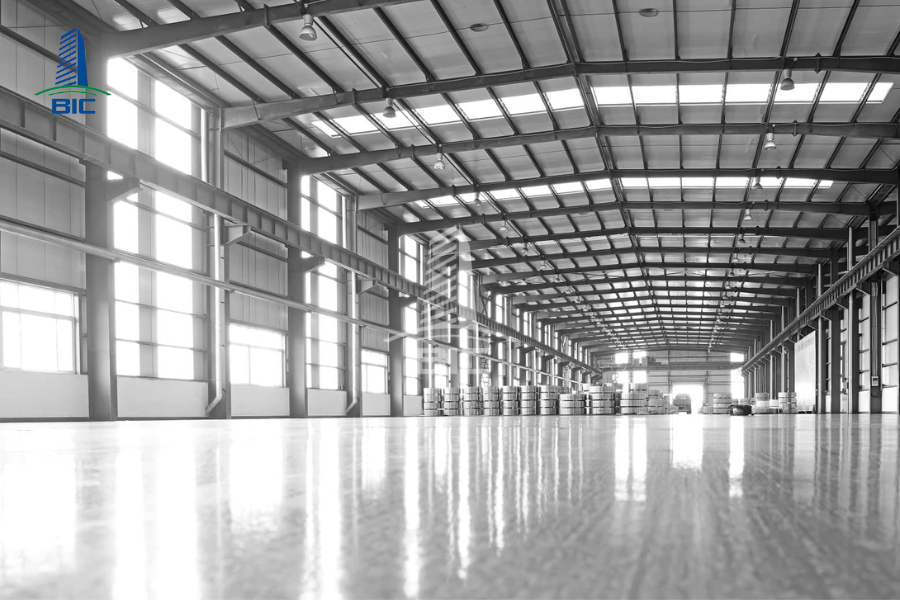
Pre-engineered steel structures are the most commonly used primary structural material in lightweight factories. Steel components are designed and fabricated in factories according to factory design documents, then transported and erected on site. This solution allows for quality control, faster construction, and reduced weather dependency. In factory construction, pre-engineered steel is particularly suitable for large-span buildings, open production spaces, and fast-track projects.
Built-up steel and standard steel sections are flexibly used in main frames and secondary components of lightweight factories. Built-up steel optimizes cross-sections based on actual loads, reducing structural weight while maintaining load-bearing capacity. Standard steel sections offer advantages in availability and ease of construction. In factory design, a balanced combination of both helps achieve technical efficiency and cost effectiveness.
Compared to reinforced concrete structures, steel structures are lighter, faster to construct, and easier to expand or renovate. Concrete structures offer durability and resistance to harsh environments but typically require longer construction times and larger foundations. For lightweight factories, steel structures are generally preferred due to their flexibility and cost optimization.
Lightweight steel structures are best suited for factory projects requiring rapid deployment, large spans, or future expansion. Manufacturing plants, warehouses, and logistics facilities commonly benefit from this solution due to high flexibility and investment efficiency. In factory design, steel structures must be carefully engineered to ensure safety, functionality, and long-term performance.
In lightweight factories, reinforced concrete floors remain a common and effective solution due to their high load-bearing capacity, durability, and suitability for various production types. Floors are typically designed as reinforced concrete slabs on improved ground, combined with appropriate foundation treatments based on geotechnical conditions. In factory construction design, concrete grade, slab thickness, and reinforcement details must align with actual usage requirements to ensure safety and longevity.
Although the overall structure is lightweight, floor loads can be significant due to machinery, equipment, forklifts, and stored goods. Factory design must clearly identify static and dynamic loads to select appropriate materials and floor structures. Incorrect load assessment can lead to settlement, cracking, surface damage, and direct impacts on production.
Depending on functional requirements, lightweight factory floors can be finished with various solutions such as polished concrete, hardener-treated floors, epoxy coatings, or specialized industrial finishes. These solutions improve abrasion resistance, dust control, and ease of cleaning. Proper floor finishing selection enhances working conditions and reduces maintenance costs during operation.
Floor and foundation materials directly affect operational efficiency. Stable, level, and load-resistant floors support precise machinery operation, reduce vibration, and minimize equipment damage. Conversely, substandard floors can disrupt production, increase repair costs, and compromise workplace safety. Therefore, in lightweight factory design and construction, floor materials should be treated as a critical technical component rather than merely a finishing item.

For lightweight factories, thermal insulation materials play an important role in improving working conditions and reducing operating costs. Common solutions include insulated metal roofing, sandwich panels, and additional insulation layers for roofs and walls. In factory design, appropriate insulation materials help regulate indoor temperatures, reduce reliance on cooling systems, and improve energy efficiency.
Fire safety is a mandatory requirement in factory construction. Auxiliary and finishing materials must meet fire-resistance standards, limit fire spread, and support safe evacuation. Fire-resistant materials for structures, cladding, and interior finishes enhance overall safety. Selecting compliant materials helps reduce risks and ensures adherence to legal regulations.
Lightweight factories often generate noise and vibration from machinery operations. Acoustic and vibration-damping materials help mitigate impacts on workers and surrounding areas. Sound-absorbing materials, acoustic panels, and vibration isolation solutions are integrated into factory design to improve the working environment and meet occupational safety requirements.
Finishing materials in factories must be durable, easy to clean, and suitable for production activities. Industrial coatings, corrosion-resistant materials, and technical accessories help maintain long-term operational performance. In lightweight factory construction, appropriate finishing materials reduce maintenance costs and enhance the facility’s usable value.
A common mistake is selecting materials primarily based on low cost while overlooking functional suitability. Low-priced materials that fail to meet technical or environmental requirements can lead to early damage, higher repair costs, and operational disruptions. Prioritizing functionality and suitability ensures long-term investment efficiency.
Materials and factory design must follow the same technical direction. Selecting materials that are not aligned with construction design can complicate installation, reduce structural efficiency, and necessitate unnecessary adjustments. Factory design should be based on material properties to ensure feasibility and safety.
Each factory has unique production conditions and load requirements. Failure to fully consider these factors when selecting materials can result in overloading, settlement, or structural damage. Accurate assessment of loads and production conditions is essential for safe and effective material selection.
Many investors focus only on initial investment costs while ignoring long-term maintenance and material durability. Low-durability or hard-to-maintain materials increase operating costs and reduce asset value. Selecting durable, easy-to-maintain materials helps optimize long-term costs and enhance building performance.
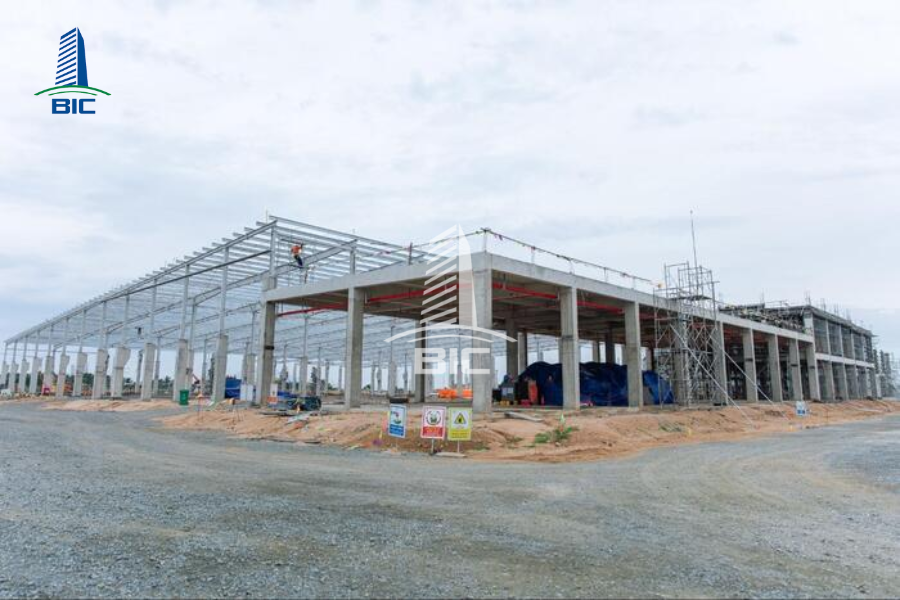
Material selection should be carried out in parallel with factory design, based on functional requirements and production characteristics. Clear functional definitions guide appropriate material choices for structure, enclosure, and finishes, helping materials perform as intended and minimizing waste and design changes.
Primary structure and cladding systems should be designed in an integrated manner to ensure load-bearing capacity, airtightness, and long-term performance. Cladding materials compatible with lightweight structures reduce loads, enhance thermal performance, and improve indoor working conditions. Early integration ensures cohesive system performance and durability.
Construction design plays a critical role in optimizing material usage to control investment costs. Through accurate load calculations, span optimization, and appropriate technical solutions, design helps select materials that meet technical requirements without redundancy. Material optimization reduces construction costs and long-term maintenance expenses.
To ensure materials are selected and applied correctly, continuous involvement from design through construction is essential. Close coordination allows timely adjustments, proper application of materials, and maximum effectiveness. This approach helps investors control quality and optimize overall investment outcomes.
For lightweight industrial factories, materials are not merely building components but decisive factors influencing investment costs, construction schedules, and long-term operational efficiency. Selecting appropriate materials requires consideration of load-bearing capacity, weight, flexibility, production conditions, and life-cycle costs. When these factors are properly evaluated from the design stage, lightweight factories can fully realize their advantages while minimizing risks.
From BIC’s construction design perspective, alignment between materials, structural systems, and technical solutions forms the foundation for efficient and sustainable factory development. Investors should approach material selection as a strategic decision—supporting not only current needs but also future operation, maintenance, and expansion. When materials are correctly selected and properly implemented according to design, lightweight factories deliver long-term value and clear investment efficiency.