In the highly competitive industrial manufacturing market, a company’s advantage does not come solely from modern production lines or a prime location. The foundation begins with professional factory design. This is the stage that transforms operational requirements into technical solutions that can be constructed, commissioned, and expanded in the future. When businesses invest correctly from the design phase, they gain full control over total ownership cost, shorten project timelines, and elevate quality and fire safety standards. From internal logistics layout, structural configuration, and industrial flooring to MEP systems and BIM-based data management, every detail directly influences productivity, operating expenses, and adaptability to market changes.
In this article, BIC analyzes the practical benefits of investing in well-planned factory design. It clarifies the essential technical components, the role of design in both leasing ready-built factories and constructing new ones, and the standard implementation process with KPI monitoring. The goal is to provide investors with a clear decision-making framework, ensuring timely groundbreaking, stable operations, and readiness for expansion within the next three to five years.
A properly executed factory design eliminates issues at the root. Architecture, structure, MEP, and fire safety systems are coordinated in sync, preventing on-site conflicts. Value engineering is applied based on transparent data. Materials and components are optimized for performance rather than the lowest price. As a result, total ownership cost decreases both in initial investment and long-term operations. Lower energy consumption, proactive maintenance, and longer system lifespans allow investors to forecast cash flow accurately and allocate budgets effectively to value-creating activities.
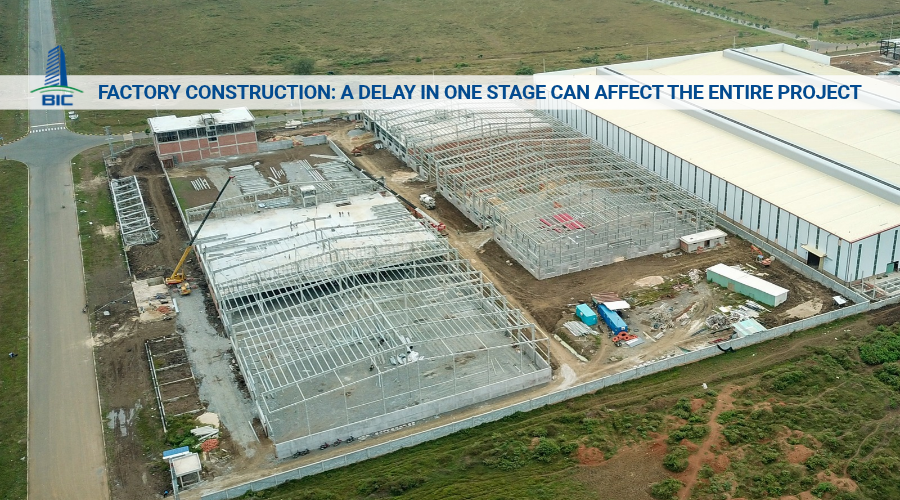
Finalizing the design early helps lock technical specifications, reduce RFIs, and minimize redesigns. Long-lead items such as steel structures, transformers, and fire pumps can be ordered on schedule because the bill of materials is clearly defined. Construction access, pathways, crane positions, and storage yards are planned within the design, minimizing downtime due to on-site adjustments. Groundbreaking and inspection milestones become more predictable, enabling the factory to enter operation as planned.
.png)
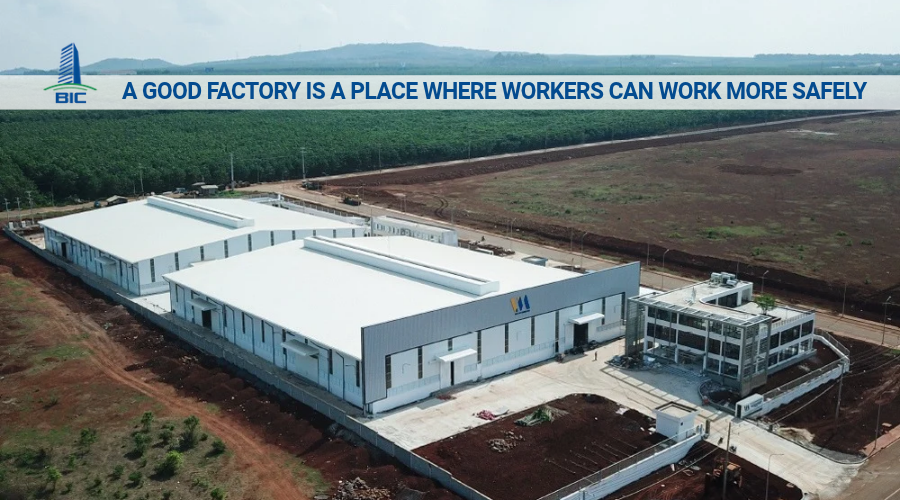
Operational quality starts on the drawings. Industrial floors designed with the right load capacity, flatness criteria, and expansion-joint configuration minimize cracking and deflection. Human and vehicle flows are logically planned to reduce risky intersections. Ventilation, lighting, and microclimate control systems are calculated based on heat loads and illuminance standards for each production stage. A stable working environment increases productivity, reduces defects, and lowers turnover rates.
A professional factory design prioritizes regulatory compliance. Standards, design approvals, and evacuation simulations are prepared early. Fire protection systems are hydraulically calculated, ensuring pumps, tanks, loops, sprinklers, and escape routes meet all requirements. Permit applications require fewer revisions, reducing the risk of schedule delays. The factory becomes certifiable and safe for operation.
Professional designs look beyond immediate needs. Technical spaces, electrical and water capacity, and internal infrastructure are reserved to allow expansion without disrupting production. Structural and MEP layouts include provisions for additional connections, spare conduits, and future equipment areas. Modular planning allows new production lines to be added without disrupting existing flows. This enables companies to scale faster, reduce expansion costs, and maintain continuous orders during growth phases.
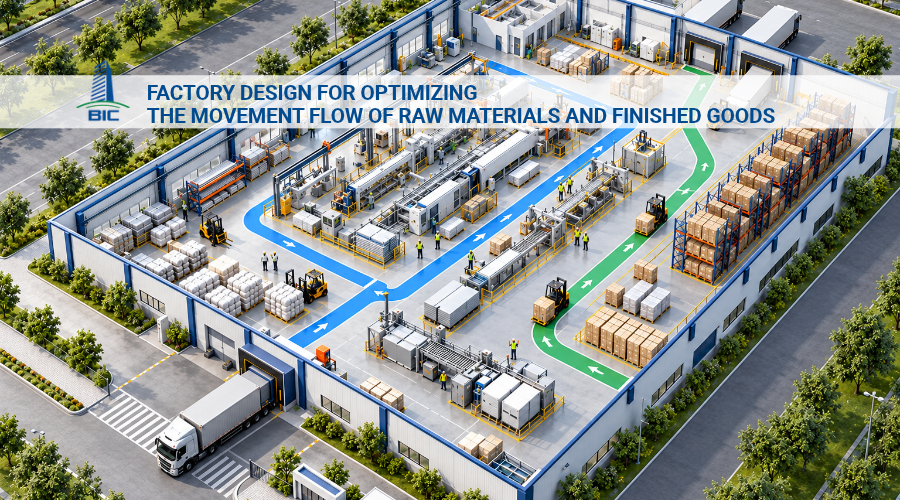
The master plan forms the foundation of all design decisions. It aims to organize efficient circulation for pedestrians, forklifts, and trucks while maintaining safety and productivity. Pedestrian paths are separated from heavy transport routes. Intersections are controlled with signage, speed bumps, and convex mirrors. Gates, parking zones, container yards, and loading areas follow the logical sequence of material flow to minimize U-turns. Turning radii are calculated based on truck and trailer types. When done correctly, daily operations are smoother, logistics costs drop, and collision risks are controlled.
Factory design begins with reliable geotechnical data. Soil investigation determines the choice of shallow or pile foundations, floor elevation, and ground improvement. Industrial floors require defined load capacities, flatness criteria, and expansion-joint configurations. Large-panel floors, surface hardening, and polishing may be applied to minimize cracking and wear. For column bases and crane areas, separate footing and anchoring solutions help control differential settlement, reduce vibration, and protect equipment accuracy.
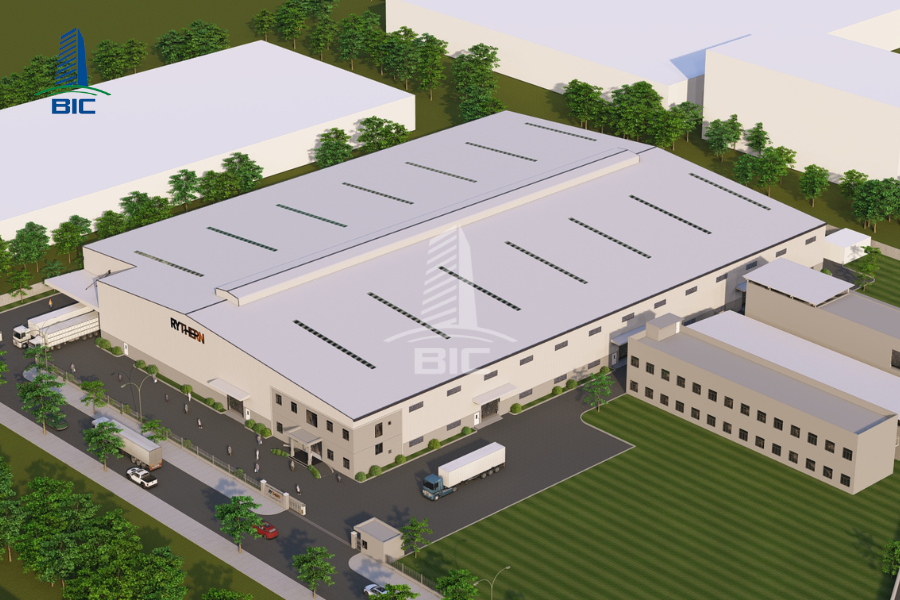
The structural frame must safely withstand dead loads, live loads, wind, crane loads, and suspended equipment. Drawings define load paths, beam–truss spans, deflection limits, and lateral drift criteria. Connection plates, anchor bolts, and stiffeners are detailed to ensure stability during erecting and operation. Industrial environments require proper corrosion protection through paint or galvanization, with specifications for coating layers, surface preparation, thickness inspection, and adhesion tests. Clear acceptance criteria ensure consistent evaluation by contractors and supervisors.
MEP is the lifeline of any factory. Electrical design defines medium- and low-voltage configurations, transformer capacity, backup generators, ATS, lightning protection, and grounding. Water supply and drainage specify hourly flow, pressure requirements, tank and pump placement, and ring-pipe layouts for stable operation. Industries requiring compressed air or process gases receive layouts for technical shafts, compressor rooms, main pipe routes, condensate drainage, and allowable leakage rates. Ventilation and cooling are calculated based on heat and moisture loads, with options including exhaust fans, cooling pads, or rooftop units. With proper design, construction becomes smooth, commissioning is faster, and operating costs decrease.
Fire systems are integrated into the main design. Hydraulic calculations determine tank volume, pump configuration, operating pressure, and looped sprinkler networks. Fire zones and fire-stopping details appear on plans and sections. Escape routes, signage, and emergency lighting follow standards to ensure safe evacuation. Pump rooms, alarm centers, and fire truck access routes are clearly planned, enabling smooth approvals and timely certification.
Completed infrastructure allows immediate operation after handover. Site grading ensures stormwater flows toward drains and catch basins, reducing flooding risk. Internal roads specify load capacity, lane width, and elevation, suited for truck traffic. Guardhouses and access-control points are designed for wide visibility and fast processing. Security lighting covers loading zones, container yards, and intersections for safe night shifts. A clear design package gives investors a reliable construction roadmap and a durable operational foundation.
ESG-oriented factory design begins with energy efficiency. The goal is to reduce consumption per production unit while maintaining workplace comfort. Natural lighting solutions must be addressed early. Skylight strips are arranged with proper light-transmission coefficients. High windows and shading devices help extend daylight hours without glare. Natural ventilation is prioritized using prevailing wind direction, combined with local exhaust fans for heat-generating areas and fresh-air supply based on occupancy.
Rooftop solar is a high-value addition. Roof structure must account for panel loads and maintenance walkways. Multi-point energy metering across production areas allows monitoring of kWh/m² and kWh per product unit. This data supports optimized scheduling, early anomaly detection, and ESG reporting.
Material selection determines the project’s carbon footprint. Prioritize steel and roofing materials with verified origins, low-VOC coatings, and insulated cladding to reduce HVAC loads. For roofs and walls exposed to intense sunlight, include insulation and reflective colors to lower surface temperature. High-wear floor zones require hardened industrial flooring to extend lifespan.
Investors should conduct life-cycle assessments to quantify emissions across material production, construction, operation, and replacement. This enables choosing options with the lowest carbon footprint while maintaining reasonable ownership cost.
Water is a key ESG pillar. Rainwater harvesting systems should support irrigation, road cleaning, and indirect cooling. Cooling-intensive operations can reuse treated water to reduce fresh water demand. Water system layouts must separate clean water, domestic wastewater, and industrial wastewater. Specialized streams require pre-treatment before entering central treatment plants.
Solid-waste management begins with layout planning: on-site sorting zones, sealed collection routes, and covered temporary storage areas. Waste service providers must meet certification and frequency requirements. These conditions should appear in design documents and bidding packages to ensure compliance from day one.
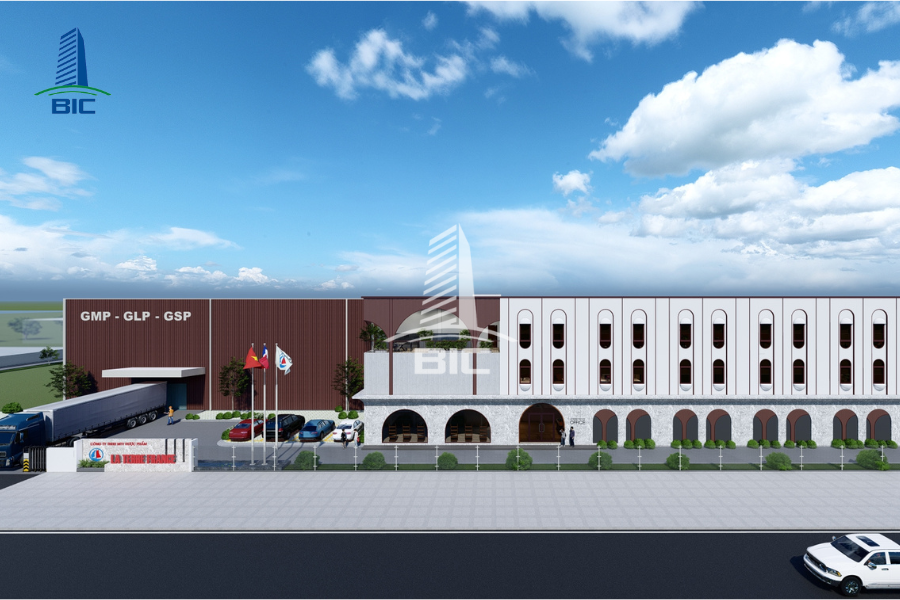
The process starts with a clear brief from the investor. The design team gathers site data, conducts soil tests, and reviews planning indicators and applicable standards. Based on this, a master plan is proposed, organizing material flows, warehouse locations, loading areas, and technical corridors.
The basic design defines architectural, structural, and MEP dimensions. The detailed design follows with construction-ready specifications. Cost estimates accompany the drawings, enabling scope finalization, budgeting, and transparent bidding. Regulatory approvals for construction and fire safety are prepared with calculations, evacuation layouts, and simulations.
After approvals, bidding proceeds, evaluating contractor capabilities, technical proposals, and pricing. Long-lead items like steel structures, transformers, and fire pumps are finalized early. Mobilization plans, site safety strategies, and inspection schedules are agreed upon before groundbreaking.
Risk control depends on discipline and transparent data. All clarifications are managed through RFIs with deadlines and responsible personnel. Shop drawings align with detailed design and are reviewed before fabrication or installation. Regular coordination meetings between architecture, structure, MEP, and fire safety help detect conflicts early. Version control ensures all parties use the same documents, with change logs noting cost and schedule impacts.
Inspection milestones include rebar and anchor checks before concrete pours, steel-frame erection inspection, pipe/cable tray elevation checks, single-system testing, and full-system commissioning. Fire systems undergo pressure tests, flow measurements, alarm checks, and evacuation drills before certification. As-built documents, operation manuals, spare-parts lists, and maintenance plans complete the handover package.
Design cost typically accounts for a small percentage of total investment, varying with project scale, production-line complexity, fire safety requirements, and customization level. Standard projects range from 1–several percent, while complex facilities may require more due to advanced calculations and multi-disciplinary coordination.
Increasing design budget to an appropriate depth improves synchronization, reduces rework, supports controlled value engineering, stabilizes specifications for transparent bidding, reduces construction cost, shortens schedules, and lowers long-term operating and maintenance expenses.
Prioritize spending on soil investigation, accurate site surveying, modeling, conflict simulation, and critical-material testing such as industrial flooring and corrosion protection. These create data-driven design decisions and reduce rework risk.
Focus on master planning, foundation and structural design, future MEP expansion plans, fire protection design with evacuation simulation, and independent QC before issuing drawings, these areas have the most direct impact on cost, schedule, and certification success.
Reducing geotechnical investigation often leads to incorrect foundation solutions, resulting in settlement, cracking, and significant remedial costs later on. Incomplete data also distorts floor-load and equipment-base calculations, directly affecting operational safety. A proper survey should include adequate borehole density for the project area, additional laboratory tests and field tests, groundwater checks, compressibility indexes, and bearing-capacity parameters.
For materials, concrete, steel, corrosion-protection coatings, and floor-surface hardening systems should be tested right from the design stage to ensure that all specifications included in the documents are technically sound and supported by validated data.
Cost-cutting in fire safety and environmental compliance often leads to prolonged approval processes, on-site demolition and rework, and even failure to obtain timely certification.
A proper design must integrate evacuation simulations, hydraulic calculations for pumps and looped networks, and precise locations for sprinklers, water tanks, and fire truck access routes from the outset.
On the environmental side, production and domestic wastewater must be separated, with pre-treatment systems tailored to the industry type. Designers should also select low-emission materials and plan solid-waste management routes and storage areas.
When these criteria are finalized early in the construction design, legal approvals proceed smoothly and safety risks are significantly reduced.
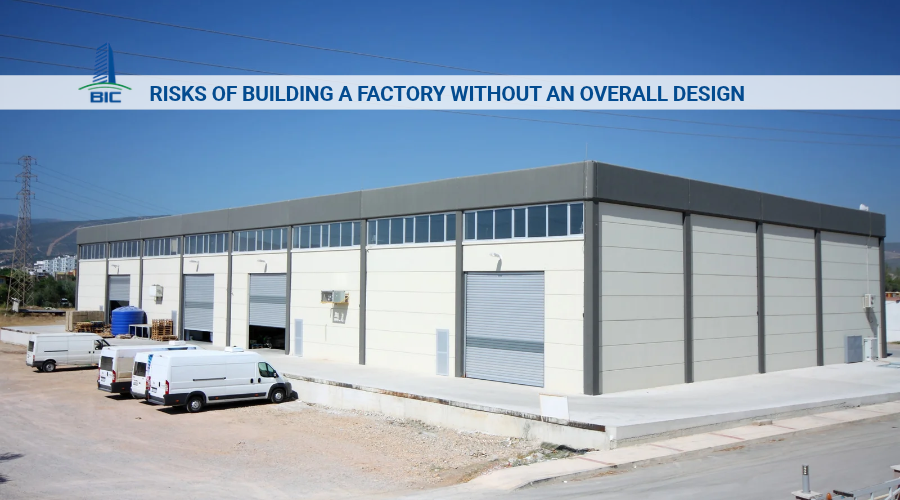
A design that only meets immediate needs will quickly become overloaded as orders increase, leading to costly renovations and production interruptions.
The design should allocate technical space, connection points, spare conduits, and equipment bases for expansion within the next three to five years. Electrical and water capacity should include reasonable reserves. Roof structures should be designed to support future solar panels, and internal roads should offer sufficient turning radius as traffic volume grows.
A modular approach allows new production lines to be added without disrupting the existing layout.
When design documents lack standardized specifications, contractors prepare bids based on their own interpretations, making price comparisons difficult and increasing the risk of material substitutions after contract award.
Investors should issue unified technical standards, equivalency rules, quantity-takeoff templates, and quality-control matrices directly within the bidding documents. Key materials must have mandatory specifications, testing criteria, and acceptance methods.
With a consistent data foundation, bidding becomes transparent, construction follows the correct technical standard, and misunderstandings between parties are reduced to a minimum.
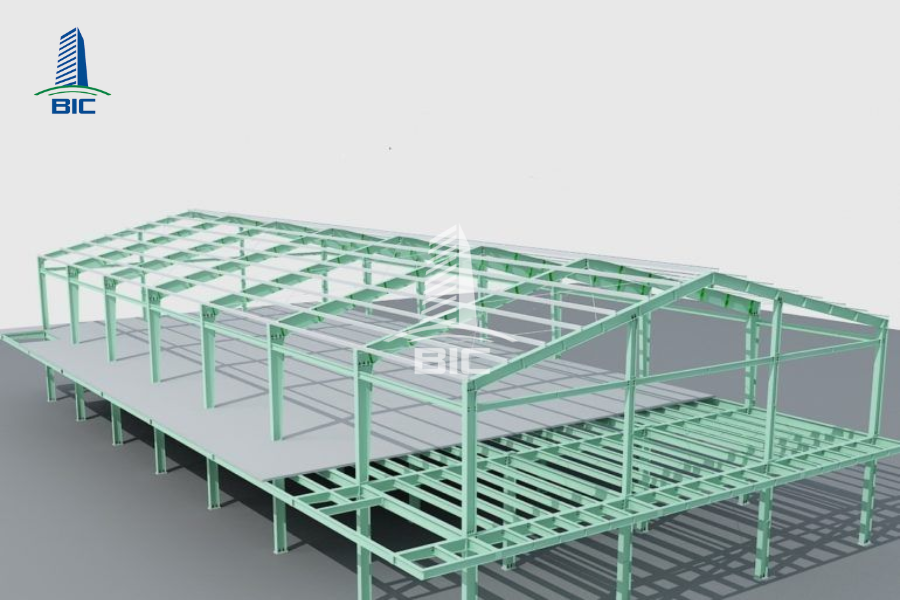
Investing correctly in factory design is a small portion of total cost but generates significant long-term value. A professional design package minimizes variations, maintains schedule certainty, enhances quality and safety standards, and lowers operational expenses throughout the building’s lifecycle. When design is standardized from the beginning, legal approvals and fire-safety certification proceed smoothly, production lines reach optimal efficiency, and the factory is ready for expansion as market demand grows.
Treat design as a strategic asset, not an expense. Establish clear technical standards, coordinate all disciplines within a BIM model, manage risks through comprehensive surveys and testing, and prepare future-expansion scenarios for the next three to five years. This foundation enables investors to optimize total ownership cost and secure a sustainable competitive advantage.
If you need a turnkey partner from concept to groundbreaking, BIC is ready to support you. From requirement review, standardization, modeling, approvals, and cost estimating to bid management and quality control, our team ensures your project stays on schedule, on budget, and safe from the very first day of operation.