In construction investment projects especially industrial factory developments the selection of a reputable construction design consultant has a direct impact on project cost, schedule, and overall quality. Design documents not only determine the form and functionality of a building but also serve as the basis for quantity control, cost management, and compliance with legal regulations throughout project implementation.
For investors, construction design is not merely a technical task but a strategic starting point. A capable factory design consultant can analyze investment needs, propose solutions aligned with operational objectives, and help control risks from the preparation stage. Conversely, choosing the wrong design consultant may result in frequent design revisions during construction, increased costs, and extended completion timelines.
In the article below, BIC outlines the essential steps investors should take to select a reputable construction design consultant, establishing a solid foundation for the project and enhancing long-term investment efficiency.
Construction design forms the basis for determining project scale, technical solutions, and construction quantities. A well-prepared design dossier allows investors to accurately control costs from the outset and minimize variations during factory construction. In contrast, poorly calculated or impractical designs often require changes during execution, leading to higher costs and reduced investment efficiency.
Project schedule and quality largely depend on the completeness and coordination of construction design documents. Clear and well-coordinated designs enable contractors to execute work smoothly, reduce technical conflicts, and minimize adjustments during construction. For factory projects, substandard designs can disrupt construction, prolong completion time, and affect the investor’s operational plans.
Construction design documents are the basis for legal procedures such as construction permits, fire safety appraisal, and project acceptance. A competent design consultant ensures full compliance with applicable codes and regulations, helping investors minimize legal risks during construction and operation. Lack of legal awareness in design can result in serious errors and costly corrective actions.
Choosing the wrong construction design consultant can lead to functional mismatches, unexpected cost overruns, and construction delays. Design errors may also compromise building quality and increase operational risks. For investors, dedicating sufficient time and resources to selecting the right consultant is critical to achieving long-term project success.

A construction design consultant is not merely a provider of technical drawings but a key advisory partner throughout the investment process. Their role includes site surveys, analysis of usage requirements, proposal of suitable technical solutions, and support in investment decision-making. A capable consultant translates investment objectives into feasible solutions while controlling risks from the early stages.
Construction design and factory construction are closely linked, with design forming the foundation of the entire execution process. Accurate and complete design documents help contractors clearly understand technical requirements, implement construction correctly, and minimize variations. Conversely, uncoordinated or impractical designs create construction difficulties, increase costs, and extend project timelines.
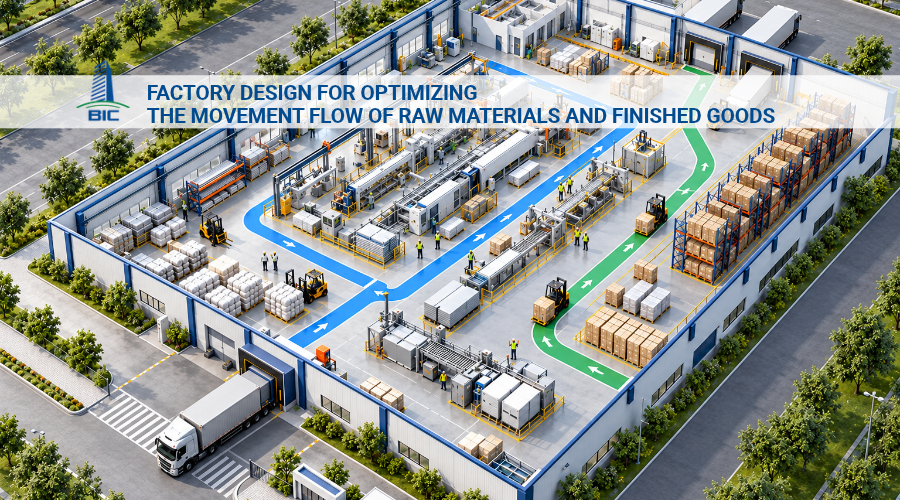
For industrial projects, factory design plays a critical role in layout planning, structural arrangement, and technical system integration. Well-considered designs optimize production space, ensure safety, and facilitate construction. When design is carried out methodically, construction proceeds more smoothly, with fewer adjustments and improved overall quality.
The role of construction design does not end with the completion of design documents. Throughout the project life cycle from construction and operation to maintenance and renovation design remains the basis for quality control and appropriate adjustments. A design consultant who accompanies the project long term helps investors operate efficiently, reduce costs, and enhance asset value over time.

Before seeking a design consultant, investors should clearly define the project type and investment objectives. Whether the factory is intended for manufacturing, logistics, or leasing will determine the design approach from the outset.
At the same time, the design scope—covering architecture, structure, and MEP systems—must be clearly defined to avoid omissions or overlaps. For factory design, specific requirements related to loads, functionality, production lines, and safety standards should be clarified. In addition to current needs, investors should consider future expansion and long-term use to ensure design flexibility.
Professional capability is a fundamental criterion when selecting a construction design consultant. Investors should verify legal qualifications, professional licenses, and permitted scope of practice. Engineers and architects must possess expertise relevant to the intended factory type. Experience with similar projects is clear evidence of practical capability. Moreover, the consultant should demonstrate strong understanding of technical standards, construction codes, and legal requirements applicable to factory projects.
Factory design is closely tied to on-site construction realities. Therefore, practical experience in factory construction is essential. Experienced consultants understand common site issues, from geotechnical conditions to construction organization. Their ability to coordinate with contractors makes designs easier to implement and reduces the need for revisions. Lessons learned from completed projects are valuable assets that improve design optimization for new developments.
A reputable design consultant should have a clear and systematic workflow. Site surveys, design concept development, and documentation preparation must be carried out methodically. Coordination among architectural, structural, and MEP disciplines should be well-organized to ensure consistency. In addition, the consultant should have effective methods for managing changes and variations, while maintaining transparency in communication and progress reporting.
Construction design plays a vital role in controlling project cost and schedule. Investors should assess the consultant’s capability in cost estimation and quantity take-offs to ensure accuracy from the outset. High-quality design documents help minimize variations during factory construction. Furthermore, designs that support effective schedule control contribute to on-time and on-budget project completion.
A reputable consultant does not stop at delivering design documents but continues to support the investor during construction. Providing technical assistance on site, resolving design conflicts, and coordinating with relevant parties ensure that design solutions are implemented correctly. Integrated design-and-build or comprehensive consultancy models offer significant value by reducing risks and improving overall project management efficiency.
Design fees should not be evaluated solely based on price. Investors should compare proposals in terms of work scope, document quality, and level of support provided. Selecting the lowest-priced consultant often carries risks related to quality and cost overruns during construction. A long-term value assessment helps investors choose a consultant that delivers real benefits for the factory project.

A common mistake is prioritizing low design fees without thoroughly evaluating professional competence. Low-cost designs often result in superficial documents lacking technical depth and practicality. This frequently leads to cost overruns during factory construction and reduced overall investment efficiency.
Factory design requires deep understanding of industrial buildings, production processes, and construction conditions. Ignoring a consultant’s factory design experience may result in impractical designs, difficult execution, or repeated revisions. Practical experience is crucial for producing feasible and effective designs.
Some investors underestimate the importance of detailed contracts. Undefined scopes of work can lead to disputes, unclear responsibilities, and unexpected costs. A transparent contract protects investor interests and ensures the consultant fulfills agreed obligations.
Construction design influences not only the design stage but also construction, operation, and future renovation. Ignoring a consultant’s ability to provide long-term support can create difficulties when issues arise on site. A design partner capable of long-term collaboration ensures more stable and effective project implementation.

Practical experience enables consultants to propose solutions aligned with construction conditions and operational needs. Investors should prioritize firms with proven experience in factory design and construction or similar industrial projects. Real-world experience reduces technical risks, minimizes variations, and enhances design feasibility.
Selecting a design consultant requires comprehensive evaluation across professional capability, experience, workflow, and coordination ability. Assessing criteria in isolation may lead to incomplete decisions that do not reflect true capability. A holistic approach ensures alignment with project objectives.
Construction design should not be treated as a mandatory expense but as a strategic investment that determines project effectiveness. A well-conceived design optimizes construction costs, shortens schedules, and improves building quality. Investors should allocate appropriate resources to design to secure long-term benefits.
A reputable design consultant should be regarded as a long-term partner throughout the project life cycle. Choosing a partner rather than merely hiring a service provider strengthens coordination, shared responsibility, and effective issue resolution. Sustainable partnerships contribute significantly to investment efficiency and project success.
Selecting the right construction design consultant is a decisive first step in determining the overall effectiveness of a project—especially for factory developments that demand high technical standards, cost control, and strict scheduling. A capable design consultant not only helps investors manage risks, optimize solutions, and ensure legal compliance but also establishes a solid foundation for construction and long-term operation. Rather than focusing solely on service fees, investors should evaluate overall capability, practical experience, and long-term collaboration potential.
With a structured consulting approach and extensive experience in industrial projects, BIC serves as a construction design partner accompanying investors from concept development and design through factory construction implementation. By focusing on feasibility, cost control, and operational efficiency, BIC delivers sustainable investment value rather than merely providing design documents.