In an era where speed, precision, and cost control are key factors in industrial projects, Building Information Modeling (BIM) has become the preferred choice of many investors. Particularly in industrial factory design and construction, BIM offers the ability to visualize the project in detail, coordinate disciplines accurately, and optimize the entire process from design to construction and operation.
More than just a trend, BIM is gradually becoming a new standard that enhances investment efficiency. Instead of relying on fragmented drawings and traditional methods prone to errors and cost overruns, investors can now manage their entire project through a comprehensive 3D digital model that integrates all technical information.
In this article, BIC explains the role and practical benefits of BIM in factory construction, along with key recommendations for choosing the right design and implementation partners. This is an essential guide for manufacturing, logistics, and industrial infrastructure investors to enter a new era of smart, safe, and sustainable development.
BIM (Building Information Modeling) is an advanced process that uses 3D digital models to store and manage project data throughout a building’s lifecycle. All information about architecture, structure, electrical, plumbing, and MEP systems is integrated into a single shared model. Any change made is automatically updated across all components. This brings major advantages for large-scale industrial projects such as factories:
- Definition of BIM: BIM creates a 3D digital replica of the entire factory, combining data on materials, technical specifications, construction processes, and management. According to the Ministry of Construction, BIM “creates and utilizes digital models throughout the lifecycle of the building,” optimizing design, construction, and operation.
- Centralized information management: Every modification made to the BIM model is automatically updated across all data layers. This eliminates the need for manual updates to multiple 2D drawings and ensures data consistency. Engineers and architects can focus on improving the 3D model rather than spending time on repetitive manual work.
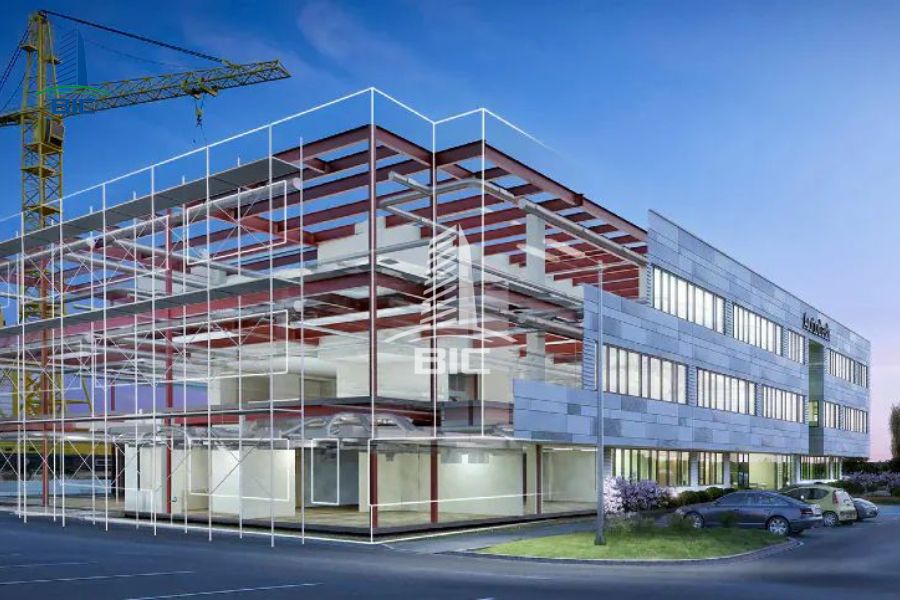
- Detailed and intuitive design: BIM digitizes the factory in a detailed 3D format, allowing users to view every component (structure, walls, roof, MEP, etc.) clearly. Investors and design teams can easily detect technical clashes (e.g., a column intersecting with a conduit) early in the design stage.
- Cross-disciplinary collaboration: The BIM model integrates data from all disciplines architecture, structure, and MEP allowing everyone involved to work on the same platform. This promotes seamless communication between teams, minimizing misunderstandings and coordination errors.
Thanks to these advantages, BIM is becoming the core technology in modern industrial factory design and construction, helping investors ensure design quality and optimize both costs and schedules compared to traditional methods.
- Reduced costs and waste: With BIM’s accuracy, investors and contractors can estimate budgets more precisely, saving up to 10% in construction costs and reducing material waste by about 20%.
- Improved cross-disciplinary coordination: BIM allows architects, structural, and MEP engineers to collaborate on a single shared model, streamlining communication and eliminating design conflicts.
- Early clash detection: The 3D simulation helps identify conflicts, such as ducts overlapping beams before construction begins, reducing costly on-site rework.
- Shortened construction schedule: BIM accelerates design revisions and project execution. In many cases, BIM has helped shorten construction timelines by around 10%.
- Centralized data management: All project drawings and technical information are stored within the BIM model and automatically updated, preventing data loss or version confusion.
- Enhanced operation and maintenance: After construction, the BIM model remains valuable for facility management, containing all maintenance schedules, equipment details, and technical documentation.
These benefits clearly demonstrate that BIM delivers tangible improvements in cost efficiency, schedule control, quality, and interdepartmental collaboration.
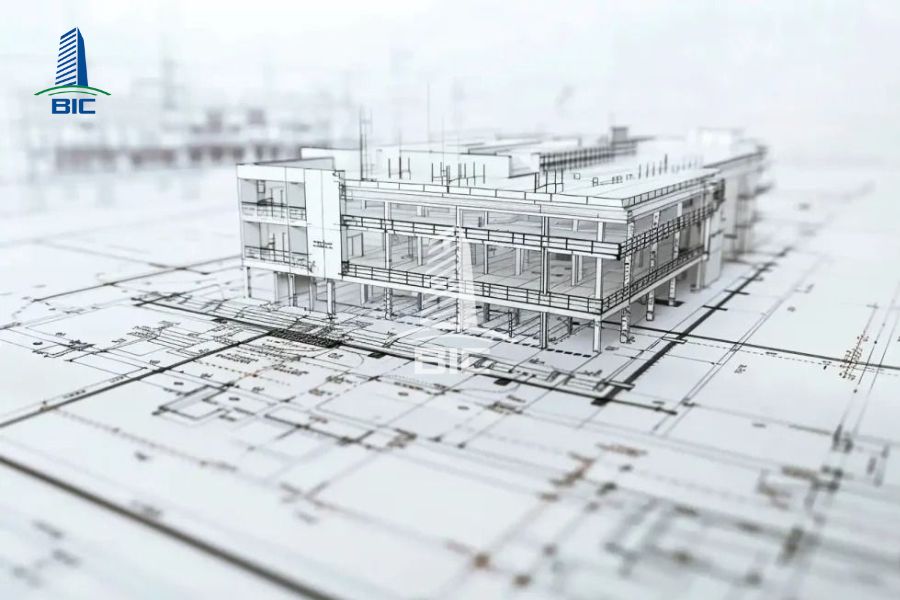
- Planning and creating the initial 3D model: Define project goals and gather site data to build an initial 3D concept model, including structural frames, slabs, and roofs.
- Building the detailed BIM model: Add MEP systems, architectural elements, and material specifications to create a complete and accurate digital model.
- Clash detection and coordination: Teams collaboratively review the model using BIM software to identify and resolve technical conflicts before construction.
- Operation and maintenance management: After completion, BIM serves as a digital record for facility management, supporting future maintenance and upgrades.
Overall, BIM provides an integrated and intelligent design–build–operate approach, ensuring higher quality and adaptability for modern industrial factories.
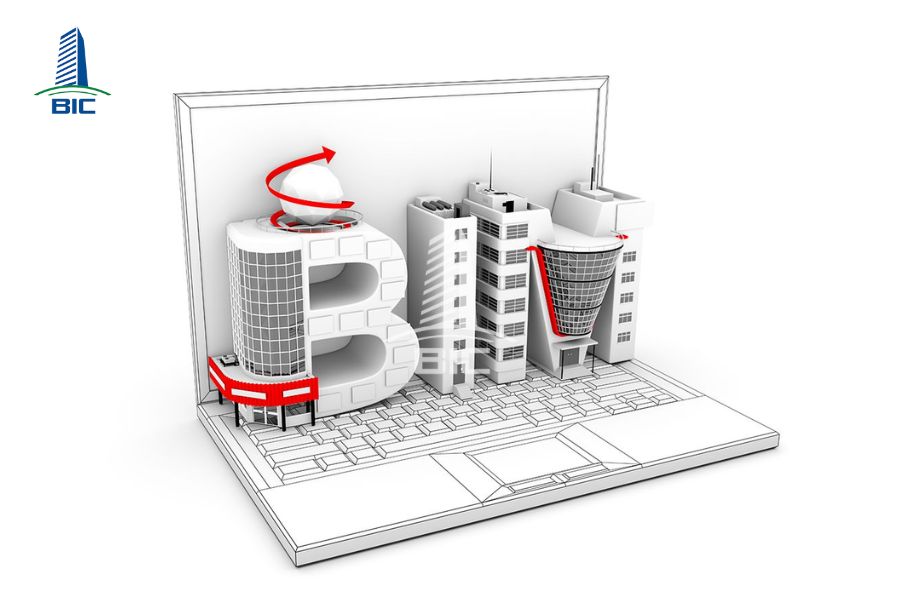
- Choose experienced BIM consultants: Select design and construction companies with proven BIM expertise, as encouraged under Decision No. 258/QĐ-TTg of the Vietnamese Government.
- Develop a BIM Execution Plan (BEP): Clearly define objectives, standards, scope, and responsibilities before implementation.
- Select the right software tools: Use platforms like Revit (3D design), Navisworks (clash detection), and BIM 360 (data management) for effective coordination.
- Include BIM clauses in contracts: Specify deliverables, such as 3D models, clash reports, and drawings, to ensure compliance.
- Train project personnel: Invest in BIM training for engineers and project managers to ensure smooth operation and collaboration.
- Manage continuous updates: Establish a workflow for information management to maintain the most current model throughout the project.
By following these principles, investors can implement BIM effectively and fully leverage its advantages.
In today’s industrial landscape, where investment efficiency and long-term management are critical, BIM is no longer optional, it’s essential. From 3D visualization and interdisciplinary coordination to precise cost estimation and operational management, BIM introduces a transparent, modern, and sustainable way of building.
Regardless of your project’s size or location, applying BIM correctly will help you stay in control of progress, reduce technical risks, and optimize your budget. For investors planning to build a factory, partnering with experienced BIM-enabled design and construction firms ensures your project is efficient, accurate, and future-ready.