Are you planning to build a factory for your business? In today’s rapidly growing industrial landscape, a well-planned and professionally designed facility serves as the cornerstone of an efficient and sustainable manufacturing operation. Factory design and construction are not merely drawings on paper, they represent a crucial investment step that allows businesses to clearly visualize the layout, functionality, and future expansion capabilities of their facilities.
A standardized design and construction process ensures that every element from structural integrity and equipment layout to electrical, plumbing, and fire safety systems is planned in a scientific and systematic manner. This approach not only helps save time and construction costs but also minimizes operational risks later on. A well-structured design ensures compliance with technical standards and legal regulations while optimizing production performance and enabling future scalability as your business grows.
In the following sections, BIC will introduce the essential steps in a professional factory design and construction process, helping you gain a clear overview and greater confidence when executing your project. This knowledge empowers investors to actively participate in each stage of the design process, ensuring that construction proceeds smoothly and efficiently. Let’s explore how to turn your investment plan into reality successfully and effectively.
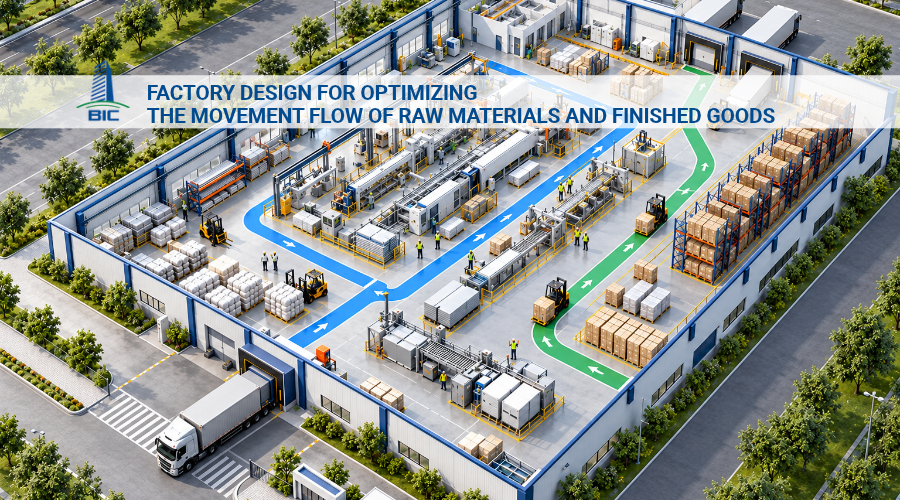
A professional design process helps save both time and costs for investors. A detailed, well-prepared design minimizes rework, adjustments, and material waste during construction while ensuring that the finished building meets operational requirements. According to construction experts, a well-planned industrial design optimizes machinery layout, reduces transportation distances between production lines, shortens production time, and cuts operational costs.
Furthermore, a standard design ensures workplace safety and project quality. A good factory layout provides rational space utilization, proper ventilation, emergency exits, and suitable fire prevention systems reducing accident risks and enhancing worker productivity. A meticulous design also extends the building’s lifespan, preventing deterioration and equipment damage caused by poor planning.
Lastly, working with a professional design company ensures compliance with legal and construction standards. Experienced designers understand zoning, construction permitting, technical specifications, and environmental requirements helping investors avoid legal complications and shorten approval timelines. When all legal requirements are properly handled from the start, the project moves seamlessly into the construction and commissioning phases.
In short, a professional design and construction process not only optimizes costs, time, and productivity but also ensures safety, quality, and full legal compliance for the entire project.
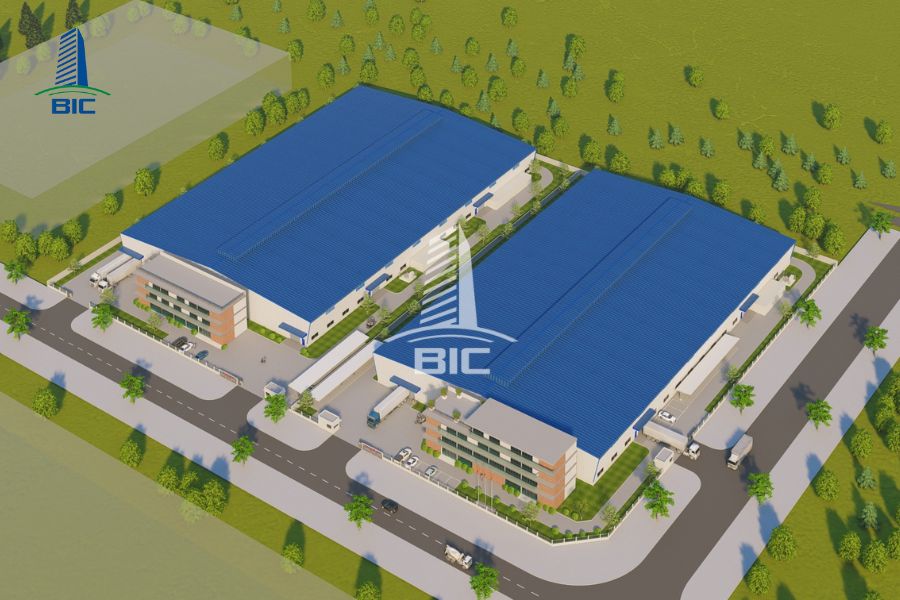
The factory design process typically includes five main stages:
- Site Survey & Concept Development
- Preliminary Design
- Detailed Technical Design
- Cost Estimation
- Construction Permits & Legal Procedures
Each step plays an essential role in transforming the initial concept into a complete and executable construction plan.
This is the first and most critical step. The design team visits the project site to measure dimensions, assess topography, soil conditions, and available infrastructure (power, water, internal roads), as well as surrounding environmental factors. Based on the findings, architects and engineers propose suitable architectural and structural solutions, including building orientation, gate and driveway positions, and internal transportation routes.
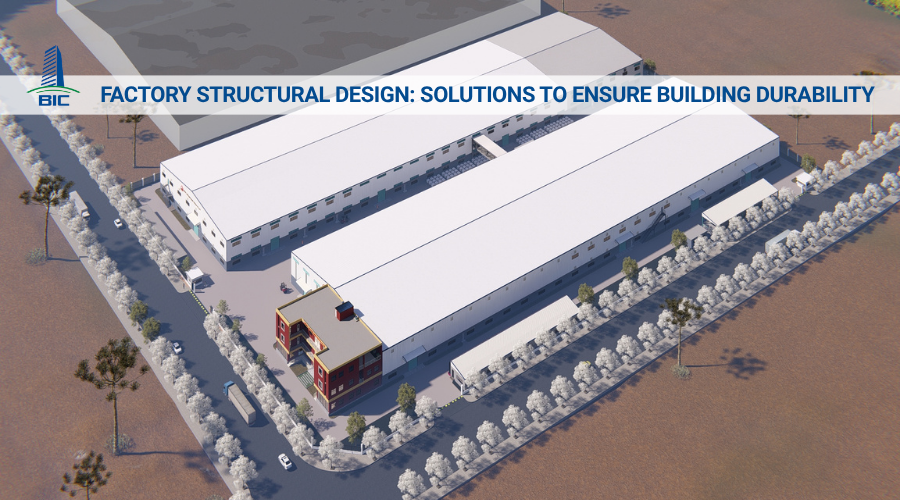
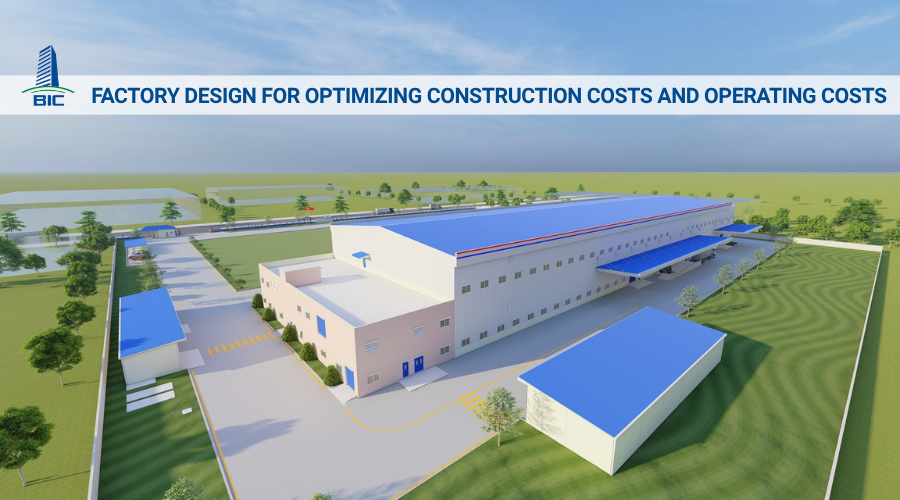
The outcome of this stage is a preliminary site layout and initial 3D perspective, allowing investors to visualize the overall scale and spatial organization of the factory.
After the site survey, the design team develops preliminary drawings to concretize the concept. These include the general master plan showing functional areas such as production, warehouse, office, and canteen, along with 3D renderings of the factory. These drawings illustrate the construction concept and are used for investor feedback and approval.
The preliminary design should cover overall site planning and floor layouts for each area. Importantly, fire safety systems, emergency exits, and internal infrastructure should be reflected at this stage to ensure all safety requirements are considered early on.
At this stage, the design is refined into comprehensive technical drawings covering every component: foundation structure, steel framing, column and beam connections, roofing system, and detailed specifications for all building materials.
The technical design also includes drawings for electrical, plumbing, HVAC, lighting, fire protection, and security systems providing complete and accurate documentation for construction implementation.
For example, this step defines foundation depth, steel column dimensions, floor types, fireproofing layers, and bolt connections to ensure precision and durability. A detailed technical design is the key reference for builders to execute the project correctly and efficiently.
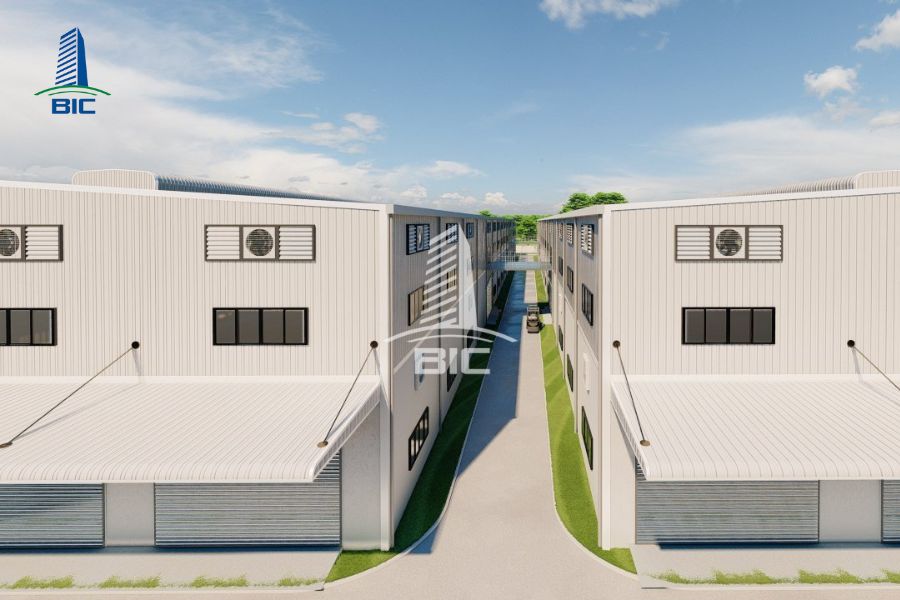
Alongside the detailed design, the design or consulting unit prepares a construction cost estimate based on material quantities and drawings. This includes calculations for all materials (steel, concrete, roofing, electrical systems, etc.) and labor for each work item.
The final deliverable a full set of technical drawings and a cost estimate—serves as the basis for construction bidding and later acceptance testing. A detailed cost estimate helps investors manage budgets accurately and make informed design or resource adjustments to stay within financial limits.
Once the design and budget are finalized, the investor proceeds with construction permit applications as required by local authorities. This includes approved drawings and cost estimates. For factories located in industrial zones or with special requirements, additional permits such as fire safety approval, environmental registration, and land-use certification may also be required.
Only after all permits are obtained can the project officially commence. Working with experienced architects helps complete these procedures efficiently and ensures full compliance with local regulations.
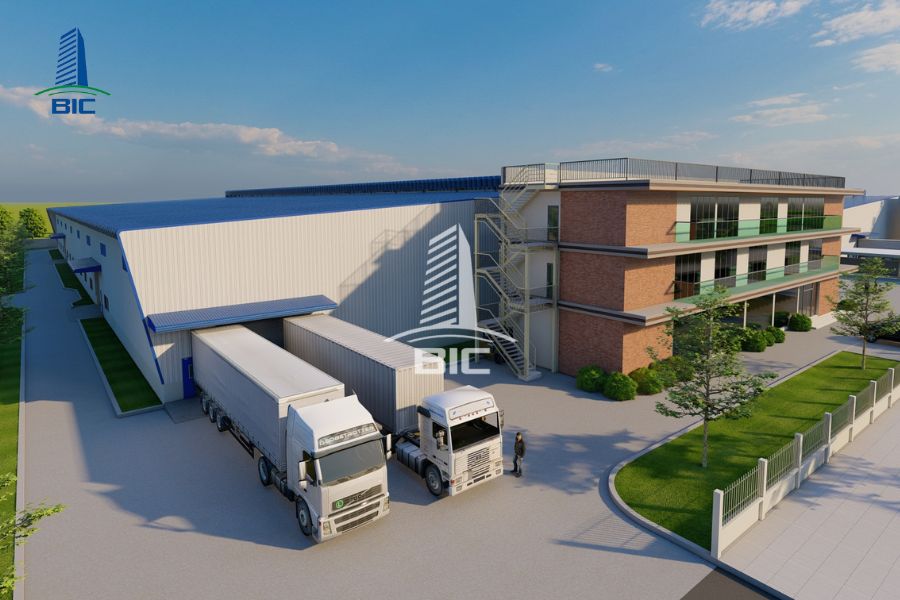
To ensure a smooth collaboration with the design team, investors should keep in mind:
- Clearly define your needs and expectations: Before starting, list your project requirements functionality, scale, design preferences, and budget. Provide all existing site data and special production or environmental needs.
- Choose a reputable and capable design firm: Review company credentials, similar completed projects, and client feedback. Select firms with proven experience in industrial factory design.
- Understand the working process and maintain communication: Agree on clear timelines, deliverables, and communication channels to prevent misunderstandings or delays.
- Sign a detailed contract: Specify scope of work, milestones, payment terms, design revision policy, and penalties for delays.
- Provide timely feedback: Review all drawings carefully and respond promptly to ensure quick adjustments.
- Be prepared for potential changes: Remain flexible to address unforeseen site or regulatory issues.
- Clarify post-design support and warranty policies: Ensure the design firm provides technical support if issues arise after completion.
By preparing thoroughly and maintaining clear communication, investors can minimize risks, optimize budgets, and ensure on-time project delivery.
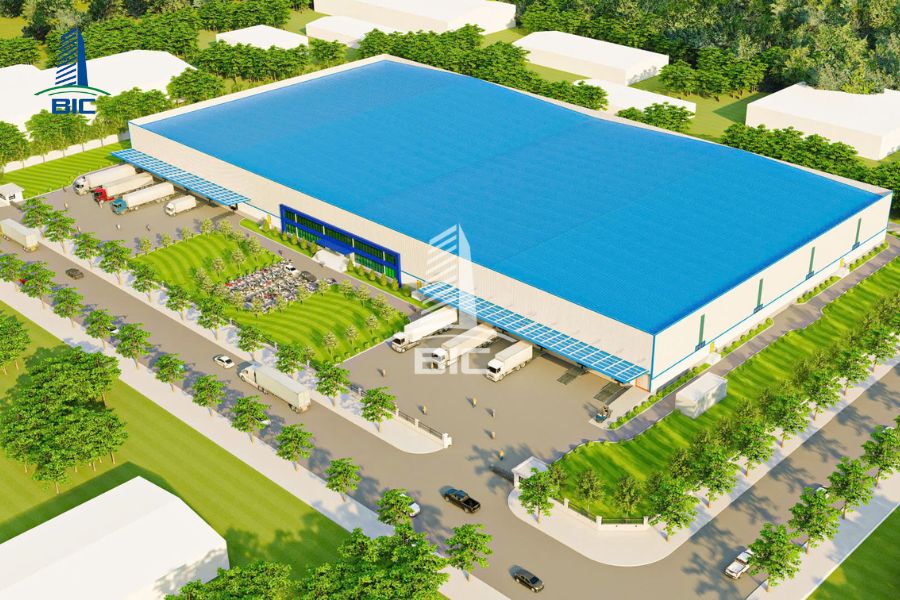
Designing and constructing a factory is more than simply erecting a building, it’s about creating the operational foundation for an entire production system. A well-defined design process helps investors control budgets, ensure construction quality, and establish a safe, efficient, and sustainable working environment.
If you are planning to build a factory, don’t overlook the design phase, it is the “blueprint” guiding your entire project. Take the time to work with a qualified design firm that understands technical standards and production requirements to maximize your investment efficiency.
BIC takes pride in being a leading provider of comprehensive industrial factory design and construction services, supported by an experienced team of engineers, a transparent working process, and a strong sense of responsibility. We are committed to accompanying our clients from concept to completion ensuring every project is delivered on time, on budget, and to the highest standards of quality.