Beyond solving the land availability issue, these satellite parks also help optimize supply chains, provide access to an abundant labor pool, and leverage increasingly synchronized regional planning. In this article, BIC analyzes why this trend is accelerating, the specific benefits it brings to enterprises, and key considerations when designing and constructing factories in satellite industrial parks around Ho Chi Minh City helping investors make sound strategic decisions for long-term growth.
In recent years, surrounding provinces such as Long An, Binh Duong, and Dong Nai have witnessed a strong wave of factories moving out of Ho Chi Minh City’s inner districts. Satellite industrial parks such as Long Hau (Long An), VSIP (Binh Duong), and Nhon Trach (Dong Nai) have emerged as strategic destinations due to their clear advantages in land availability, investment costs, and regional connectivity.
Statistics show that the areas bordering Ho Chi Minh City currently host over 30 industrial parks, with occupancy rates exceeding 90%, positioning the region as the “new manufacturing hub” of Southeast Asia. At the same time, FDI inflows into the manufacturing sector reached USD 21.5 billion in the first half of 2025, up 32% year-over-year. Notably, 54% of new FDI enterprises chose ready-built factories (RBF) in satellite industrial parks to shorten production setup time.
Key factors driving the relocation trend:
- Land shortage in Ho Chi Minh City: The city now has only about 74 hectares of usable industrial land remaining. Many older industrial zones have stalled due to site clearance issues, leaving over 20% of industrial land undeveloped.
- High investment and operating costs: Rental prices for factories in central Ho Chi Minh City are significantly higher than in satellite zones. For instance, multi-story factories in Long Hau (Long An) are 20–35% cheaper while maintaining comparable quality and accessibility.
- Interregional planning advantages: Ho Chi Minh City’s expanded metropolitan planning integrates infrastructure and land-use policies across neighboring provinces. This has streamlined investment and permitting processes in satellite industrial parks, making it easier for businesses to begin operations. The completion of ring roads, expressways, and seaport connections also reduces dependence on administrative boundaries.
All these factors create a favorable environment for both domestic and international companies to shift their investments and expand production in satellite industrial parks instead of remaining congested in the inner city. This is a golden opportunity for investors to capture the trend, optimize costs, and sustainably scale their manufacturing operations.
.jpg)
With strategic locations, competitive costs, and modern planning, satellite industrial parks surrounding Ho Chi Minh City have become the top choice for businesses looking to build, expand, or relocate factories. This is not only a financially sound solution but also a sustainable development opportunity for investors in the post-industrialization phase.
One of the key advantages of satellite industrial parks is that land and factory rentals are 20–35% cheaper than in central Ho Chi Minh City. For example, at Long Hau Industrial Park, businesses can access high-quality multi-story factories or industrial land at more economical rates while maintaining high standards. Many satellite parks also offer tax incentives and technical infrastructure support, reducing financial pressure during the early investment stage.
These industrial parks are located near major transportation routes such as the Ben Luc – Long Thanh Expressway, My Phuoc Tan Van Road, and Ring Roads 3 and 4, with easy access to key international seaports (Cat Lai, Hiep Phuoc) and the upcoming Long Thanh Airport. This connectivity streamlines logistics and export operations, cutting both time and costs.
For instance, Long Hau Industrial Park is just 19 km from District 1 and directly connected to major portsan ideal location for export-oriented industries.
Satellite industrial parks are typically located near residential or urban-industrial clusters, making it easier to attract skilled and unskilled labor from surrounding provinces. Labor costs are generally lower than in Ho Chi Minh City, helping optimize long-term operating expenses. Some models, such as VSIP (Binh Duong), integrate work–life–service facilities to retain both workers and technical experts.
Many satellite parks are being developed under the Eco-Industrial Park model, incorporating high-tech infrastructure and renewable energy systems. For instance, Becamex IDC is developing parks like Cay Truong and Bau Bang 2 with an environmentally friendly approach to meet ESG (Environmental – Social – Governance) and green export standards.
Most new parks now apply modern industrial design standards, including:
- Ground-floor ceiling height of at least 4.5 m
- Floor load capacity from 1 ton/m²
- Automatic fire protection systems, natural ventilation, and energy-saving LED lighting
These features help businesses boost productivity while ensuring safety and sustainability.
With these strong advantages, satellite industrial parks around Ho Chi Minh City not only solve cost and space challenges but also pave the way for sustainable and competitive growth in the global market.
.jpg)
Amid rising production demands, satellite industrial parks in provinces such as Long An, Binh Duong, and Dong Nai are rapidly expanding in both scale and quality. These areas are not only major FDI destinations but are also pioneering the development of modern, green, and smart industrial park models aligned with future manufacturing trends.
Long An currently operates 16 industrial parks with a total area of about 2,323 hectares and an occupancy rate of 87.6%. Key parks such as Long Hau, Tan Duc, and Duc Hoa III – SLICO are attracting significant FDI and driving logistics, services, and urban development in parallel.
The province is also promoting the Industrial – Urban – Service model, integrating factories, worker housing, logistics centers, and community amenities creating a high-quality environment for both workers and professionals.
Following the city’s metropolitan expansion plan, numerous new industrial projects have been launched in neighboring provinces. Becamex IDC, for example, is developing Cay Truong and Bau Bang 2 under the international Eco-Industrial Park model that integrates production, environmental management, and sustainability.
Long An targets 51 industrial parks by 2030, covering nearly 12,500 hectares, providing investors with abundant options to align with their long-term expansion strategies.
Instead of building from scratch, many companies now opt to lease RBFs in satellite parks to reduce setup time and initial costs. Recent data shows that 54% of new manufacturing projects in the first half of 2025 adopted the RBF model.
Additionally, multi-story factory designs are gaining popularity, helping maximize land efficiency and reduce legal and construction-related risks.
Rather than operating independently, provinces such as Long An, Binh Duong, and Dong Nai are strengthening interregional linkages with Ho Chi Minh City in urban, industrial, and logistics planning. This integration enables synchronized infrastructure and streamlined investment procedures.
A multi-core “industrial ecosystem” is emerging, allowing provinces to share resources, infrastructure, and labor transforming satellite industrial parks into vital components of southern Vietnam’s supply chain.
With clear planning frameworks, strong local government support, and a focus on green, smart industry, satellite industrial parks around Ho Chi Minh City are entering a period of rapid and sustainable growth offering golden opportunities for investors.
.jpg)
When relocating or expanding operations to satellite industrial parks, investors should carefully plan factory design and construction to maximize efficiency, investment returns, and future scalability. Key considerations include:
Each industry and production process has distinct requirements for space, load capacity, layout, and technical systems. Before construction or relocation, businesses should assess:
- Current and projected production scale over 5–10 years
- Equipment type and floor load requirements
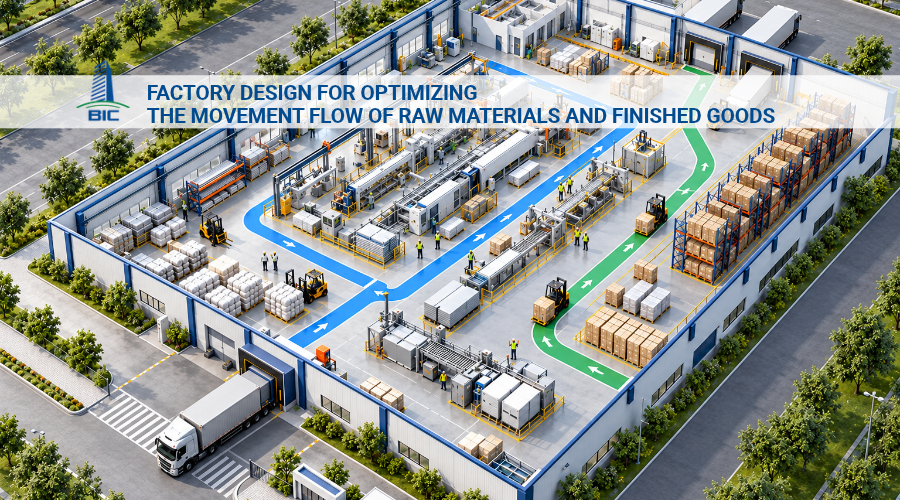
- Functional zoning: production, warehouse, office, technical, logistics
- Height, ventilation, lighting, hygiene, and safety standards
In areas with limited land, multi-story factory design is an effective solution to save space while maintaining flexibility.
Factories today must go beyond technical requirements to embrace sustainability. Key design features include:
- Minimum ceiling height of 4 m, floor load capacity above 1 ton/m²
- Natural lighting and ventilation systems
- Automatic fire protection, smoke–heat detection systems
- Rooftop solar panels, efficient drainage and heat recovery systems
- Eco-friendly materials and lightweight steel structures for expansion
Incorporating smart, green design solutions helps enterprises meet ESG standards, enhance reputation, and attract global investors.
Many satellite industrial parks now offer RBFs meeting industrial standards, ideal for businesses needing fast deployment and minimal legal risks.
However, for industries with specific technical requirements (e.g., environmental treatment, cleanrooms, cold storage, or high-tech production), a build-to-suit approach ensures optimal functionality and performance. Custom multi-story designs also help maximize limited land areas.
.jpg)
To ensure quality, compliance, and on-time delivery, investors should collaborate with experienced industrial design–build firms. A trusted partner will provide:
- Functional master planning consultancy
- Optimal structural, architectural, and MEP design
- Safe, efficient, and cost-effective construction execution
- Legal, permitting, and fire safety support
Choosing the right design–build partner lays a solid foundation for long-term success in satellite industrial parks.
Factory relocation from central Ho Chi Minh City is no longer just a trend, it has become a strategic move for both domestic and foreign enterprises. With clear advantages in cost, land, infrastructure, and supportive policies, satellite industrial parks in Long An, Binh Duong, and Dong Nai are proving to be ideal destinations for the next phase of industrial investment.
However, to fully leverage these opportunities, businesses must proactively plan their factory design, choose suitable investment models (RBF or custom-built), and partner with reputable design–build contractors familiar with local industrial regulations. Proper preparation from the start ensures time efficiency, cost optimization, and sustainable operations in the long term.
If you’re seeking professional factory design and construction solutions in satellite industrial parks around Ho Chi Minh City, contact BIC’s expert team for a free consultation. With extensive experience in industrial project delivery, BIC is committed to providing end-to-end solutions from design and construction to legal support helping your business enter a new era of sustainable growth.