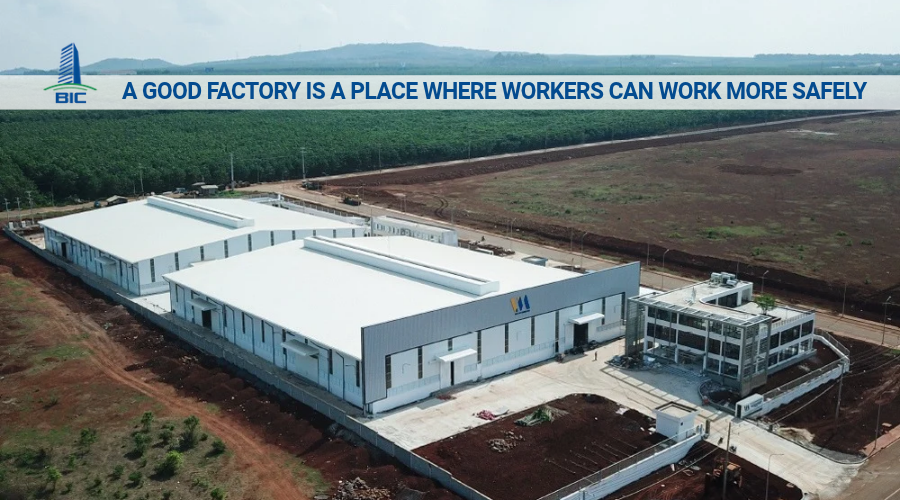
Industrial factories with large roof areas, high steel frame structures, and a concentration of modern machinery are highly vulnerable to lightning strikes during the storm season. Ignoring the factory lightning protection system or installing one that fails to meet technical standards can cause serious consequences, including warehouse fires and explosions, damage to MEP equipment, and direct threats to workers’ lives.
Investing in a synchronized factory lightning protection system from the factory design dossier stage is an essential solution to protect assets, maintain continuous production operations, and fully comply with legal regulations on fire prevention and fighting. Close coordination with the general construction contractor from the construction design stage helps businesses proactively control risks, optimize installation costs, and ensure absolute safety for the entire building.
Underestimating or cutting the investment budget for a factory lightning protection system is a dangerous mistake made by many businesses. When thunderstorms occur, a direct lightning strike or lightning surge can cause catastrophic consequences to both property and human life.
Modern factories concentrate a high density of technological equipment such as inverters, PLC automatic control systems, CNC machines, and high-capacity transformer stations. When lightning strikes directly or lightning surge current travels through power lines and signal cables, the sudden voltage spike can burn and destroy sensitive electronic circuit boards.
Damage to specialized equipment not only costs investors a huge budget for replacement and repair, but also reduces the fixed asset value of the building.
Lightning current carries extremely high energy, with the temperature at the contact point potentially reaching thousands of degrees Celsius. This temperature can easily ignite flammable materials commonly found in warehouses, such as garments, paper packaging, wood, or industrial chemicals.
In addition to fire risks, lightning current transmitted into the ground without a proper earthing system can create step voltage and touch voltage. These are direct causes of life-threatening danger for workers in production areas.

Electrical short circuits and fires caused by lightning can put the entire factory into partial or complete power failure, immediately halting the operating production line. Sudden production stoppage can damage materials being processed, delay order delivery schedules, and expose the business to heavy contractual penalties from partners.
The process of resolving the consequences, restoring electrical infrastructure, and re-inspecting all equipment often lasts for many weeks, creating a chain of financial losses for the business.
A factory lightning protection system is a mandatory item in the fire prevention and fighting safety approval dossier under construction law. A building without a lightning protection system, or with a system installed incorrectly compared to the construction design drawings, may be rejected during fire protection acceptance by the fire police authority.
This means the factory does not meet legal conditions for commercial operation and may face administrative penalties or be forced to suspend all factory activities until technical standards are fully met.
A complete factory lightning protection system consists of two parallel protection solutions: direct lightning protection and surge protection, integrated synchronously from the project planning stage.
This system is responsible for actively intercepting lightning current when it strikes the building and safely directing the current into the ground:
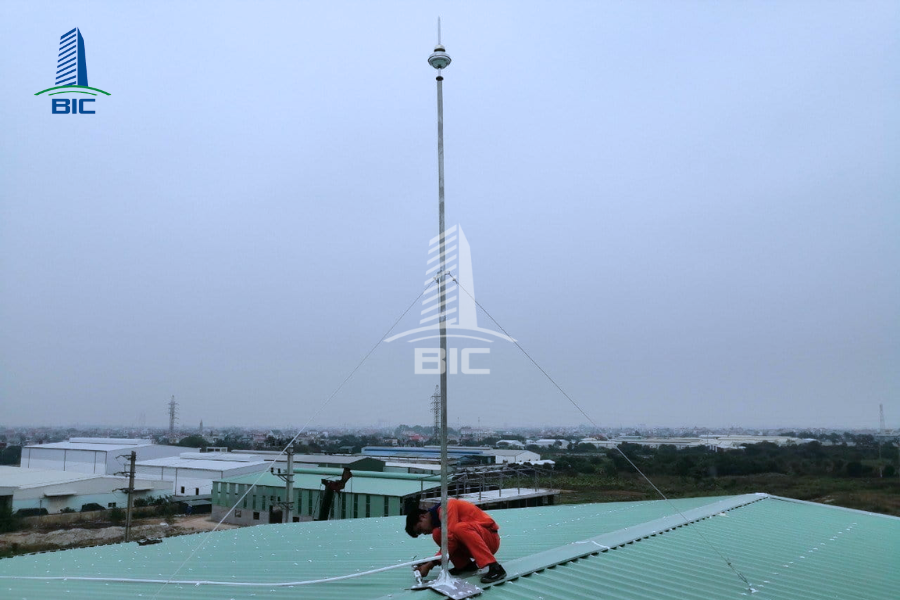
- Early Streamer Emission, or ESE, lightning air terminal: Installed at the highest position on the factory roof. ESE technology creates a much wider protection zone than a conventional lightning rod, covering the entire roof area and surrounding auxiliary structures.
- Down conductor system: After being intercepted by the air terminal, the lightning current is transmitted through bare copper cables or galvanized copper conductors with large cross-sections, running along the steel frame columns down to the earthing system.
- Lightning earthing system: This includes a series of copper-bonded steel rods driven deep into the ground, combined with GEM ground enhancement material. This earthing system ensures an earth resistance value below 10 ohms, allowing lightning energy to be quickly dissipated into the ground without endangering the foundation.
Lightning surges traveling through power cables and telecommunications cables can destroy the entire electronic equipment system inside the factory:
- Surge Protective Devices, or SPD: Installed at transformer stations, main distribution boards, and branch distribution panels. When a high-voltage surge caused by lightning appears, the SPD immediately activates its surge suppression mechanism and discharges excess energy into the earthing system.
- Data transmission protection devices: Installed at the input points of server systems, surveillance camera networks, automation control signal cables, and weighbridge stations to prevent sensitive electronic circuit boards from burning.
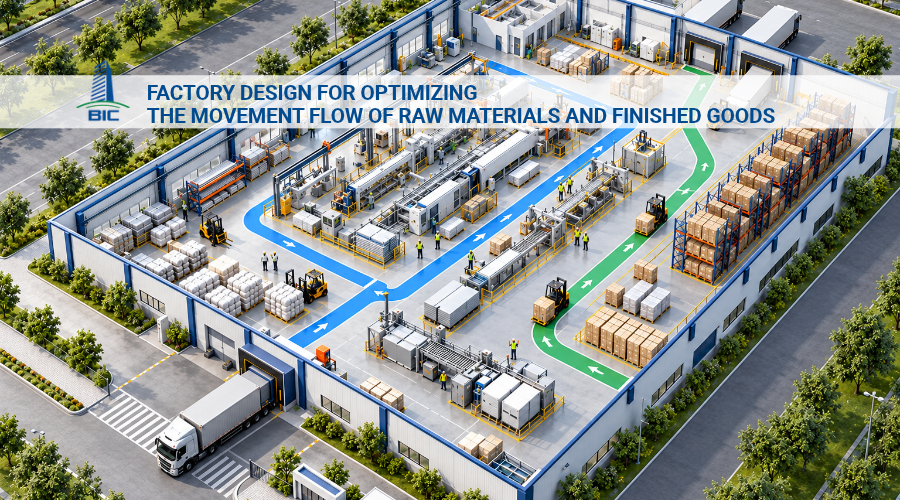
Calculating the lightning protection solution directly in the construction design dossier brings high technical and financial efficiency. Engineers plan the locations of air terminals, down conductor routes, and earthing systems in coordination with the building’s steel frame structure.
This synchronized planning eliminates spatial conflicts with rooftop infrastructure such as roof ventilation turbines, rooftop solar power systems, or industrial exhaust chimneys.
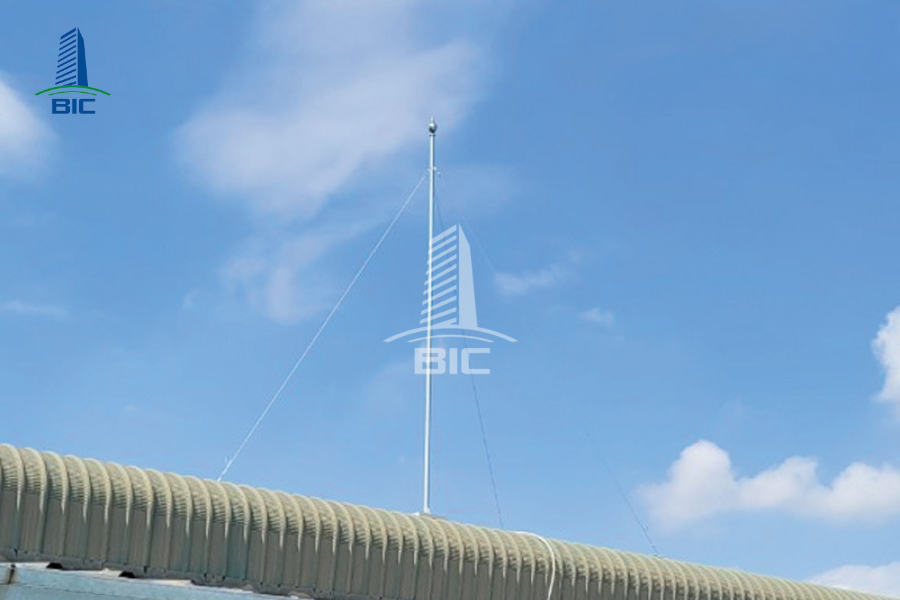
Lightning protection for industrial buildings must strictly comply with current legal regulations and technical standards.
TCVN 9385:2012 provides detailed technical requirements, from calculating the protection radius of air terminals and selecting conductor cross-sections to construction specifications for earthing systems. Compliance with this standard helps ensure that the system can operate safely under all thunderstorm intensity conditions.
Lightning protection is a mandatory item in the fire prevention and fighting safety approval dossier. State management authorities require factory design dossiers to integrate a standard-compliant lightning protection solution before construction permitting approval.
The lightning protection system should be inspected periodically at least once per year before the storm season. Inspection focuses on measuring earth resistance to determine whether the earthing system still maintains resistance below 10 ohms, thereby promptly detecting corrosion of earthing rods or broken conductors.
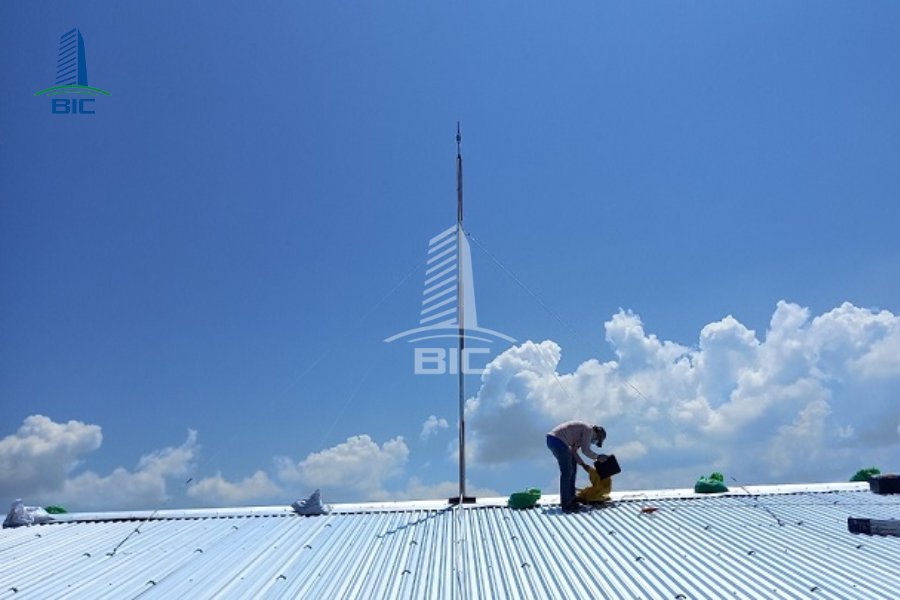
Choosing a reputable construction unit helps investors obtain a standard-compliant lightning protection system, save costs, and optimize the schedule.
The general construction contractor measures soil resistivity at the project site before preparing the construction design drawings for the earthing system. For rocky areas or sites with high soil resistivity, the general contractor proactively proposes deep grounding well solutions or the use of ground enhancement materials to achieve safe technical values at the most economical cost.
The general contractor is responsible for supplying all materials, including lightning air terminals, surge protective devices, earthing rods, and conductors with complete Certificates of Origin and Certificates of Quality. Construction is carried out strictly according to the factory design drawings, using exothermic welding to connect earthing rods and ensure that joints do not oxidize over time.
The general construction contractor represents the investor in working with independent inspection units to measure earth resistance and issue safety certification. At the same time, all technical documents for the factory lightning protection system are completed by the general contractor as part of the as-built dossier, supporting the investor in quickly passing fire prevention and fighting acceptance with the fire police authority.
A factory lightning protection system is a comprehensive protective shield for a company’s assets, people, and production chain against natural disaster impacts. Proactively investing in a synchronized lightning protection system from the project planning stage helps investors optimize budgets, thoroughly prevent short-circuit and fire risks, and ensure full legal safety.
Partnering with BIC, a reputable general construction contractor with in-depth factory design consulting capability, is a strategic choice that lays a solid foundation for the building to operate safely, sustainably, and efficiently throughout the project life cycle.