In logistics and manufacturing operations, warehouse design is a critical factor that determines a business’s ability to store, manage, and distribute goods efficiently. A well-planned warehouse layout helps maximize usable space, reduce operating costs, ensure goods safety, and improve supply chain management. Conversely, a poorly designed warehouse can lead to congestion, wasted space, and increased operational risks.
Modern warehouses are no longer just storage spaces, they serve as coordination hubs directly connected to production and distribution. Therefore, aspects such as location, master planning, structure, technical systems, and future expandability must be carefully considered from the design stage. These elements also enable seamless integration between warehouse and factory design, creating a robust infrastructure for production and logistics.
With years of experience in delivering industrial projects, BIC views the design phase as the cornerstone of investment efficiency. A well-engineered warehouse design not only meets current needs but also opens opportunities for long-term growth, helping businesses strengthen their competitiveness in an increasingly challenging market.
Warehouses are essential nodes in the supply chain, responsible for transshipment, storage, and distribution. A well-designed warehouse can significantly impact logistics costs, productivity, and service quality.
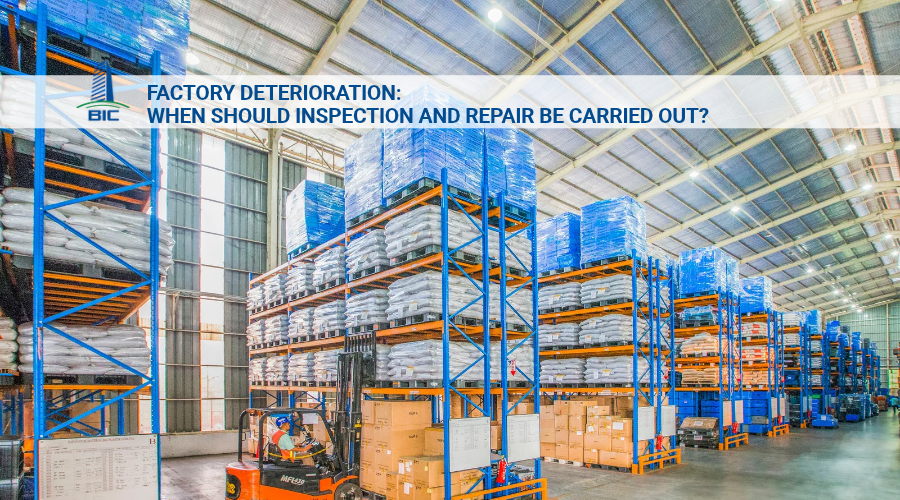
First, a scientifically designed warehouse maximizes storage efficiency. Instead of simply increasing floor space, design based on load capacity, ceiling height, and optimized racking systems allows businesses to fully utilize both horizontal and vertical space. This is especially vital for industries that need to store large volumes of goods over long periods, such as FMCG, raw materials, or electronic components.
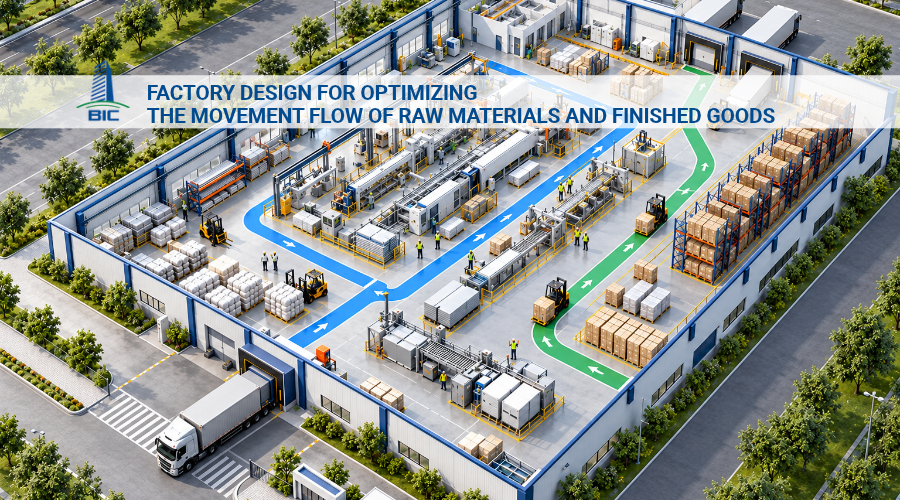
Second, a well-structured design shortens goods handling time. Efficiently arranged receiving, storage, and dispatch areas ensure smooth movement for goods and vehicles like forklifts and trucks, minimizing congestion. Streamlined workflows reduce unnecessary handling steps, saving labor costs and accelerating delivery times.
Finally, warehouse design is closely tied to safety and regulatory compliance. Adhering to fire protection standards, ventilation, lighting, and emergency exits not only ensures the safety of goods and personnel but is also a mandatory requirement for legal approvals. Businesses with a long-term vision often integrate warehouses into the overall factory infrastructure, creating a synchronized and sustainable system that supports both production and modern logistics demands.

A well-planned warehouse design not only optimizes space but also reduces operating costs, ensures goods safety, and enhances logistics efficiency. To achieve these goals, businesses must pay close attention to several critical factors from the early stages of planning.
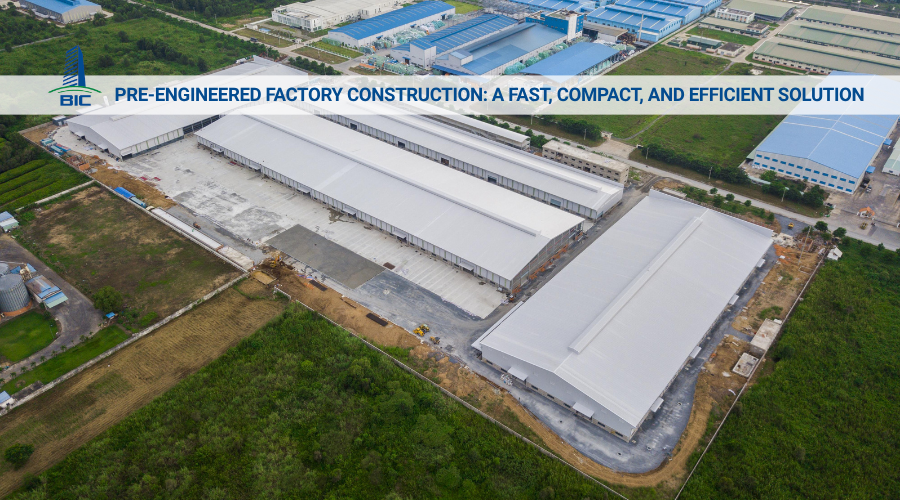
The location of the warehouse directly affects logistics costs, delivery times, and overall competitiveness. Warehouses located near major transportation routes, seaports, railways, or industrial zones can significantly reduce transportation costs and streamline goods movement. In contrast, warehouses far from transport hubs or with poor infrastructure can disrupt logistics flows, increase costs, and delay deliveries.
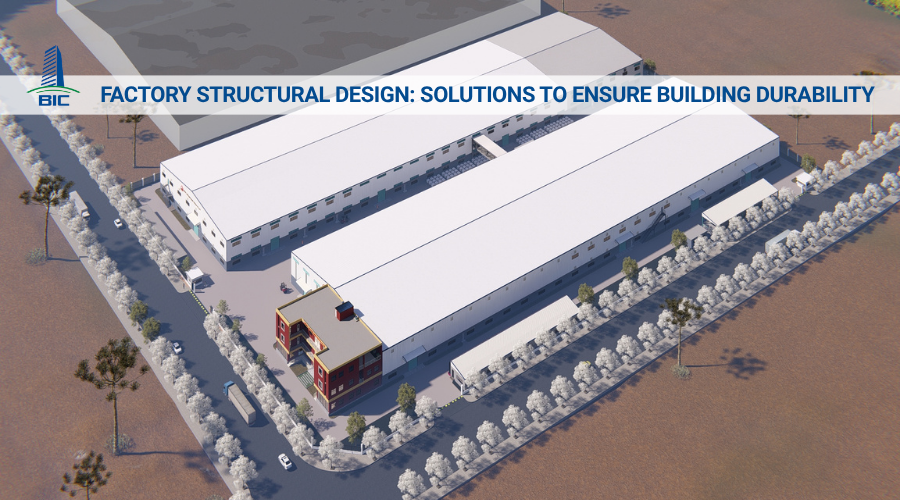
Master planning should also be carefully calculated. Entry and exit points must be wide enough to allow safe and efficient movement of trucks, containers, and forklifts. The site layout should clearly separate receiving, storage, and dispatch areas while ensuring one-way traffic to minimize congestion and prevent collisions during operations.
The warehouse structure must align with the type of goods stored. For example, heavy materials require robust steel frames and high-load concrete floors, whereas lightweight goods can use flexible structures that are easy to install and expand. Ceiling height should be designed based on racking systems and handling equipment. A warehouse 9–12 m high can accommodate multi-tier racking systems, optimizing vertical storage instead of expanding floor space.
The internal layout must also be logical. The receiving area should be near the main entrance and parking lot to save loading and unloading time. Storage zones should be divided into sections by SKU codes to simplify inventory counting and software-based management. The dispatch area should be separated to avoid confusion and shorten order processing time.

A modern warehouse requires integrated technical systems. Lighting must provide 200–300 lux to ensure safe working conditions and reduce errors during inventory tasks. Natural ventilation combined with industrial fans helps lower indoor temperatures, while cold storage or specialized warehouses need temperature control and air conditioning systems.
Fire protection systems are mandatory. Depending on the type of goods, warehouses must be equipped with automatic sprinklers, fire extinguishers, fire alarms, and backup water supplies. Drainage and waterproofing solutions must also be well-designed to prevent flooding, especially for warehouses storing perishable materials. Neglecting these factors can lead to rapid deterioration of the facility and pose safety hazards.
All warehouse designs must comply with national technical standards (TCVN, QCVN) and local regulations. These include safe spacing between racks, the number and placement of emergency exits, signage, emergency lighting, and occupational safety measures. Compliance not only ensures legal operation but also reduces the risk of fire, explosions, and accidents during operation.
Some businesses attempt to cut costs by skipping design validation according to standards, only to face obstacles during licensing, requiring costly revisions or additional documentation. This leads to delays, increased expenses, and disruptions to business plans.

Many businesses invest in warehouse construction but overlook key design factors, leading to inefficient operations, higher costs, and safety issues. Below are the most common mistakes investors make:
- Ignoring future expansion plans: Many warehouses are built to meet only current needs without considering future growth. As goods volume increases, businesses are forced to renovate or build new warehouses, wasting money and disrupting operations. Effective designs should plan for expansion, structural load capacity, and technical system scalability.
- Poor goods flow planning: Another frequent mistake is unscientific layout planning, causing overlapping traffic between receiving, storage, and dispatch zones. As a result, forklifts and trucks become congested, and workers spend more time handling goods, reducing operational efficiency. A one-way traffic design and well-defined functional zones can save hours of labor daily.
- Inadequate lighting and ventilation: Warehouses are large spaces, yet many companies install minimal lighting and ventilation. Insufficient lighting leads to inventory errors, while poor ventilation increases temperature, affecting goods quality and worker health. Modern designs must ensure adequate lighting, use natural light where possible, and include suitable fans, vents, or air conditioning.
- Neglecting fire safety and occupational standards: This is a critical but common oversight. Some warehouses are built without proper fire safety systems lacking sprinklers, alarms, or emergency exits. In the event of an incident, the consequences extend beyond goods loss to endanger lives and damage company reputation. Meeting fire safety and occupational standards from the design stage ensures smooth licensing and long-term warehouse protection.

To ensure stable operations, cost savings, and the capacity to meet increasing storage demands, businesses should adopt modern, integrated warehouse design solutions. These not only address common shortcomings but also lay the groundwork for sustainable development.
- Implement modern warehouse management technology: A smart warehouse relies on management tools such as WMS (Warehouse Management System), barcodes, QR codes, or RFID. These technologies allow real-time tracking of goods, reduce errors in inbound and outbound processes, and optimize inventory control. IoT integration also enables monitoring of temperature, humidity, and energy usage for timely adjustments.
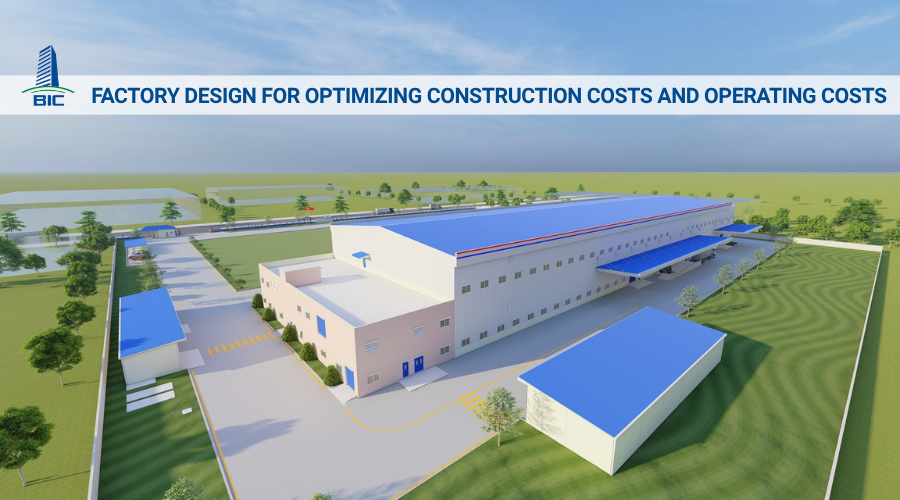
- Design green, energy-efficient warehouses: Modern warehouse design trends focus on reducing operating costs and environmental impact. Businesses can maximize natural light through skylights, use energy-efficient LED lighting, or install solar panels on warehouse roofs. Natural ventilation combined with industrial fans reduces the load on air conditioning systems, maintains stable temperatures, and lowers electricity costs.
- Integrate warehouses with factory systems: One way to optimize infrastructure is to design warehouses in sync with factories and other auxiliary facilities. When warehouses, production areas, and offices are properly connected, businesses reduce material transfer times, cut operating costs, and improve production efficiency. This approach also makes future expansions easier without complex renovations.
- Invest in safety and fire protection systems: Effective designs must include fully compliant safety systems. Warehouses should be equipped with automatic sprinklers, smoke sensors, fire alarms, and appropriate water or gas suppression systems. Emergency exits, signage, and lighting must be strategically placed and compliant with TCVN and QCVN standards. This ensures both operational safety and regulatory compliance.
A well-designed warehouse not only enables efficient goods management but also reduces operating costs, boosts labor productivity, and ensures safety throughout operations. When factors like location, master planning, structure, technical systems, and legal standards are thoroughly addressed, the warehouse becomes a solid foundation for the supply chain and manufacturing activities.
Conversely, mistakes such as neglecting expansion planning, poor traffic flow, or ignoring safety standards can cost businesses significantly more to fix later. Therefore, investing in the design stage is the most cost-effective and sustainable solution.
With extensive experience in industrial and logistics projects, BIC is committed to delivering integrated warehouse design solutions that optimize functionality and meet all technical standards. By partnering with BIC, businesses gain not only a safe and efficient warehouse but also a solid infrastructure platform to expand production and enhance competitiveness in the long run.