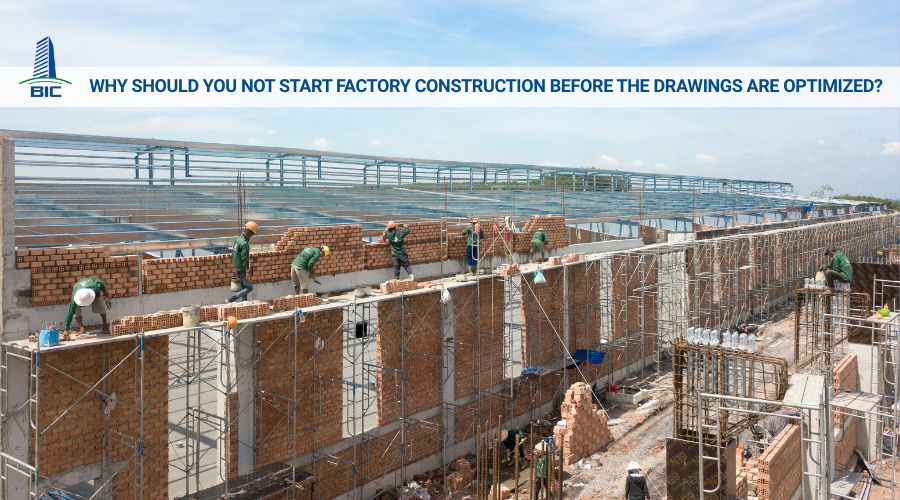
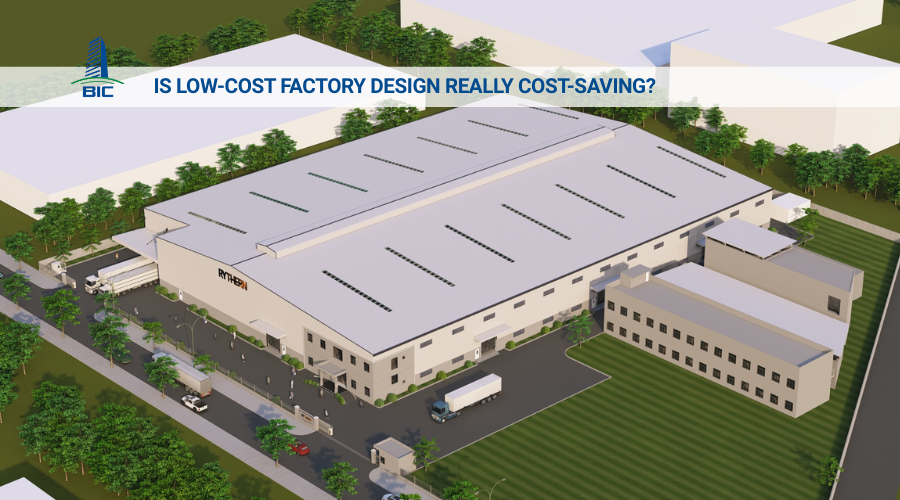
The design of the factory is important to the manufacturing business because it is the place where the direct production of products takes place. The design of the factory according to good quality standards not only makes the most of the use of the product. land use but also optimize initial investment costs for the best operation for employees and product production productivity .
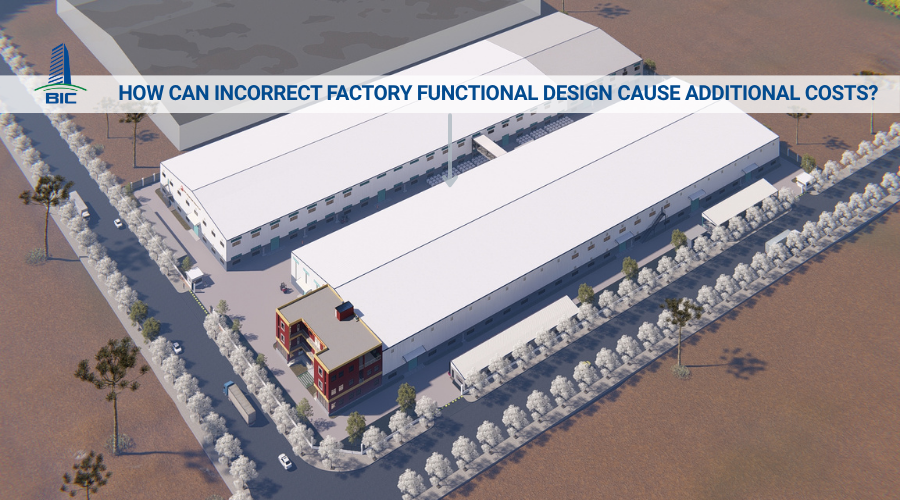
The design of a beautiful factory, good quality and meeting the requirements of the investor when designing a factory, it is necessary to comply with certain rules. The overall design of the premises starts from the grouping of workshops, works and equipment according to specific functional groups that differ depending on the characteristics of the group. Arrange and allocate planning based on the production relationship of the system.
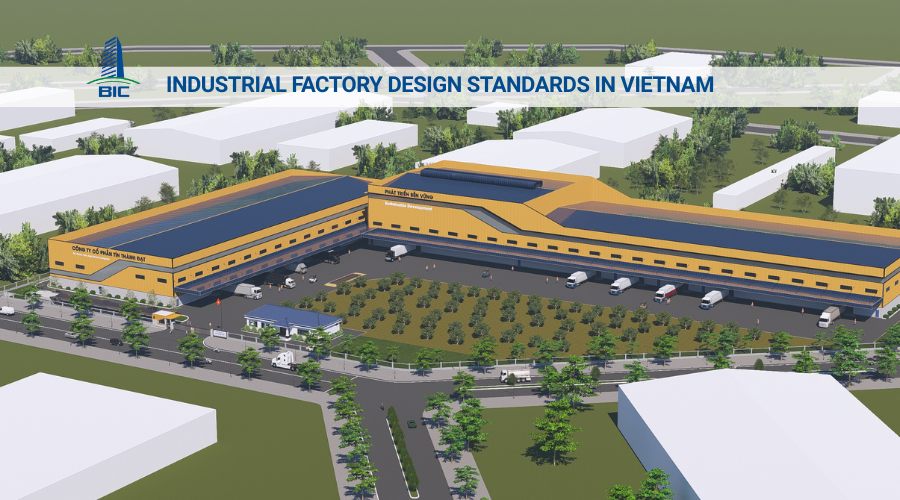
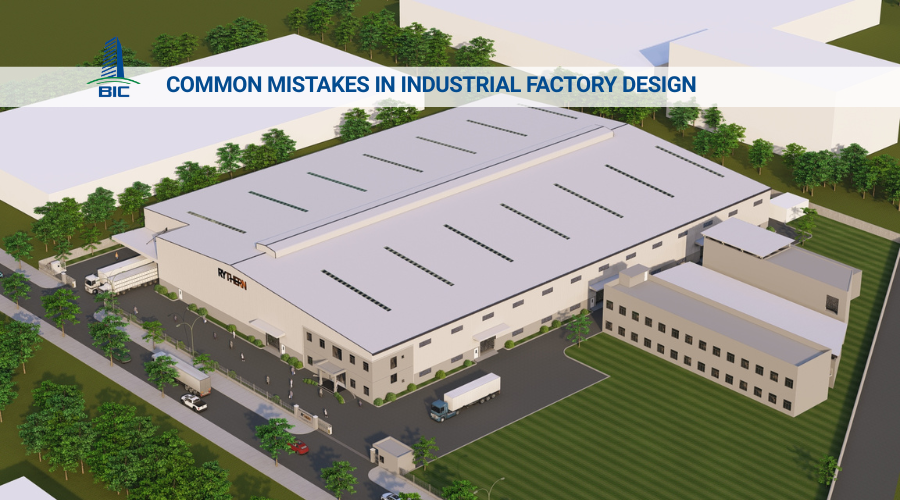
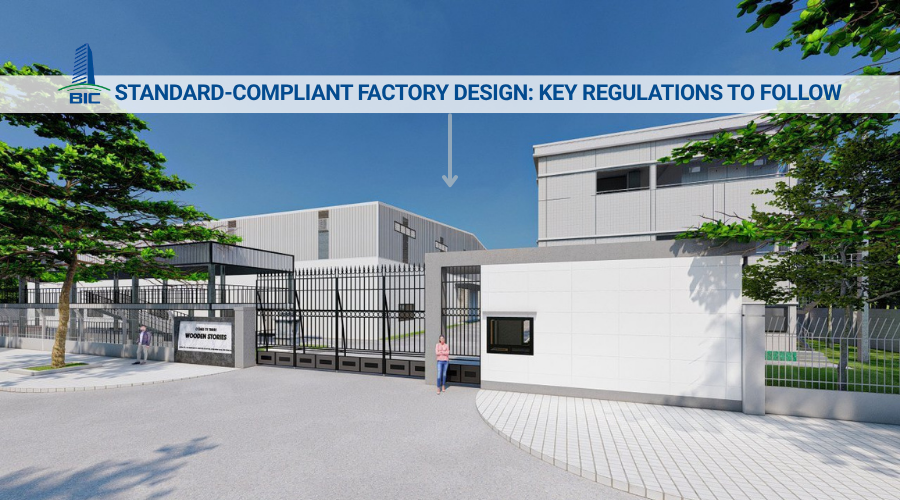
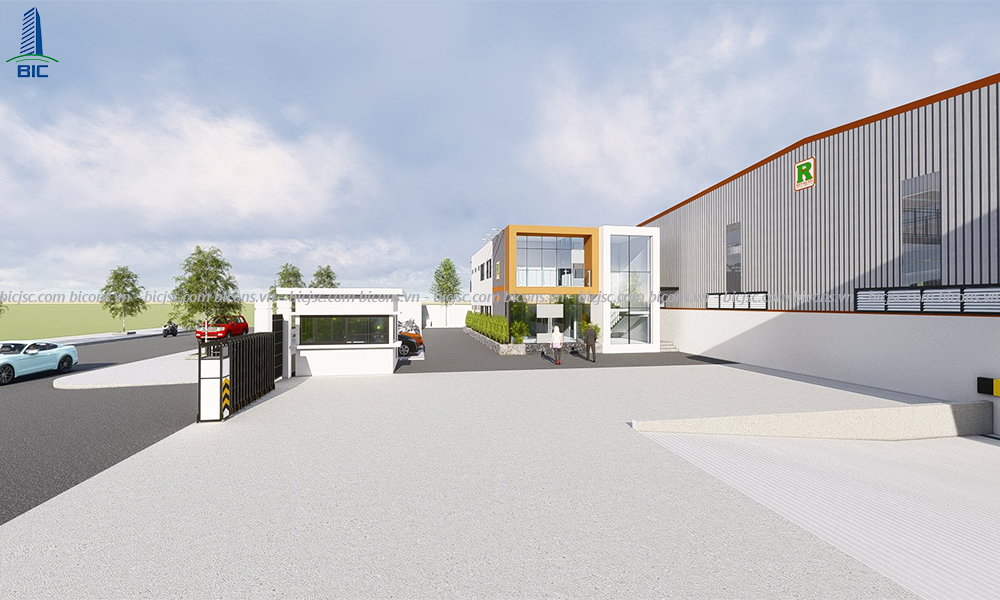
+ Factory area: It is a place where entrance gates, permanent houses, administrative buildings, product showrooms are built, concentrated or scattered, depending on the size and general planning structure of the industrial park. Karma.
+ Production area: It is the place to allocate the main production workshop areas, the sub-production workshops in the production line area.
+ Production auxiliary area: Noi arranges public workshops to serve the main production lines such as energy works, power generation stations, medical stations, transformer stations, operators, technical networks …
In order to arrange and organize a reasonable flow of personnel and goods, the factory can be divided into areas based on the density of workers working in the workshops into the following areas:
+ The area uses a lot of human resources.
+ Areas using less manpower.
+ Areas using average number of human resources.
In order to be able to easily arrange human resources in the production process as well as equipment in accordance with the characteristics of hygiene, fire and explosion risks, etc., the factory should be divided into the following areas:
+ Non-toxic, clean, safe area.
+ Less toxic area.
+ The area has a lot of toxic.
Areas with a high risk of fire and explosion.
After dividing the workshops based on different criteria as above, the design units need to analyze, evaluate and synthesize and by their experience to come up with an architectural design plan of the facade. by the most optimal overall, harmonizing all the above factors to propose to the investor.

Here are some principles that should be considered when designing the overall premises of the factory:
+ The area in front of the factory is usually a traffic area for partners to contact and employees to work. The traffic here is mainly on foot, the toilets are clean and beautiful. Therefore, they are often arranged in front of the factory, next to the main traffic route, the main cool wind direction is part of the architectural face of the factory. However, depending on the size and organizational structure of the investor, they can be arranged to concentrate in one area or disperse for all production workshops.
+ Production area with many workshops with many different features, production and hygiene characteristics, large or medium volume of transportation, means of transport in the area are mainly for non-motorized vehicles. The need for rails (cars, trams, conveyors, etc.) is usually located in the center of the land, next to the area in front of the factory and according to the principles of hygiene and reasonable distribution. density of manpower and volume of transportation.
+ The production auxiliary area is usually arranged next to the main production areas, at the end of the main wind direction, behind the factory, near the goods transportation channel, the warehouse system of the factory.
+ Warehouse and traffic areas are usually located behind the factory and near where there is easy access to the traffic system to transport raw materials and finished products in and out and are usually located at the end. main wind direction to minimize smoke and dust and reduce the possibility of polluting the factory's production environment.
Traffic flow of goods and people on the factory land.
In the process of production and business, factories need to form different traffic flows to easily control and ensure safety for workers.

Flow: is the flow to transport goods and materials in and out of the factory.
Human flow: is the main movement of workers when coming to the factory or communicating between workshops.
The flow of people and the flow of goods should be neatly arranged, independent and not intersecting. Easy access to the internal and external traffic system. In case of force majeure, these two streams intersect and the intersection density is frequent, it is necessary to build an overpass or a route to pass through.
Land is a finite and extremely valuable asset. Therefore, when designing and building factory design units, it is necessary to have a broad view and foresight to come up with an optimal plan to help investors save land and avoid unnecessary waste.
Unified box into blocks: If the office, administrative area and workshops have the same production, hygiene, climate, construction parameters, or have little influence on each other, they can be merged into one block. This consolidation will help the investor save land and construction costs because it can reduce construction items, shorten the traffic network and technical pipelines.
Architectural design: The architectural design of the factory is also one of the factors that help investors save construction land. Usually, the simpler the designs, the more land is saved.
Increase the number of floors: Increasing the number of floors will help save land and improve construction density. However, the number of floors allowed to be built must comply with the guidelines and regulations of the State.
Future expansion and development is something that needs to be considered and calculated, so architects need to plan to reserve land right from the initial investment stage, so that the investor can expand later. . Avoid dismantling, demolishing, moving to another construction site, which is costly, wasteful and difficult to control.
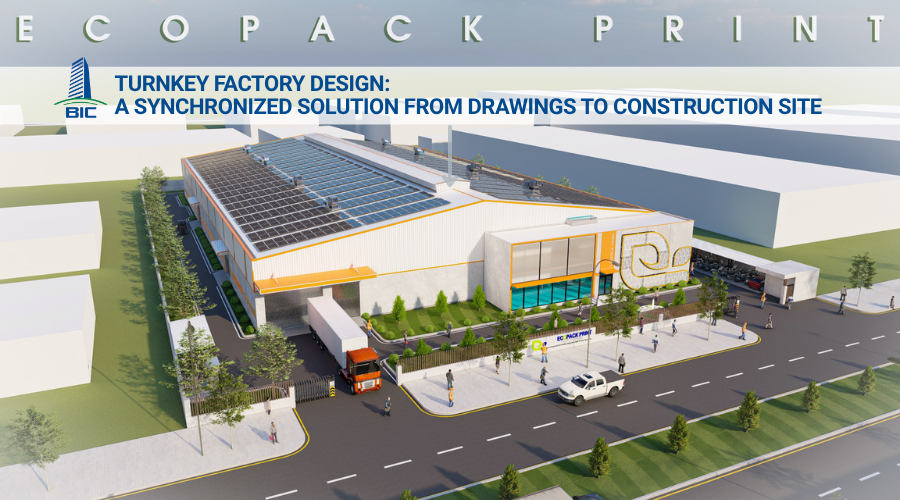
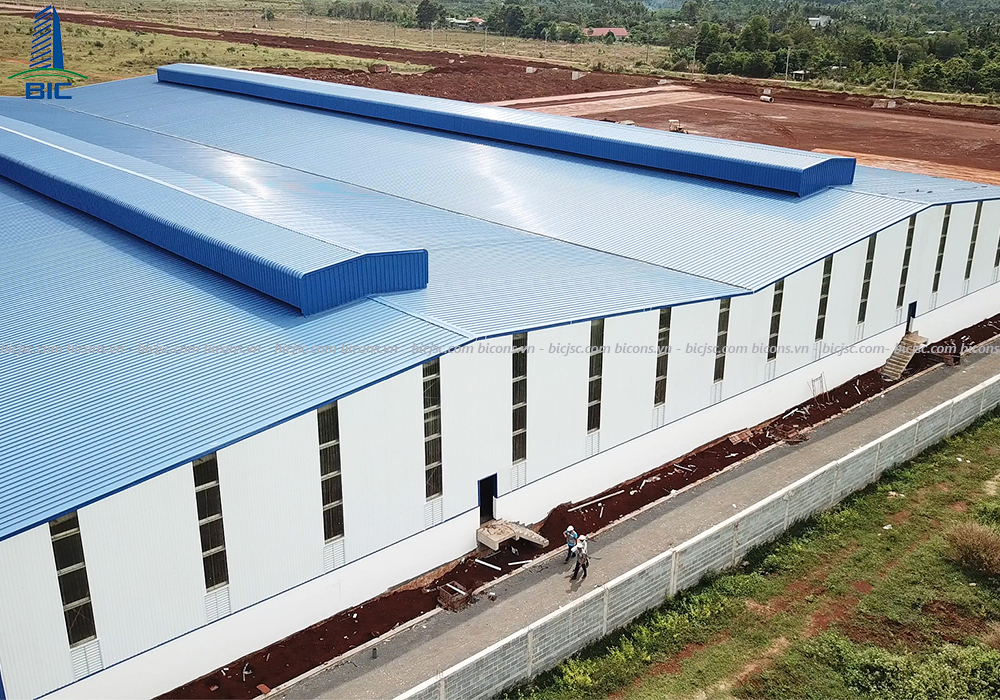
This is the most important note that we advise you to think carefully. This note will give you 2 options: designing a factory using pre-engineered steel frame structures or using traditional reinforced concrete structures. While the pre-engineered steel frame factory can be easily expanded, narrowed or relocated to another location for rebuilding without much impact on the structure and usability of the factory. Whereas this is not possible if you choose reinforced concrete workshop.
Factory land must be divided into areas with different orientations according to different construction periods according to the construction progress of the factory.
Therefore, architects and engineers need to have a broad view of production organization, architectural space planning, construction organization of the factory to avoid inconsistency in the construction process and complex. ground space of both the architectural complex before and after the process of use, development and expansion.